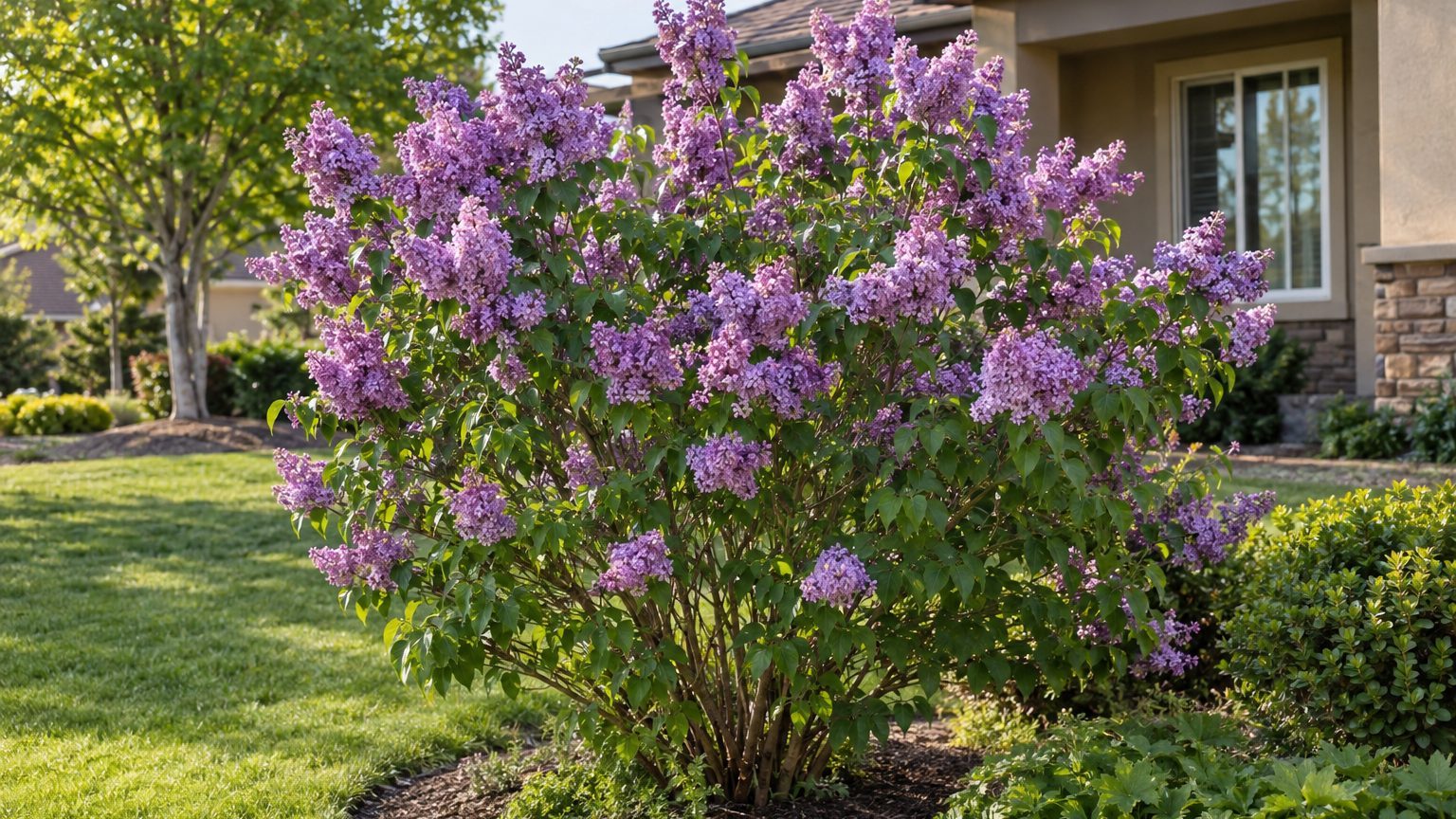
A lilac in full bloom is a spring sight, and in Arizona it depends heavily on where the yard sits. Gardens in the high country can bring one into flower. Low-desert yards, with mild winters and long hot summers, ask more of the plant than it can give.
When Do Lilacs Bloom in Arizona?

Lilacs flower with the local spring, so the bloom comes when your own yard turns the corner from winter, and in the low desert it may be sparse or skipped. The year of a lilac here runs in a clear order.
- In spring, the clusters open as the local season warms, and cooler high-country yards see them later than warm valley yards.
- Right after the last flowers fade, prune, because that is the moment before next year’s buds begin to form.
- Through summer, the shrub sets the buds for the following spring on the new growth, so leave the branches alone.
- In fall, the plant slows down and holds those buds, still untouched by pruners.
- In winter, the shrub needs a cold rest to mature its flower buds, and a mild winter is the usual reason for a poor show.
In the Phoenix area, a rare cold snap can bring 32F between late December and mid January, and a freeze does not happen in most years. A reliable fall freeze does not arrive at all. The USDA Plant Hardiness Zone system spans 4b to 10b across Arizona, so a Flagstaff yard and a Phoenix yard sit in entirely different worlds.
Arizona — the year and the numbers
- State
- Arizona
- USDA zones
- 4b-10b
- Frost
- none in an average year
- Annual rain
- 7 in
- Lawn zone
- warm-season
- Source
- NOAA NCEI 1991-2020 Climate Normals + NOAA RCC ACIS daily records, station USW00023183 — https://www.ncei.noaa.gov/access/services/data/v1?dataset=normals-annualseasonal&stations=USW00023183 · Phoenix
Which Lilacs Grow Best in Arizona?
In the high country, where winters are cold, lilacs can do well. In the low desert, common lilacs struggle because the winters are too mild to rest the buds and the summers are too hot.
Gardeners in warm regions have a few kinds to try. None gives the full cold-climate display, but some bloom with little winter chill.
| Lilac type | How it does in Arizona | Why |
|---|---|---|
| Common lilac | Does best in the cold high country, struggles in the low desert | Needs a cold winter rest, dislikes hot summers |
| Southern lilacs (sold as lilacs for the South) | Usually grow and bloom in warm yards | Early blooming, but less fragrant than the classic kind |
| Descanso hybrids | Worth trying in warm yards | Bred in a warm region, in white, blue and pink forms |
| Low chill cultivars | Bloom with less winter cold | Still do better with a long cold rest |
Among the Descanso hybrids, the white Angel White and the blue Blue Boy are the names to look for, along with a pink variety. Plants sold as heat tolerant often do not thrive in hot, humid weather, and hot humid stretches also invite powdery mildew.
When to Plant, Prune and Feed Lilacs in Arizona
The calendar of a lilac is set by its flower buds more than by the weather. Pruning is the task with a firm timing rule. The full detail lives on the page about when to prune lilacs in Arizona.
| Task | Best timing in Arizona | Why then |
|---|---|---|
| Prune | Right after the flowers fade | Lilacs bloom on last year’s wood and set next year’s buds soon after flowering |
| Hold off pruning | Late summer, fall and winter | Cutting then removes the next spring’s flowers |
Planting and feeding follow your yard’s local spring rather than a fixed date, and the low desert needs extra care because summer heat is the limiting factor. A planting made at the start of a cool spell gives roots a chance to settle before the heat. Pick a variety suited to a mild winter if the yard is in a warm valley.
How Lilac Bloom Time Changes Across Arizona
Elevation does most of the sorting in Arizona, because a lilac wants cold and the state offers cold in some places and almost none in others.
- Flagstaff and the high country: Winters freeze hard, which is what lilacs want. Bloom arrives later in spring than in the valleys, and common lilacs have the best odds here.
- Phoenix and the low desert: Winters are mild and the summers are hot. Flowering comes with the early local spring, if it comes at all, and Southern lilacs or low chill kinds are the better bet.
A yard between those settings, on a slope or a higher valley floor, will fall somewhere in the middle.
Where to Get Lilac Advice in Arizona
For a diagnosis or a soil test, local help beats guessing. Arizona has a state extension service and county offices that know the local conditions.
- University of Arizona Cooperative Extension, reached through University of Arizona Extension, offers plant guidance and lists local contacts.
- Your county extension office can take a soil sample or look at a struggling shrub, and the visit is worth making before you replace a lilac.
Common Questions
Are Southern Lilacs as Fragrant as Common Lilacs?
Usually not. They tend to grow and bloom in warm yards, but the scent is milder than the classic kind.
Should You Buy a Lilac Sold as Heat Tolerant?
Treat the label with caution. Plants sold with that claim often do not thrive as well as they do in cooler climates, so a Southern lilac, a Descanso hybrid or a low chill cultivar is a safer choice.
Can a Lilac Survive Winter in Flagstaff?
Yes. The high country freezes hard, giving common lilacs the cold winter rest they need.