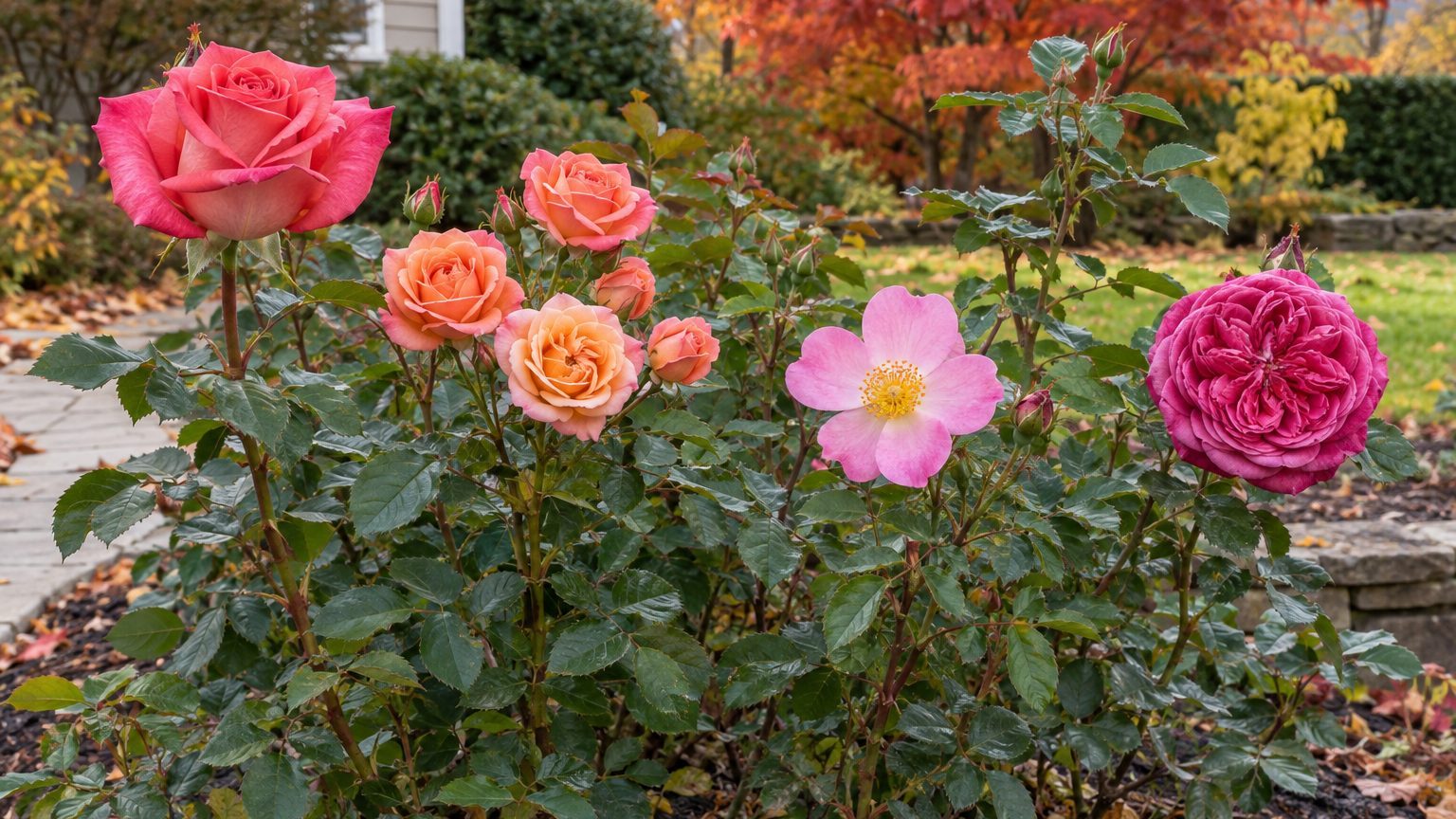
Roses in the Northwest Territories come through winter when they are tough shrub types, and rugosa roses lead that group. Hybrid teas, floribundas and other tender roses do not reliably overwinter. The long cold decides almost everything, so the choice you make at the nursery matters more than any care you give later.
Best Roses to Grow in Northwest Territories

Winters here are long and severe, and snow cover often lasts into spring. Roses that die back and regrow from the base each year suit that rhythm. Tender roses are a poor fit for that rhythm. Winter hardiness is the first filter for roses in the territory.
Rugosa Roses
Rugosa rose (Rosa rugosa) is hardy in most locations in comparable northern conditions, although the best varieties differ from place to place. That makes it the natural starting point here too. Buy a plant that has grown on its own roots, set it in full sun, and expect a rugged, dense shrub rather than a polished show rose.
Explorer Series Roses
Hardy shrub roses such as the Explorer series perform well without extra winter protection, which suits a gardener who would rather not wrap canes every fall. They bloom on new growth, so a May pruning (once shoots are actively growing) keeps them tidy. Treat them as the next step after rugosa if you want a bit more flower variety.
Knock Out Roses
Knock Out is another shrub rose that does well without extra protection in cold winters. It earns a place in a front bed where you want repeat bloom and low fuss. Try the plant through a full winter before filling a border with it.
Hybrid Teas and Floribundas
Tender roses do not reliably overwinter in comparable northern conditions, and that list includes hybrid teas, grandifloras, floribundas and miniature roses. The same caution applies in the Northwest Territories. They need real winter protection even in ordinary cold, so grow them only if you accept a high chance of replacing them.
Northwest Territories — the year and the numbers
- State
- Northwest Territories
- Hardiness zones
- 1b
- Last spring frost
- May 25
- First fall frost
- September 18
- Annual rain
- 11 in
- Lawn zone
- cool-season
- Source
- Environment and Climate Change Canada — Canadian Climate Normals 1981-2010, station YELLOWKNIFE A · Yellowknife
How to Choose a Rose for a Northwest Territories Garden
Start from your winter, because it narrows the field fast. In Yellowknife, hardiness is Canadian zone 1b, a rating built on several climate measures and not comparable with a USDA zone. Tender classes fall out first, and the hardy shrubs remain.
Frost timing matters for planting. At Yellowknife the average last spring frost falls on May 25, which means frost arrives later than that date in one year out of two. Districts farther north run behind. There is no local extension page on rose timing, so the months here follow the nearest comparable climate; confirm local timing with a garden centre, a rose society or a territorial gardening group.
| Your situation | What suits it in Northwest Territories | Why |
|---|---|---|
| Very cold winter | Rugosa roses | Hardy in most locations in a comparable northern climate |
| Little time for winter care | Explorer series or Knock Out shrub roses | They perform well without extra protection |
| You want a hybrid tea or floribunda | Grow it with full winter protection | Tender roses do not reliably overwinter |
| Buying bare-root roses | Plant in June | Roses go in once the ground has warmed, and potted roses can go in later |
Small gardens, humid summers and summer heat can all affect how a rose performs, so ask a nursery near you how a particular rose handled those conditions before you buy.
Which Roses Suit Different Parts of Northwest Territories
The territory is large, and the main change from place to place is how short the growing season gets as you go north.
- Yellowknife: Frost timing in this guide is read from here, so use it as your baseline. Hardy shrub roses, rugosa first, are the dependable choice.
- Inuvik and the Beaufort Delta: Spring comes later than in Yellowknife, so wait for real growth before pruning and plant bare-root roses toward the end of the planting window. Stay with rugosa.
- Hay River and Fort Smith: South of Yellowknife, they may allow a little more room, but the hardy shrub roses are still the safe bet and tender types stay a gamble.
Wherever you garden, a neighbor’s rose that has come through local winters tells you more than any catalog.
Rose Buying Mistakes to Avoid in Northwest Territories
Buying a Tender Rose
A hybrid tea or miniature rose is attractive on the shelf, but these types do not reliably overwinter in a climate like this. The risk is a plant that may be gone by spring. Choose a rugosa or a hardy shrub rose, and if you want a tender one anyway, plan its winter protection before you plant.
Pruning Too Soon in Spring
Warm days tempt you to cut early, but canes may still carry dead wood, and live buds can be lost. For repeat-blooming roses, May is the pruning month. Wait until active growth begins, then cut back to healthy wood.
Planting Bare-Root Roses Too Early
Bare-root roses are dormant and unprotected, so setting them out into cold ground invites setbacks. June is the month for planting them. Potted roses are more forgiving and can go in later, so if the season has slipped away from you, buy potted plants.
Where to Get Rose Advice in Northwest Territories
The territory has no county extension offices. Agriculture help comes from the territorial government, and local growers fill in what is specific to your community.
- The Government of the Northwest Territories agriculture services are the place to ask about growing conditions and local contacts, ideally in winter when you are planning.
- A garden centre or rose society near you can tell you which varieties have survived in your town, so ask before spring orders go in.
- Territorial gardening groups share what has worked locally, and they are worth a visit in late spring before you plant.
Common Questions
When Should You Feed Roses in the Northwest Territories?
Feed from May through July and stop by August 1. Use a soluble fertilizer in those months, then stop so the canes can harden before a hard freeze.
When Should You Prune a Once-Blooming Rose?
Right after it flowers, never in early spring. Old garden roses, ramblers and many climbers bloom on last year’s wood, so a spring cut removes the buds for that summer.
What Does Hardiness Zone 1b Mean for Roses?
It is a Canadian zone, and it does not convert to a USDA zone, because the Canadian system weighs several climate measures and the USDA system uses one. It describes Yellowknife, not the whole territory, so treat it as a guide and lean toward the hardiest roses.