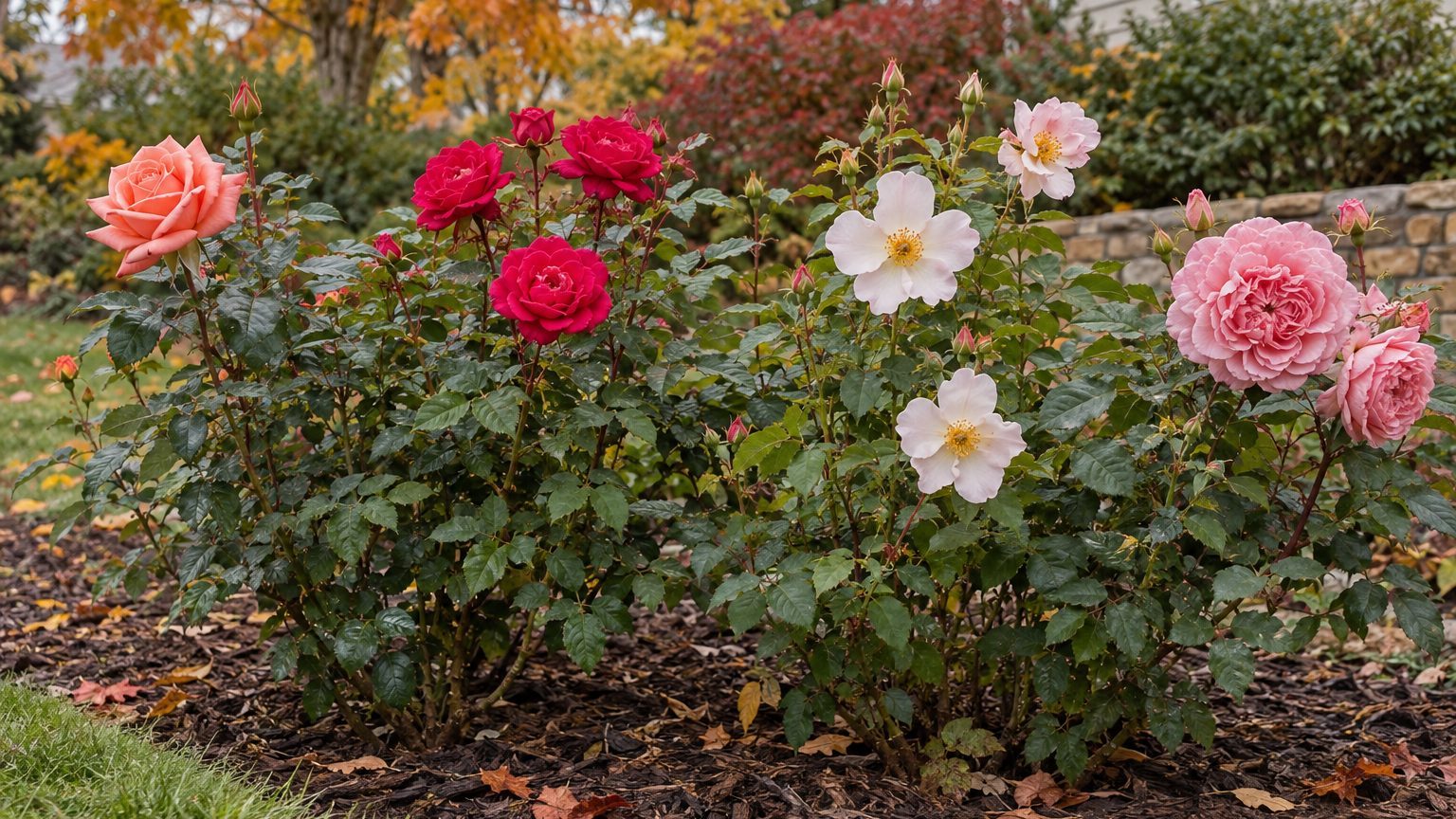
Hardy shrub roses leaf out in North Dakota gardens each spring without the burlap, mounded soil and worry that tender roses demand. Hybrid teas can still grow here, but winter decides which roses are easy and which are a project.
Best Roses to Grow in North Dakota

Hardy shrub roses and the Canadian-bred series do best here, because winter is the limit. Across the state the USDA hardiness zone runs from 3a to 4b, and the zone differs from one part of the state to another. Roses bred for warmer climates struggle in that cold.
Hardy Shrub Roses
These are the easy path. Shrub roses that do not require winter protection let you skip the autumn chore entirely. Knock Out and the Explorer series perform well without extra protection, so they suit anyone who wants flowers without a fall job.
Canadian Artist Series
Bred to be winter hardy and disease-resistant, this series addresses the main problems a North Dakota rose faces. Look for it when you want a rose that handles cold winters and humid summer leaf diseases without constant attention.
Campfire
Campfire has done well in a North Dakota garden, covering itself in yellow, red and pink flowers. That mix of colors gives a front bed plenty of show without mixing varieties.
Emily Carr
Emily Carr has been used in a North Dakota front yard as a focal point. Plant it where it can stand alone, such as near the walk or at a corner of the bed, so the flowers get noticed.
Hybrid Teas and Floribundas
Most hybrid tea, floribunda and grandiflora roses were bred for warmer climates and cannot survive northern winters without protection. They remain popular, and they can work here, but plan for the extra work every autumn and spring. Treat them as a commitment, not a casual purchase.
North Dakota — the year and the numbers
- State
- North Dakota
- USDA zones
- 3a-4b
- Last spring frost
- May 4 to May 15
- First fall frost
- September 25 to October 5
- Annual rain
- 24 in
- Lawn zone
- cool-season
- Source
- NOAA NCEI U.S. Climate Normals 1991-2020, 32F freeze probabilities · Fargo
How to Choose a Rose for a North Dakota Garden
Start with how much effort you want to give in November and April. A rose that needs no protection saves work, while a tender one repays you only if you will cover it every year.
Think too about your summers. Humid weather favors fungal leaf diseases, so a disease-resistant variety keeps the foliage clean.
| Your situation | What suits it in North Dakota | Why |
|---|---|---|
| Very cold winters | Hardy shrub roses, Canadian Artist Series | Bred to be winter hardy, so they need no mounding |
| Humid summers | Canadian Artist Series, or any variety rated disease resistant | Resistance to black spot also lessens the effects of rust |
| Little time | Hardy shrub roses such as Knock Out or Explorer | They do well with no winter protection |
| Set on a hybrid tea | Hybrid tea, floribunda or grandiflora, with protection | They were bred for warmer climates and need a covered winter |
Pruning follows the type. Repeat-blooming roses such as hybrid teas, floribundas and modern shrub roses are pruned in April and May, once the winter cover is off and a hard freeze has passed. Once-blooming roses flower on last year’s wood, so prune them right after they bloom, never in early spring. For a hot, dry spot or a tight bed, ask your county office what grows well nearby.
Which Roses Suit Different Parts of North Dakota
The state spans zone 3a to 4b, so the same rose can be easy in one yard and a gamble in another.
- Red River Valley: Winters here sit toward the milder end of the range, so a hybrid tea still needs good protection. Hardy shrub roses are still the lower-effort choice.
- Turtle Mountains: Higher ground runs colder and frost lingers into spring, so lean on hardy shrub roses and the Canadian-bred series, and plant potted roses on the later side.
- Northern border counties: Cold is a serious concern here, so skip tender types unless you are ready to protect them carefully.
Whatever your location, plan on frost lingering later in country gardens than in town.
Rose Buying Mistakes to Avoid in North Dakota
Tender Roses Left Unprotected
A hybrid tea planted bare and left through winter will usually die back hard or not return. Either choose a hardy shrub rose that needs no protection, or commit to mounding the plant after several hard freezes, once it is fully dormant.
Varieties Prone to Disease
Humid summers invite black spot and rust, and a susceptible variety spends the season losing leaves. Inspect new plants for rust symptoms before buying, and choose varieties sold as disease resistant. Resistance to black spot helps lessen the effects of rust too.
Planting Too Early
Dormant bare-root bushes go in early, before trees and shrubs leaf out or at least by early May. Potted roses started in a greenhouse should wait until the danger of severe frost has passed, which means late May or early June. The last spring frost at the reference city falls May 4 to May 15, and gardens outside town often see it later, so a warm April day is no signal to rush a potted rose into the ground.
Where to Get Rose Advice in North Dakota
For local help, North Dakota State University Extension publishes rose guidance written for the state’s climate, and your county office can speak to conditions in your own yard.
- County extension office: Call before choosing varieties in spring, since staff know which roses survive winters in your area.
- Extension rose publications: Read them in winter, when you are planning purchases and not yet planting.
- Local garden clubs and neighbors: Walk the street in early summer and note which roses are blooming, then ask what they are.
Common Questions
When Should You Cover Roses for Winter in North Dakota?
November is the month, after several hard freezes, once the rose is completely dormant. In early November, shorten the stems to about 18 inches before mounding. Covering too soon, while the plant is still growing, can trap warmth and invite problems.
When Should You Take Winter Protection Off?
April. Leave the mound intact until mid-April, then take it off in stages. If spring stays cold, the job can also be done in May. Once the cover is off and a hard freeze is no longer likely, remove dead, dark or weak wood from repeat-blooming roses.
When Should You Feed Roses in North Dakota?
Feed in late April, and again when plants approach peak bloom, which falls in mid to late June. Feeding can continue into July, but stop by August so the canes can slow down and mature before winter.