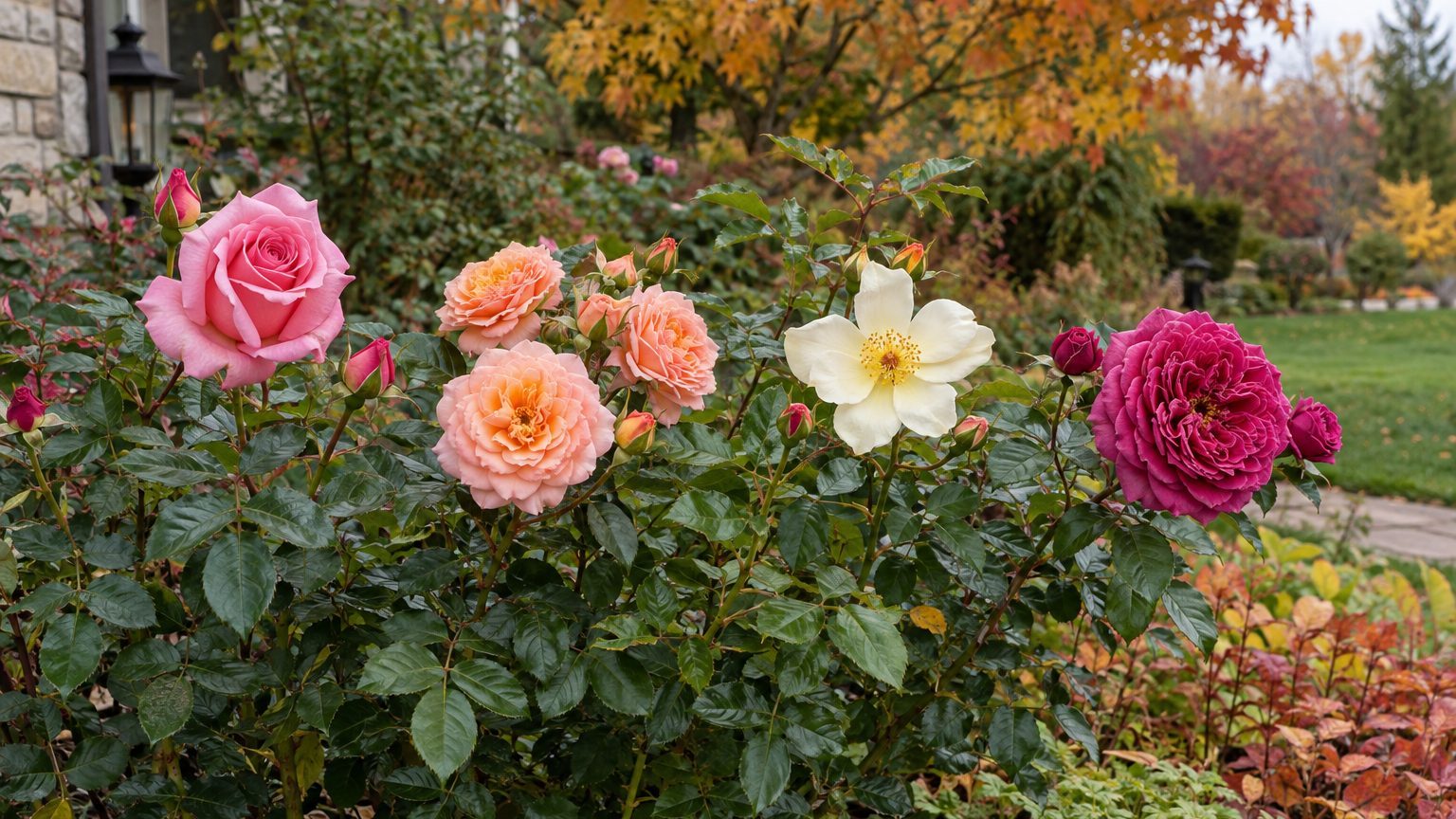
A rose can leaf out happily in spring and still lose its canes to a hard Massachusetts winter, so the type you pick matters more than the spot you pick it for. Hardy shrub roses, rugosas and old garden roses carry through with little help, while hybrid teas need protection in cold winters. Choosing by winter toughness first makes the rest of the garden easier.
Best Roses to Grow in Massachusetts

Hardy shrub roses, rugosas and old garden roses do well here because winter, more than summer heat or humidity, decides which roses last, and USDA hardiness zones run from 5a to 7b across the state. Tender types can still succeed, but they need a plan for the cold months.
Hardy Shrub Roses
Most shrub, landscape and species roses are reliably winter hardy and need no extensive preparation for winter. Knock Out and the Explorer series perform well without extra protection, which makes them a sensible start for a front yard or a foundation bed.
Rugosa Roses
Rosa rugosa is known for broad hardiness, which suits the colder inland yards well. Give it sun and elbow room, and the winter wrap can stay in the shed.
Old Garden Roses
Many old garden roses are extremely tolerant of cold temperatures. Many of them flower once a year on last year’s wood, so prune them right after they bloom, never in early spring.
Hybrid Teas and Floribundas
Hybrid teas, floribundas and grandifloras are not reliably winter hardy and must be protected. Mound the base and cover the canes in November, once several killing freezes have sent the plants dormant. December works too if the weather holds.
These repeat bloomers flower on new wood, so they are pruned in March or April, as the buds begin to swell. Cut less in fall and more heavily in spring.
Climbing Roses
Some climbing roses are not reliably winter hardy, so check the hardiness of a variety before you buy. A hardy climber trained on a trellis or arbor gives height without taking up bed space, while a tender one needs the same winter protection as a hybrid tea.
Massachusetts — the year and the numbers
- State
- Massachusetts
- USDA zones
- 5a-7b
- Last spring frost
- April 1 to April 8
- First fall frost
- November 3 to November 14
- Annual rain
- 44 in
- Lawn zone
- cool-season
- Source
- NOAA NCEI 1991-2020 Climate Normals, 32F freeze probabilities · Boston
How to Choose a Rose for a Massachusetts Garden
Start with how much winter work you are willing to do. The type of rose and its place in the garden decide how much protection it needs, so a sheltered corner can change the answer.
After that, think about what you want the rose to do: fill a border, cut for a vase, or climb a post.
| Your situation | What suits it in Massachusetts | Why |
|---|---|---|
| Very cold winter or exposed yard | Shrub roses, rugosas, old garden roses | These are reliably hardy and need little winter preparation |
| Little time for care | Knock Out or an Explorer series rose | They perform well without extra winter protection |
| Small space | A hardy miniature, or a climber on a trellis | Some miniatures are reliably hardy, and a climber grows up instead of out |
| Cut flowers for the house | Hybrid teas | Long stems and a single sweet-scented bloom, but they need winter protection |
Humid summers and dry spells differ from one yard to the next, so lean on what helps any rose: direct sun and loose, well-drained soil rich in organic matter.
Which Roses Suit Different Parts of Massachusetts
Winter severity shifts from the harbor to the hills, and that changes how adventurous you can be with tender roses.
- Boston and the harbor shore: Waterfront air is the mildest in the state, so hybrid teas and floribundas are easier to carry through here, as long as you still protect them in November.
- Inland suburbs: Frost comes sooner in fall and lingers longer in spring than on the waterfront, so lean toward shrub roses and rugosas and expect to cover tender roses earlier.
- The Berkshires: Colder winters make hardy shrub roses, rugosas and old garden roses safer choices, with tender types kept to a protected corner.
Wherever you live, pick the rose for your own yard’s winter, not the nearest city’s.
Rose Buying Mistakes to Avoid in Massachusetts
Buying Tender Roses Without a Winter Plan
A hybrid tea planted in spring and left bare in winter is a rose you buy again. Most types of garden roses need some protection here, and the amount depends on the type and where it sits in the garden.
If you want the look but not the work, choose a hardy shrub rose. If you buy a tender one, put on its protection in November after several killing freezes.
Planting in the Wrong Spot
Roses sulk in shade and in heavy, soggy soil. They want direct sun and good drainage, with loose soil rich in organic matter. Check the spot at midday before you dig, and loosen the bed with compost if the soil is dense.
Pruning Once-Bloomers in Early Spring
A spring cut on a once-blooming rose removes the wood that carries that year’s flowers. Check the tag or ask the seller whether a variety repeats. Repeat bloomers get the March or April cut, while once-bloomers wait until the last flowers fade.
Where to Get Rose Advice in Massachusetts
UMass Extension publishes garden guidance for the state and can tell you which roses hold up in your own neighborhood. Your county’s extension office is the nearest contact for local questions.
- The state extension site carries fact sheets on rose selection and care, handy before you shop in late winter.
- The county office can answer questions about a struggling plant, best brought in with a cane or leaf sample once growth starts in spring.
- Before you buy, check which hardiness zone your yard falls in and take that note to the nursery.
Common Questions
When Should You Plant Bare-Root Roses in Massachusetts?
Plant them in March or April, before growth starts. Roses in containers can go in later, and May, June and July all work for them.
When Should You Feed Roses in Massachusetts?
Feed from April through July: after pruning, at first bloom and again in mid-July. Skip feeding after mid-August so new growth is not soft going into winter.
When Should You Take Winter Protection Off Roses?
Take it off in March or April, once the ground has thawed. Remove the mound gradually, then prune out weak, dead or crossing canes.