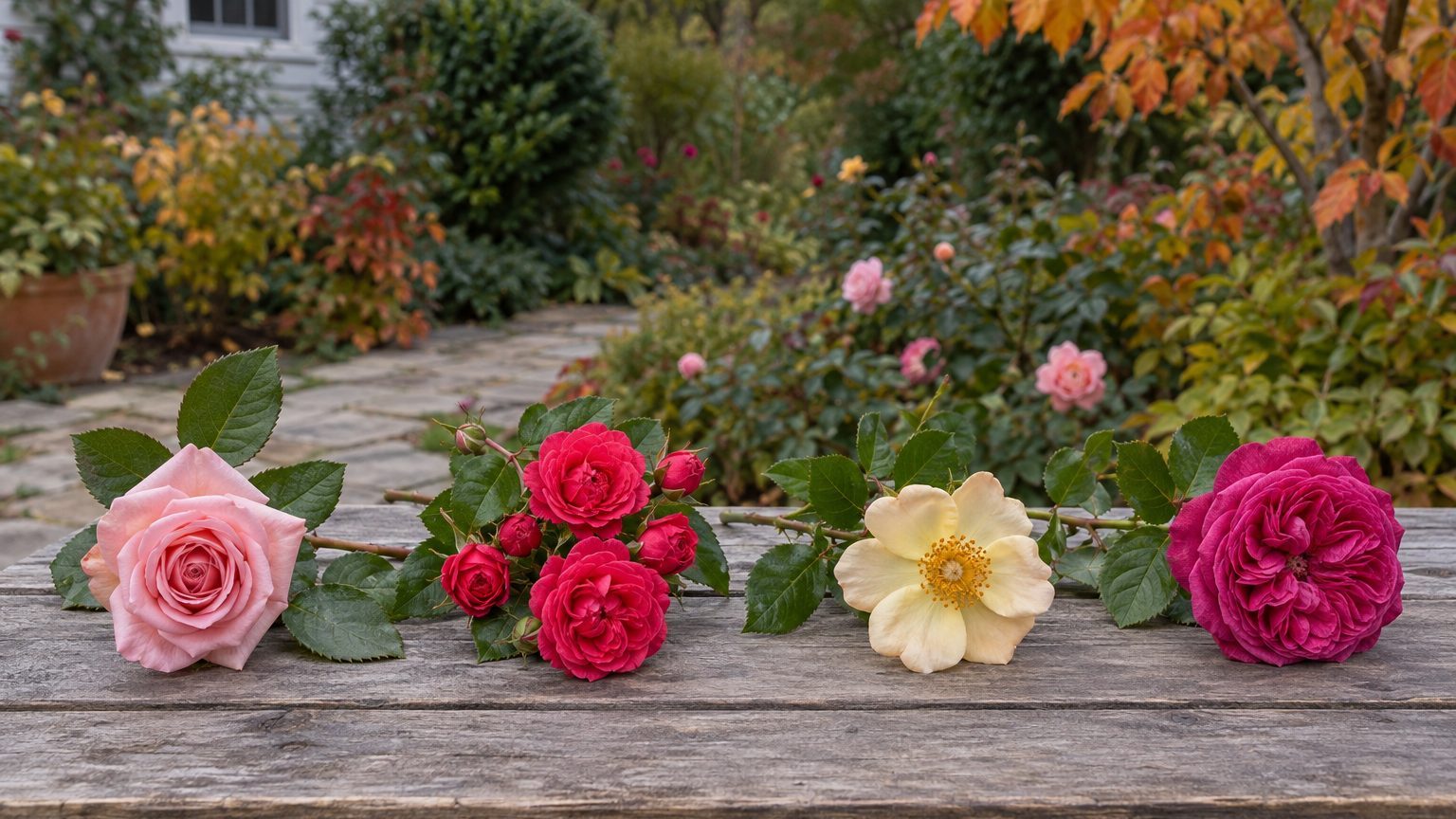
When the forsythia blooms along a Kentucky fence line, the rose canes are waking up too, and the roses that came through winter without dieback are the ones worth building a bed around. Hardy shrub roses, rugosas and old garden roses handle Kentucky’s cold winters, humid summers and hot spells with little fuss.
Best Roses to Grow in Kentucky

Roses bred for cold hardiness and disease resistance hold up here, because Kentucky gardens fall in USDA zones 6a to 7a, with cold winters, humid summers and hot spells. Tough shrub roses and old garden roses need less coddling, while fussy hybrid teas ask for more attention.
Explorer Roses
This group was bred for roses that are hardy, disease-resistant and repeat blooming. Many are hardy to zone 3A, so Kentucky winters are well within their comfort range and the canes rarely need wrapping.
Most are shrubs between 3 and 10 feet tall. ‘Louis Jolliet’ is a climber, and ‘Charles Albanel’ works as a groundcover. Give them full sun and fertile, moist, well-drained soil.
Rugosa Roses
Rugosa is a hardy, multi-stemmed, disease-resistant shrub rose, which suits humid summers when leaf spot would trouble other roses. It is also drought tolerant, so dry spells bother it less.
It tolerates poor soil in full sun and prefers moist, acidic to neutral, well-drained ground. Cultivars come in single, semi-double or double forms, some with fewer prickles.
Old Garden Roses
Many old garden roses are extremely tolerant of cold temperatures, which makes them dependable through a hard Kentucky winter. They also skip the heavy pruning that modern roses demand.
Hard cuts can ruin their graceful shape and sharply reduce flowering, so trim lightly to tidy them, and only right after they finish blooming.
Hybrid Teas
Hybrid teas are grown for large, fragrant, solitary blooms, and many gardeners find them worth the extra care. They are less hardy than shrub roses, though, and can take considerable damage in a cold winter.
Plant a few where you can watch them closely, and surround them with tougher roses.
Floribundas and Miniatures
Floribundas bear clusters of small flowers, while miniatures carry small blooms on dwarf plants. Repeat-blooming floribundas and miniatures get their main pruning in March.
Their size makes them good choices for borders, containers and tight front-yard beds.
Climbers and Ramblers
Climbers flower from new wood, while ramblers flower from old wood. That difference decides when each gets pruned, so label them when you plant.
Many climbers bloom once, so a trellis or fence rose should wait for its pruning until the flowers fade.
Kentucky — the year and the numbers
- State
- Kentucky
- USDA zones
- 6a-7a
- Last spring frost
- March 24 to April 4
- First fall frost
- November 2 to November 12
- Annual rain
- 48 in
- Lawn zone
- transition-season
- Source
- NOAA NCEI 1991-2020 Climate Normals, 32F freeze probabilities · Louisville
How to Choose a Rose for a Kentucky Garden
Match the rose to the problem your yard actually has. A windy corner, a damp bed and a busy schedule each point to a different type.
Bare-root roses go into the ground in March or April, and February also works when the soil is workable. Potted roses can go in later.
| Your situation | What suits it in Kentucky | Why |
|---|---|---|
| Very cold winter exposure | Explorer roses | Hardy to zone 3A, so little added protection is needed |
| Humid summer, leaf disease worries | Rugosa roses, Explorer roses | These roses are described as disease-resistant |
| Heat and dry spells | Rugosa roses | Drought tolerant and fine in poor soil in full sun |
| Little time for pruning | Old garden roses | They skip the hard annual pruning modern roses need |
| Small space | Miniature roses, floribundas | Dwarf plants with small flowers, or clusters of blooms |
Hybrid teas suit a gardener who enjoys the extra work, since they ask for a heavy spring pruning and a closer eye in winter.
Which Roses Suit Different Parts of Kentucky
Kentucky’s zones run from 6a to 7a, so the cooler corners lean toward hardier roses. Frost timing also shifts with where the garden sits.
- Louisville: city gardens run milder than the open countryside around them, so hybrid teas and floribundas have a fair chance with a little attention in winter.
- Rural Jefferson County: expect a tighter frost window than in the city, so lean on Explorer and rugosa roses and wait to plant until the soil is workable.
Gardens at the cooler end of the state should treat hardiness as the main filter when choosing, with flower color considered afterward.
Rose Buying Mistakes to Avoid in Kentucky
Buying a Rose Too Tender for Winter
Hybrid teas can suffer considerable damage in a hard winter, and a whole bed of them can come back thin. Where the garden is exposed, choose a rose bred for much colder zones, which needs little to no added protection here.
Ignoring Disease Resistance
Humid Kentucky summers favor leaf diseases, and a variety with no resistance will need constant attention. Shrub roses described as disease-resistant, like rugosas and the Explorer group, spare you that routine.
Pruning Once-Bloomers in Spring
Old garden roses, ramblers and many climbers flower once a year, on last year’s wood. Prune them right after they bloom, never in early spring, or the cuts remove the coming season’s flowers.
Where to Get Rose Advice in Kentucky
Local advice beats general advice when a rose struggles, because soil, drainage and exposure vary from yard to yard. Helpful sources are close at hand for a Kentucky gardener.
- University of Kentucky Extension offers rose and garden guidance that fits the state’s climate, and it is a good first stop before ordering plants in late winter.
- Your county extension office can look at photos or samples of cane damage or leaf spots, so contact it when the buds start to swell in March.
Common Questions
When Should You Prune Repeat-Blooming Roses in Kentucky?
March is the usual month for hybrid teas, floribundas and modern shrub roses, and it can also be done in February or April. Watch for forsythia in bloom and swelling buds as the signal.
When Should You Plant Bare-Root Roses in Kentucky?
March and April suit bare-root roses, and it can also be done in February. Potted roses can go in later than bare-root ones.
When Should You Feed Roses in Kentucky?
Feed from April through August, once the first leaves are out. It can also be done in March. Stop before the last stretch of summer so new growth can harden before winter.