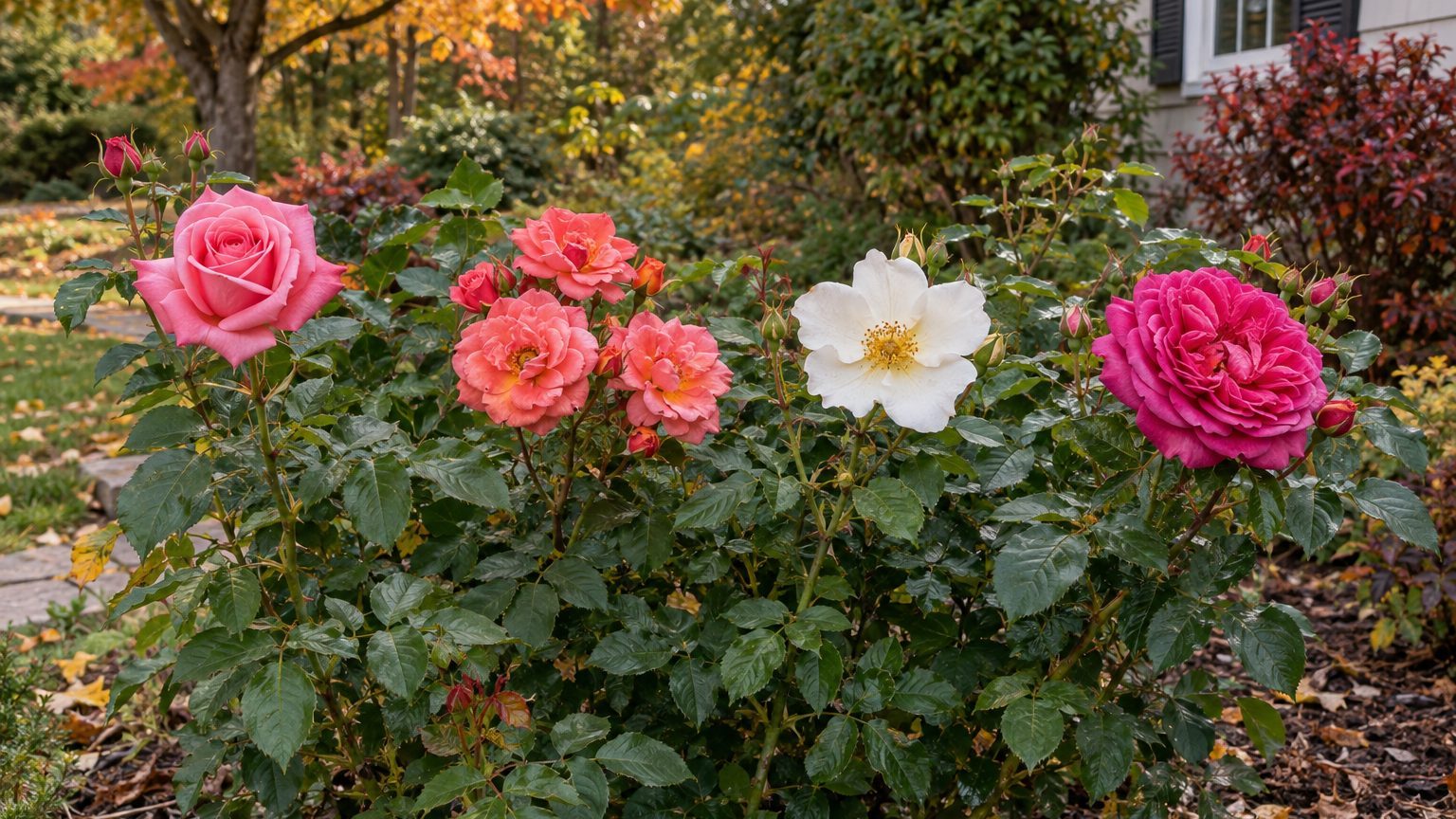
Come April, the winter mounds around the rose bushes come off and the pruners come out, and a Kansas bed shows quickly which roses came through the cold. Hardy shrub roses and old garden roses handle the state’s winters, summer heat and humid spells with little fuss, while floribundas need protection in cold winters. Hybrid teas can still earn a spot if you give them protection.
Best Roses to Grow in Kansas

Hardy Shrub Roses
Shrub roses such as Knock Out and the Explorer series perform well in Kansas without extra winter protection. That saves you the November mounding and the April unwrapping that other types demand. They are also a practical place to start if you have little time for roses.
They repeat bloom, so prune them in March or April, just as the buds begin to swell. Feed from April through July.
Floribundas
Floribundas are shorter and more compact than hybrid teas, with smaller canes and large clusters of flowers. Floribundas are described as hardy and lower-maintenance, but they still need protection in cold winters.
Their showy masses of color and compact growth make them useful in bed plantings, grouped in shrub borders, or as a low hedge along a walk.
Old Garden Roses
Many old garden roses are extremely tolerant of cold temperatures, and most are reliably winter hardy without extensive preparation. Many older shrub roses suit water-conserving landscapes, a useful trait during a dry Kansas summer.
Most flower once a year, on last year’s wood. Prune them right after they bloom, never in early spring, or you cut off the season’s flowers.
Polyantha Roses
Polyanthas are shrubby, low-growing roses with clusters of small flowers. They are usually quite hardy and bloom freely through the growing season, so they fill the gap in a border where taller roses would look out of scale.
Some polyanthas are reliably hardy, while others still need protection. Check the plant tag before you count on skipping the winter work.
Hybrid Teas
Hybrid teas are a widely grown type of rose in Kansas because of their large flowers, and most (but not all) carry some fragrance. They are not reliably winter hardy, so they need protection through the cold months.
They are also susceptible to aphids and black spot. Grow them if you love cut flowers and will do the extra work, and keep them where air moves freely around the canes.
Kansas — the year and the numbers
- State
- Kansas
- USDA zones
- 5b-7a
- Last spring frost
- April 4 to April 18
- First fall frost
- October 23 to November 2
- Annual rain
- 34 in
- Lawn zone
- transition-season
- Source
- NOAA NCEI 1991-2020 Climate Normals, 32F freeze probabilities · Wichita
How to Choose a Rose for a Kansas Garden
Start with how much time you want to spend, then match the rose to the weather your yard gives it. Hardiness matters, because a bush bred for colder climates needs little to no added protection in a milder garden. Kansas falls in USDA zones 5b to 7a, so check the zone for your own county.
| Your situation | What suits it in Kansas | Why |
|---|---|---|
| Very cold winters | Shrub roses, old garden roses | Most are reliably hardy and need little winter preparation |
| Humid summer | Hardy shrub roses over hybrid teas | Hybrid teas are susceptible to aphids and black spot |
| Heat and dry spells | Old garden and shrub roses | Many are well adapted to water-conserving landscapes |
| Little time | Floribundas, Knock Out, Explorer series | Floribundas need less routine care but still require winter protection in cold winters; hardy shrub types skip that work. |
| Small space | Floribundas, polyanthas | Compact, low-growing and useful as a hedge or in a border |
Climbing roses deserve careful scrutiny before you buy, since most are not reliably winter hardy and some need protection. Pick a variety labeled for cold hardiness, and expect to protect it.
Which Roses Suit Different Parts of Kansas
The state stretches a long way, and winter cold and summer moisture shift across it, so match your choice to your own county.
- Johnson County and the Kansas City area: Summers run humid here, so favor disease-tolerant shrub roses and give hybrid teas room for air to move around them.
- Western Kansas: Winters bite harder and summers run drier, so lean toward hardy shrub and old garden roses that cope with less water.
- Southern Kansas: The milder end of the state’s zone range gives hybrid teas a better chance, though they still need protection in cold winters.
A neighbor’s thriving bush offers a useful clue to what works on your street.
Rose Buying Mistakes to Avoid in Kansas
Choosing a Tender Type
Hybrid teas, grandifloras and floribundas are not reliably winter hardy in the colder parts of the Midwest, and many climbers share the problem. Buy one without a plan and you may lose canes to the cold.
Plan on winter protection in November, after several killing freezes, or choose a hardy shrub rose instead.
Ignoring Black Spot
A variety that is susceptible to black spot struggles through a humid summer, and the leaves drop early. Check the label for disease resistance before you buy.
Hardy shrub roses are the easier answer in a muggy yard, while hybrid teas need plenty of space and airflow.
Planting a Grafted Rose Without Protection
Grafted roses carry a tender top bud union, and a hard winter can kill the graft and leave only the rootstock. Keep the union protected with a mound over the crown.
Plant bare-root roses in March or April, before growth starts, and potted roses from April on. They can also go in during May, June or July.
Where to Get Rose Advice in Kansas
Local help is easy to reach. K-State Research and Extension publishes rose guides written for Kansas conditions, and your county office can answer questions about your own soil and street.
- Its rose publications cover variety choice and care through the year.
- Your county extension office can tell you what grows locally, so call in winter before you order.
Common Questions
When Should You Prune Roses in Kansas?
Repeat-blooming roses are pruned in March or April, once winter protection comes off. They can also be pruned in February. Once-blooming roses wait until after they flower.
When Should You Feed Roses in Kansas?
Feed from April through July, after pruning and at first bloom. Stop after mid-August so new growth can harden before winter.
When Do You Put Winter Protection on Roses?
Wait until November, after several killing freezes. It can also go on in December. Take it off in March or April, once the ground thaws.