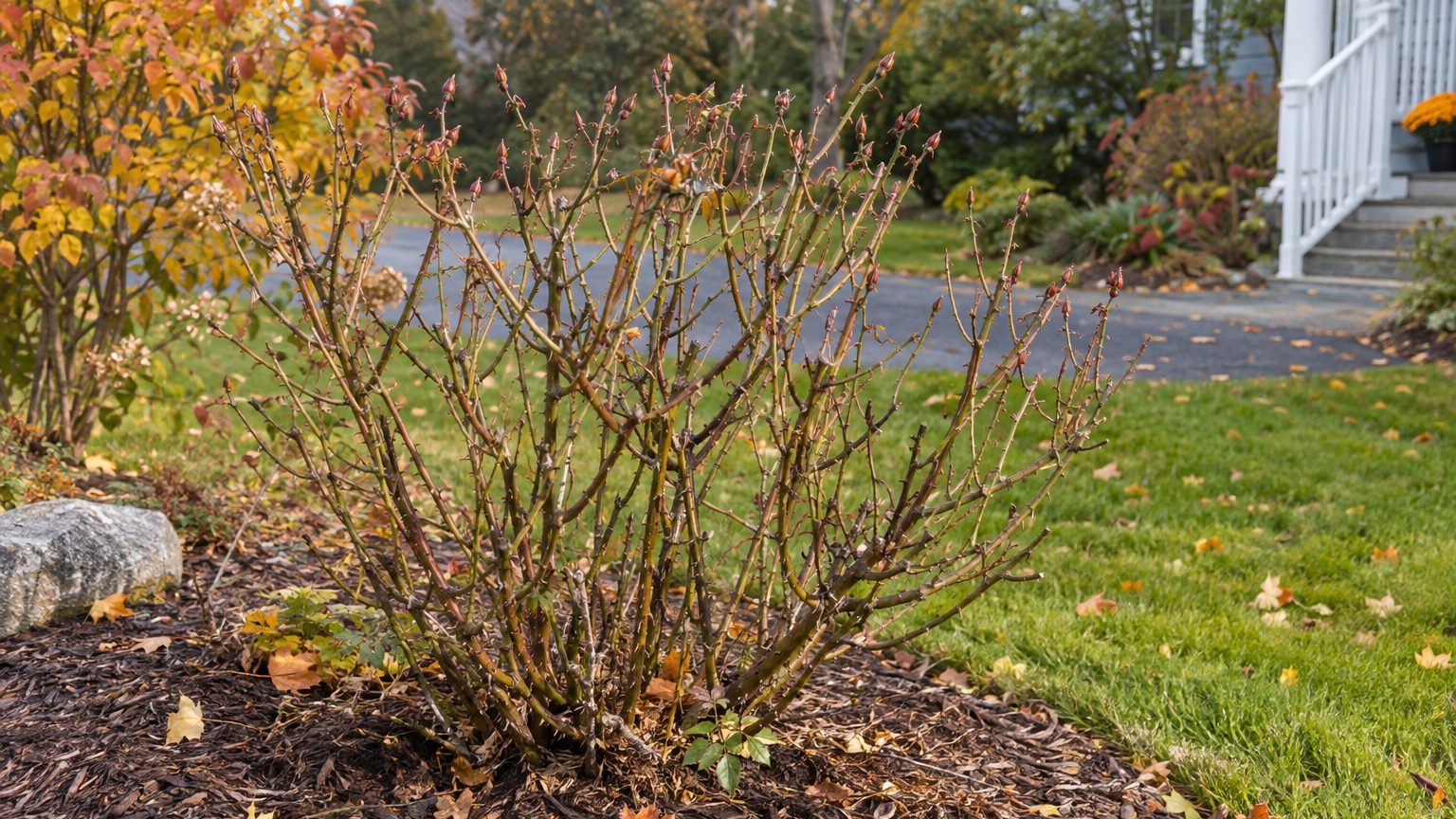
Rose canes that wintered under a mound of mulch look tired and brown by the time the garden thaws, and the urge to grab the pruners comes early. In Nova Scotia, the timing of that first cut depends on the kind of rose you grow. Most roses are cut in spring, but a few types are cut only after they flower.
When to Prune Roses in Nova Scotia

Prune repeat-blooming roses in April and May. It can also be done in March, as long as you wait for active growth, because late winter while the plant is still dormant is the outer limit. Nova Scotia has no local rose-timing guidance of its own, so these months follow northern New England, where the climate is comparable.
Confirm local timing with a garden centre, a rose society or a provincial gardening group, since a cold inland yard and a mild harbor lot do not wake up together.
| Type of rose | When to prune in Nova Scotia | Why |
|---|---|---|
| Hybrid teas, floribundas, modern shrub roses | April to May, or March if growth has started | They bloom on new wood, so a spring cut shapes the canes that will carry flowers. |
| Once-blooming roses (old garden roses, once-blooming climbers) | Right after they flower, never in spring | They flower on last year’s wood, so a spring cut removes the coming blooms. |
Repeat-blooming climbers are not covered by a separate month here, so treat them with the repeat-blooming roses and let the buds guide the cut. Whatever the type, a frost date such as the average last spring frost of May 7 at Halifax only marks frost risk. Half of all years bring frost after that day, so it never tells you when to cut.
Nova Scotia — the year and the numbers
- State
- Nova Scotia
- Hardiness zones
- 6b
- Last spring frost
- May 7
- First fall frost
- October 18
- Annual rain
- 55 in
- Lawn zone
- cool-season
- Source
- Environment and Climate Change Canada — Canadian Climate Normals 1981-2010, station HALIFAX STANFIELD INT'L A · Halifax
How to Tell When Your Roses Are Ready to Prune
Buds and shoots tell you more than the calendar on any given spring, and a few signs are easy to read from the path.
- Buds along the canes swell and turn reddish, which means the plant is waking and you can see which wood is alive.
- New shoots have appeared, a sign that active growth has begun and the rose is ready to prune.
- Hard freezes have passed, so a fresh cut will not leave tender new growth exposed to frost.
- The winter mound or mulch has come off, usually in May or as early as April, before new growth starts, and it reveals the canes you need to judge.
- Forsythia is in bloom nearby, a handy neighborhood cue that spring has settled in.
Cut back to healthy wood, which is green or white inside, and leave the dark, shriveled stems for removal.
Should You Prune Roses in Fall or Winter in Nova Scotia?
Mostly no. In fall, the only cut worth making is shortening very long stems so the wind does not whip them around, and nothing more than that. A severe cut then invites new growth that will not toughen before winter.
Protection goes on in November, late in the month and after hard frosts have killed the leaves. Hybrid teas, floribundas and grandifloras need that cover in cold winters, while hardy shrub roses such as Knock Out or the Explorer series do well without extra protection. The Explorer roses, named for Canadian explorers like Champlain and Cabot, are a sensible pick for colder yards.
Save the main pruning of repeat-blooming roses for spring, once the mound has come off in May or April and the buds show you what survived. Feeding follows the same rhythm: monthly from April, stopping in August so late growth is not pushed before winter.
How Rose Pruning Dates Shift Across Nova Scotia
The reference city for Nova Scotia is Halifax, which sits in Canadian hardiness zone 6b. That is a Canadian rating and does not convert to a USDA zone. Elsewhere in the province, conditions shift the timing in a few clear directions.
- Halifax and the Atlantic coast: Ocean air keeps spring cool and slow, so buds can lag behind inland yards, though winters stay milder. Judge by swelling buds rather than the date.
- Annapolis Valley: Sheltered inland yards tend to warm earlier in spring, so shoots may be ready sooner than on the coast.
- Cape Breton and northern districts: Colder, later springs run behind Halifax, so lean toward May and wait for the mound to come off.
The rule everywhere is the same: let the buds decide within the months given above.
Where to Get Rose Advice in Nova Scotia
Canada has no county extension office, so local help comes from the province, nearby gardeners and nurseries. Bring a cane or a photo and ask what has worked in your own neighborhood.
- The Nova Scotia Department of Agriculture offers provincial farm and horticulture information, worth checking before spring work begins.
- A local garden centre or rose society can tell you how buds are advancing in your district, so visit in April.
Common Questions
Can You Plant a Rose in Spring in Nova Scotia?
Yes. Bare-root roses go in during April and May, while potted roses can be planted later in the season.
When Should You Feed Roses in Nova Scotia?
Feed from April through July, with August as a last round if needed. Stopping then keeps late growth from being caught by winter.
When Should You Take Winter Protection Off Roses in Nova Scotia?
May is the usual month, and it can be done in April. Remove the mulch before new growth begins, so shoots are not smothered or bent.