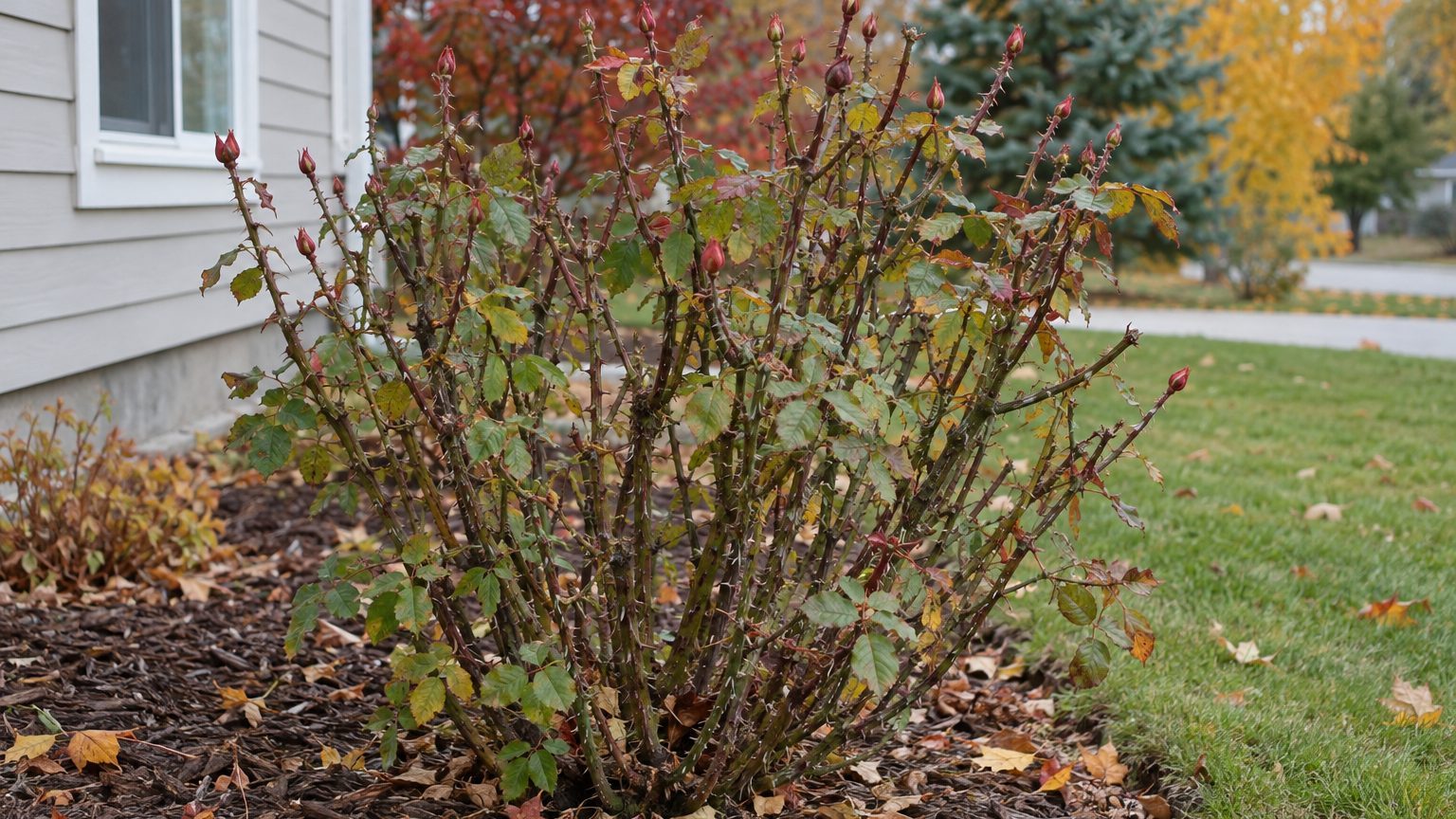
Bare canes in a northern rose bed look worse than they are. Once the snow pulls back, some stems turn out green inside and others have simply died back over winter. In the Northwest Territories, the spring cut waits for the roses to show you which is which.
When to Prune Roses in Northwest Territories

Prune repeat-blooming roses in May. The dates here follow the nearest comparable climate, so confirm local timing with a garden centre, a rose society or a territorial gardening group.
Snow cover lasts into spring, and pruning ahead of growth only leaves fresh cuts exposed to a late cold snap. Average last frost at Yellowknife falls on May 25, and in one year out of two it comes later.
| Type of rose | When to prune in Northwest Territories | Why |
|---|---|---|
| Repeat-blooming roses (hybrid teas, floribundas, modern shrub roses) | May, once growth is active | Snow cover lasts into spring, and shoots show you which canes survived |
| Once-blooming roses (old garden roses, ramblers, many climbers) | Right after they bloom, never in spring | They flower on last year’s wood, so a spring cut removes the coming blooms |
Repeat-blooming climbers have no month of their own here, so treat them by how they bloom: if they flower again after the first flush, give them the May cut, and if they flower once, wait until the flowers fade. Plan around hardiness too. Yellowknife sits in Canadian hardiness zone 1b, a rating that does not convert to a USDA zone, and tender roses such as hybrid teas and floribundas struggle to overwinter in gardens this cold. Rugosa roses and other hardy shrub roses make the safer bet, and they need far less cutting back after a hard winter.
Northwest Territories — the year and the numbers
- State
- Northwest Territories
- Hardiness zones
- 1b
- Last spring frost
- May 25
- First fall frost
- September 18
- Annual rain
- 11 in
- Lawn zone
- cool-season
- Source
- Environment and Climate Change Canada — Canadian Climate Normals 1981-2010, station YELLOWKNIFE A · Yellowknife
How to Tell When Your Roses Are Ready to Prune
Roses give their own signals, and in a short northern season those signals matter more than the date on the wall.
- The snow has melted off the bed, so the canes are visible and the soil around the crown is no longer frozen.
- Buds along the canes are swelling and turning from tight and dormant to plump, which tells you the plant is waking up.
- Small shoots are growing from those buds, and active growth is the cue to start cutting.
- Hard freezes have passed, because a cut made just before a cold night leaves tender tissue exposed.
- Any winter mound or cover has been taken off gradually, so you can see the base of the plant and judge each cane.
Cut back to green, healthy wood where the pith inside is pale, and leave brown canes until growth proves they are dead.
Should You Prune Roses in Fall or Winter in Northwest Territories?
Mostly no. In fall, the only job is shortening long, whippy stems that would catch the wind and rock the plant loose, and nothing beyond that. Hard pruning before spring growth opens the plant to dieback.
Winter protection does more for the plant than fall cutting. Hybrid teas, floribundas and grandifloras need cover in cold winters, while hardy shrub roses such as Knock Out or the Explorer series perform well without extra protection. Leave the full shaping for May, when the buds show where the live wood is.
How Rose Pruning Dates Shift Across Northwest Territories
The territory is large, and the timing slides with how far north your garden sits.
- Yellowknife: use May as a starting point, then wait until the buds swell before pruning.
- Inuvik and the Mackenzie Delta: farther north, spring arrives later, so wait for real growth before you cut, even if May has already started.
Gardens in the north run weeks behind the Yellowknife pattern, so let the roses set the pace.
Where to Get Rose Advice in Northwest Territories
The territory has no local extension page on rose timing. The agriculture team at Government of the Northwest Territories Agriculture is the official starting point for growing questions.
- Territorial agriculture staff can point you to guidance on cold-climate gardening, and spring is a good time to ask before you cut.
- A local garden centre can tell you which hardy roses have done well nearby, so ask before you buy in late spring.
- A rose society or territorial gardening group can confirm local pruning timing, and members are easiest to reach before the season starts.
Common Questions
When Can You Plant a Rose in the Northwest Territories?
Bare-root roses go in during June, and potted roses can be planted later than that. Soil needs to have thawed and warmed before the roots go in.
When Should You Fertilize Roses in the Northwest Territories?
Feed from May through July, then stop by August 1. Late feeding pushes soft new growth that has no time to harden before frost.
What Hardiness Zone Is Yellowknife for Roses?
Yellowknife is in Canadian hardiness zone 1b. That is a separate system from the USDA map and does not convert to a USDA zone, so choose roses sold as hardy for cold northern gardens.