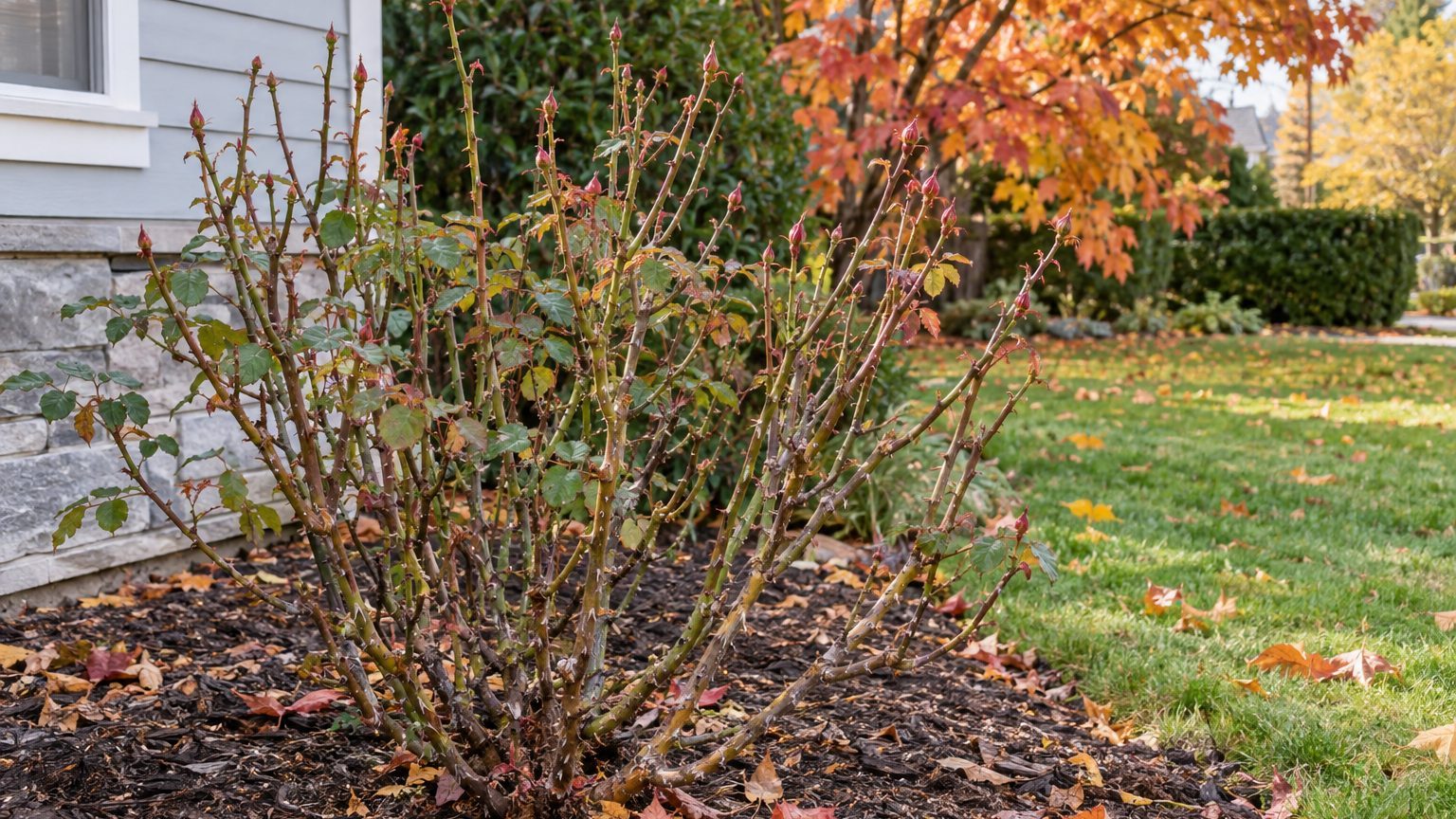
Rose canes look bare and a little stiff by late winter, and the urge to grab the pruners arrives well before the plants are ready. In British Columbia, the cut for repeat-blooming garden roses comes in late winter to early spring, and the timing depends on the type of rose. Once-blooming roses follow a different rule entirely.
When to Prune Roses in British Columbia

Prune repeat-blooming roses (hybrid teas, floribundas and modern shrub roses) in February and March. April works too, especially when the forsythia is in bloom. British Columbia has no local extension page on rose timing, so these dates follow the nearest comparable climate to the south. Confirm local timing with a garden centre, a rose society or a provincial gardening group.
| Type of rose | When to prune in British Columbia | Why |
|---|---|---|
| Hybrid teas, floribundas, modern shrub roses | February and March, with April as a later option when the forsythia blooms | They flower on new growth, so a spring cut sets up the season’s blooms |
| Old garden roses, ramblers, many climbers that bloom once | Right after they finish flowering, never in early spring | They flower on last year’s wood, and a spring cut removes the buds |
Climbers that repeat-bloom are not covered by a separate window here, so ask a local rose society how they handle yours. Pruning later also pushes back the first flush of flowers, which is a fair trade if a late cold snap is in the forecast.
British Columbia — the year and the numbers
- State
- British Columbia
- Hardiness zones
- 9a
- Last spring frost
- March 18
- First fall frost
- November 10
- Annual rain
- 47 in
- Lawn zone
- transition-season
- Source
- Environment and Climate Change Canada — Canadian Climate Normals 1981-2010, station VANCOUVER INT'L A · Vancouver
How to Tell When Your Roses Are Ready to Prune
Months give the range, and the plant gives the green light, so watch for these signs before the first cut.
- Buds along the canes swell and turn plump, which tells you the plant has woken up and you can see exactly where to cut.
- Forsythia comes into yellow bloom, a reliable cue that the rose pruning window has opened.
- In Vancouver, the last spring frost falls on average on March 18, but in one year out of two it arrives later, so treat that date as a midpoint and wait until hard frost has passed.
- Any winter mulch mounded over the base is pulled back once the weather warms, so you can see the crown and the lowest buds.
- Mild days become the norm rather than the exception, because pruning stimulates new growth and a cold night can nip it.
When the signs and the calendar disagree, let the buds decide when to prune.
Should You Prune Roses in Fall or Winter in British Columbia?
Not much, and not hard. In fall and winter, shorten only the long whippy stems that could catch the wind and rock the plant loose at the roots. Leave the real shaping of repeat-blooming roses for late winter and early spring, when the buds show where the live wood is.
A severe cut before the plant has settled invites new growth that cold weather can damage. The same goes for once-blooming roses, whose flowering wood you would be removing.
In colder parts of the province, the fall job is protection rather than pruning. Mound loose mulch over the base of tender roses in November or December, once the plant is dormant. Vancouver sits in zone 9a on the Canadian hardiness system, which is not the USDA scale, and mild coastal gardens often skip the mound.
How Rose Pruning Dates Shift Across British Columbia
British Columbia is not one climate, so the months above are a starting point that slides with where you garden.
- Vancouver and the Lower Mainland: the February and March window fits well, and gardeners here can start toward the early end once the buds swell.
- Vancouver Island and the Gulf Islands: the maritime air keeps winters gentle, so pruning follows the coast pattern, with buds swelling early and the cut coming in February or March.
- The Okanagan: winters are colder than on the coast, so lean toward March and April, and watch the forsythia and the buds before you cut.
- Northern BC, around Prince George: spring arrives well behind the coast, so wait until the buds swell and the hard frosts have passed, and mound mulch in November or December.
Moving inland or uphill pushes the pruning later, and the buds will tell you when.
Where to Get Rose Advice in British Columbia
Rose advice in British Columbia comes from the province and from local growers. The Government of British Columbia agriculture and seafood pages cover plant care and farming basics for the province.
- A local garden centre can tell you in late winter when roses in your town are breaking bud, and what bare-root stock is arriving.
- A local rose society or master gardener group can show you how to cut a cane, ideally in a pruning demonstration held in late winter.
- Bring a photo of your rose, the type if you know it, and ask whether it blooms once or repeats, then mark the pruning month on the calendar.
Common Questions
Can You Plant Bare-Root Roses in British Columbia?
Yes, February and March suit them, with the plant going in while still dormant so roots can establish before growth begins. Potted roses are more flexible and can go in later, up until early summer, before the heat of midsummer arrives.
When Should You Feed Roses After Pruning?
Feed from bud break in March through July. Repeat the feeding every four to six weeks during the growing season. Stop in late summer, since the plant is heading toward dormancy and soft new growth would be at risk.
What Happens If You Prune Roses Too Early?
Early cuts wake the plant up, and the soft new shoots can be damaged by a late cold spell, leaving you to cut back again. A rose pruned early in a frosty year can also bloom later than one left until the buds swell.