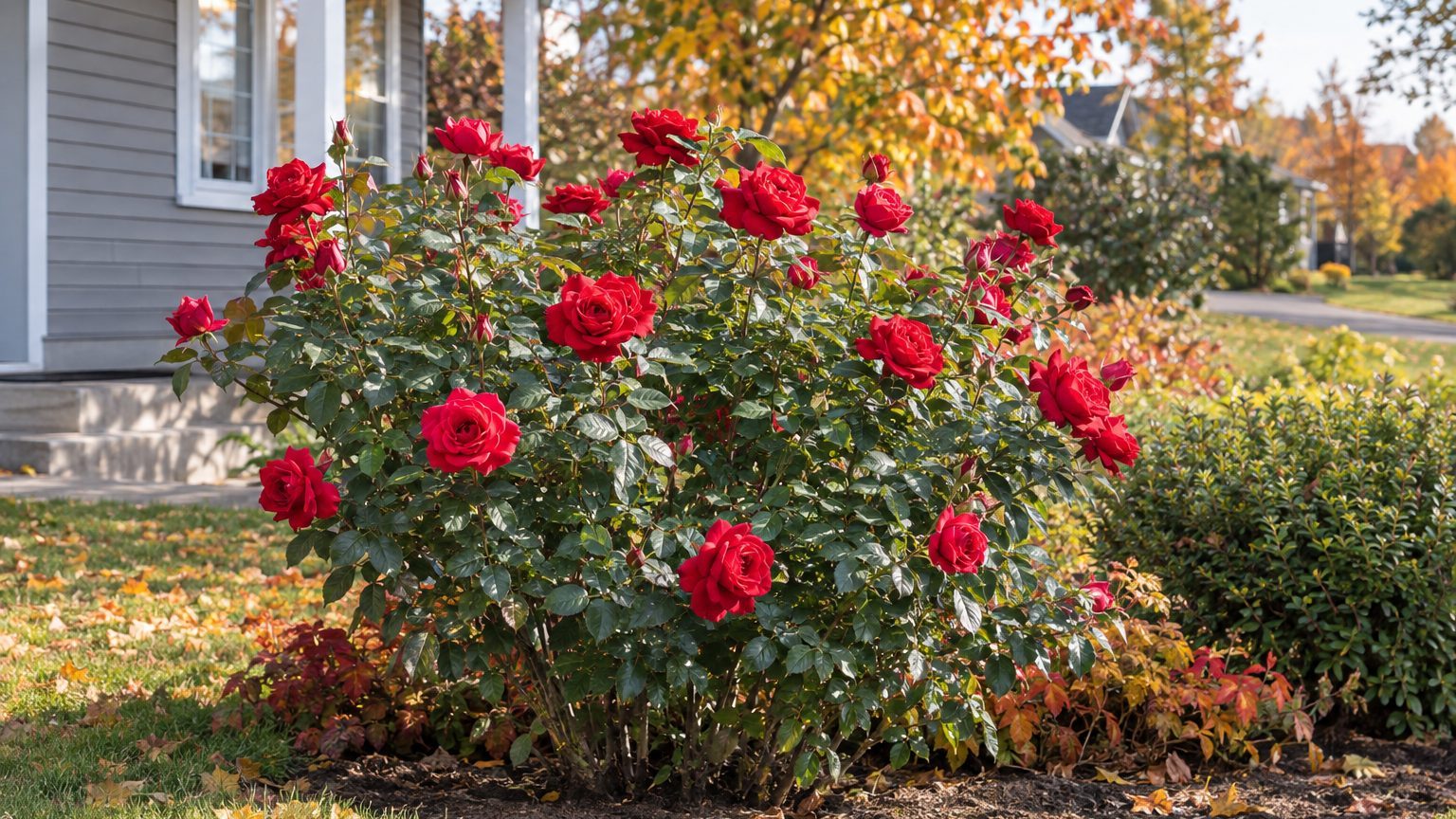
Snow still lies on the ground in the early part of the season across Nunavut, and a rose bush waits well behind the calendar of any southern yard. Roses in Nunavut are a short-season project: a hardy shrub rose planted in early summer, fed through the bright months, and tucked in before the cold returns.
When to Plant Roses in Nunavut

Bare-root roses go in first, in June, while they are still dormant and the soil has thawed enough to dig. Potted roses can follow later, since they arrive with leaves and roots already awake. Nunavut has no local page on rose timing, so these dates follow the nearest comparable climate; confirm local timing with a garden centre, a rose society or a territorial gardening group.
At Rankin Inlet, the last spring frost falls on average around June 19, which means half of all years bring frost later than that. Treat it as the middle of a window, never as a safe date. The first fall frost arrives on average around September 13, but the date is only the midpoint of a window. Rankin Inlet sits in Canadian hardiness zone 0a, a system that does not convert to a USDA zone, so local conditions elsewhere in Nunavut need to be checked.
- In late winter and early spring, snow cover holds the ground and the bushes stay dormant, so there is nothing to plant and nothing to prune yet.
- In May, prune repeat-blooming roses once active growth and new shoots appear. Feeding starts in the same month.
- In June, bare-root roses go into the ground, and potted roses can be planted a little later once the frost risk has eased.
- From June through July, feeding continues while the plant puts on growth and flowers.
- By August 1, feeding stops so the canes can harden before the first fall frost.
A bare-root rose planted dormant in June gets the whole short summer to root, which is why it beats waiting for warmer weather that may never come.
Nunavut — the year and the numbers
- State
- Nunavut
- Hardiness zones
- 0a
- Last spring frost
- June 19
- First fall frost
- September 13
- Annual rain
- 12 in
- Lawn zone
- cool-season
- Source
- Environment and Climate Change Canada — Canadian Climate Normals 1981-2010, station RANKIN INLET A · Rankin Inlet
Which Roses Grow Best in Nunavut?
Hardy shrub roses are the safe bet. Hybrid teas, grandifloras, floribundas and miniature roses are tender choices for Nunavut, so ask local growers whether they can overwinter in your community. Rugosa roses are a hardier option, but ask local growers which varieties survive in your community.
Summers are short and cool, so a rose that needs a long season to build wood has little chance. A tough, hardy type does better than a fussy one.
| Rose type | How it does in Nunavut | Why |
|---|---|---|
| Rugosa | A hardy choice to investigate locally | Check local winter survival before planting |
| Hybrid tea | Unreliable | Tender roses do not reliably overwinter |
| Floribunda | Unreliable | Tender, needs winter protection in cold winters |
| Grandiflora | Unreliable | Tender, needs winter protection in cold winters |
| Miniature | Unreliable | Tender roses do not reliably overwinter |
Hardy shrub roses such as the Explorer series perform well without extra protection in cold climates. Once-blooming roses, including old garden roses, ramblers and many climbers, flower on last year’s wood, so they are pruned right after they bloom and never in early spring.
When to Prune, Feed and Protect Roses in Nunavut
The year’s work is compact. Pruning waits for active growth, because snow cover lasts into spring and new shoots reveal which canes survived.
Feeding runs through the bright months and ends early enough for the canes to firm up. Tender types need winter protection in cold winters, while hardy shrub roses usually do without it.
| Task | Best months in Nunavut | Why then |
|---|---|---|
| Pruning repeat-blooming roses | May | Wait until new shoots appear and growth is active |
| Planting bare-root roses | June | Dormant plants settle in as the soil thaws |
| Feeding | May, June, July | Supports growth, and stopping by August 1 lets canes harden before frost |
Repeat-blooming types include hybrid teas, floribundas and modern shrub roses. The page on when to prune roses covers the cuts in more detail.
How Rose Care Dates Change Across Nunavut
Nunavut spans a huge stretch of Arctic coast and islands, and the season shifts with it. The dates lean on a single reference city, so expect differences elsewhere.
- Rankin Inlet: On the Kivalliq coast of Hudson Bay, this is the reference point for the frost dates above, and a rose here follows them as given.
- Iqaluit: Local conditions on Baffin Island may differ from Rankin Inlet, so confirm planting and feeding timing with local gardeners.
- Cambridge Bay: Local frost timing may differ from Rankin Inlet, so confirm the planting window in your community.
A sheltered, sunny spot against a south-facing wall can gain a little ground on any of these.
Where to Get Rose Advice in Nunavut
Nunavut has no county extension office, so advice comes from a few other places. Agriculture and Agri-Food Canada offers federal gardening and soil information for northern growers.
- A local garden centre or greenhouse group can tell you which hardy roses survived recent winters in your community, so ask before buying.
- A rose society or territorial gardening group can help with diagnosing problems and with sourcing bare-root plants for June planting.
Common Questions
Can You Plant a Rose in July?
Only June is supported here for bare-root planting; ask a local garden centre to confirm when a potted rose can go in. A late planting still has less time to settle before fall, so water it regularly and ask a local garden centre about winter protection.
Do Roses Need Winter Protection in Nunavut?
Tender roses do, and they may still fail to overwinter. Hardy shrub roses such as the Explorer series usually manage without extra cover, which makes them the safer choice.
Why Is My Rose Pruned Back but Not Leafing Out?
Look at the canes: green inside and plump buds mean the plant is alive and just slow, while brown and brittle wood points to winter dieback. Wait until active growth and new shoots appear before cutting further.