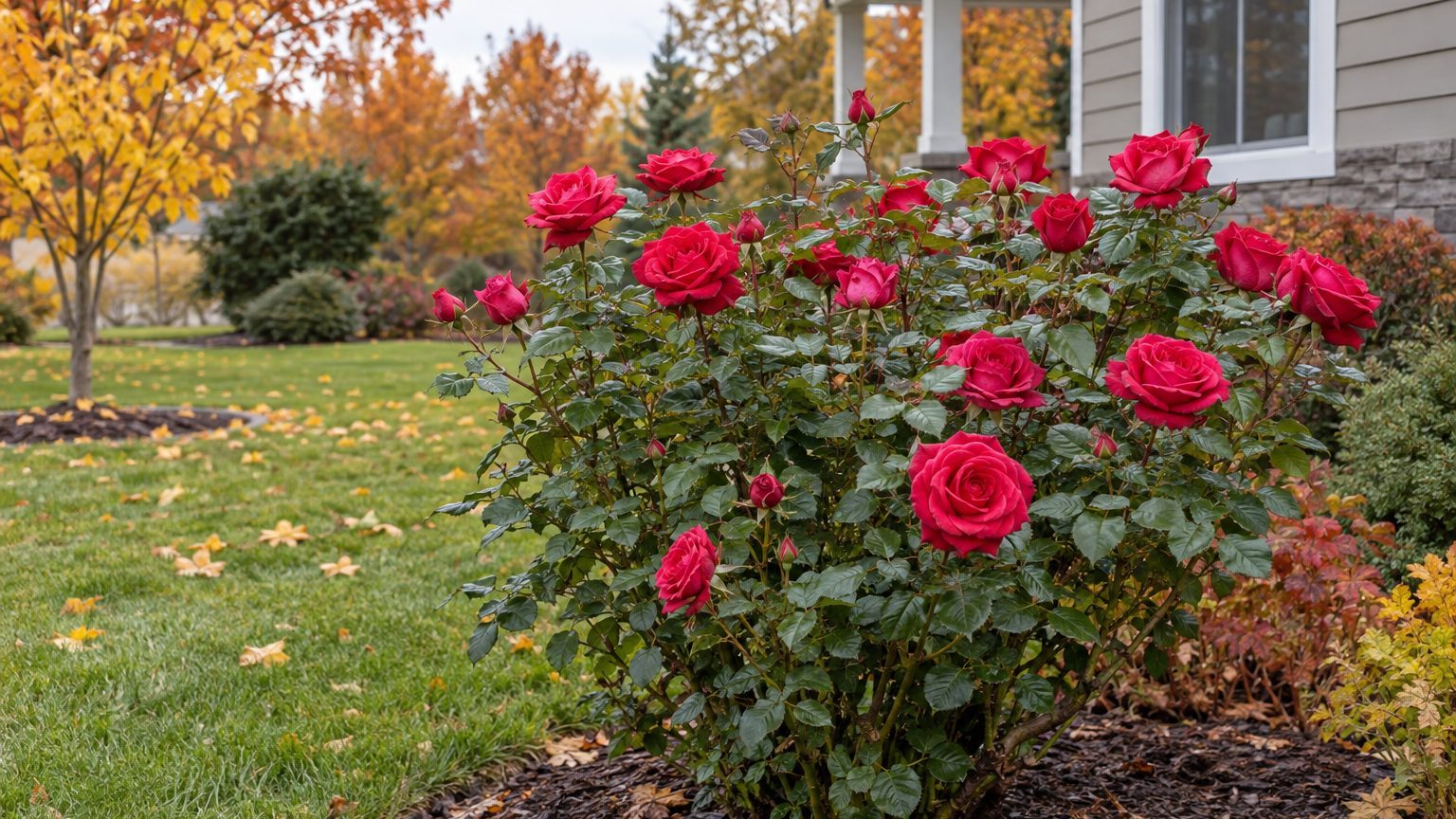
Snow still covers the beds when southern gardeners are already pruning, and that late thaw sets the pace for every rose in the territory. Bare-root roses go in during June, repeat-blooming roses are pruned in May, and feeding runs from May through July. Only certain kinds of roses handle the winters, so the choice of variety matters as much as the date.
When to Plant Roses in Northwest Territories

Bare-root roses go in first, in June, while they are still dormant, and potted roses can follow later once the soil has settled and warmed.
- In winter and early spring, roses sit dormant under snow, and that cover lasts well into spring, so pruning and planting wait for the thaw rather than the calendar.
- In May, repeat-blooming roses are pruned once growth is clearly active. In Yellowknife, the last spring frost averages May 25, and half of all years bring frost later than that, so a tender young shoot is never safe yet.
- In June, bare-root roses are planted dormant, which suits a young plant that cannot take a late frost. Potted roses can go in after them.
- From May through July, roses are fed, and the feeding stops by August 1 so new growth is not pushed right before the cold.
- In September, the first fall frost in Yellowknife averages September 18, but it arrives later in half of all years. Plants then harden off and head into dormancy.
Yellowknife sits in Canadian hardiness zone 1b (a Canadian system that does not convert to a USDA zone), and gardens farther north tend to run later.
Northwest Territories — the year and the numbers
- State
- Northwest Territories
- Hardiness zones
- 1b
- Last spring frost
- May 25
- First fall frost
- September 18
- Annual rain
- 11 in
- Lawn zone
- cool-season
- Source
- Environment and Climate Change Canada — Canadian Climate Normals 1981-2010, station YELLOWKNIFE A · Yellowknife
Which Roses Grow Best in Northwest Territories?
Hardy roses do best here, and the Rugosa rose is the dependable choice because it is hardy in most northern locations. Winter is the limit rather than summer heat or humidity.
Tender types, the ones bred for milder gardens, do not reliably overwinter this far north, so they are a gamble in the ground.
| Rose type | How it does in Northwest Territories | Why |
|---|---|---|
| Rugosa roses | Hardy in most locations | They are tough enough for long, cold winters |
| Hardy shrub roses such as the Explorer series | Perform well without extra protection | They are bred to tolerate cold winters |
| Hybrid teas | Do not reliably overwinter | They are tender and need winter protection in cold winters |
| Floribundas and grandifloras | Do not reliably overwinter | They are tender types, like hybrid teas |
| Miniature roses | Do not reliably overwinter | They are tender types, so a mild spot matters |
Start with a Rugosa or a hardy shrub rose if you want roses that come back each year without fuss. Treat a hybrid tea as a special project, something you protect carefully and accept may not survive, rather than the backbone of the bed.
When to Prune, Feed and Protect Roses in Northwest Territories
Roses here follow a short, compressed year. Pruning waits for May, planting happens in June, and feeding fills the summer months.
Each task depends on the plant waking up, not on a date on the wall.
| Task | Best months in Northwest Territories | Why then |
|---|---|---|
| Pruning repeat-blooming roses (hybrid teas, floribundas, modern shrub roses) | May | Snow cover lasts into spring, so wait for active growth before cutting |
| Planting bare-root roses | June | The ground has thawed and the plant goes in dormant, with potted roses able to go in later |
| Feeding roses | May, June, July | Feeding supports growth in the short season and stops by August 1 before the cold |
Winter protection is the job after all of these. Tender types need it most, and hardy shrub roses need much less. The page on when to prune roses in Northwest Territories goes deeper on cutting techniques and deadwood.
How Rose Care Dates Change Across Northwest Territories
The territory is large, and the dates lean toward the south. Gardens farther north start later and finish sooner.
- Yellowknife: this is the place the frost dates and the rose calendar describe best, so treat its dates as the middle of a window rather than a firm line.
- Inuvik and the Mackenzie Delta: northern gardens like these run later than Yellowknife, so pruning, planting and the first feeding all slide back, and the season closes sooner.
A sheltered corner against a wall or fence can add a little warmth anywhere in the territory, which helps a young rose settle in.
Where to Get Rose Advice in Northwest Territories
Local rose timing is not published for the territory, so these dates follow the nearest comparable climate. Confirm them close to home with a local garden centre, a rose society or the provincial or territorial gardening groups.
- The Government of the Northwest Territories agriculture services can answer questions about what grows in the territory, so ask before buying roses.
- A local garden centre or rose society can tell you which hardy roses have come through recent winters in your town, and a master gardener group can help diagnose problems.
Common Questions
What Does Canadian Zone 1b Mean for Roses?
It means very cold winters, and the Canadian system is built on several climate factors rather than winter low alone, so it does not match a USDA zone. Pick roses sold as very hardy and check them against local experience.
Can You Prune a Once-Blooming Rose in Spring?
Not for flowers. Once-blooming roses (old garden roses, ramblers and many climbers) flower on last year’s wood, so prune them right after they bloom. Spring cutting removes the buds.
Do Roses Need Winter Protection?
Hybrid teas, floribundas and grandifloras need protection in cold winters. Hardy shrub roses such as Knock Out or the Explorer series perform well without extra protection.