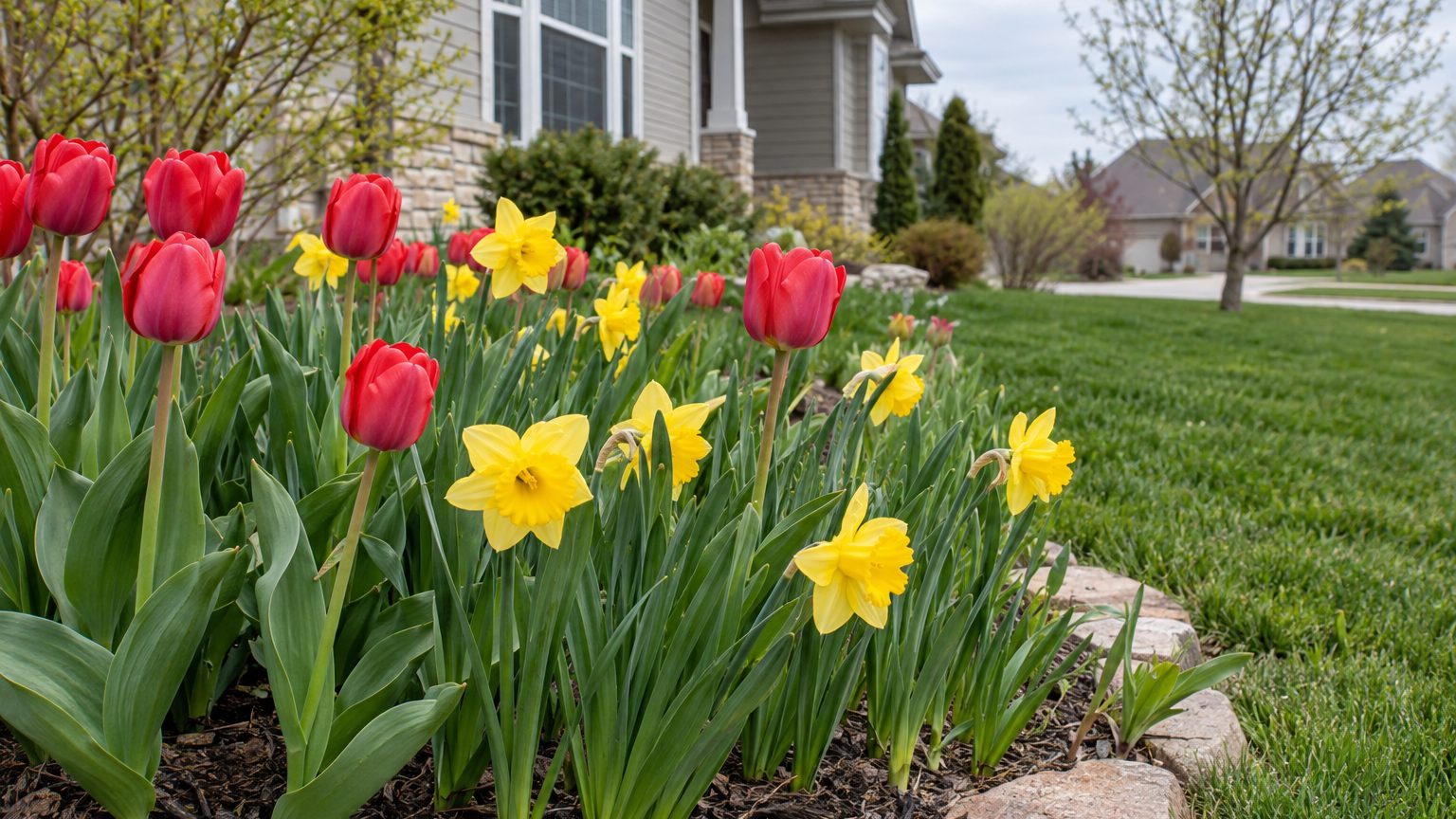
Tulip and daffodil bulbs go into North Dakota soil while the garden is winding down, after the first cool nights and well before the ground turns to stone. The bulbs spend winter doing their root work in the dark, and the payoff comes in spring.
When to Plant Tulips and Daffodils in North Dakota

Plant tulips and daffodils from mid-September through mid-October, which gives the roots time to settle before the ground freezes. A bulb’s year here runs like this:
- In late summer, buy bulbs while the selection is full, and pick ones that feel firm and heavy for their size, with no soft spots or mold.
- Through the early autumn weeks, skip any chilling step, because a North Dakota winter delivers all the cold the bulbs need on its own.
- In September and October, plant once the soil has cooled below about 60°F, which keeps the bulbs from sprouting too soon while still leaving four to six weeks for roots to form before the ground freezes.
- After planting, water the bed once, then lay a loose blanket of shredded leaves or straw once the soil surface begins to freeze, so the ground stays evenly cold through winter thaws.
- In early spring, the first green tips push through the mulch, and peak tulip bloom follows from late April to mid-May.
Fall frost at the Fargo airport typically arrives September 25 to October 5, and the state spans USDA hardiness zones 3a to 4b. Gardens in the suburbs and out in the country usually freeze sooner than the airport does, so check your own county before you set a planting date.
North Dakota — the year and the numbers
- State
- North Dakota
- USDA zones
- 3a-4b
- Last spring frost
- May 4 to May 15
- First fall frost
- September 25 to October 5
- Annual rain
- 24 in
- Lawn zone
- cool-season
- Source
- NOAA NCEI U.S. Climate Normals 1991-2020, 32F freeze probabilities · Fargo
Which Spring Bulbs Do Best in North Dakota?
Daffodils and alliums are the dependable choices here, since they come back for years and wildlife leaves them alone. Tulips are lovely but often short-lived, and crocus and hyacinths suit a garden where squirrels and deer are not a daily presence.
Winter cold is not the obstacle in North Dakota. The real limits are heavy clay soil that stays wet and the animals that treat some bulbs as a snack.
| Bulb type | How it does in North Dakota | Why |
|---|---|---|
| Daffodils | Reliable for years | They live longer in clay soils than tulips, and animals leave them alone |
| Alliums | Easy and forgiving | They need a cold winter to bloom and can go in a few weeks before a hard frost |
| Species tulips | Often the better tulip choice | The shorter types with smaller flowers cope with clay better than big hybrids |
| Hybrid tulips | Short-lived, often a few seasons | Years of hybridizing weakened their return, and wet clay shortens it further |
Crocus and hyacinths can be grown here too, though voles, squirrels, rabbits and deer eat crocus along with tulips, so they do best where those animals are scarce or where you can protect them. If you love big hybrid tulips, treat them as a seasonal splurge and replant when they fade.
When to Plant, Chill and Care for Spring Bulbs in North Dakota
Three jobs shape the year: planting in autumn, letting winter do the chilling, and leaving the foliage alone after the flowers fade. Each has a clear signal, so you can read your own yard instead of the calendar.
| Task | Best timing in North Dakota | Why then |
|---|---|---|
| Plant | September to October, once soil is below about 60°F | Roots form before the freeze, and the bulbs stay put instead of sprouting in fall |
| Chill | No refrigerator step needed | Most spring bulbs want about 12 to 16 weeks of cold, and winters here supply it |
| Mulch | When the soil surface starts to freeze | A cover keeps the bed evenly cold through winter thaws |
| Leave the foliage | After bloom in April to May, until the leaves turn brown | The leaves feed the bulb for next year’s flowers |
After bloom, remove only the faded flowers and let the leaves wither on their own. If a bag of bulbs is still unplanted when the first hard frosts arrive, plant them anyway, because they do better in the ground than in storage, and the job can wait as long as the soil can be dug.
How Bulb Planting Time Changes Across North Dakota
North Dakota is wide, and fall arrives on different schedules from the Minnesota border to the Montana line, so aim for the front or back of the planting window depending on where you garden.
- Red River Valley: Fargo, Grand Forks and the flat farmland around them cool down at a steadier pace, so the middle and later part of the window usually suits, as long as the soil is under 60°F.
- Turtle Mountains and the northern tier: Devils Lake, Rugby and the country up toward the Canadian border get cold nights sooner, so plant toward the early part of the window and mulch promptly.
- Badlands and the southwest: Dickinson and Medora sit higher and drier, with colder nights earlier in autumn, so favor September planting and watch the soil closely.
Wherever you live, a cheap soil thermometer pushed a few inches into the bed tells you more than any date on a calendar.
Where to Get Bulb Advice in North Dakota
When a bed disappoints, local experts can help sort out soil, drainage and variety. North Dakota gardeners have solid public resources for exactly that kind of question.
- North Dakota State University Extension publishes planting guidance for the state, so check it before you buy bulbs in late summer.
- Your county extension office can run a soil test and look at a struggling bed, so visit before you dig if you have heavy clay or a drainage problem.
- A local master gardener group can point out which bulbs hold up in your neighborhood, so ask them when you plan next year’s tulip and daffodil beds.
Common Questions
Should You Water Bulbs After Planting?
Give the bed one good soak right after planting so the soil settles around the bulbs and roots can start growing. After that, autumn rain and snowmelt usually do the rest, and extra water on top of bulbs mostly invites rot.
Which Way Up Does a Tulip or Daffodil Bulb Go?
Set the pointed end up and the flat, rough end down, where the roots will form. Larger bulbs like daffodils go deeper than small ones, and if you cannot tell the top from the bottom, a bulb planted on its side will usually still find its way up.
Can Bulbs Grow in Soil That Stays Wet?
Bulbs sulk in wet, heavy clay, and hybrid tulips suffer most. Work compost into the planting area or choose a spot that drains well, and avoid planting right beside annuals that need frequent watering, since that extra moisture can rot the bulbs below.