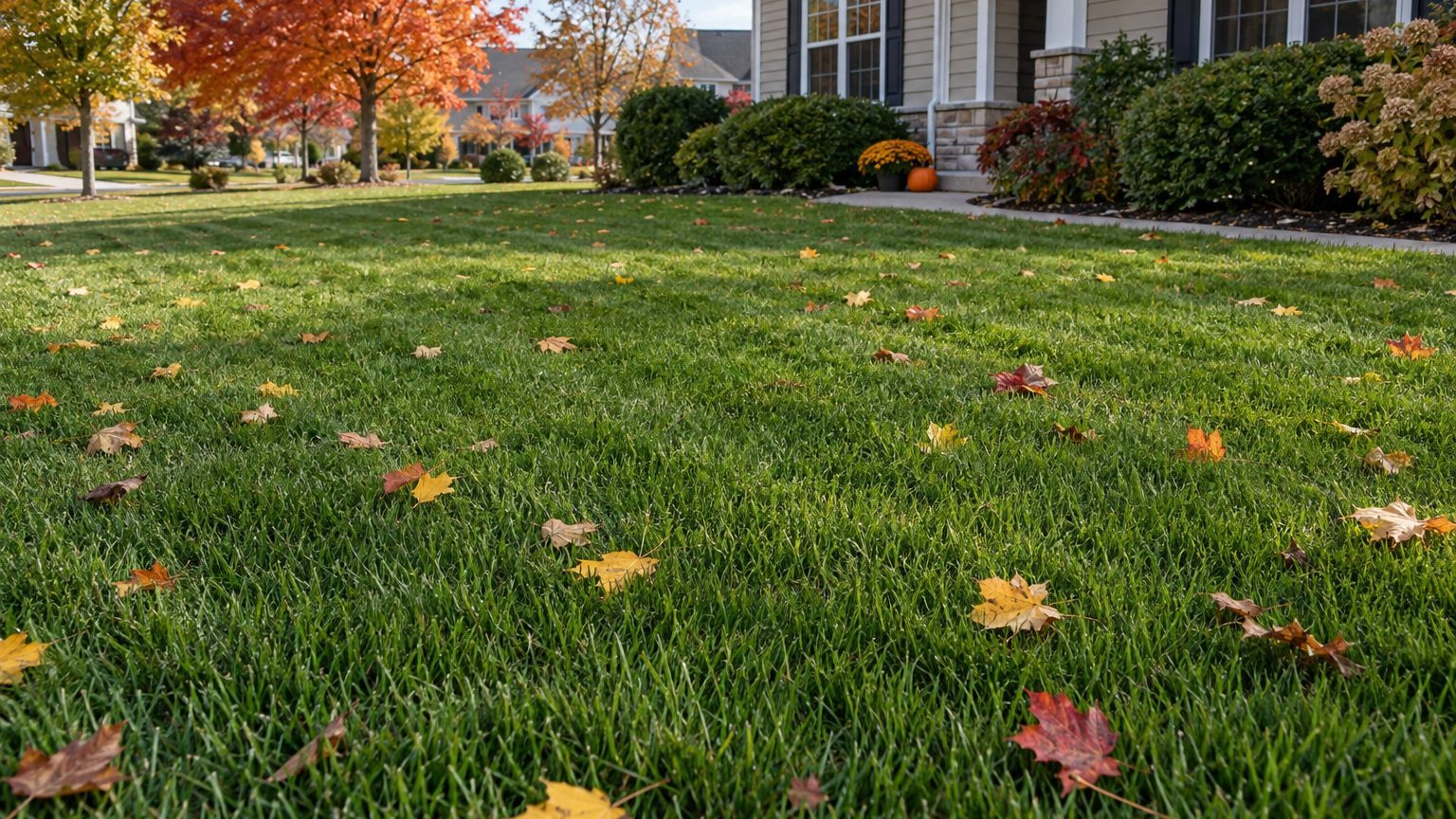
A Wisconsin lawn spends winter dormant under snow and the growing season racing to recover, so good timing matters. Cool-season grass puts on its best growth in the soft weather of late summer and early fall, which is when the heavy work belongs.
What to Do Each Month in a Wisconsin Lawn

Most of the big jobs cluster between August and October, with a lighter round of chores in spring. Winter is for leaving the grass alone, apart from dormant seeding.
| Month | In the lawn |
|---|---|
| January | Rest. The grass is dormant. If November got away from you, dormant seeding on cold soil still works now. |
| February | Rest. Dormant seed can still go down on frozen ground and wait for spring to sprout. |
| March | Rest, with a watch on the thaw. Dormant seeding still works in March, and soggy turf is best left unwalked. |
| April | Put down crabgrass preventer before the weed seeds sprout. Mowing can also begin now, once the grass is actually growing. |
| May | Preventer still works this month, and mowing and watering begin in earnest. Sod goes down well now, and seeding, core aeration, a light feeding and broadleaf weed control all work too, if spring got busy. |
| June | Mow, water and lay sod while the soil is warm and moist. Broadleaf weeds can still be treated now. |
| July | Mow high and water through the heat. Sod will take now, but the stress of summer makes it a harder job. |
| August | The season turns. Core aerate, dethatch, seed and lay sod now. Early August also works for feeding, since it counts as late summer, not midsummer. |
| September | The busiest month on the calendar. Aerate, dethatch, seed, fertilize, lay sod and treat broadleaf weeds while the soil is warm and the nights are cool. |
| October | Aerate, fertilize, lay sod and treat broadleaf weeds. If you missed September, these jobs still pay off. Keep mowing until growth stops. |
| November | Seed on cold soil so it sprouts in spring. A last mowing also works early in the month. |
| December | Rest. The grass is dormant, though dormant seeding still works if you have not done it yet. |
Wisconsin law bars lawn fertilizer on frozen ground, and phosphorus fertilizer is allowed only on a new lawn or where a soil test shows a shortage. Both rules shape the fall feeding, so check your soil before reaching for a bag.
Wisconsin — the year and the numbers
- State
- Wisconsin
- USDA zones
- 3b-6a
- Last spring frost
- April 16 to April 29
- First fall frost
- October 17 to October 29
- Annual rain
- 35 in
- Lawn type
- cool-season
- Source
- NOAA NCEI 1991-2020 Climate Normals, 32F freeze probabilities · Milwaukee
When Does the Lawn Season Start and End in Wisconsin?
Grass wakes up when the soil warms, not when the calendar says spring. Cool-season lawns germinate and grow best with soil at 50 to 65 °F, and that is why seed sown in late summer takes so well: the ground is still warm and the air is cooling down.
Frost dates tell a different story. They mark the risk to young seedlings and fresh sod, not the day the lawn starts or stops. In Milwaukee, the last spring freeze usually falls between April 16 and April 29, so tender spring seeding can still be nipped early.
In fall, Milwaukee’s first freeze usually arrives between October 17 and October 29. Seed that goes down in August and September has time to root and thicken before then. Seed sown later has little time to toughen up, which is why November is handled as a dormant job instead.
How the Lawn Calendar Shifts Across Wisconsin
The months above hold statewide, but the lake, the latitude and the soil nudge them earlier or later depending on where you live.
- Milwaukee and the Lake Michigan shore: The big lake keeps the first fall freeze at bay, so the fall window runs a little longer here than inland. Spring comes on slowly because the water stays cold.
- Madison and the inland south: Freezes arrive earlier in fall than along the lakeshore, so aim for the early end of the seeding and feeding months. Spring warms up faster than at the water’s edge.
- The Northwoods: Spring comes late and fall comes early. Seeding and sod belong at the front of their windows, and the mowing season is noticeably shorter.
When in doubt, favor the earlier part of a fall window the farther north or inland you go.
Lawn Care Timing Mistakes to Avoid in Wisconsin
Feeding in Midsummer
A heavy dose of fertilizer in hot weather pushes soft growth the grass cannot support, and it can burn the blades. Hold off through July and feed in September and October, when roots are building for winter. Early August is the summer exception.
Seeding After the Window Closes
Seed that goes down in October has little time to root before the freeze, and winter often wipes out the weak seedlings. Seed in August or September for the best results. If that slips past you, wait for November and let the seed sit dormant until spring.
Putting Down Preventer Too Late
Crabgrass preventer works only before the weed seeds sprout. Applied after crabgrass is up, it does nothing, and you pay for it all summer. Spread it in April or May, ahead of the warm soil that wakes the seeds.
Where to Get Lawn Advice in Wisconsin
University of Wisconsin Extension publishes lawn guidance written for Wisconsin soils and weather, and every county has an extension office staffed by local people.
- Use the state extension site when you want the reasoning behind a task, ideally before the window opens.
- Call your county extension office for soil testing information, especially before you buy phosphorus fertilizer.
- Bring a sample of a problem patch to the county office when something looks wrong and you cannot tell why.
Common Questions
What Is Dormant Seeding and Why Does It Work?
You scatter seed on cold soil in late fall, and it stays put through winter. When the soil warms in spring, it sprouts early, often ahead of weeds. November is the month to aim for.
Is October Too Late to Seed a Wisconsin Lawn?
Usually, yes. The soil cools quickly and a freeze can arrive before seedlings root. Use October for aerating, feeding and laying sod, then save seed for November’s dormant window.
Do You Need to Dethatch Every Year?
No. Dethatch only when the layer of dead stems and roots at the soil surface builds up enough to block water and air. When it is needed, late summer is the time to do it.