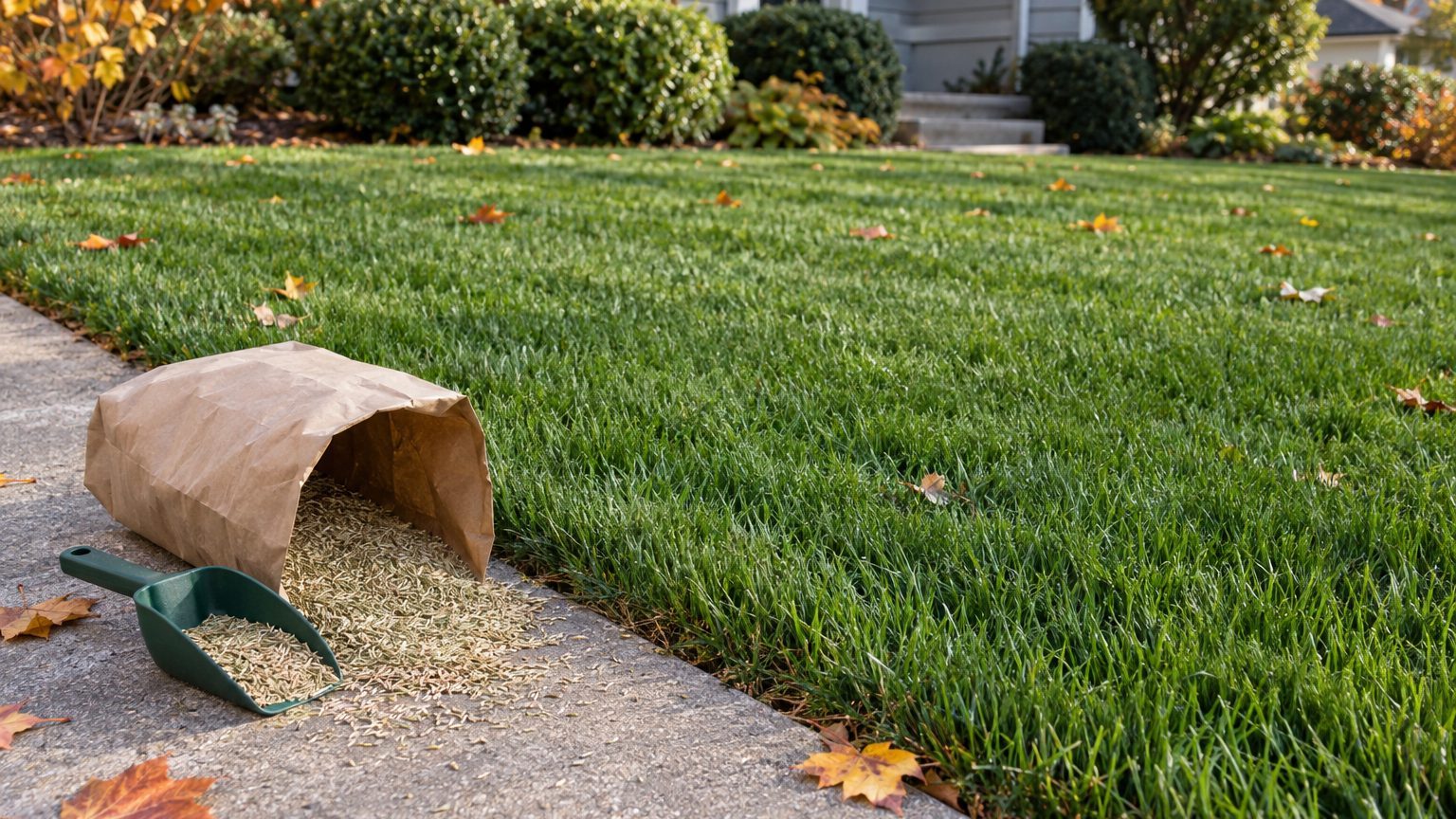
A thin, patchy lawn in Washington often looks fine in May and tired by August, and the grass you seeded decides which. Cool-season grasses suit the state, especially the mild, wet side west of the Cascades. Seed choice and seeding season shape the whole year that follows.
Which Grass Grows Best in Washington?
Cool-season grasses are the ones that work here, because they grow in the mild, damp spring and fall and rest through the dry stretch of summer. Warm-season grasses are a poor fit for the state’s cool soils. The state spans USDA hardiness zones 4a-9a, so the high, cold interior asks more of a grass than the Puget Sound lowlands do. These four species suit a broad range of Washington lawns.
Perennial Ryegrass

Perennial ryegrass sprouts fast and fills in bare spots quickly, which suits the mild, wet weather west of the Cascades. It is less happy in hard freezes, so it does better in lowland yards than in cold interior ones.
Use it where you want green quickly, often mixed with a finer grass.
Tall Fescue
Tall fescue puts down deep roots, which help it through a dry summer. That depth matters in a state where July and August bring little rain.
It is a sensible pick for sunny, busy yards and for anyone who would rather water less.
Fine Fescues
Creeping red, chewings and hard fescue all do well in shade and on thin, lean soil. They need less fertilizer and less mowing than bluegrass, and they handle the cool, cloudy conditions common under Washington evergreens.
They wear poorly under heavy foot traffic, so keep them for quieter corners.
Kentucky Bluegrass
Kentucky bluegrass makes a dense, dark green lawn and spreads to repair itself, and it tolerates cold well. It is slow to germinate and wants full sun and regular watering in summer.
It carries more risk in a dry yard where you cannot irrigate, since it browns and goes dormant when starved of water.
Washington — the year and the numbers
- State
- Washington
- USDA zones
- 4a-9a
- Last spring frost
- February 27 to March 18
- First fall frost
- November 13 to November 30
- Annual rain
- 39 in
- Lawn type
- cool-season
- Source
- NOAA NCEI 1991-2020 Climate Normals, 32F freeze probabilities · Seattle
How to Choose Grass Seed for a Washington Yard
Start with what your yard gives the grass: sun or shade, feet or paws, a hose or none. Then think about how often you want to mow and water. Matching those few facts to a species avoids most of the disappointment.
Seed is often sold as a blend, so read the label for the species it lists and pick the blend whose main grass fits your yard.
| Your yard | Grass that fits | Why |
|---|---|---|
| Full sun, heavy use | Tall fescue | Deep roots and tough blades handle wear and dry spells |
| Shade under trees | Fine fescues | Cope with low light and lean soil |
| Want fast green-up | Perennial ryegrass | Sprouts quickly and fills bare ground |
| Sunny, can water often | Kentucky bluegrass | Dense and self-repairing, but thirsty |
| Little mowing, little watering | Fine fescues | Grow slowly and ask for less care |
Many yards are a mix of these conditions, and a blend of tall fescue with a little ryegrass or fine fescue handles a patchwork of sun and shade better than a single species.
Which Grasses Grow Where in Washington
The Cascades divide Washington into contrasting climate patterns, and grass that thrives on one side can struggle on the other.
- Puget Sound and the Seattle area: Mild, damp weather lets ryegrass, fine fescues and tall fescue grow well, and the frost-free stretch is long. Cold, wet soil still holds spring growth back well past the last freeze, so patience pays.
- Spokane and the Columbia Basin: Winters are colder and summers hotter and drier, so tall fescue and bluegrass with irrigation carry the lawn. Summer watering matters far more here than on the coast.
- Cascade foothills and higher ground: Cold winters favor bluegrass and fine fescues, and the growing season is shorter, so seed needs time to root before the cold arrives.
The mild frost dates of the Seattle area do not carry over to the eastern side of the state.
Grass Seed Mistakes to Avoid in Washington
Choosing the Wrong Species
A bluegrass lawn in a shady, unwatered yard fades into moss and bare soil. Match the grass to the light and water you really have, using the shade and sun guidance above.
Seeding at the Wrong Time
Seed in August or September, when soil is warm; April and May also work. Midsummer heat can dry out seedlings, while winter cold can keep them from establishing.
Burying Seed or Spreading It Wrong
Cover seed no more than 0.25 inch and press it firmly into the soil so each seed touches the ground. Deeply buried seed may not reach the surface, while seed left loose on top can wash or blow away. Follow the rate on the bag rather than guessing: too much seed crowds seedlings into weak, disease-prone stands, and too little leaves gaps that weeds fill.
Where to Get Lawn Advice in Washington
Local help can fit lawn advice to conditions on either side of the Cascades.
- WSU Extension offers lawn guides and seed recommendations, useful before you buy seed in late summer.
- Your county extension office can answer questions about your own soil and climate, and it is worth a call before you start a renovation.
Common Questions
When Should You Seed a Lawn in Washington?
August and September are the strongest months, and April and May also work. If you miss early fall, a spring seeding still gives the grass time to root before summer.
Can You Grow a Lawn in Eastern Washington Without Much Water?
It is hard. Tall fescue handles dry weather well, but regular irrigation may still be needed to keep it green through eastern Washington summers.
Is a Seed Blend Better than a Single Grass?
A blend combines grasses suited to different conditions across the yard. Sun, shade and wear differ from corner to corner, and different grasses take over where they suit best.