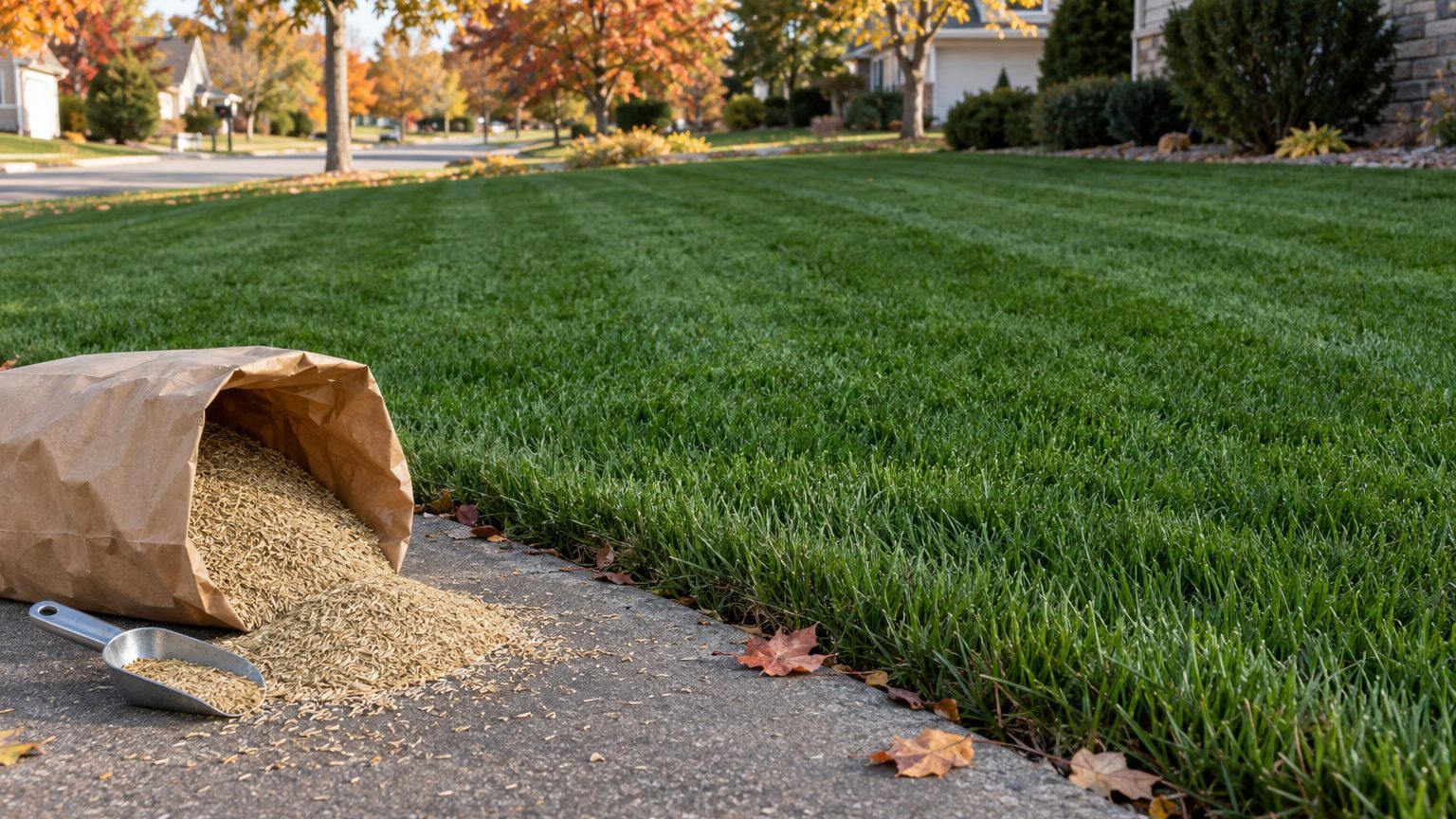
A South Dakota lawn tells you its story in the early warm weeks of spring, when the green either comes up thick and even or shows bare, winter-battered patches. Winters here are hard enough to decide which seed lasts.
Which Grass Grows Best in South Dakota?
South Dakota spans USDA hardiness zones 3b-5b, so cold hardiness matters when choosing lawn seed. The lawn grasses that work here are Kentucky bluegrass, the fine fescues, and perennial ryegrass in a supporting role.
Kentucky Bluegrass
Kentucky bluegrass is the backbone of South Dakota lawns. It shrugs off the cold, spreads by underground stems, and fills in thin spots on its own once the weather warms.
It wants full sun and regular water through summer, and it can go dormant and tan in a dry spell, then green up again when rain returns.
Fine Fescues
Creeping red, chewings, and hard fescue make up this group, and they handle cold well. They cope with shade and thinner soil better than bluegrass does, so they suit spots under trees or along the north side of a house.
They also need less water and fertilizer, which suits a lawn you would rather not fuss over.
Perennial Ryegrass
Perennial ryegrass sprouts fast, which makes it handy for quick cover. The catch is that it is short-lived in the coldest winters, so in South Dakota it works best as a minor part of a mix rather than the main grass.
Expect to patch it from time to time if you use it, especially in the northern part of the state.
South Dakota — the year and the numbers
- State
- South Dakota
- USDA zones
- 3b-5b
- Last spring frost
- April 29 to May 9
- First fall frost
- September 24 to October 4
- Annual rain
- 28 in
- Lawn type
- cool-season
- Source
- NOAA NCEI 1991-2020 Climate Normals, 32F freeze probabilities · Sioux Falls
How to Choose Grass Seed for a South Dakota Yard
Start with light and traffic because they quickly narrow the choice. Then think about how much water you can give the lawn and how often you want to mow.
Most yards are a mix of conditions, so a blend of bluegrass and fine fescue often covers a sunny front lawn as well as a shadier side yard from the same mix.
| Your yard | Grass that fits | Why |
|---|---|---|
| Full sun, regular watering | Kentucky bluegrass | Dense, tough turf that repairs itself |
| Shade or under trees | Fine fescues | Tolerates low light better than bluegrass |
| Kids and pets, heavy use | Kentucky bluegrass with some ryegrass | Bluegrass recovers, ryegrass fills in fast |
| Little watering, less mowing | Fine fescues | Lower water and fertilizer needs |
If you want a lawn that stays green with no irrigation at all, expect bluegrass to go dormant in a dry stretch. Fine fescues hold up better there, though they will not match the thick, carpet look of a well-watered bluegrass lawn.
Which Grasses Grow Where in South Dakota
Kentucky bluegrass and fine fescues can work across the state, while ryegrass is less dependable in colder areas; winter length and moisture shift the odds from region to region.
- Black Hills: Cold and elevation make winters longer, so the fine fescues earn their place here and ryegrass is a poor bet. Frost also arrives earlier and lingers later than in town-level reference figures.
- Sioux Falls and the eastern prairie: Rainfall is more generous, which suits Kentucky bluegrass. The growing season is a bit longer, and ryegrass has a better chance of surviving.
- West River: Drier conditions favor the fine fescues, or a bluegrass lawn you are willing to let rest in dry spells.
Check your own county before planning around frost dates, since gardens outside town usually see frost later in spring and earlier in fall.
Grass Seed Mistakes to Avoid in South Dakota
Buying a Warm-Season Seed
Seed meant for southern lawns will not make it through a South Dakota winter. Check the label for Kentucky bluegrass, fine fescue, or a blend of them, and skip anything sold for the South.
Seeding at the Wrong Time
August and September give new seed warm soil and cooling air, so it roots well before winter. May also works if you missed the fall window. Seed on cold soil in November also works, since it sleeps through winter and sprouts in spring. If you want to seed earlier, October also works.
Burying or Overspreading the Seed
Cover the seed with no more than 0.25 inch of soil, and press it down so it touches the ground firmly. Deep burial keeps small seed from reaching the surface. Spreading too much seed crowds seedlings, which then compete and weaken, so follow the rate printed on the bag.
Where to Get Lawn Advice in South Dakota
Local advice beats general rules in a state this varied. Local sources are worth a call or a visit before you buy seed.
- South Dakota State University Extension publishes lawn guidance written for the state’s climate, and it is a good place to start in late summer before seeding.
- Your county extension office can tell you what works in your soil and how early frost usually arrives where you live, so call before you plan a seeding.
Common Questions
Can You Mix Kentucky Bluegrass and Fine Fescue Seed?
Yes. A blend lets the bluegrass fill the sunny areas while the fescue holds the shadier ones, which suits yards with mixed light.
Is Ryegrass a Good Choice for a South Dakota Lawn?
It sprouts quickly, but it is short-lived in the coldest winters. Use it as a small part of a mix and not as the main grass.
When Should You Fertilize a New South Dakota Lawn?
May and September are the usual months for fertilizing a lawn here, and September pairs well with fall seeding.