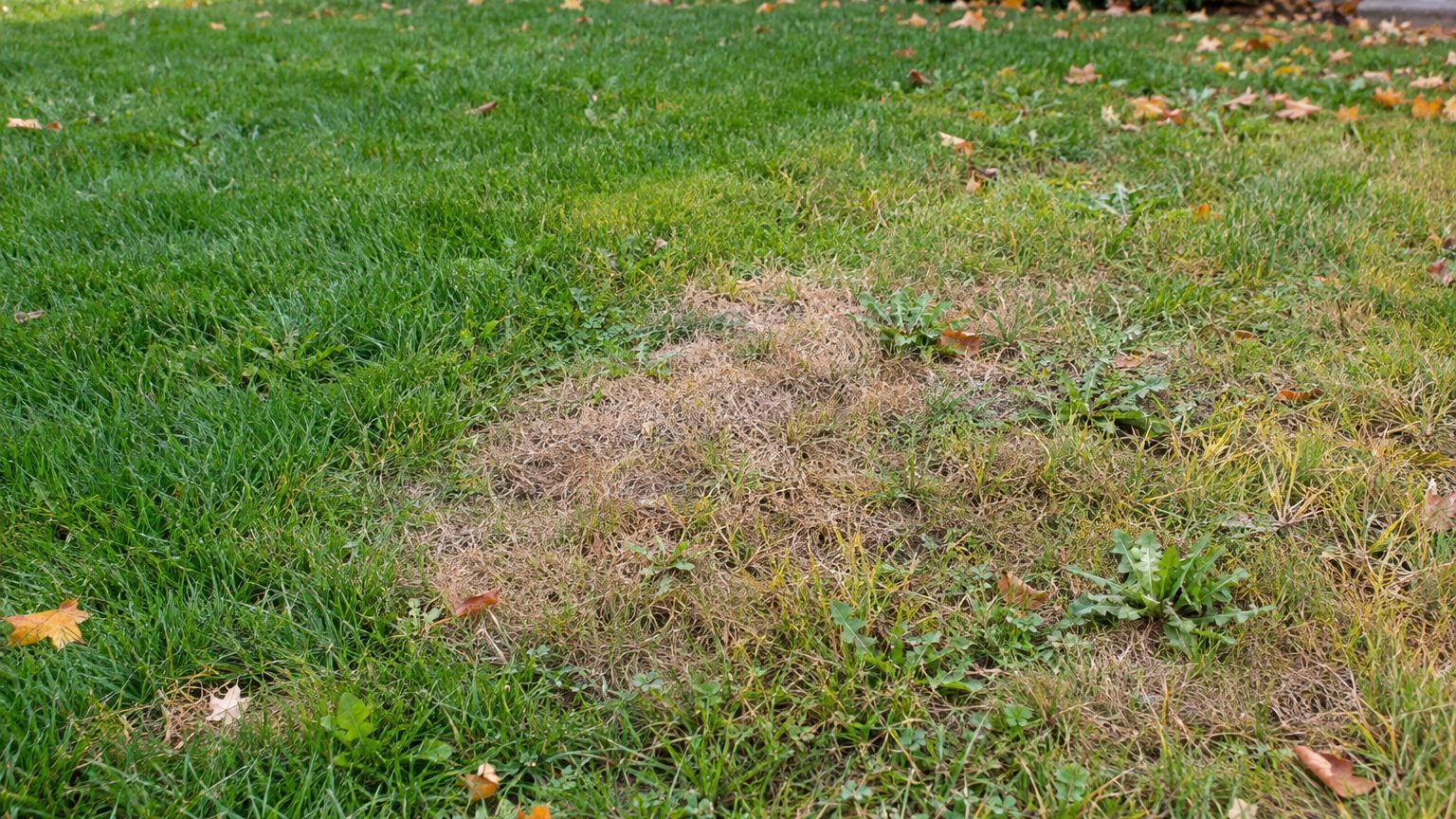
Gray, matted circles after the snow melts, a lawn that lifts like a loose carpet in late summer, coarse crabgrass spreading through thin spots: these are the repeat visitors on Quebec lawns. The causes often include long snow cover, a short growing season, or habits in mowing, watering and feeding. Each one is easier to fix once you can name it.
Lawn Pests and Diseases in Quebec
Snow Mold

As the snow melts, you may find circular patches of flattened, gray or pinkish grass that feel crusty. Deep, long-lasting snow cover over unfrozen ground allows it, and those conditions occur in Quebec.
Rake the patches gently to lift the mats and let air in. The grass may recover on its own as the weather warms.
Crabgrass
Crabgrass shows up as coarse, light green blades spreading flat from a center point, mostly in thin or bare spots along driveways and sidewalks. It sprouts in warming soil, long after frost has passed.
A pre-emergence preventer works best in May, before the seedlings appear. Once the plants are up, the preventer no longer helps, so thicker grass becomes your main defense.
Chinch Bugs
In hot, dry summer weather, irregular yellow to straw-colored patches may appear in the sunniest part of the lawn, usually along hot edges near pavement. The patches slowly widen and do not green up after watering.
Separate chinch bug damage from drought by parting the grass at the edge of the patch and looking for insects. Cutting back thatch removes the hiding places these insects like.
White Grubs
Late in summer, grass that lifts like a loose carpet, with pale, C-shaped larvae in the soil beneath, points to grubs. Crows, skunks or raccoons digging up the turf is another sign that they are feeding there.
Healthy, deeply rooted grass is more resilient to grub damage. Heavy damage is a reason to bring in a garden centre or a local lawn professional, who can advise on timing and approach.
Thick Thatch
Thatch is the spongy layer of dead stems and roots between the green blades and the soil. A layer up to 1.3 cm (1/2 inch) is healthy. Above that, dethatch or core aerate, because a thick mat sheds water and shelters both grubs and fungus.
Quebec — the year and the numbers
- State
- Quebec
- Hardiness zones
- 5b
- Last spring frost
- May 6
- First fall frost
- October 5
- Annual rain
- 39 in
- Lawn type
- cool-season
- Source
- Environment and Climate Change Canada — Canadian Climate Normals 1981-2010, station MONTREAL/ST-HUBERT A · Montreal
How to Tell Which Lawn Problem You Have
A clue is rarely enough. Pair what you see with where it happens and when, then run a simple test: tug the grass, press a screwdriver into the soil, or part the blades at the edge of a patch.
Shade versus full sun and the time of year narrow the list quickly.
| Sign | Quick test | Points to |
|---|---|---|
| Gray, crusty circles right after snowmelt | Rake lightly and see if new blades show | Snow mold |
| Coarse, sprawling blades in thin spots in warm weather | Check if the plant roots from a central point | Crabgrass |
| Straw-colored patches in full sun that keep spreading after watering | Part the grass at the edge of the patch and look for tiny insects | Chinch bugs |
| Turf that rolls back in late summer, with animal digging | Pull a small flap and look for pale larvae | White grubs |
| Spongy feel underfoot and water running off | Cut a plug and measure the brown layer | Thatch |
Thin grass under mature maples is usually shade and root competition rather than a pest, and it calls for shade-tolerant seed or a bed of mulch instead of more treatments.
Where Lawn Problems Are Worst in Quebec
Quebec is not one climate, so the same problem arrives at different times across the province. The Montreal reference point is in Canadian hardiness zone 5b, and districts farther north or uphill run later in spring.
- Montérégie and the Montreal plain: Crabgrass and chinch bugs can establish on sunny, hot lawns during the growing season.
- Laurentians and Eastern Townships: Higher ground holds snow longer and warms later, which favors snow mold and delays seeding and the first mowing.
- Quebec City and Saguenay-Lac-Saint-Jean: Cold winters and deep snow cover mean snow mold and winter injury are the usual spring complaints, while summer problems start later.
If your lawn thaws later than a neighbor’s across the river, hold your spring tasks until the soil is truly workable.
Lawn Care Mistakes That Invite Problems in Quebec
Mowing Too Short
Scalped grass has shallow roots and leaves bare soil for crabgrass to colonize. It also stresses the lawn in hot spells.
Mow regularly from May to October, with blades sharp and the deck set high. Keep mowing as needed through October; in November, mow only if the grass is still growing.
Watering Lightly and Often
Short daily sprinklings keep roots near the surface and the thatch damp, which suits fungus and weeds. Quebec lawns need extra water mostly in June to August.
Water deeply when the grass shows signs of dryness, then let the surface dry before watering again.
Feeding at the Wrong Time
Heavy feeding in midsummer pushes soft top growth that drought and insects hit hardest. A feeding in May also feeds crabgrass if the lawn is thin.
September is the strongest moment for fertilizer, when roots are building ahead of winter. If you miss it, October still works; you can also fertilize in May.
Where to Get Lawn Advice in Quebec
Quebec has no county extension offices, so advice comes through the province and local growers. Start with the provincial agriculture ministry, then ask people who know your soil and your street.
- The Ministère de l’Agriculture, des Pêcheries et de l’Alimentation du Québec is the provincial starting point for agricultural and turf information.
- A local master gardener or horticultural society can look at your lawn in person, best when problems first appear in spring or summer.
- A neighborhood garden centre can identify a grub or a weed if you bring a sample in a bag, and advise on the right seed for your shade or sun.
Common Questions
When Should You Aerate a Lawn in Quebec?
September is the best time, while the grass is still growing and can fill in the holes. If you miss it, May also works while the lawn is growing.
Can You Seed a Lawn in Quebec in November?
Yes, as a dormant seeding. The seed sits on cold soil through winter and sprouts in spring. For a stronger start, seed in August or September, when the soil is still warm.
Is It Safe to Seed in Spring Once the Snow Is Gone?
May works as a fallback, but frost can still return after the snow melts, especially in uphill and northern districts. Watch soil warmth rather than the calendar, and expect spring seedings to need more watering than late-summer ones.