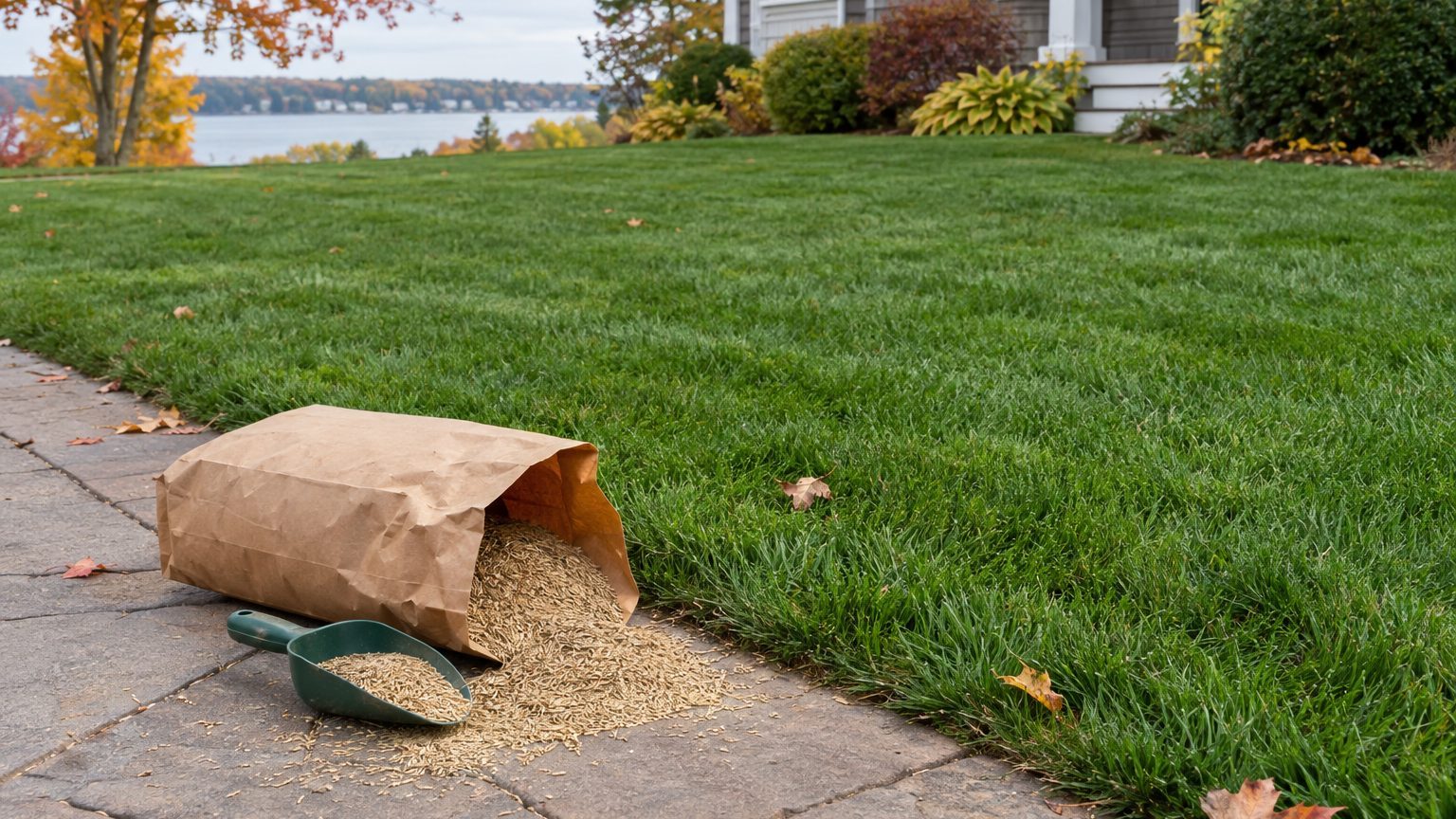
Thin patches in a Prince Edward Island lawn usually show up after a wet spring or a hard winter, and the fix starts with the seed you pick. Cool-season grasses suit the Island, and a blend built on Kentucky bluegrass and fine fescues covers most yards. Perennial ryegrass and tall fescue fill particular jobs.
Which Grass Grows Best in Prince Edward Island?
Cool-season grasses are the ones to buy here, because the Island has cool summers, cold winters and a growing season that favors grass making its best growth in spring and early autumn. Warm-season grasses stall in these conditions. Charlottetown sits in Canadian hardiness zone 5b (a Canadian rating that does not match USDA zones), and every species below handles that cold.
Kentucky Bluegrass
This is the dependable base of most Island lawns. It spreads by underground stems, so it knits together and slowly repairs small bare spots on its own. It wants sun and a regular mowing, and it is slow to sprout, so give it patience after seeding.
Fine Fescues
Creeping red, chewings and hard fescue belong together in this group. They cope with shade, thin soil and less fertilizer better than bluegrass does, which makes them the choice under maples and spruces. Mixed into a blend, they keep the lawn looking even where light is uneven.
Perennial Ryegrass

Ryegrass sprouts fast, so it shows green quickly and helps hold a new seedbed against rain. It is less hardy than bluegrass, and in a hard winter it can thin out. Use it as a partner in a mix, not as the whole lawn.
Tall Fescue
Tall fescue is deep-rooted and tough under foot traffic, but it grows in clumps and does not spread. Because tall fescue grows in clumps, a dead patch leaves a gap that must be reseeded. Follow the seeding rate on the label and reseed thin spots as they appear.
Prince Edward Island — the year and the numbers
- State
- Prince Edward Island
- Hardiness zones
- 5b
- Last spring frost
- May 16
- First fall frost
- October 17
- Annual rain
- 46 in
- Lawn type
- cool-season
- Source
- Environment and Climate Change Canada — Canadian Climate Normals 1981-2010, station CHARLOTTETOWN A · Charlottetown
How to Choose Grass Seed for a Prince Edward Island Yard
Start with what your yard actually does: how much sun it gets, who walks on it and whether you can water in dry spells. Match those answers to a species, then choose a blend whose grasses complement each other when conditions change.
August and September are the best months for seeding, with May as a fallback if the season slips by. If you miss the autumn window, November dormant seeding still works, because seed laid on cold soil waits and sprouts in spring.
| Your yard | Grass to look for | Why it fits |
|---|---|---|
| Full sun, regular mowing | Kentucky bluegrass | Spreads and fills gaps into a dense turf |
| Shade or under trees | Fine fescues | Tolerate low light and thinner soil |
| Heavy foot traffic | Tall fescue with bluegrass | Deep roots take wear, bluegrass repairs |
| Fast cover on bare soil | Perennial ryegrass in a blend | Sprouts quickly and steadies the seedbed |
| Little watering, less mowing | Fine fescues | Manage with less fertilizer and less fuss |
Watering matters most from June to August, so a yard where you cannot water leans toward fescues. If you do not want to mow often, fine fescues grow slowly and stay low, while bluegrass and ryegrass ask for a regular cut.
Which Grasses Grow Where in Prince Edward Island
Exposure and elevation can change how quickly a lawn warms in spring, so Charlottetown is only a reference point. A spring frost date shifts from one district to the next, so treat any date as the middle of a window, not a safe day to seed.
- Charlottetown and central Queens County: Frost leaves on average around May 16, which means half of years it lingers later. Bluegrass blends with fine fescues do well here, and May is the fallback month for seeding when local soil and weather are suitable.
- Summerside and West Prince: lawns on exposed sites near the shore can face wind and salt spray. Choose the grass mix for the light, soil and care available in your coastal yard.
- Souris, Montague and eastern Kings County: use Charlottetown’s frost date only as a reference point and adjust seeding to local conditions.
Shaded yards, wherever they are, call for fine fescues first.
Grass Seed Mistakes to Avoid in Prince Edward Island
Buying a Single Grass for Every Spot
The same grass rarely suits a whole yard, since the sunny front lawn and the shaded side strip need different traits. Read the label for the blend, and look for bluegrass and fine fescues together. Seed a shadier strip with a fescue-heavy mix and leave the sunny lawn to bluegrass.
Seeding Too Late in Autumn
Seed needs time to sprout and root before the ground freezes, and on average the first fall frost arrives around October 17 in Charlottetown. Seed in August or September so the grass is established first. If you miss that window, seed in November on cold soil and let it come up in spring.
Burying Seed or Spreading It Unevenly
Grass seed needs shallow cover and firm contact with the soil. Cover it no more than 6 mm (0.25 inch) deep, which a light raking achieves, and press it against the soil. Spread it evenly, thicker than a light dusting but without piles, and water regularly so the surface never fully dries while seedlings emerge.
Where to Get Lawn Advice in Prince Edward Island
Canada has no county extension office, so help comes from the province and from local growers. The Island has several good places to ask about soil, seed blends and local conditions before you buy.
- The Prince Edward Island agriculture department publishes provincial guidance, and it is worth checking before you plan your seeding.
- A local master gardener group can answer questions about your district, and spring is a good time to ask.
- A garden centre near you can help read a seed label and match a blend to your yard, ideally before August.
Common Questions
Is November Too Late to Seed a Lawn in Prince Edward Island?
Not if you seed on cold soil. Seed sown in November stays put over winter and sprouts in spring, so it works as a fallback when autumn slips away, though August and September give better results.
When Should You Aerate or Dethatch a Lawn in Prince Edward Island?
Dethatching works best in August and September, and aeration is best in September, with May as a fallback. Doing either just before seeding opens the soil so seed meets it directly.
Can You Keep Mowing a Prince Edward Island Lawn into Autumn?
Yes. Mowing is best from May through October, and April or November may still call for a cut if the grass keeps growing. Mow only while the grass is growing, and stop when growth stops.