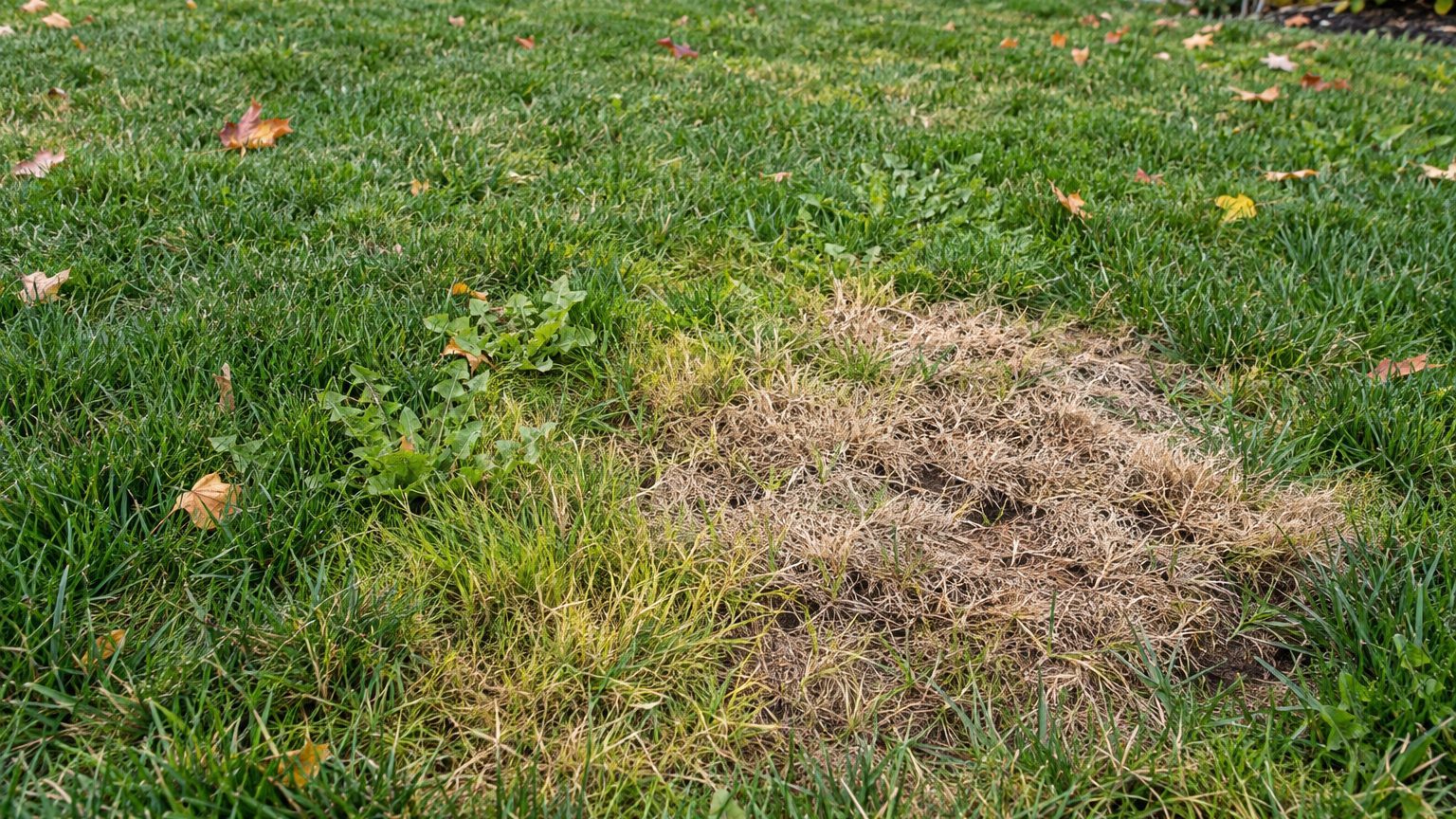
Gray, matted patches after the snow melts, and brown circles or peeling turf later in the summer, are the usual signs of trouble on a Prince Edward Island lawn. Prince Edward Island lawns can face snow mold, red thread, white grubs, crabgrass and moss, but each problem favors different conditions. Good timing, mowing and watering can prevent or reduce many of them.
Lawn Pests and Diseases in Prince Edward Island
Snow Mold

Snow mold shows up as gray or pinkish circles of flattened, crusty grass as soon as the snow leaves. It forms under long-lasting snow cover on grass that went into winter long and wet.
Rake the patches gently to lift the blades and let air in. Most lawns recover on their own as growth picks up, and a light reseeding fills any bare spots.
Crabgrass in Thin Spots
Crabgrass is a coarse, light green grass that sprawls outward in a star shape on sunny, thin or bare ground. It sprouts after the soil warms in late spring and dies with the first hard frost, leaving gaps behind.
A thick lawn helps control crabgrass because seedlings struggle without bare soil. Fill thin areas with seed in late summer so nothing is left open to sprout the next year.
Red Thread
Red thread looks like tan or bleached patches with fine pink to red threads sticking out from the leaf tips. Cool, humid weather and hungry, underfed grass favor it, and the Island has plenty of both.
Feed the lawn on schedule and water in the morning so the blades dry quickly. The grass usually outgrows the damage once it is well fed.
White Grubs
White grubs are plump, C-shaped larvae that chew grass roots. The lawn turns brown and the turf lifts like a loose rug, often with skunks, crows or gulls tearing at it.
Peel back a corner of affected sod and look at the soil beneath. Finding grubs beneath damaged sod supports the diagnosis, but their presence alone does not show how serious the damage is.
Moss in Shade and Wet Spots
Moss forms a soft green mat where grass has already given up, usually under trees, beside north-facing walls or in low, compacted ground. It moves into thin turf rather than killing healthy grass.
Open the canopy, loosen the soil with core aeration, and seed a shade-tolerant mix. Raking out the moss alone brings it back.
Prince Edward Island — the year and the numbers
- State
- Prince Edward Island
- Hardiness zones
- 5b
- Last spring frost
- May 16
- First fall frost
- October 17
- Annual rain
- 46 in
- Lawn type
- cool-season
- Source
- Environment and Climate Change Canada — Canadian Climate Normals 1981-2010, station CHARLOTTETOWN A · Charlottetown
How to Tell Which Lawn Problem You Have
No symptom settles the diagnosis by itself. Pair the shape of the patch with the time of year, and check whether the spot sits in sun or shade. A quick tug on the grass tells you whether roots are still holding.
Grass that pulls up easily because its roots are damaged can point to an insect underneath, but it is not conclusive by itself. Grass that stays firmly anchored makes root-feeding grubs less likely, so compare the other symptoms before deciding.
| What you see | Where and when | Points to |
|---|---|---|
| Gray or pink matted circles, blades stuck together | Just after snow melt, in low or long-covered spots | Snow mold |
| Pink threads on tan patches | Cool, damp stretches from late spring into fall | Red thread |
| Coarse, spreading clumps | Sunny thin spots in summer | Crabgrass |
| Turf lifts like carpet, animals digging | Late summer into fall, roots missing | White grubs |
| Soft green velvet mat | Shade, damp or packed soil | Moss |
A spongy lawn that feels bouncy underfoot may simply carry too much thatch. A layer up to 1.3 cm (1/2 inch) is healthy, and anything thicker calls for dethatching or core aeration.
Where Lawn Problems Are Worst in Prince Edward Island
Charlottetown’s last spring frost averages May 16, and in half of years it arrives later. Use Charlottetown only as a reference point; northern or upland districts can run behind it.
- North Shore and Cavendish: on exposed sites, wind and salt spray can thin turf and leave room for crabgrass.
- Charlottetown and Queens County: shaded or compacted yards can hold moisture, which favors moss and red thread.
- Summerside and Prince County: exposed yards can dry in summer and show winter burn where wind reaches the turf.
- Souris and Kings County: compare the Charlottetown reference point with the conditions in your yard before timing spring work.
Wherever you live, a spot beside the road or driveway also takes winter salt, and its grass thins first.
Lawn Care Mistakes That Invite Problems in Prince Edward Island
Mowing Too Short
Scalped grass exposes soil, gives crabgrass room to germinate and leaves the lawn less resilient. Mowing runs from May through October here, and April or November works if the grass is still growing.
Raise the mower to a higher setting and avoid removing a large share of the blade at once.
Watering Lightly and Often
Frequent shallow sprinkling keeps the surface wet, which red thread and moss love, and trains roots to stay near the top. Watering matters most from June through August.
Water deeply and less often, in the morning, so the blades dry by evening and roots chase moisture downward.
Feeding at the Wrong Time
Overfeeding can push soft, fast leaf growth instead of steady root development. September is the strongest time to fertilize, while May and October also work.
Feed in autumn to build roots and thickness, and keep spring applications light.
Where to Get Lawn Advice in Prince Edward Island
Canada has no county extension offices, so advice here comes from the province, local gardeners and nurseries. Start with the agriculture pages from the Government of Prince Edward Island.
- The provincial agriculture ministry has resources on soil, pests and plant health, and is a good first stop in spring.
- A local master gardener group can look at photos of a problem patch, which helps before you buy anything.
- A garden centre can identify a grub or weed if you bring a sample, especially in late summer.
Common Questions
When Should You Seed a Lawn in Prince Edward Island?
August and September give new grass time to root before winter. If you miss that window, May still works, and seed spread on cold ground in November sprouts in spring.
When Should You Put Down Crabgrass Preventer?
May is the month to apply it, before the seeds germinate. Putting it down later misses the sprouting, and the product does little once crabgrass is up.
When Should You Core Aerate a Prince Edward Island Lawn?
September is the best time, when the grass recovers quickly and fills the holes. Spring aeration in May is a fallback, though avoid doing it where crabgrass seed is waiting.