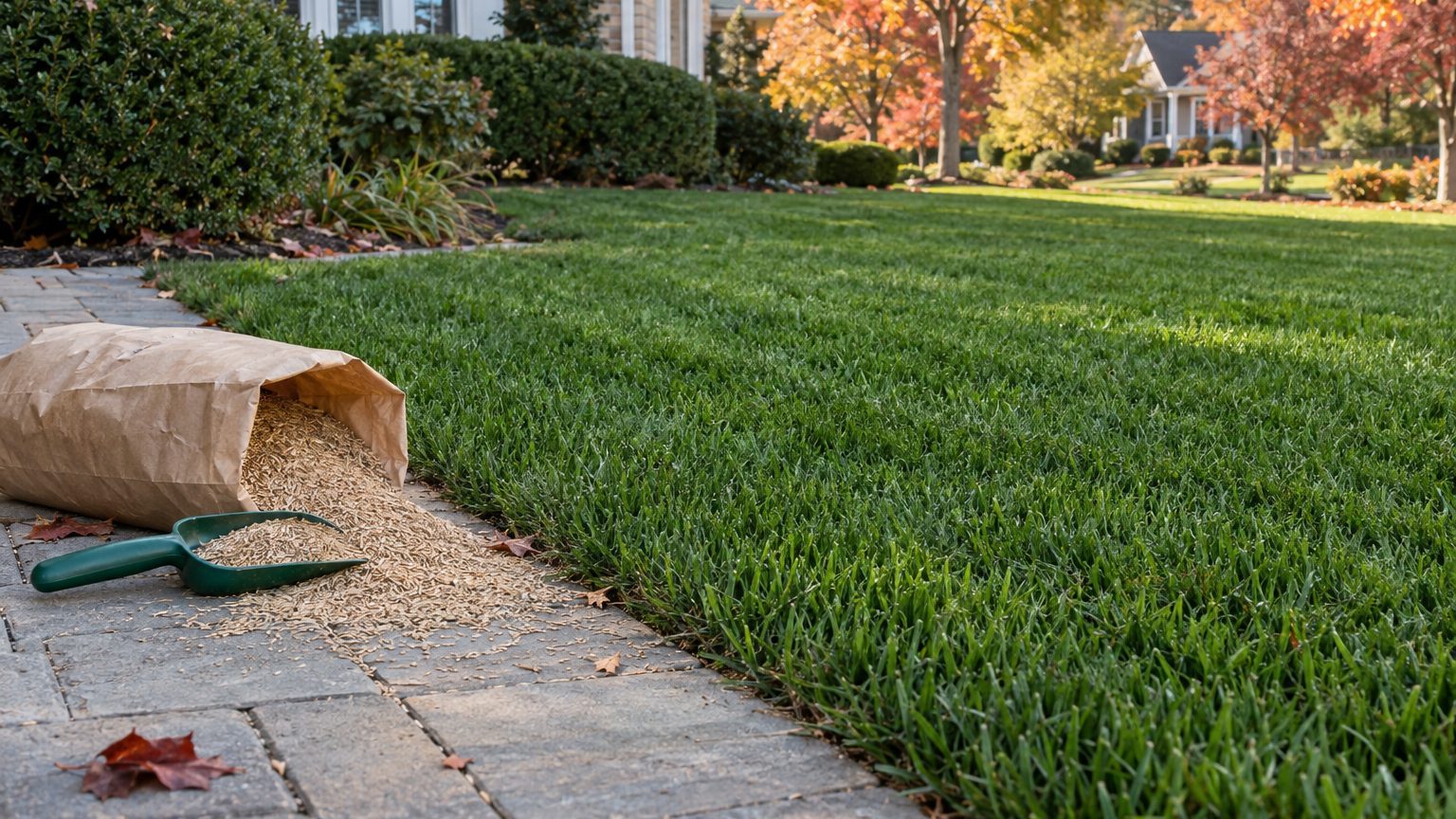
July exposes the tradeoff between cool-season and warm-season lawns in North Carolina: fescue may fade in the heat while bermudagrass is in active growth. Both can be the right call, depending on where the yard sits and how much sun it gets. Tall fescue is a widely available cool-season option for North Carolina lawns.
Which Grass Grows Best in North Carolina?
North Carolina sits in the transition zone, so both cool-season and warm-season grasses grow here, and each has a weak season. Cool-season grasses stay green through winter but strain in summer, while warm-season grasses thrive in heat and go tan after frost. The grasses below suit different parts of the state and different yard conditions.
Tall Fescue
Tall fescue is a cool-season option for North Carolina lawns. It handles summer heat better than other cool-season grasses, tolerates some shade, and stays green through winter.
Seed it in August, with September as the fallback, so the young plants root before cold arrives. It still needs regular water from June through August.
Bermudagrass
Bermudagrass is a true sun lover that shrugs off Piedmont and coastal heat. It can go in as seed or sod, and it spreads aggressively to fill gaps.
Plant it in May, with June as a fallback. It turns tan in winter and fades quickly in shade, so keep it for open, sunny yards.
Zoysiagrass
Zoysiagrass makes a dense, carpet-like lawn that handles heat well and crowds out many weeds. It is mostly sold as sod or plugs rather than seed, which raises the upfront cost.
Lay it in May, with June and July still workable. It greens up slowly in spring and browns in winter.
Kentucky Bluegrass
Kentucky bluegrass belongs on cooler, higher ground, which in North Carolina means the mountains. Farther east, summer heat leaves it thin and prone to browning without heavy care.
If you garden in the Blue Ridge, it can work. In the Piedmont or on the coast, choose tall fescue or a warm-season grass instead.
North Carolina — the year and the numbers
- State
- North Carolina
- USDA zones
- 5b-8b
- Last spring frost
- March 23 to April 5
- First fall frost
- October 30 to November 8
- Annual rain
- 44 in
- Lawn type
- cool- and warm-season
- Source
- NOAA NCEI U.S. Climate Normals 1991-2020, 32F freeze probabilities · Charlotte
How to Choose Grass Seed for a North Carolina Yard
Start with the sunlight your yard actually gets, then think about foot traffic, watering, and how often you want to mow. Those answers narrow the field quickly.
Shade is an important dividing line. Warm-season grasses want open sun, while tall fescue copes with filtered light under trees.
| Your yard | Grass | Why |
|---|---|---|
| Full sun, heavy use | Bermudagrass | Tough in heat and spreads to repair wear |
| Partial shade | Tall fescue | Tolerates filtered light better than warm-season grasses |
| Green in winter | Tall fescue | Cool-season grass that holds color through the cold months |
| Low water, hot sun | Bermudagrass | Warm-season grass built for summer heat |
| Dense, neat turf | Zoysiagrass | Thick growth, usually installed as sod or plugs |
| Mountain yard | Kentucky bluegrass | Suited to cooler, higher ground |
Mowing habits matter too. Warm-season lawns grow actively in summer and are mowed from April through October, while tall fescue is mowed from March through November.
Which Grasses Grow Where in North Carolina
The state stretches from the Atlantic to the Appalachians, and the grass that suits each end is different.
- Blue Ridge Mountains: Cooler, higher ground suits Kentucky bluegrass and tall fescue. Spring comes several weeks later here than in Charlotte, so hold off on early seeding.
- Piedmont (Charlotte, Raleigh, Greensboro): This is the transition zone at its fullest. Tall fescue tolerates filtered light, while bermudagrass and zoysiagrass suit full sun, so the choice follows your light.
- Coastal Plain: Warmer winters and earlier springs favor bermudagrass and zoysiagrass, and tall fescue works harder to survive summer.
Whichever region you live in, sunlight and soil in your own yard still decide the final pick.
Grass Seed Mistakes to Avoid in North Carolina
Planting Fescue in Full Sun
Tall fescue struggles on a hot, sunny, unwatered slope. If the yard bakes all summer, bermudagrass is the safer match. Save fescue for shade or for yards where you will water regularly in June, July, and August.
Seeding at the Wrong Time
Cool-season seed sown in spring faces summer heat before roots are ready. Seed tall fescue in August, or in September if you miss that window. Warm-season seed goes down in May, because it needs warm soil to sprout.
Burying the Seed Too Deep
Grass seed is small, and a thick layer of soil smothers it. Rake lightly, keep the covering to 0.25 inch at most, and press the seed into the ground. For a thin fescue lawn, aerate in August and overseed right after.
Where to Get Lawn Advice in North Carolina
Local advice beats general advice here, because soil and microclimate shift from one county to the next. Local help is worth seeking.
- North Carolina Cooperative Extension publishes turfgrass guidance for the state, and it is worth a visit before you buy seed.
- Your county extension office can advise on soil testing and local conditions, so call before fertilizing in March, September, or October.
Common Questions
Can You Plant Grass Seed in North Carolina in Spring?
Warm-season grasses like bermudagrass can go in during May, with June as a fallback. Tall fescue is better seeded in late summer because spring seedlings often struggle once hot weather arrives.
Is Zoysiagrass Sold as Seed?
It is mostly sold as sod or plugs. Bermudagrass is the warm-season grass more often planted from seed or sod.
When Should You Fertilize a North Carolina Lawn?
Tall fescue does best with feeding in March, September, and October. Bermudagrass and zoysiagrass want it in May, June, and July. Skip fescue feeding in summer.