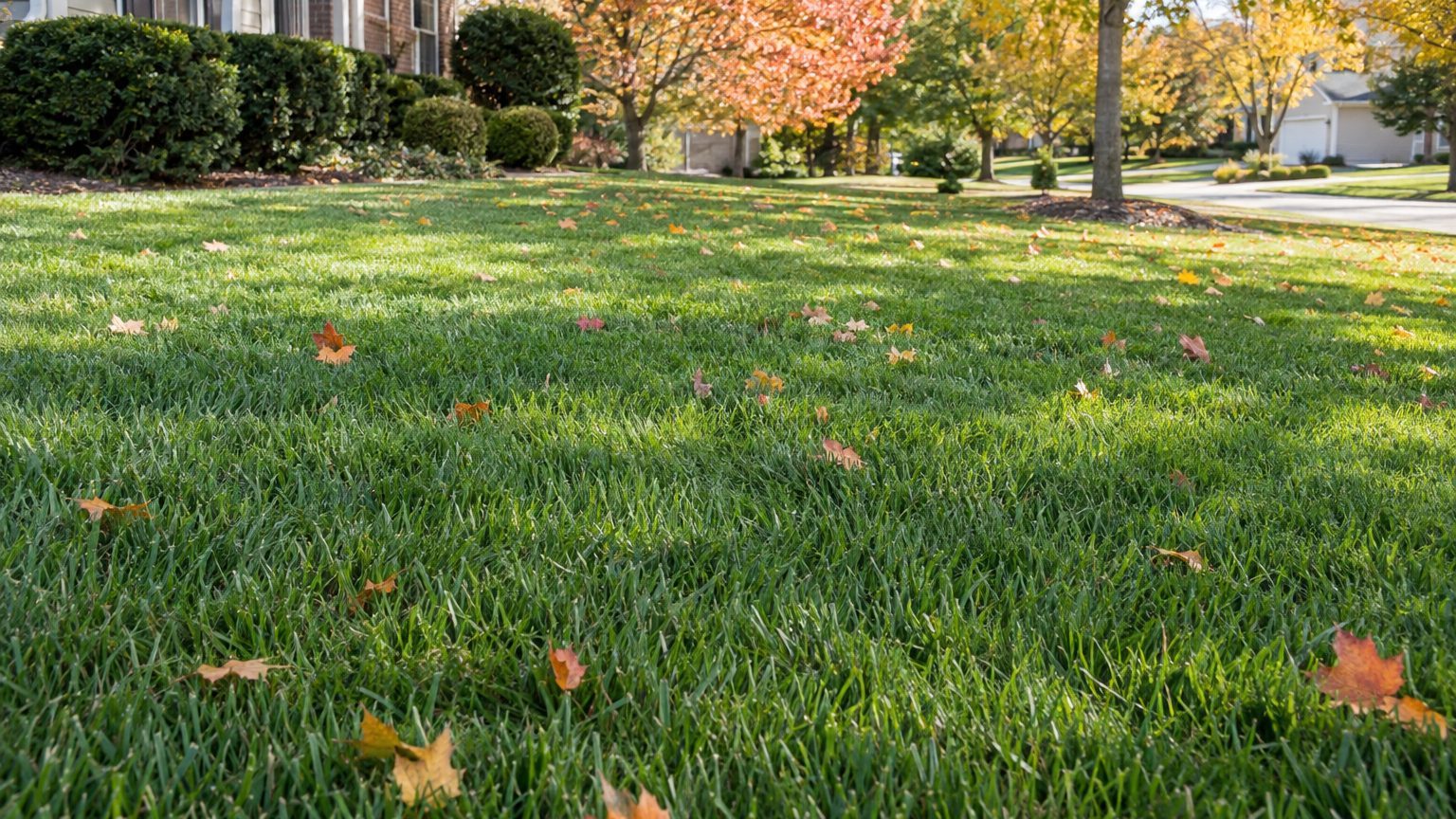
Tall fescue turns green in March while a bermuda or zoysia lawn next door stays straw-brown longer. Missouri sits where cool-season and warm-season grasses overlap, so the right month for a task depends on which grass you own.
What to Do Each Month in a Missouri Lawn

Cool-season lawns (tall fescue, bluegrass) do their heavy work in fall and early spring. Warm-season lawns (bermuda, zoysia) do theirs in late spring and summer, once the soil has warmed. Each row below says which grass it speaks to when it matters.
| Month | In the lawn |
|---|---|
| January | Rest. The grass is dormant, so keep foot traffic light on frozen turf and leave it alone. |
| February | Still mostly rest. A mild spell lets you put down crabgrass preventer early, before the weed seeds wake up. |
| March | Spread crabgrass preventer and feed tall fescue as it wakes. The first mowing of the year usually comes now. |
| April | Mowing picks up, and bermuda and zoysia begin to green. Preventer and fertilizer still work if March slipped by, and warm-season thatch can be pulled now too. |
| May | Seed or sod bermuda and zoysia, dethatch them, and start feeding them. Preventer still works if you are late. |
| June | Warm-season grass is growing hard, so keep feeding it and start watering. Seeding and sodding warm-season lawns still work this month. Leave tall fescue unfed, since fertilizer should never go on it in summer. |
| July | Water deeply and keep feeding bermuda and zoysia. If you missed May and June, sod still works in July. |
| August | Core aerate fescue, then seed it right away while the soil is warm. Dethatch cool-season turf, and keep new seed moist. |
| September | Feed fescue, and dethatch if August got away from you. If you missed August, overseeding and aeration still work now. |
| October | Feed fescue and keep mowing. Warm-season grass slows and browns, so its last mowings come now. |
| November | Mow fescue as long as it grows, and rake leaves so they do not smother it. Bermuda and zoysia are dormant. |
| December | Rest. The whole lawn is dormant, and the only job is staying off it when it is frozen. |
If you are unsure which grass you have, settle that first. A fescue lawn and a bermuda lawn can sit side by side and need opposite things in the same month.
Missouri — the year and the numbers
- State
- Missouri
- USDA zones
- 5b-7b
- Last spring frost
- April 6 to April 20
- First fall frost
- October 18 to October 29
- Annual rain
- 39 in
- Lawn type
- cool- and warm-season
- Source
- NOAA NCEI 1991-2020 Climate Normals, 32F freeze probabilities · Kansas City
When Does the Lawn Season Start and End in Missouri?
Grass wakes up when the soil warms, not when the last frost passes. Cool-season seed germinates once the soil sits at 50 to 65 °F. Warm-season seed needs warmer soil, at 65 to 70 °F, so seeding bermuda and zoysia belongs in May or June rather than early spring.
Frost dates matter mostly for young seedlings. In the Kansas City area, the last spring freeze usually falls between April 6 and April 20, and southern Missouri is milder still. Warm-season seed sown before that window risks a late freeze burning the first green blades.
The fall side works the same way. The first freeze tends to arrive between October 18 and October 29 around Kansas City, and a fescue seedling needs to be rooted well before then. That is why late summer seeding beats waiting for October. Mature turf shrugs off a light frost, and growth slows with cooling soil, so mowing keeps going into November for fescue.
How the Lawn Calendar Shifts Across Missouri
Missouri runs from USDA hardiness zone 5b to 7b, so the north and the south do not wake up together. Shift the monthly tasks in the direction below.
- Northern Missouri, around Kirksville and the Iowa line: Spring comes later and fall frost arrives earlier. Tall fescue and bluegrass dominate, and warm-season grasses are a gamble because winter can injure them. Push spring tasks toward the later end of their months and seed fescue at the start of the late-summer window.
- Kansas City and St. Louis: These sit in the middle of the transition zone, where either grass type can work. Follow the calendar as written, and expect fescue to struggle in a hot summer.
- The Ozarks around Springfield: Higher ground keeps nights cooler, so spring warmth arrives a little later than the valleys would suggest. Fescue does well here, and bermuda can suffer during severe winter cold.
- The Bootheel in the southeast: This area has milder winters than northern Missouri, so spring starts earlier. Bermuda and zoysia thrive, while fescue works harder through summer heat. Lean toward the early end of spring tasks.
Within each region, a south-facing slope warms sooner than a shady north side, so different parts of the same yard can follow different schedules.
Lawn Care Timing Mistakes to Avoid in Missouri
Seeding Fescue in Spring
Spring seed sprouts fast and looks promising, then meets Missouri summer before the roots are deep. Heat and drought thin it out, and crabgrass fills the gaps. Wait for late summer, when warm soil and cooling air let seedlings root properly, and aerate first so the seed meets bare soil.
Late Crabgrass Preventer
Preventer stops crabgrass seeds from sprouting, but it does nothing to plants already up. Once seedlings appear, the product is wasted money. Apply it in March, or in February or April if the season runs early or late, and May is the last reasonable call.
Dethatching Warm-Season Grass in Fall
Pulling thatch from bermuda or zoysia as the lawn heads into dormancy leaves it bare and slow to recover. Weeds move into the open ground, and winter cold hits unprotected crowns. Do the job in May or June, while the grass is growing fast enough to fill in.
Where to Get Lawn Advice in Missouri
Soil, shade and grass variety differ from one Missouri yard to the next, and local experts can fine-tune the schedule above for yours.
- The University of Missouri Extension publishes lawn guides for fescue, bermuda and zoysia, and a quick look in spring or late summer helps you plan the next job.
- Your county extension office can answer questions about local weeds and soil, and it is worth a call before you buy seed or fertilizer.
- A soil test through the county office can guide feeding decisions.
Common Questions
How Can You Tell If Your Lawn Is Tall Fescue or Bermuda?
Look at the color and the leaf. Fescue stays green well into November and has wide, coarse blades. Bermuda turns tan after the first hard frost and has fine blades with creeping runners. Check the color and leaf shape before you buy seed or fertilizer.
Can You Keep Fescue and Bermuda in the Same Yard?
You can, but they follow different calendars, so each patch needs its own feeding and seeding months. Mixed lawns often look uneven because the grasses green up and go dormant at different times. Treat each area as its own lawn for timing.
How Do You Know When a Brown Lawn Is Dormant and Not Dead?
Dormant grass is brown all over and the crowns near the soil stay firm and pale. Dead grass pulls up easily and leaves bare, dry patches. If the browning follows the seasons and the whole lawn matches, dormancy is the likelier cause.