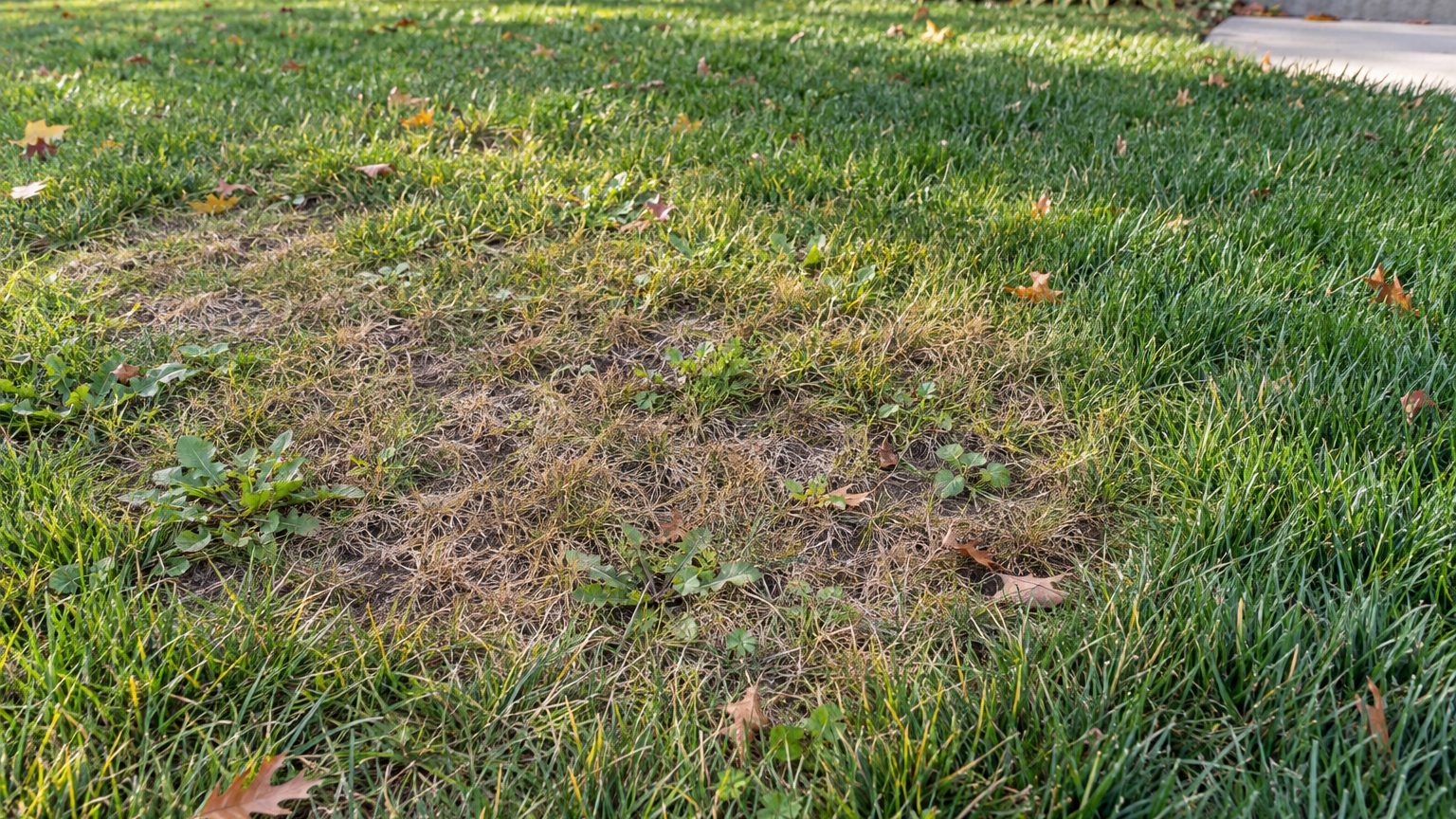
Straw-colored patches in July, a spreading mat of coarse crabgrass, or turf that peels back like a carpet are the usual Iowa lawn complaints. Most of them trace back to a few causes: humid summer nights, thin turf, and mowing, watering or feeding at the wrong moment. Naming the problem correctly comes first, and the fix is usually simple.
Lawn Pests and Diseases in Iowa
Crabgrass in Spring

Crabgrass is a coarse, light green annual that sprouts in bare or thin spots as the soil warms. It dies with the first hard frost and leaves a mess of seed behind. A preventer goes down in April, and May still works if April slips by.
Dandelions in Open Turf
Dandelions show up wherever the grass is thin, and a deep taproot lets them regrow from a fragment. Pull them when the soil is moist so the whole root comes out. Thick turf is the lasting fix, because a dense lawn leaves little light for seedlings.
Dollar Spot in Early Summer
Dollar spot makes small, bleached, straw-colored spots that merge into larger blotches. It favors lawns that are underfed and dry at the root while humid at the leaf. A fall feeding keeps turf strong, and watering deeply in the morning helps leaves dry quickly.
Brown Patch in Midsummer
Brown patch is a fungus of hot, sticky weather. Look for roughly circular patches, sometimes with a darker smoky edge early in the morning. Grass blades are damaged but the crowns usually survive. Skip nitrogen in the heat, cut back on evening watering, and let the lawn dry overnight.
White Grubs in Late Summer
Grubs are fat, C-shaped, creamy larvae that chew grass roots. Infested turf wilts despite watering and lifts easily, and raccoons, skunks or birds often tear it up while feeding. Peel back a patch of sod to check. If you find many grubs, treat that part of the lawn rather than the whole yard.
Iowa — the year and the numbers
- State
- Iowa
- USDA zones
- 4b-6a
- Last spring frost
- April 12 to April 24
- First fall frost
- October 14 to October 25
- Annual rain
- 37 in
- Lawn type
- cool-season
- Source
- NOAA NCEI 1991-2020 Climate Normals, 32F freeze probabilities · Des Moines
How to Tell Which Lawn Problem You Have
Symptoms rarely settle the diagnosis on their own. Pair what the grass looks like with when it happens and where in the yard, and the list of suspects shrinks fast.
Tug on the damaged turf. Grass that lifts with no roots points to grubs, while grass that stays anchored points to disease or drought.
| What you see | When and where | Likely problem |
|---|---|---|
| Turf lifts like loose carpet, animals digging | Late summer into fall, often in sunny, well-watered areas | White grubs |
| Roughly circular patches, dark smoky edge | Midsummer, after hot humid nights | Brown patch |
| Small straw-colored spots that merge | Early summer, on lean or dry-rooted turf | Dollar spot |
| Coarse, light green clumps spreading flat | Summer, in bare or thin spots near pavement | Crabgrass |
| Spongy feel underfoot, water runs off | Any season, a thatch layer over 1/2 inch | Excess thatch |
Thin grass under trees is not a pest at all. Shade and root competition starve the turf, so look for a pattern that follows the canopy and an area that stays damp. Hard, compacted soil in high-traffic strips also mimics disease, and core aeration relieves it.
Where Lawn Problems Are Worst in Iowa
Iowa spans USDA hardiness zones 4b to 6a, a range that reflects differences in extreme winter cold.
- Northwest Iowa and Siouxland: Colder winters and a later spring can slow recovery and increase the risk of winter injury. Wind and dry spells stress grass here.
- Central Iowa around Des Moines: Humid summers can favor brown patch and dollar spot, while compacted clay soil slows rooting.
- Mississippi River towns like Dubuque and the Quad Cities: Shady, damp sites can thin turf and favor fungal disease.
- Southern Iowa: Longer, warmer summers raise disease pressure and let crabgrass run longer.
Wherever you live, a shady, poorly drained corner is especially prone to trouble.
Lawn Care Mistakes That Invite Problems in Iowa
Mowing Too Short
Scalped grass has fewer leaves to feed the roots, so weeds like crabgrass and dandelions move into the gaps. Raise the mower deck and take off only the top of the blade at each cut. Mow from April through November, whenever the grass is growing.
Watering Lightly and Late
Short, frequent sprinkling keeps roots shallow and leaves wet overnight, which feeds brown patch and dollar spot. Water deeply and early in the morning instead, so the soil soaks well below the surface and the blades dry by evening.
Feeding at the Wrong Time
Heavy nitrogen in midsummer pushes soft growth that disease loves. Fertilize in September and November, when cool-season grass builds roots, and May also works for a lighter spring feeding. Fall feeding also leaves the lawn denser by the time crabgrass seeds sprout.
Where to Get Lawn Advice in Iowa
Local soils, shade and weather differ from one county to the next, so a nearby source can confirm what you suspect before you spend money.
- Iowa State University Extension publishes lawn guides, and its horticulture staff can help identify a disease or weed from a photo or sample.
- Your county extension office can point you to soil testing before you fertilize or reseed.
- Bring a sod sample with roots to the county office when you cannot tell grubs from disease.
Common Questions
When Should You Seed a Lawn in Iowa?
August and September are the strongest months, because warm soil and cooler air give seedlings time to root before winter. Spring seeding in April or May also works, though summer heat and crabgrass compete with young grass. In Des Moines, the first fall frost tends to arrive between October 14 and October 25, and sites farther north can see it sooner.
When Should You Core Aerate an Iowa Lawn?
September is the best time, when the grass can fill the holes quickly. If you miss it, April and May also work. Aerate when the soil is moist, not bone dry or soggy.
When Does an Iowa Lawn Need the Most Watering?
June, July and August are the months when the lawn most needs a deep soaking during dry spells. If rain has been steady, hold off, because wet leaves and soil in summer invite disease.