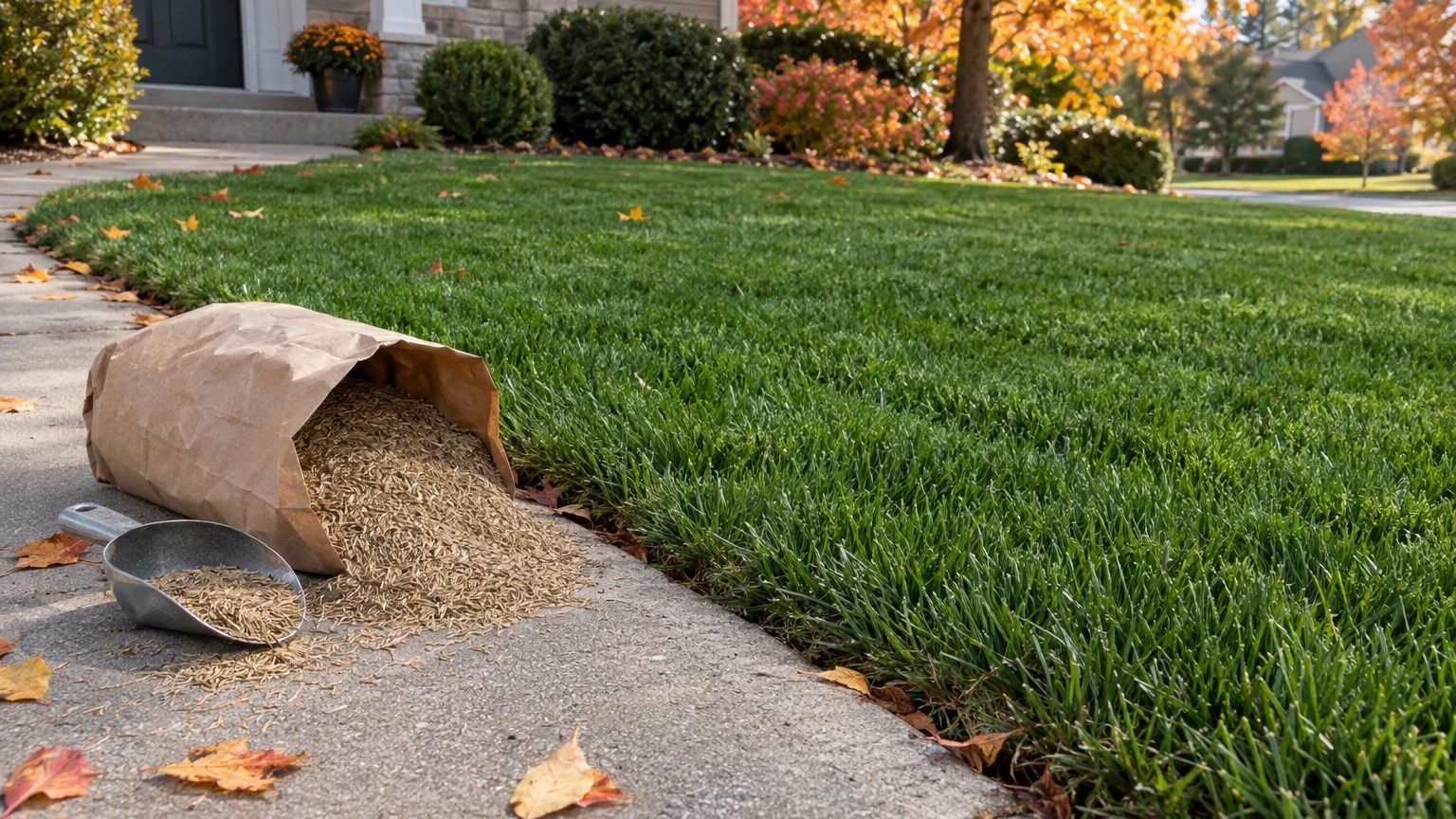
A thin, patchy lawn in Illinois often starts with the wrong seed for the spot. Cool-season grasses suit this state, with Kentucky bluegrass, tall fescue, fine fescues and perennial ryegrass doing the work. Which one fits depends on your sun, your foot traffic and how much you want to water and mow.
Which Grass Grows Best in Illinois?
Cool-season grasses grow best here, because Illinois has cold winters (USDA hardiness zones 5a to 7b) and warm, humid summers that cool-season turf can ride out with a little help. They grow hardest in spring and fall, slow down in midsummer heat, and go dormant rather than die in a cold snap. These species differ in how much attention they need.
Kentucky Bluegrass
Bluegrass is the classic Illinois lawn, dense and deep green, and it knits together through underground runners. It fills small bare spots on its own over time.
It wants full sun and regular water in a dry summer, and it starts slowly from seed, so give it patience after seeding.
Tall Fescue
Tall fescue sends roots deeper than bluegrass, which helps it get through July and August with less watering. It tolerates traffic and some heat stress well.
It grows in clumps instead of spreading, so thin spots need overseeding now and then to stay full.
Fine Fescues
Creeping red, chewings and hard fescue are the ones to reach for under mature trees, where bluegrass fades. They accept shade, poorer soil and lower fertility.
They dislike heavy foot traffic and soggy ground, so keep them for the quiet corners of the yard.
Perennial Ryegrass
Ryegrass sprouts fast, which makes it handy for quick cover on a bare patch or mixed in with slower bluegrass. It is a good nurse crop for that reason.
Perennial ryegrass is vulnerable to seasonal stress when grown alone, so it works well as part of a blend.
Illinois — the year and the numbers
- State
- Illinois
- USDA zones
- 5a-7b
- Last spring frost
- April 11 to April 22
- First fall frost
- October 24 to November 3
- Annual rain
- 38 in
- Lawn type
- cool-season
- Source
- NOAA NCEI 1991-2020 Climate Normals, 32F freeze probabilities · Chicago
How to Choose Grass Seed for an Illinois Yard
Start with the conditions you cannot change: how many hours of sun the yard gets, and who walks across it. Then weigh how much water and mowing you are willing to give. Illinois yards often do well with a blend of these species, matched to the dominant condition.
Mixed yards are common, with a sunny front and a shaded back. Seed each zone for what it really gets instead of using the same mix everywhere.
| Your yard | Grass to seed | Why it fits |
|---|---|---|
| Full sun, regular watering | Kentucky bluegrass | Dense turf that repairs itself |
| Full sun, less watering | Tall fescue | Deep roots handle summer dryness |
| Shade under trees | Fine fescues | Accept low light and lean soil |
| Kids and pets, heavy traffic | Tall fescue with ryegrass | Tough blades and fast recovery |
| Quick fix for bare ground | Perennial ryegrass in a blend | Sprouts quickly to hold soil |
| Less frequent mowing | Fine fescues | Slow, low-input growth |
Watering is most useful in June, July and August, when cool-season grass needs help the most. If you would rather skip that chore, lean toward tall fescue and fine fescues.
Which Grasses Grow Where in Illinois
Illinois stretches a long way north to south, and the grass mix shifts a little along the way.
- Chicago and the northern counties: Winters are colder here, so Kentucky bluegrass and fine fescues thrive, and ryegrass blends are a sound partner for quick cover.
- Central Illinois around Springfield and Champaign: Bluegrass and tall fescue both do well, and the choice often comes down to how much summer watering you plan to do.
- Southern Illinois near Carbondale: Summers run hotter and longer, which favors tall fescue for its deep roots, while bluegrass needs more attention in July and August.
Wherever you live, check conditions in your own county, since local frost and soil vary.
Grass Seed Mistakes to Avoid in Illinois
Seeding at the Wrong Time
Cool-season seed does best sown in August and September, when soil is warm and the cold is still far off. Chicago’s first fall frost usually arrives between October 24 and November 3, and suburban yards often see it sooner. If you miss that window, April and May also work.
Burying the Seed Too Deep
Grass seed is small and needs light to wake up. Cover it with no more than 0.25 inch of soil, and press it down so each seed touches the ground firmly.
Choosing the Wrong Species
Planting bluegrass in deep shade or fine fescue on a busy play area sets up a lawn that struggles. Match the grass to the spot first, then buy the seed, and read the label for the species it lists instead of trusting a cheerful picture on the bag.
Where to Get Lawn Advice in Illinois
Local help can fine-tune a seed choice for your soil and your county. Local help is worth seeking before you buy seed.
- University of Illinois Extension offers lawn guides and seasonal tips, so browse them before you buy seed.
- Your county extension office can answer questions about local soil and grass trouble, and it is a good stop before seeding season in late summer.
Common Questions
Can You Mix Grass Seed Types in Illinois?
Yes. Blends of bluegrass with ryegrass, or blends of fine fescue varieties, are common and help a lawn cope with mixed sun and shade across the yard.
Is Warm-Season Grass a Good Choice in Illinois?
Cool-season species are the usual recommendation here. Warm-season turf turns brown for much of the cold season, which can be unattractive in a front yard.
Should You Fertilize Right After Seeding?
Fertilizing works well in September and November, and May is an option too. Check the label on a starter product if you want to feed at seeding time.