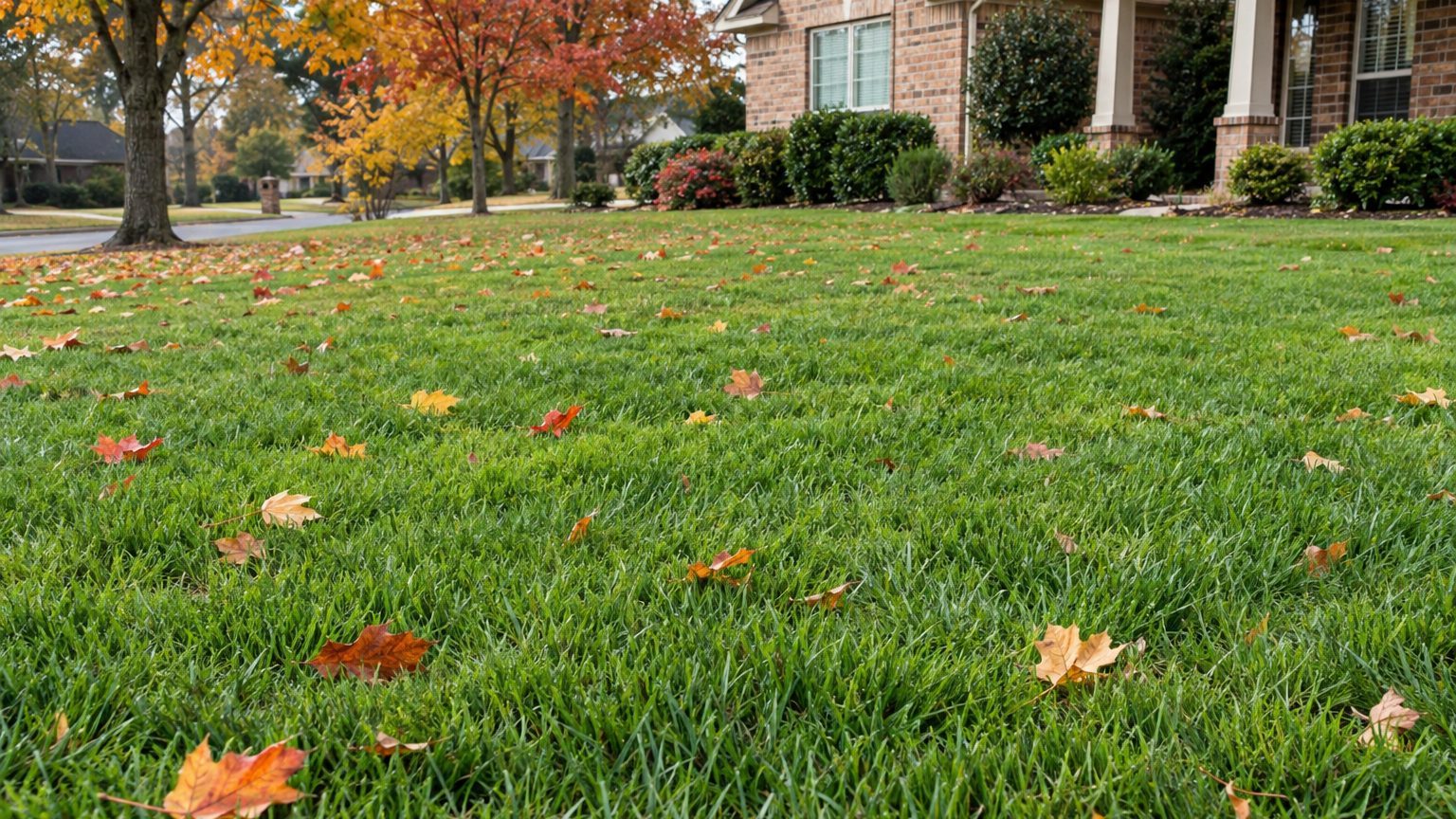
Bermuda and zoysia lawns across Arkansas turn tan in the cooler months and green up when warm weather settles in. Tall fescue lawns stay green much longer and struggle in July heat. Because warm-season and cool-season grasses run on opposite schedules, a useful Arkansas lawn care calendar starts with the grass you mow.
What to Do Each Month in a Arkansas Lawn

Warm-season grasses (bermuda, zoysia) do their work from late spring through summer. Tall fescue gets its attention in early spring and again from late summer into fall. The notes below say which grass each task belongs to.
| Month | In the lawn |
|---|---|
| January | Rest. Warm-season grass is dormant, so there is nothing to mow or feed. |
| February | Still quiet. If the weather turns mild, you can put down crabgrass preventer now, ahead of the weeds. |
| March | Apply crabgrass preventer this month, and feed tall fescue as it wakes up. Mowing begins again for fescue. |
| April | Bermuda and zoysia start growing, so mowing begins for them. Preventer and fescue fertilizer still work now, and warm-season lawns can be dethatched. |
| May | Seed bermuda or zoysia, or lay sod, while warmth builds. Start feeding warm-season lawns and dethatch them. Preventer still works if you missed spring. |
| June | Keep feeding warm-season grass and start watering as heat builds. If you missed May, seeding and sod still work, and so does dethatching. |
| July | Water deeply and keep feeding bermuda and zoysia. Leave tall fescue alone, because it should never be fertilized in summer. Sod still goes down if needed. |
| August | Core aerate, then seed tall fescue into the opened soil. Dethatch cool-season lawns now and keep watering through the heat. |
| September | Feed cool-season lawns and dethatch. If you missed August, aerating and overseeding fescue still work now. |
| October | Feed again to build roots before winter. Warm-season mowing winds down as growth slows. |
| November | Keep mowing tall fescue while it grows. Bermuda and zoysia are going dormant, so leave them be. |
| December | Rest. The grass is dormant or nearly so. |
Tall fescue asks for work in cool months, while bermuda and zoysia need attention in warm ones. Mixing warm-season and cool-season calendars can waste fertilizer.
Arkansas — the year and the numbers
- State
- Arkansas
- USDA zones
- 6b-8a
- Last spring frost
- March 12 to March 28
- First fall frost
- November 7 to November 20
- Annual rain
- 50 in
- Lawn type
- cool- and warm-season
- Source
- NOAA NCEI 1991-2020 Climate Normals, 32F freeze probabilities · Little Rock
When Does the Lawn Season Start and End in Arkansas?
Grass wakes up when the ground warms, not when the last frost passes. Seed and roots want soil at 65 to 70 °F and rising. Bermuda and zoysia lag behind fescue in spring because they need that warmth, which is why their big jobs wait until May.
Frost dates matter mostly for young grass. In Little Rock, the last spring freeze usually falls between March 12 and March 28, but tender growth can be affected by lighter frost outside that window.
In Little Rock, the first fall freeze usually lands between November 7 and November 20. Fescue seeded in late summer has time to root by then, and bermuda is already fading to tan. Mowing for warm-season lawns ends with that slowdown, while fescue keeps growing a bit longer.
How the Lawn Calendar Shifts Across Arkansas
Arkansas stretches from hills in the northwest to flat farmland in the east, and the timing slides a little with each.
- Ozark Mountains: Spring arrives later and fall comes sooner, so warm-season jobs start toward the end of their window. Tall fescue is common here, and late-summer seeding is worth keeping on time.
- Arkansas Delta: Warmth arrives early and lingers, so bermuda wakes sooner and stays active longer. Summer watering matters most on these flat, hot lawns.
- Ouachita Mountains: Elevation and shade keep soil cooler, so wait for the ground to warm before seeding or laying sod.
- Texarkana and south Arkansas: Spring often arrives earlier here, so tasks like preventer can go down near the start of their window.
Move your timing toward the early end of each window in the south and east, and toward the late end in the northwest hills.
Lawn Care Timing Mistakes to Avoid in Arkansas
Feeding Fescue in Summer
Fertilizer pushes tender growth on a cool-season grass that is already stressed by heat. The result is a weaker, disease-prone lawn.
Feed tall fescue in early spring and again in fall, and skip the summer months entirely.
Seeding Bermuda Too Early
Seed that goes down in cool spring ground sits and rots, or sprouts thinly before weeds crowd it. Wait for May, when warmth is steady. If you miss it, June still works.
Applying Preventer Too Late
Crabgrass preventer works by stopping seeds as they sprout, so it does nothing once the weeds are up. March is the target. If spring slips past you, April and May still give partial protection, but earlier is better.
Where to Get Lawn Advice in Arkansas
Soil, shade, and grass type vary from yard to yard, so local advice fills in what a general schedule cannot. The University of Arkansas Cooperative Extension Service runs an office in every county.
- The state extension website has lawn guides by grass type, which are worth reading before you buy seed or fertilizer.
- Your county extension office can advise on soil testing, so contact it before spring feeding.
- County staff can also help identify weeds or patches you cannot name, so bring a sample when problems show up.
Common Questions
Why Does Bermuda Turn Tan in Fall?
Bermuda and zoysia go dormant when the weather cools. The tan color is normal, and the grass greens up again when warm weather returns.
How Can You Tell Warm-Season Grass from Tall Fescue?
Look at the color in winter and the texture of the blades. Tall fescue stays green and has coarse, upright blades. Bermuda and zoysia turn tan and spread by runners across the soil.
Should You Mow a Dormant Lawn?
Dormant bermuda and zoysia are not growing, so there is nothing to cut. Tall fescue is different. It keeps growing into November, so keep mowing it until growth stops.