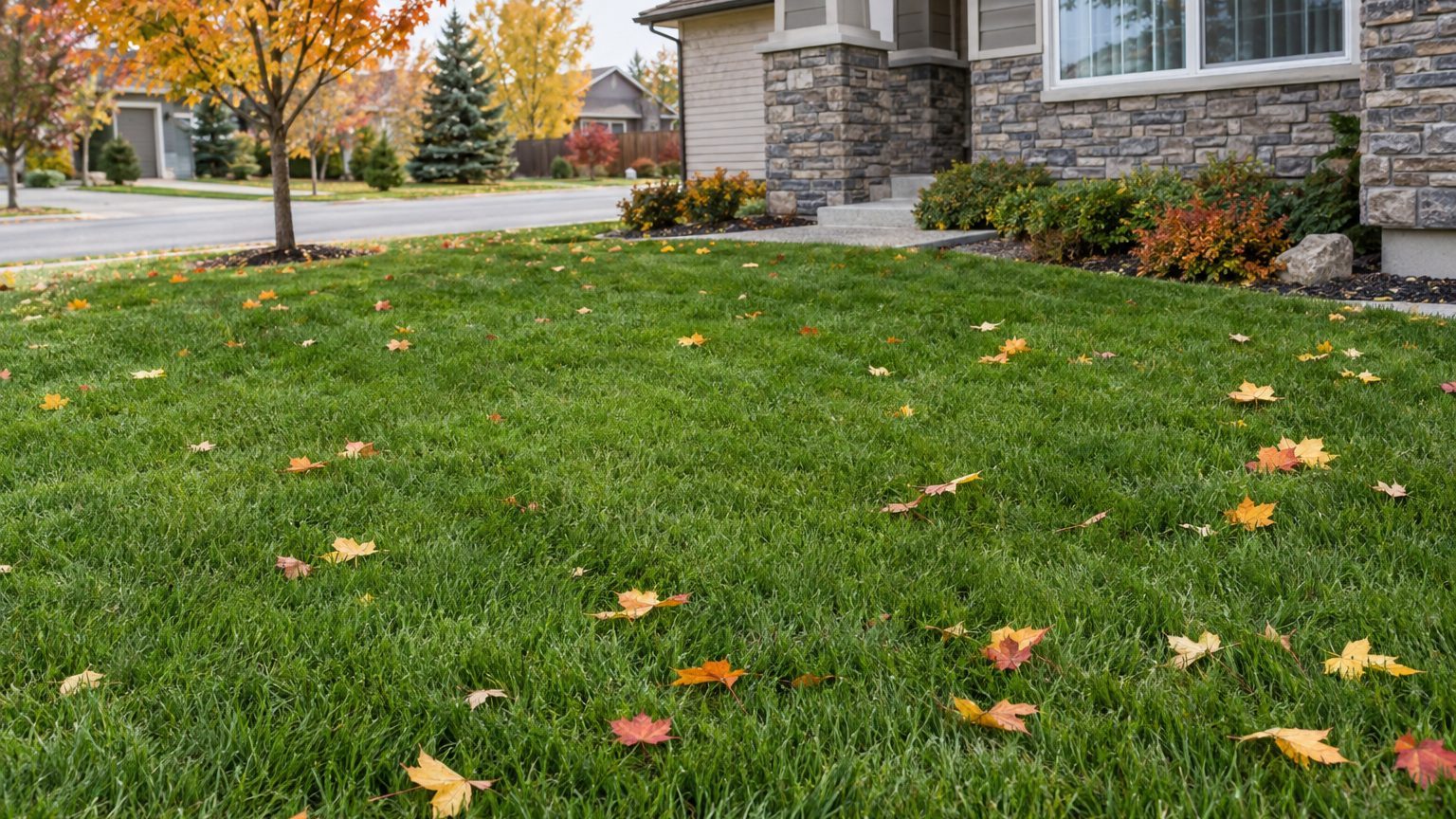
Alberta lawns spend long months under snow, then get a short season to thicken up before the cold returns. A few jobs, mostly in late spring and late summer, decide whether the grass fills in or thins out. Timing matters more here than effort.
What to Do Each Month in a Alberta Lawn

Cool-season grasses carry Alberta lawns, so the work clusters in late spring and late summer. Late spring starts the growing year, and late summer sets up the next one.
| Month | In the lawn |
|---|---|
| January | Rest. The grass is dormant under snow, so keep heavy foot traffic and piled shoveled snow off it. |
| February | Rest. A midwinter thaw can tempt you outside, but the grass is still asleep. |
| March | Rest, with a watch on the melt. Keep off soggy turf, and note any matted, grayish patches where snow lay longest. |
| April | Rake off winter debris once the ground firms up. The grass is only starting to stir, so seed, feed and mower can wait. |
| May | Apply crabgrass preventer before weed seed sprouts, keeping it away from areas you plan to seed, and feed the lawn as growth picks up. Start mowing and watering. Seeding also works this month if you missed late summer. |
| June | Mow regularly and water when rain falls short. This is steady upkeep with no big jobs. |
| July | Keep mowing and watering. Cool-season grass slows in heat, so deep, regular soaking carries it through. |
| August | Core aerate compacted areas and dethatch only where buildup warrants it, then seed thin areas. Warm soil and cooling nights help new grass root quickly. |
| September | Finish any needed aerating, dethatching and seeding, and feed the lawn to build roots for winter. Mow and water until the month closes. |
| October | Keep mowing while the grass still grows, and stop watering. If you prefer not to wait until November, October also works for dormant seeding. |
| November | Spread seed on cold soil so it sleeps through winter and sprouts in spring. That is dormant seeding. |
| December | Rest. The grass is dormant, and the tools can go in the shed. |
Skipping a month in the middle rarely hurts. Skipping late summer can hurt, because seeding, feeding and aeration all pay off during that stretch.
Alberta — the year and the numbers
- State
- Alberta
- Hardiness zones
- 4a
- Last spring frost
- May 21
- First fall frost
- September 16
- Annual rain
- 17 in
- Lawn type
- cool-season
- Source
- Environment and Climate Change Canada — Canadian Climate Normals 1981-2010, station CALGARY INT'L A · Calgary
When Does the Lawn Season Start and End in Alberta?
Grass wakes up when the soil warms, not when the calendar says so. Seed germinates once the soil reaches 10 to 18 °C (50 to 65 °F), and cool-season grasses grow hardest in the mild weather of late spring and early fall. Mowing runs from May through October, then the lawn goes quiet.
Frost dates matter mostly to young seedlings. In Calgary, the last spring frost falls on average May 21, which means that in about half of years it arrives later. Treat that as the middle of a risky stretch, not a safe planting date.
The first fall frost comes on average September 16 in Calgary, and again half of years it falls later. Seed sown in August has time to root before then. Seed sown much later is better left on cold soil until it sprouts the following spring.
How the Lawn Calendar Shifts Across Alberta
Alberta stretches from the dry southern prairie to the boreal north, so the monthly jobs slide earlier or later depending on where you live.
- Lethbridge and Medicine Hat: The south warms sooner and dries out faster. Spring work starts earlier, and summer watering matters more than elsewhere in the province.
- Calgary: Chinook winds can melt snow in midwinter and fool you into thinking spring has arrived. Wait for the soil to warm steadily before you feed or seed.
- Banff and Canmore: Altitude shortens the season, with greening later in spring and frost earlier in fall. Shift the late summer jobs toward the early end of their window.
- Peace River country: The north runs weeks behind Calgary in spring. Plan your seeding for the front of the late summer window so roots settle before winter.
Local weather can override all of this, so let your own lawn’s color and growth guide the start of each job.
Lawn Care Timing Mistakes to Avoid in Alberta
Feeding During a Winter Thaw
A warm spell in winter or early spring makes feeding feel timely, but the grass is dormant and the ground may still be frozen. Fertilizer sits on the surface and can wash away with meltwater. Wait for May, when growth is real, and feed again in September.
Applying Crabgrass Preventer Late
A crabgrass preventer can also interfere with lawn seed in the treated area, and it does nothing once crabgrass seedlings are already up. Put it down in May, as the lawn starts growing. Applying it after weeds appear wastes the product and leaves the weeds in place.
Seeding Too Late in Fall
Seed sown after September gives seedlings little time to root before hard cold, and many thin out over winter. Use August or September for regular seeding. If that window passes, hold the seed until November and let it sprout in spring.
Where to Get Lawn Advice in Alberta
Canada has no county extension offices, so advice comes from the province and from local growers. The province publishes farm and horticulture guidance, and nearby people know your soil and microclimate.
- Alberta’s ministry, Alberta Agriculture and Irrigation, is the place to look for provincial guidance on soil, turf and pests.
- A local master gardener group or horticultural society can tell you how your neighborhood behaves in spring, so ask before your first spring job.
- A nearby garden centre can suggest grass seed mixes that suit local conditions, so stop in before you buy seed in August.
Common Questions
Does a Chinook Thaw Mean the Grass Is Waking Up?
No. A warm, windy day melts snow, but the soil underneath stays cold and the grass stays dormant. Wait until the lawn greens and the soil warms steadily before feeding, seeding or mowing.
Is It Too Late to Aerate in October?
Aeration and dethatching are best in August and September, while the grass is still growing and can recover. By October the window has closed, so leave them until next summer.
What If the Lawn Is Still Brown in May?
Slow greening is common after a long winter, especially in cold shade. Grass that is brown in patches and pulls up easily with no roots after the soil has warmed is more likely dead and needs reseeding. Grass that holds firm in the ground is usually just slow.