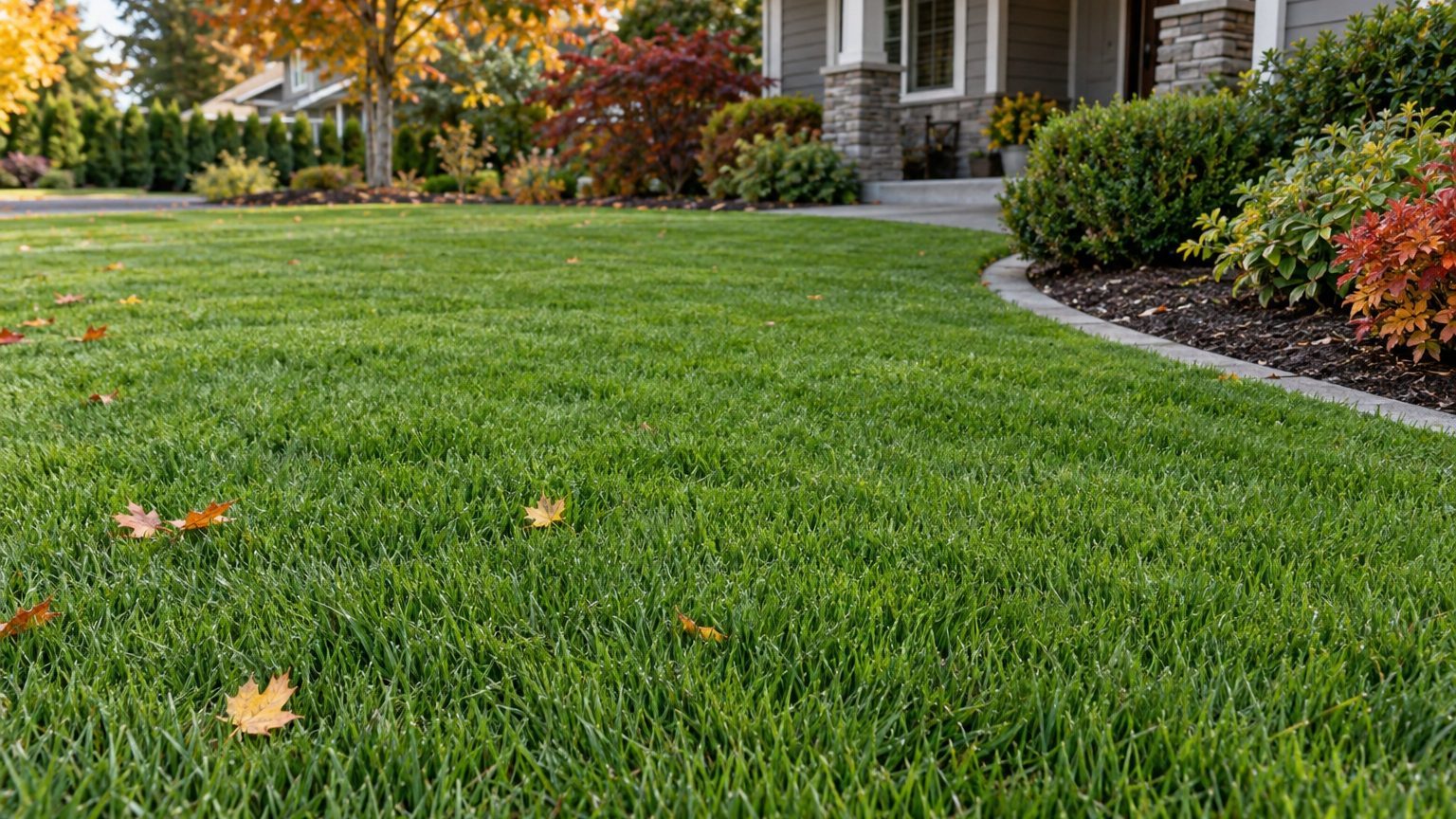
Lawns in Washington grow green through a long, damp, mild stretch on the west side of the Cascades, while the dry country to the east asks for a different rhythm. Grass here wants cool weather, steady moisture in summer and a fall that does the heavy lifting. The right timing and grass choice depend on which side of the mountains your yard is on.
Frost Dates and Growing Season in Washington
On the west side, around Seattle, the last spring freeze usually falls between February 27 and March 18, and the first fall freeze between November 13 and November 30. Washington spans USDA zones 4a to 9a, so the east side runs far colder and shorter. Grass grows with soil warmth, not the calendar, and the lawn year breaks into these moments.
- In early spring, from March into April, the freeze risk fades on the west side, yet cold wet soil keeps growth slow, so a young seeding here can still be nipped by a late frost.
- In April and May, mowing picks up, crabgrass preventer goes down in April, and seeding also works in April or May if you missed the fall window.
- From June through August, the lawn leans on watering, and these are the months when dry summers make regular irrigation matter.
- In August, seeding and dethatching begin; September brings seeding, dethatching and core aeration together, because warm soil and cooling air help new grass root before the cold arrives.
- In October and November, mowing continues while growth slows, and November fertilizing supports the lawn as the season winds down.
Late-summer seed on the west side has time to settle in before the first fall freeze arrives in mid to late November.
Washington — the year and the numbers
- State
- Washington
- USDA zones
- 4a-9a
- Last spring frost
- February 27 to March 18
- First fall frost
- November 13 to November 30
- Annual rain
- 39 in
- Lawn type
- cool-season
- Source
- NOAA NCEI 1991-2020 Climate Normals, 32F freeze probabilities · Seattle
Cool-Season or Warm-Season Grass in Washington?
Cool-season grass is the answer here. Winters are cold enough to stall warm-season types, and the growing months favor grasses that thrive in mild, moist weather. The east side adds hot, dry summers, so drought tolerance becomes the deciding trait there.
Four cool-season choices cover most Washington yards, and each fits a slightly different yard.
| Grass | Season | How it does here |
|---|---|---|
| Kentucky bluegrass | Cool | Makes a dense, green turf and fills in gaps on its own |
| Fine fescues (creeping red, chewings, hard) | Cool | Handles shade and lean soil in a low-care lawn |
| Perennial ryegrass | Cool | Sprouts fast, so it suits quick repairs and mixes |
| Tall fescue | Cool | Roots deeply, which helps through dry summer spells |
Warm-season grasses such as bermudagrass or zoysia do not suit the state’s winters, so they rarely make sense here. Mixes of the grasses above are common, since each covers a weakness in the others.
When to Seed, Fertilize and Aerate a Lawn in Washington
Late summer into fall carries most of the work. Warm soil and cooling air help seed sprout and root, and fall feeding builds strength for the next year.
Washington law limits phosphorus in lawn fertilizer, allowing it only for a new lawn or when a soil test shows a shortage, and never on frozen ground.
| Task | Recommended timing in Washington | Why then |
|---|---|---|
| Seeding | August, September | Warm soil and cooler air help seed root before winter |
| Core aeration | September | Grass is growing and recovers fast from the holes |
| Dethatching | August, September | Turf rebounds quickly in active growth |
| Fertilizing | September, November | Roots store the nutrients heading into winter |
| Crabgrass preventer | April | Goes down before weed seeds sprout |
| Watering | June, July, August | Dry summer weather calls for regular irrigation |
If you miss the fall window, seeding also works in April or May, and fertilizing also works in May. Dethatching can happen in April too. Mowing runs from April through November.
Lawn Problems to Watch for in Washington
Moss in Shady Damp Spots
Green velvet creeping through thin turf, especially under trees or along the north side of the house, points to moss. Long wet winters, shade and compacted soil all favor it over grass. Core aeration in September, more light and a soil test to check fertility give grass the upper hand.
Brown Grass in Summer

Straw-colored turf in July or August, mostly in sunny, open areas, usually means the lawn has gone dormant from dryness. Summers here are dry, and shallow roots suffer first. Regular watering in June through August keeps it green, and deep roots from fall seeding and tall fescue help.
Weeds in Thin Turf
Crabgrass and other weeds crowd in where the lawn is thin and the soil is bare, often along driveways and sidewalks. Applying preventer in April, before seeds sprout, stops many of them. Thick turf from fall seeding does the rest.
How Lawn Care Dates Change Across Washington
The dates above fit the west side best, and the state’s geography shifts them in a few clear ways.
- Seattle and Puget Sound: The water keeps winters mild and the freeze window short, so spring growth starts earlier and fall work stretches later.
- Spokane and the Columbia Basin: Winters are colder and summers hotter and drier, so the season starts later and watering matters more in summer.
- Cascade foothills and mountain towns: Elevation brings later springs and earlier fall chill, so seeding should happen earlier in the late-summer window.
Treat the dates in this article as a starting point, then adjust by a little for your own elevation and exposure.
Where to Get Lawn Advice in Washington
Washington State University Extension gives research-backed guidance for the state’s climates, and your county office can help with local conditions.
- The extension website has guides on grass choice, fertilizer and watering, useful before you plan a seeding.
- Your county extension office can point you to a soil test, helpful before any fertilizer, since phosphorus is restricted.
- Bring a sample of troubled turf to the county office when the problem first shows.
Common Questions
Can You Grow a Lawn in Eastern Washington?
Yes, with more attention to water. Drought-tolerant tall fescue and fine fescues handle the dry summers better, and irrigation is part of the routine.
Is Moss a Sign You Need More Lime?
Not on its own. Moss that appears with shade and soggy ground points to light and drainage first, so test the soil before adding anything.
Should You Mow Shorter in Fall?
Keep mowing through November as the grass keeps growing, and avoid scalping it. A slightly lower final cut is fine, but leave enough blade to protect the crown.