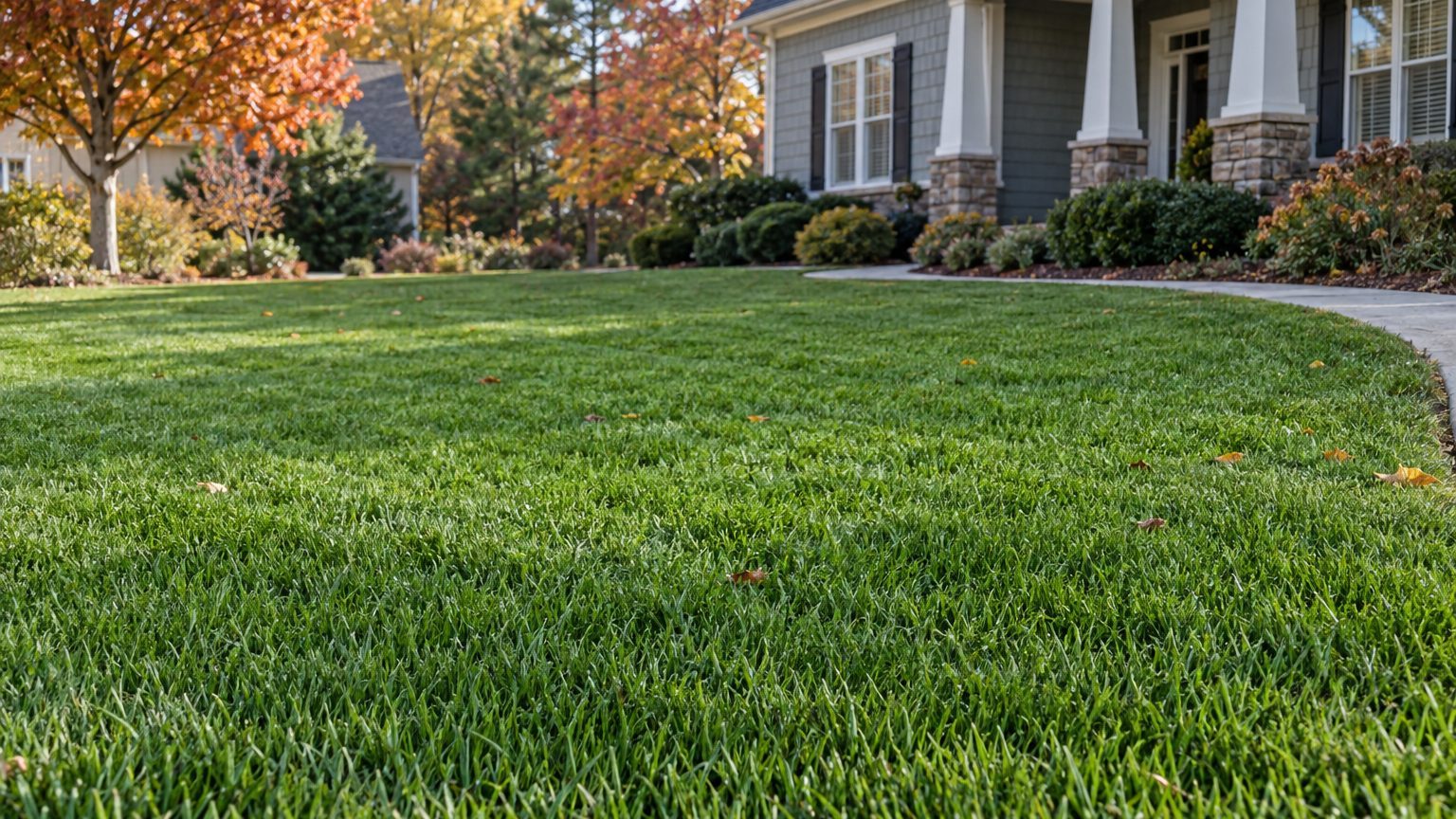
Walk a North Carolina yard in late summer and you will often see contrasting lawns: tall fescue that has gone tired and thin beside bermudagrass at full green. That contrast explains much of the state’s lawn-care calendar. Which grass you grow decides when you seed, feed and aerate.
Frost Dates and Growing Season in North Carolina
At the Piedmont reference location, the last spring freeze usually lands between March 23 and April 5. The first fall freeze usually lands between October 30 and November 8. The state spans USDA hardiness zones 5b to 8b, so mountain and coastal yards differ from that. Grass grows with soil warmth, so here is how the year runs.
- In early spring, crabgrass preventer goes down in March, and tall fescue is fed in the same month. A late freeze can still nip seedlings, so new seed waits.
- Once the soil warms in May and June, bermudagrass and zoysiagrass wake up fully. This is the time to seed bermudagrass, lay sod and fertilize those lawns.
- Through summer, from June to August, watering becomes especially important. Warm-season grass shrugs off heat while fescue struggles and needs the water.
- In late summer, August is the main window to aerate and seed tall fescue, with September as a fallback. The seed has time to root before the first fall freeze arrives.
- In fall, feed fescue in September and October. Mowing continues into November as long as the grass keeps growing.
Frost marks the risk to young grass, not the day growth starts or stops, so watch the soil and the weather as well as the date.
North Carolina — the year and the numbers
- State
- North Carolina
- USDA zones
- 5b-8b
- Last spring frost
- March 23 to April 5
- First fall frost
- October 30 to November 8
- Annual rain
- 44 in
- Lawn type
- cool- and warm-season
- Source
- NOAA NCEI U.S. Climate Normals 1991-2020, 32F freeze probabilities · Charlotte
Cool-Season or Warm-Season Grass in North Carolina?
Both can work, because North Carolina sits in the transition zone. Winters are too cold for some warm-season grasses to stay green, and summers are hot enough to stress cool-season ones. Tall fescue is the common choice for shady, cooler yards. Bermudagrass and zoysiagrass suit full sun and heat.
| Grass | How it does in North Carolina | Why |
|---|---|---|
| Tall fescue | Often stays green outside summer, but needs care in hot weather | Cool-season grass that grows in early spring and fall, and should not be fed in summer |
| Kentucky bluegrass | Suited to cooler, higher ground | Prefers the milder summers of the mountains |
| Bermudagrass | Thrives in hot, sunny lawns | Warm-season grass started from seed or sod |
| Zoysiagrass | Dense turf in warm yards | Warm-season grass, mostly started from sod or plugs |
Warm-season lawns turn tan after the first fall freeze and green up again in spring. That is normal dormancy, not damage.
When to Seed, Fertilize and Aerate a Lawn in North Carolina
Cool-season and warm-season lawns follow opposite calendars. Fescue works in late summer and fall, while bermudagrass and zoysiagrass work in late spring and summer. Match each task to your grass.
| Task | Best months in North Carolina | Why then |
|---|---|---|
| Seed tall fescue | August (September also works) | Warm soil and cooler nights help seed root before winter |
| Core aeration, fescue | August (September also works) | Opens the soil just before overseeding |
| Fertilize tall fescue | March, September, October (April also works) | Feeds when the grass grows, never in summer |
| Seed bermudagrass or zoysiagrass | May (June also works) | Warm soil for fast establishment |
| Lay sod, warm-season | May (June and July also work) | Roots take hold in heat |
| Fertilize warm-season lawns | May, June, July | Matches peak growth |
| Crabgrass preventer | March (February, April and May also work) | Goes down before crabgrass seed sprouts |
| Dethatch | August and September for fescue, May and June for bermuda and zoysia | Grass recovers quickly in active growth |
If you miss the preventer window in March, it can still go down as late as May. Fescue that misses August can still be seeded in September.
Lawn Problems to Watch for in North Carolina
Thinning Fescue After Summer
Tall fescue struggles through humid heat, and bare, thin patches often show up by late summer. That is why August aeration and overseeding matter here. Water deeply through June, July and August, and skip summer fertilizer.
Crabgrass in Thin Turf

Crabgrass moves into thin spots where the soil warms early. Apply preventer in March, before it sprouts. Dense turf also helps, so overseeding in late summer pays off the following year.
Brown Warm-Season Lawns in Winter
A bermuda or zoysia lawn that turns tan after the first fall freeze is dormant, not dead. Hold off on feeding until May. Spring fertilizer applied too early mostly feeds weeds.
How Lawn Care Dates Change Across North Carolina
The dates above fit the Piedmont, and the rest of the state shifts around them.
- Blue Ridge Mountains: Spring comes several weeks later, so seeding and feeding start later. Kentucky bluegrass does better here than in the warmer parts of the state.
- Coastal plain: Spring arrives earlier, and warm-season grasses green up sooner. Frost risk ends sooner too.
- Charlotte and the Piedmont: The dates in this guide apply here, with fescue and warm-season grasses both in use.
If you live between these areas, adjust gradually and let the weather and soil temperature guide you.
Where to Get Lawn Advice in North Carolina
North Carolina State Extension publishes lawn guidance for the state, and your county office can help with local questions.
- Visit your county extension office for a soil test before you fertilize or lime.
- Bring a sample of a damaged patch to the office for diagnosis when the problem is unclear.
- Check your soil and grass type now, so the next seeding or feeding window finds you ready.
Common Questions
Can You Grow Tall Fescue and Bermudagrass Together?
You can, but they compete, and the mix tends to look patchy. Fescue stays green in winter while bermuda goes tan, so the seasonal contrast can make a mixed lawn look uneven.
Is It Too Late to Seed Fescue If You Miss August?
No. September still works, though the seed has less time to root before the first fall freeze, so keep the soil evenly moist after seeding.
Do You Need to Mow in Winter?
Mowing continues into November for fescue and through October for bermuda and zoysia. After that, growth slows and mowing is rarely needed until spring.