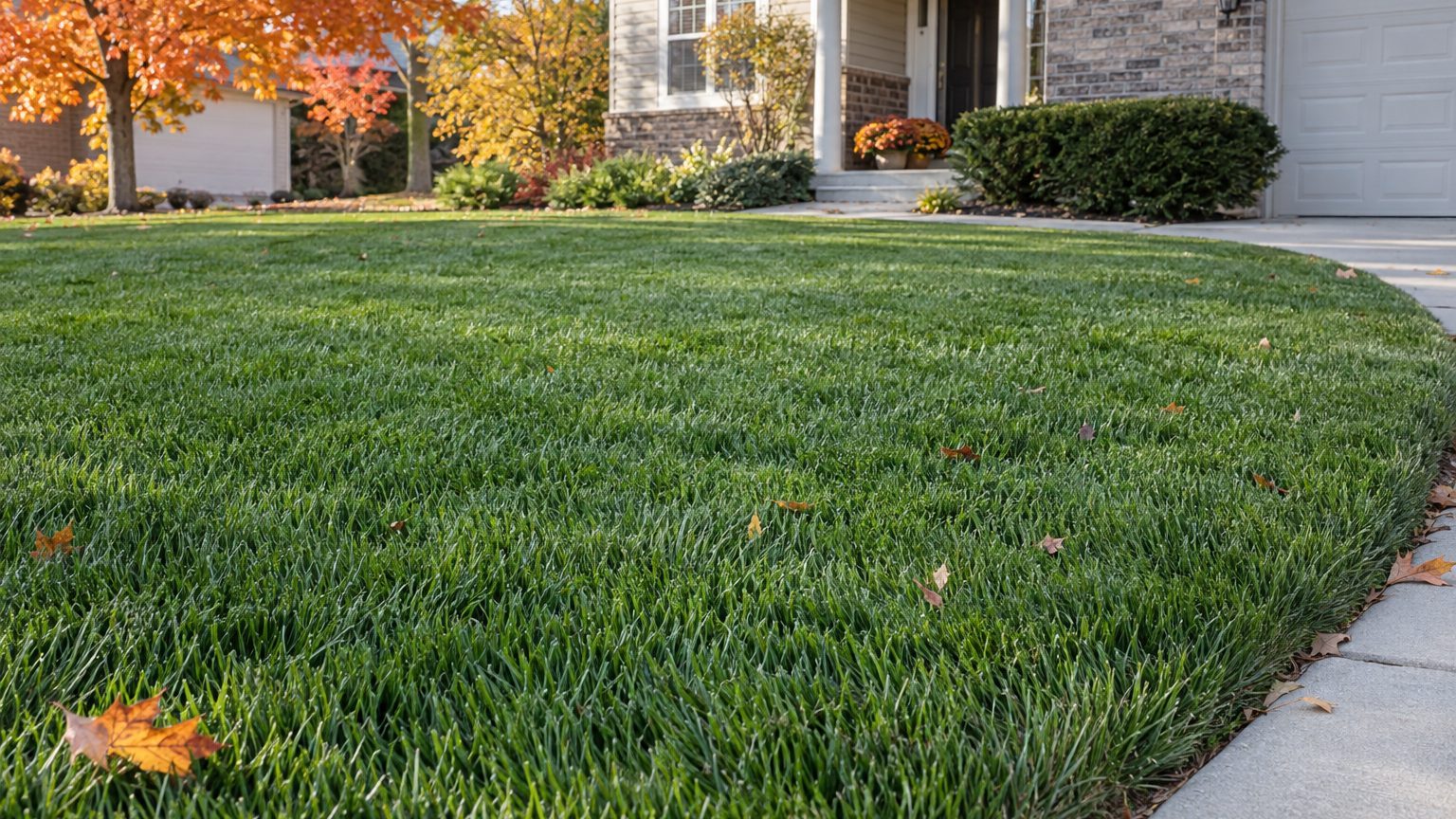
Illinois lawns green up fast in April, slow down in July’s heat, and push back hard in September, when the grass finally gets the cool nights it likes. Most of the state grows cool-season turf, so the yard’s year runs on that rhythm of spring recovery, summer survival and autumn rebuilding.
Frost Dates and Growing Season in Illinois
In Chicago, the last spring freeze usually falls between April 11 and April 22, and the first fall freeze between October 24 and November 3. Suburban and rural yards tend to freeze later in spring and earlier in fall, often by one to two weeks, so check your own county. Illinois spans USDA hardiness zones 5a to 7b, so the far south runs milder than the north.
- In early spring, grass wakes as the soil warms, not on a frost date, and April is the month to put down crabgrass preventer and to core aerate if you missed the fall window.
- In late spring, May brings steady mowing and fast growth, and it also works for a light feeding or for seeding bare spots if April slipped by.
- In summer, June through August is when watering matters most, and a young seedling caught in that heat struggles to survive.
- In late summer, August and September are the seeding months, with dethatching in the same stretch, so new grass roots before winter.
- In fall, September and November suit fertilizing, and mowing continues through November as long as the grass keeps growing.
A frost only marks the risk to tender new seedlings, so spring seed sown too early can be knocked back, while seed sown too late in fall may not root before the ground freezes.
Illinois — the year and the numbers
- State
- Illinois
- USDA zones
- 5a-7b
- Last spring frost
- April 11 to April 22
- First fall frost
- October 24 to November 3
- Annual rain
- 38 in
- Lawn type
- cool-season
- Source
- NOAA NCEI 1991-2020 Climate Normals, 32F freeze probabilities · Chicago
Cool-Season or Warm-Season Grass in Illinois?
Cool-season grass is the standard choice here. It handles the cold winters across all of Illinois and grows hardest in spring and fall, then slows in midsummer heat and dry spells.
Warm-season turf struggles with the winters, and it is not what extension guidance lists for the state’s lawns.
| Grass | How it does in Illinois | Why |
|---|---|---|
| Kentucky bluegrass | Dense, self-repairing lawn | Cold-hardy cool-season grass that spreads to fill thin areas |
| Tall fescue | Holds up through summer stress | Deep roots help it ride out heat and dry weather |
| Perennial ryegrass | Quick to sprout | Cool-season grass that establishes fast, often mixed with others |
| Fine fescues | Good for lighter, shadier spots | Creeping red, chewings and hard fescue suit lower-input lawns |
Many Illinois lawns blend these grasses, so a patch that struggles under certain conditions can be supported by a different type.
When to Seed, Fertilize and Aerate a Lawn in Illinois
Late summer into early fall is the busiest stretch of the lawn year here. Seed, aeration and feeding all land in August and September, when warm soil and cooler air favor new roots.
Spring offers a fallback window for several of the same jobs.
| Task | Best months in Illinois | Why then |
|---|---|---|
| Seeding | August, September (April and May also work) | Seedlings root before winter with less weed pressure |
| Core aeration | September (April or May if needed) | Grass recovers quickly in active growth |
| Fertilizing | September, November (May also works) | Feeds roots as the grass stores energy for winter |
| Dethatching | August, September (April also works) | Grass can rebound before cold weather |
| Crabgrass preventer | April (May also works) | Goes down before crabgrass seed sprouts |
| Watering | June, July, August | Summer heat dries the soil fastest |
If you miss September for aeration, April or May still gets the job done. Mowing runs from April through November.
Lawn Problems to Watch for in Illinois
Thin, Bare Patches After Winter
Cold winters, ice and salt along driveways leave thin or brown spots in spring. Rake the dead grass out and reseed in April or May, or wait for August and September for the strongest start.
Brown Grass in Midsummer

Heat and dry spells turn cool-season turf tan, especially on slopes and compacted soil. A dormant lawn often recovers when cooler weather returns, though regular watering through June, July and August keeps it greener. Brown that stays when the soil is moist points to a different problem.
Weedy, Compacted Areas
Heavy clay soil packs down under foot traffic, and thin turf lets weeds in. Core aeration in September opens the soil, and overseeding after it fills gaps so weeds have less room.
How Lawn Care Dates Change Across Illinois
Illinois stretches a long way north to south, and the season shifts with it.
- Chicago and the northern counties: Springs arrive later and falls turn cold sooner, and Lake Michigan keeps shoreline spring cooler, so seeding and feeding sit toward the later end of spring windows and the earlier end in fall.
- Central Illinois around Springfield and Peoria: Dates fall between north and south, so the general windows apply fairly closely.
- Southern Illinois near Carbondale: Soil warms earlier in spring and stays warm longer in fall, so spring jobs can start sooner and fall seeding can run a bit later, though summer stress hits harder.
Open, exposed yards run colder than sheltered ones, so a county office can help you fine-tune timing.
Where to Get Lawn Advice in Illinois
Local experts can tell you which grass and which dates suit your own soil and neighborhood.
- University of Illinois Extension offers lawn guidance written for the state, which helps when you plan seeding or fertilizing.
- Your county extension office can run a soil test or help diagnose a patch, so visit before you buy fertilizer or lime.
Common Questions
Can You Plant Warm-Season Grass in Illinois?
It is a poor fit for most of the state, because winters are cold enough to thin it. Kentucky bluegrass, tall fescue, perennial ryegrass and fine fescues are the usual choices.
Is Spring a Good Time to Seed in Illinois?
April and May work as a fallback, but young grass then faces summer heat before it has deep roots. If you can wait, August and September give better results.
Why Does a Lawn Turn Brown in Summer but Stay Alive?
Cool-season grass goes dormant in heat and drought to protect itself. Check that the crowns look firm and tan rather than mushy, and look for green regrowth once the weather cools.