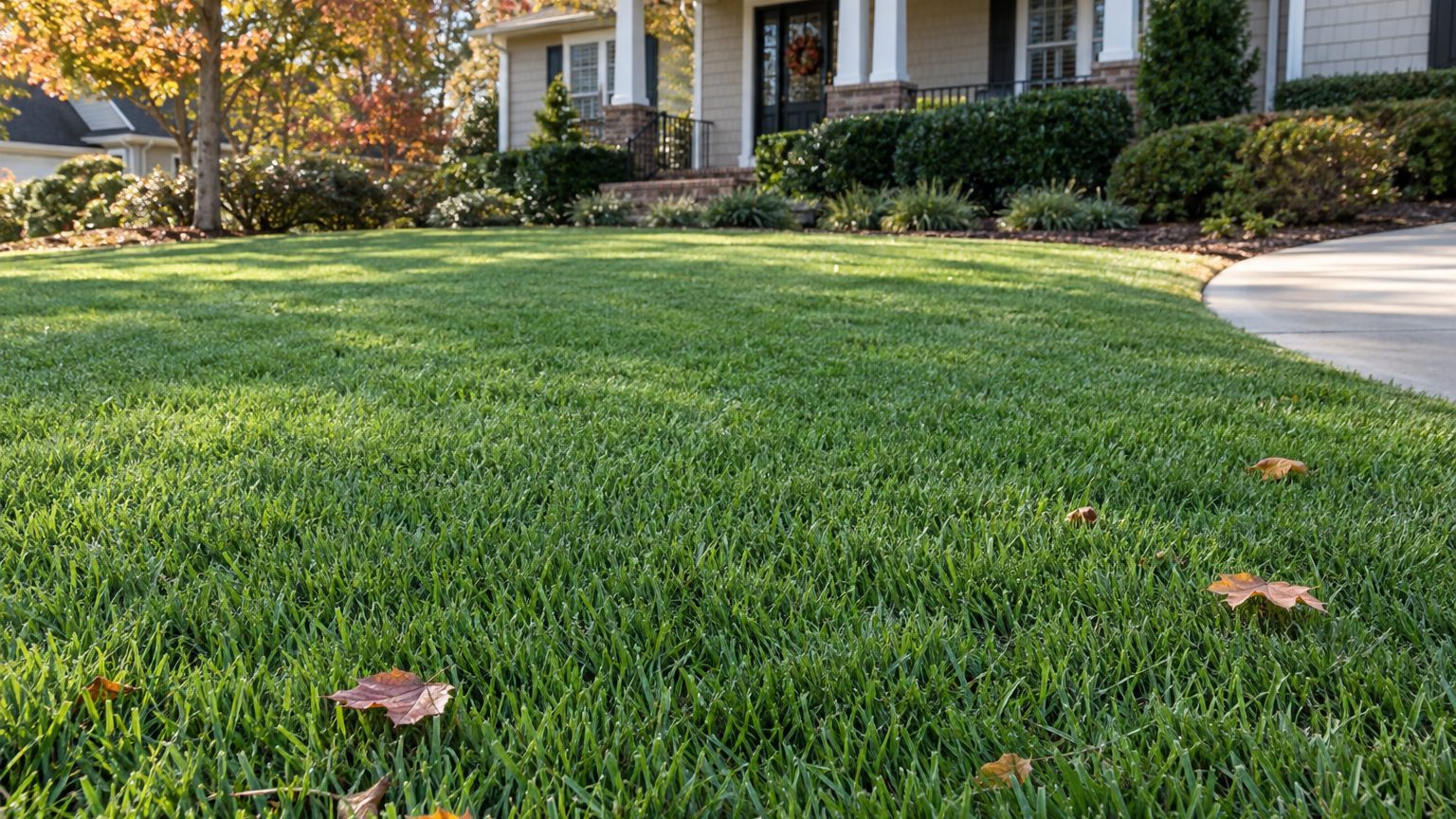
Warm-season grass in South Carolina goes straw-colored after the first hard frost, sits dormant through winter, and greens back up once the soil warms in spring. Lawns in South Carolina follow that rhythm, so the best work lands in late spring and summer rather than in fall, the way it would in the Midwest.
Frost Dates and Growing Season in South Carolina
In Charleston, the last spring frost usually falls between February 28 and March 17, and the first fall frost between November 20 and December 5. South Carolina spans USDA hardiness zones 7a to 9a, a range based on average annual extreme minimum temperatures rather than spring green-up dates. Grass grows with soil warmth, not with the frost calendar, so here is how the year tends to run.
- In late winter, the lawn is dormant and tan, and a late frost does little harm to it, so this is the time to plan and to get a soil test.
- In spring, as the soil warms and the grass greens up, mowing begins in March and April.
- In May, the lawn is growing fast and the main work of the year opens, including aeration, dethatching, seeding and sod.
- Through summer, from June to August, fertilizing and regular watering carry the lawn through the heat.
- In fall, growth slows, mowing continues into November, and the grass heads toward dormancy as frost arrives.
Upstate South Carolina runs several weeks tighter at both ends of these dates, while peninsular Charleston is milder than the numbers above suggest.
South Carolina — the year and the numbers
- State
- South Carolina
- USDA zones
- 7a-9a
- Last spring frost
- February 28 to March 17
- First fall frost
- November 20 to December 5
- Annual rain
- 53 in
- Lawn type
- warm-season
- Source
- NOAA NCEI 1991-2020 Climate Normals, 32F freeze probabilities · Charleston
Cool-Season or Warm-Season Grass in South Carolina?
Warm-season grass is the usual choice across much of South Carolina. Long, hot, humid summers suit it, it tolerates dry spells better than cool-season types, and its winter dormancy is a normal pause, not a failure.
Cool-season grasses struggle through South Carolina summers, so most lawns rely on the species below.
| Grass | How it does in South Carolina | Why |
|---|---|---|
| St. Augustinegrass | Common in warm, humid areas | Planted as sod or plugs only, never seed |
| Centipedegrass | Suits low-maintenance lawns | Can be grown from seed |
| Bermudagrass | Handles heat and sun well | Can be grown from seed |
| Zoysiagrass | Forms a dense turf | Mostly installed as sod or plugs |
| Bahiagrass | Fits tougher, less-tended spots | Can be grown from seed |
Each species has its own habits, so the choice depends on sun, soil and how much mowing you want to do. Seed-by-seed comparisons live on the state’s grass seed page.
When to Seed, Fertilize and Aerate a Lawn in South Carolina
Warm-season lawns do their heavy lifting when the soil is warm and the grass is actively growing. That puts most big jobs in late spring and summer.
If you miss a window, the fallback months in the last column still work.
| Task | Best months in South Carolina | Why then |
|---|---|---|
| Core aeration | May (June also works) | Grass recovers quickly while growing |
| Dethatching | May to June (April also works) | Turf fills back in fast |
| Fertilizing | May to August | Feeds grass during active growth |
| Seeding | May (June also works) | Warm soil helps seed establish |
| Laying sod | May (April, June and July also work) | Roots take hold in warm weather |
| Watering | May to September | Supports growth through the heat |
| Mowing | March to November | Follows the full growing season |
Seeding applies only to seeded grasses such as bermudagrass, centipedegrass and bahiagrass. St. Augustinegrass has no seed, so it goes in as sod or plugs.
Lawn Problems to Watch for in South Carolina
Straw-Colored Grass in Winter

Warm-season grass turns tan once frost arrives, and that is normal dormancy. Check by tugging a few blades near the base. If the crown is firm and pale, the lawn is asleep, not dead. Hold off on fertilizer and wait for spring warmth.
Dry, Stressed Turf in Summer
Heat and dry spells can leave grass dull, curled or footprinted, with the marks lingering after you walk across it. Water deeply when the grass shows these signs, and mow at the height suited to your grass so roots stay deeper.
Thatch Buildup
A spongy feel underfoot, plus water that runs off instead of soaking in, points to thatch. Humid summers and fast growth encourage it. Dethatching in late spring, when the grass can recover quickly, clears it out.
How Lawn Care Dates Change Across South Carolina
The dates above describe Charleston, and the rest of the state shifts around them depending on where you live.
- Upstate: Spring comes later and fall frost arrives earlier, so green-up starts later and dormancy begins sooner.
- Charleston peninsula: The harbor keeps things milder, so grass wakes earlier and stays active longer.
- Coastal Lowcountry: Mild winters stretch the growing season, though the warm, humid air also favors thatch and turf stress.
Treat the months in this article as a guide, and let your own soil warmth and local conditions fine-tune the timing.
Where to Get Lawn Advice in South Carolina
Clemson Cooperative Extension offers research-based lawn guidance written for South Carolina grasses and soils.
- Its lawn fact sheets cover maintenance calendars for each grass type, useful before the main growing season opens.
- Your county extension office can take a soil sample and help diagnose a stubborn patch, ideally before spring work begins.
Common Questions
Can You Plant St. Augustinegrass from Seed in South Carolina?
No. St. Augustinegrass is sold only as sod or plugs, so seeding is for bermudagrass, centipedegrass and bahiagrass.
Is a Tan Lawn in Winter a Sign of Trouble?
Usually not. Warm-season grasses go dormant after frost, and they green up again when the soil warms in spring.
When Does Mowing Season Run in South Carolina?
Mowing runs from March through November, following the stretch when grass is actively growing.