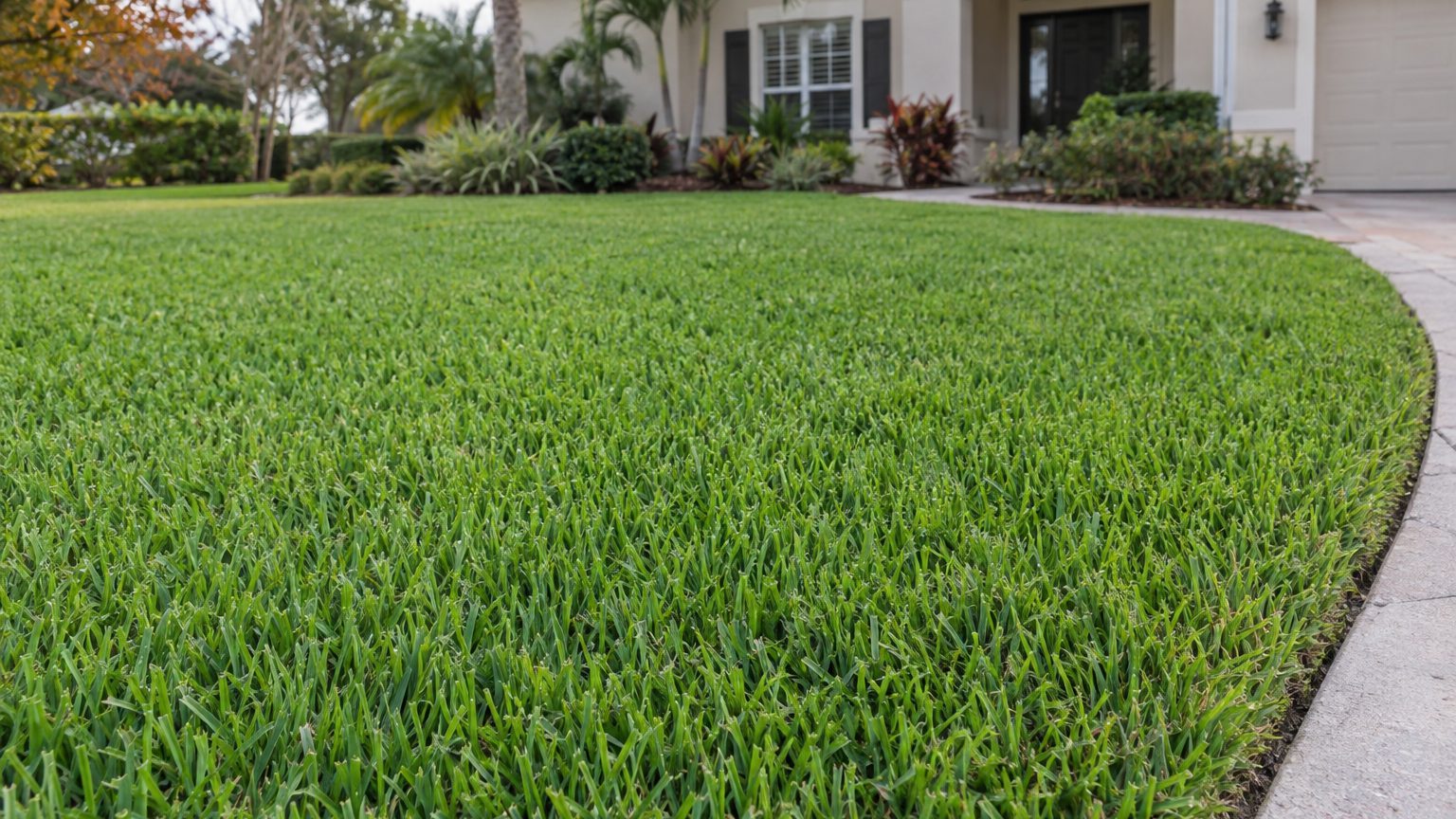
Warm-season grass follows different rhythms across Florida: northern lawns green up in spring, while central and southern lawns can grow through winter and face their hardest stretch in summer. Lawns in Florida follow soil warmth far more than the calendar, and the state is long enough that a lawn in the Panhandle and one in Miami keep different rhythms.
Frost Dates and Growing Season in Florida
Jacksonville is the reference point for the freeze dates below, while Florida as a whole spans USDA hardiness zones 8b to 11b. In Jacksonville, the last spring freeze falls between February 16 and March 7, which matters for young plugs and sod laid early.
- In Jacksonville, lawns can go dormant and turn tan in winter, and the first fall freeze arrives between November 26 and December 13, so avoid installing sod or plugs once the lawn is dormant.
- In early spring in Jacksonville, the last freeze risk fades between February 16 and March 7, but the grass stays brown until the soil warms, so wait for real green before feeding.
- In April and May, the lawn greens up and grows fast, and this is the window for the first feeding, plus seeding in May for the grasses that come from seed.
- From June through September, heat and summer rain push growth hardest, so mowing, watering and sod installation carry the work.
- In October, growth begins to slow as nights cool, and feeding or scheduled watering wraps up before dormancy.
Central and south Florida are effectively frost-free, so the calendar flips there: winter is the easy growing season and summer is the hard part. Do not apply the north Florida freeze dates to Orlando or Miami.
Florida — the year and the numbers
- State
- Florida
- USDA zones
- 8b-11b
- Last spring frost
- February 16 to March 7
- First fall frost
- November 26 to December 13
- Annual rain
- 53 in
- Lawn type
- warm-season
- Source
- NOAA NCEI 1991-2020 Climate Normals, 32F freeze probabilities · Jacksonville
Cool-Season or Warm-Season Grass in Florida?
Warm-season grass is the answer. Cool-season types like tall fescue and bluegrass struggle in Florida summer heat and humidity, and they have no use for mild winters. The grasses that persist here love heat, tolerate sandy soil and handle summer rain.
Most Florida lawns come from six warm-season grasses. Some are sold as seed, but St. Augustinegrass is only available as sod or plugs, never as seed.
| Grass | Season | How it does in Florida |
|---|---|---|
| St. Augustinegrass | Warm | Widely planted, sold as sod or plugs only |
| Bahiagrass | Warm | Tough and low-input, can be seeded |
| Bermudagrass | Warm | Grows fast in full sun, can be seeded |
| Centipedegrass | Warm | Slower growing, can be seeded |
| Zoysiagrass | Warm | Forms a dense turf, planted from sod or plugs |
| Seashore paspalum | Warm | A fit for coastal and salty conditions |
Which one suits your yard depends on sun, soil and how much mowing you want to do. The Florida grass seed guide goes deeper on choosing one.
When to Seed, Fertilize and Aerate a Lawn in Florida
Planting happens in the warm months, when roots form quickly. Aerate compacted soil while the turf is actively growing so it can recover. Seeding is limited to bahia, centipede and bermuda, since St. Augustine goes in as sod or plugs.
Many Florida counties and cities, including Orange, Pinellas, Manatee, Sarasota and Lee, ban nitrogen and phosphorus fertilizer from June 1 to September 30, so check your county before feeding in summer.
| Task | Recommended timing in Florida | Why then |
|---|---|---|
| Seeding | May, or April and June | Warm soil gets bahia, centipede and bermuda growing quickly |
| Laying sod | April through September, or March and October | Sod and plugs root while the grass is actively growing |
| Fertilizing | April and May, or October | First feeding comes when the grass greens up in spring |
| Dethatching | May and June, or April | The lawn recovers fast once it is growing hard |
| Watering | April through October | Growth is active and rain can be uneven |
Mowing runs all twelve months, though it slows in winter. In North and Central Florida, sod goes down from April to September, while in the South it can go down all year.
Lawn Problems to Watch for in Florida
Tan Grass After Winter Cold
A tan, crispy lawn in winter is usually dormancy in north Florida, where freezes still arrive. Tan blades together with cold nights point to dormancy, not death. Hold off on feeding and watering heavily until spring growth returns and the lawn greens up again.
Thin Grass in Summer Heat
Thinning turf that stays patchy through the hot, wet months often shows up where mowing is too low or the soil stays soggy. Humidity and heat stress the grass at the same time. Raise the mower height, water at the right moments and avoid adding fertilizer where county rules prohibit it.
Dry Patches in Sandy Soil
On sandy soil, dry, bluish, curling blades between rains point toward drought stress, though persistent patches may need a closer diagnosis. Water deeply when the grass shows these signs, especially from April through October, instead of sprinkling lightly.
How Lawn Care Dates Change Across Florida
Florida stretches far enough that the season changes with your latitude and distance from the coast.
- The Panhandle and Jacksonville: Winter freezes still happen, so lawns go dormant and spring work waits for warm soil.
- Orlando and Central Florida: Frost is rare, so growth starts earlier and the cool months are easier for the lawn than summer.
- Miami and the Keys: The lawn can grow nearly year-round, so the main stress comes from summer heat and rain.
Coastal yards also deal with salt, which favors tougher grasses like seashore paspalum.
Where to Get Lawn Advice in Florida
UF/IFAS Extension serves every county in Florida with lawn guidance suited to local soil and rules.
- Your county extension office can explain local fertilizer restrictions before you plan any summer feeding.
- Bring a sample of damaged turf to the office to get a diagnosis when patches appear.
- Contact them in spring, before the first feeding, to confirm what your lawn needs.
Common Questions
Can You Plant St. Augustinegrass from Seed in Florida?
No. St. Augustinegrass is sold only as sod or plugs, so seeding is for other warm-season grasses like bahia, centipede and bermuda.
Is the Lawn Dormant All Winter in Florida?
It depends on where you live. North Florida lawns turn tan during freezes, while central and south Florida lawns stay green or slow only slightly.
Can You Fertilize a Florida Lawn in Summer?
Often not. Check your county rule before applying fertilizer in summer.