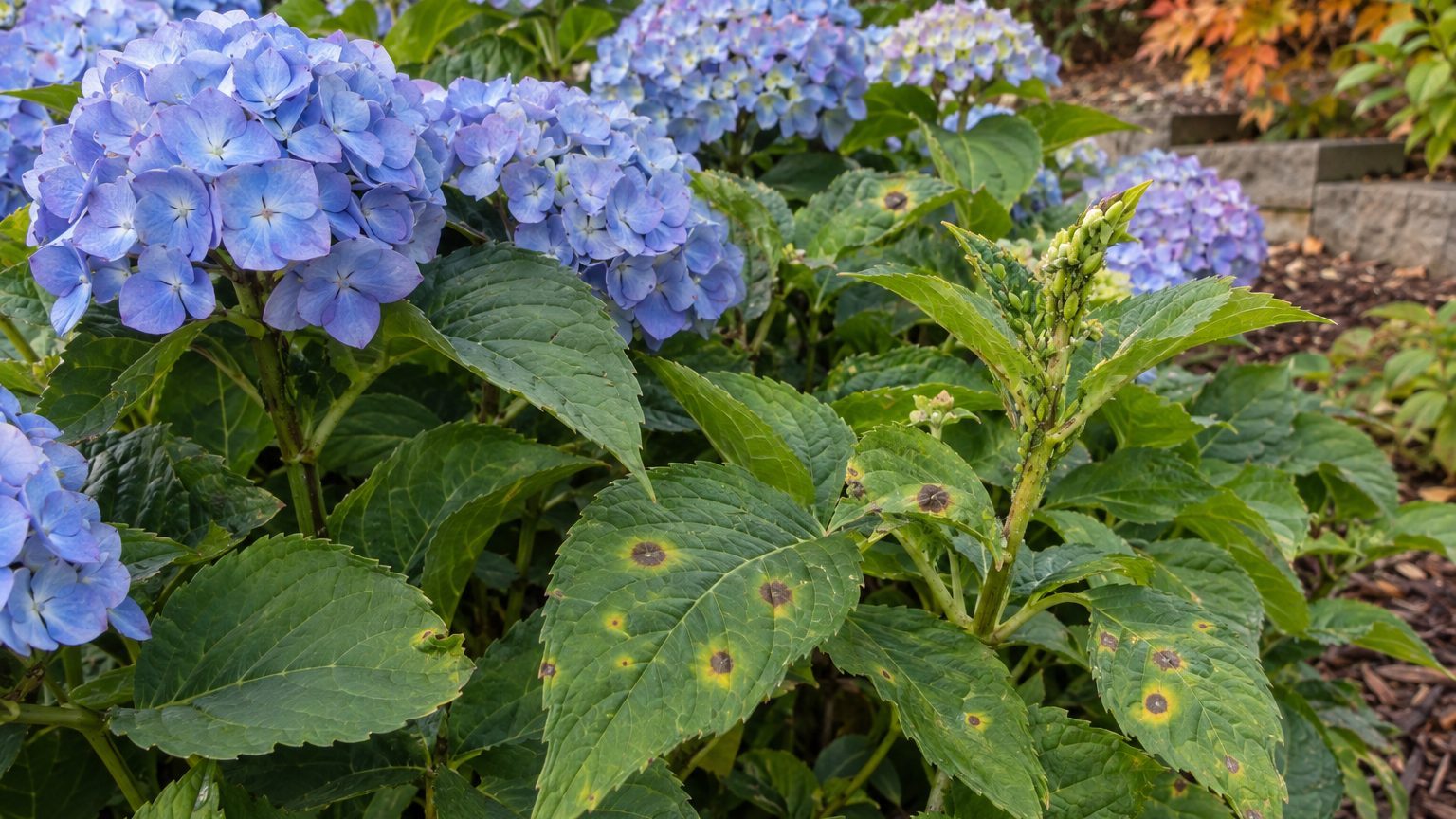
Hydrangea trouble in Vermont follows the freeze, not the calendar. Winter bud kill on bigleaf varieties, powdery mildew in humid summer stretches, and vole damage under snow cover account for most of the state’s problems, with Burlington’s short frost-free season setting the rhythm. Panicle and smooth hydrangeas dodge nearly all of it. The list below covers only what actually shows up here, in the order it appears each season.
Hydrangea pests and diseases Vermont: The Short Answer
USDA Plant Hardiness Zone Map places Burlington and the rest of Vermont across zone 3b to 5b, a range built on the average annual extreme minimum temperature, and that cold accounts for most of what goes wrong here. Vermont hydrangea trouble leans toward winter bud kill and fungal leaf disease rather than the insect pressure that dominates warmer states, with each problem arriving in a fairly predictable order through the season.
No blooms after a hard winter
Flower buds set the previous fall froze out over winter, common where lows dip toward the zone 3b end of Vermont’s range. Prune out only the dead wood once new leaves appear in spring. Panicle and smooth hydrangeas bloom on new wood instead and skip this problem most years.
Curled new growth in early summer

Aphids cluster on tender shoot tips as new growth pushes out, leaving sticky honeydew and sooty mold behind on the leaves below. A strong hose spray every few days clears light infestations before ladybugs and lacewings move in on their own. Save insecticidal soap for heavy clusters only.
White dust on the upper leaves
Powdery mildew coats leaves during warm days followed by cool, humid nights, a pattern Vermont’s short but muggy summers deliver often enough to matter. It rarely kills the plant outright but weakens next year’s bloom. Thin crowded stems for airflow and water the soil, not the foliage.
Brown spots ringed in purple

Cercospora leaf spot shows up on the lower, older leaves first during wet stretches in mid to late summer, then spreads upward as spores splash off wet foliage. Rake and discard fallen leaves each fall instead of composting them. A layer of mulch keeps soil-borne spores from splashing back up.
Flowers turning to gray mush

Botrytis blight moves fast through spent blooms and soft new growth during cool, damp stretches, turning petals to gray fuzz almost overnight. Deadhead spent flowers promptly and space plants out for better airflow between them. Bigleaf varieties, with their dense mophead clusters, hold moisture longest and see this most.
Stems gnawed near the ground

Voles chew bark at snow level over winter, girdling stems hidden under drifts, while deer browse buds and soft shoots whenever the ground is bare. A hardware-cloth collar around the base stops both kinds of damage. Wrap the base in late fall, before the ground freezes hard for good.
Vermont — the year and the numbers
- State
- Vermont
- USDA zones
- 3b-5b
- Last spring frost
- April 30 to May 10
- First fall frost
- October 3 to October 13
- Annual rain
- 38 in
- Lawn zone
- cool-season
- Source
- NOAA NCEI 1991-2020 Climate Normals, 32F freeze probabilities · Burlington
How to Work Out the Dates for Your Own Yard
Pinning down which of these problems you actually have starts with the calendar, because Vermont’s compressed frost-to-frost season narrows the list fast once you know what points to what, before you reach for pruners or spray.
- Check the date against frost: damage showing up before Burlington’s last spring frost, which NOAA NCEI 1991-2020 Climate Normals puts at April 30 to May 10, almost always traces back to winter cold rather than a fungus or insect.
- Read the moisture, not just the damage: a cool, rainy stretch anywhere in the growing season favors botrytis blight and powdery mildew both, while a dry, hot week is usually when aphid numbers climb fastest on new growth instead.
- Count back from the first fall frost: spots or wilting that show up within a few weeks of October 3 to October 13 are usually late leaf spot finishing its run, not a fresh infection worth spraying for.
- Match the plant part to the cause: bare, brittle wood with no leaves points to winter injury, spotted leaves point to fungus, sticky or curled leaves point to aphids, and gnawed bark points to deer or voles.
- Note which hydrangea type is in the ground: bigleaf carries most of the bud-blast and botrytis risk described above, while panicle and smooth hydrangeas mostly sidestep both and rarely need this checklist.
- Check drainage after heavy rain: standing water around the root ball for more than a day stresses roots and opens the door to fungal problems even when every other sign on the calendar looks fine.
Running through these six checks takes less time than a trip to the garden center, and it keeps a healthy shrub from being pruned back or sprayed for a problem it never actually had this season.
Vermont North to South: How the Dates Shift
Frost timing and hardiness zone both slide as you move away from Lake Champlain, and that shift changes which hydrangea problem shows up first and how hard it hits each year.
- Champlain Valley (Burlington, Vergennes, St. Albans): the lake keeps this corner in the milder end of Vermont’s hardiness range, so bud blast is less common here than anywhere else in the state.
- Green Mountains and higher elevations (Stowe, Killington, Manchester): colder nights push bud blast risk up sharply, and the frost-free stretch runs noticeably shorter than the reference dates for Burlington.
- Northeast Kingdom (St. Johnsbury, Newport, Island Pond): the coldest corner of the state, where bigleaf hydrangeas struggle most and winter injury outweighs every fungal problem put together.
- Connecticut River Valley and the south (Brattleboro, Bellows Falls, Springfield): milder than the mountains and closer to the Champlain Valley’s timing, though still a step behind it most years.
None of that changes which pests and diseases turn up, only how early and how hard each one hits, so check the state guide for the frost and hardiness specifics that apply to your part of Vermont.
Mistakes Vermont Punishes
Wrapping shrubs too early
Burlap or foam cones piled on while stems are still damp from fall rain trap moisture against the plant, and that turns into botrytis blight before winter sets in. NOAA NCEI 1991-2020 Climate Normals puts Burlington’s first fall frost at October 3 to October 13, so wait for nights near that range before covering anything.
Pruning bigleaf in fall
Cutting back bigleaf stems in September or October removes the very buds meant to open into next year’s flowers, since this variety sets bloom on old wood rather than new. Save any major cuts for June or July instead, and remove only clearly dead wood at other times of year.
Planting in full afternoon sun
A hot, exposed spot pushes hydrangeas to wilt daily even when watered well, and that ongoing stress leaves them open to powdery mildew and aphid buildup for the rest of the growing season. Morning sun paired with afternoon shade suits every hydrangea type Vermont can reasonably grow well.
Vermont Extension Offices and County Contacts
Vermont’s zone 3b to 5b range and Burlington’s frost dates are a starting point, not a full diagnosis, and University of Vermont Extension fills in the county-level detail your specific soil and site need.
- Your state page: the frost dates and the pruning window where you live.
- Which ones hold up here: which hydrangea types tolerate Vermont winters and which ones struggle.
- UVM Extension: county offices that can confirm a diagnosis and suggest a treatment for your yard.
Bring a photo or a clipped sample to the call, it settles the question faster than a description ever does.
Common questions
Do I need to spray my hydrangeas every year in Vermont?
Most Vermont yards only need treatment when a problem actually shows up, not on a fixed schedule. Panicle and smooth hydrangeas often go years without any spray at all, while bigleaf varieties benefit more from good spacing and morning watering than from routine chemicals.
Can I compost diseased hydrangea leaves?
Leaves with leaf spot or botrytis blight should go in the trash or a hot municipal compost pile, not a backyard bin. Home compost rarely reaches the temperature needed to kill fungal spores, and they can survive to reinfect next year’s growth.
Will a late spring frost kill my hydrangea outright?
A frost after Burlington’s typical April 30 to May 10 window usually damages soft new growth and flower buds rather than killing the whole plant. Bigleaf types lose the most bloom potential, while panicle and smooth hydrangeas, which leaf out later, generally come through unharmed.