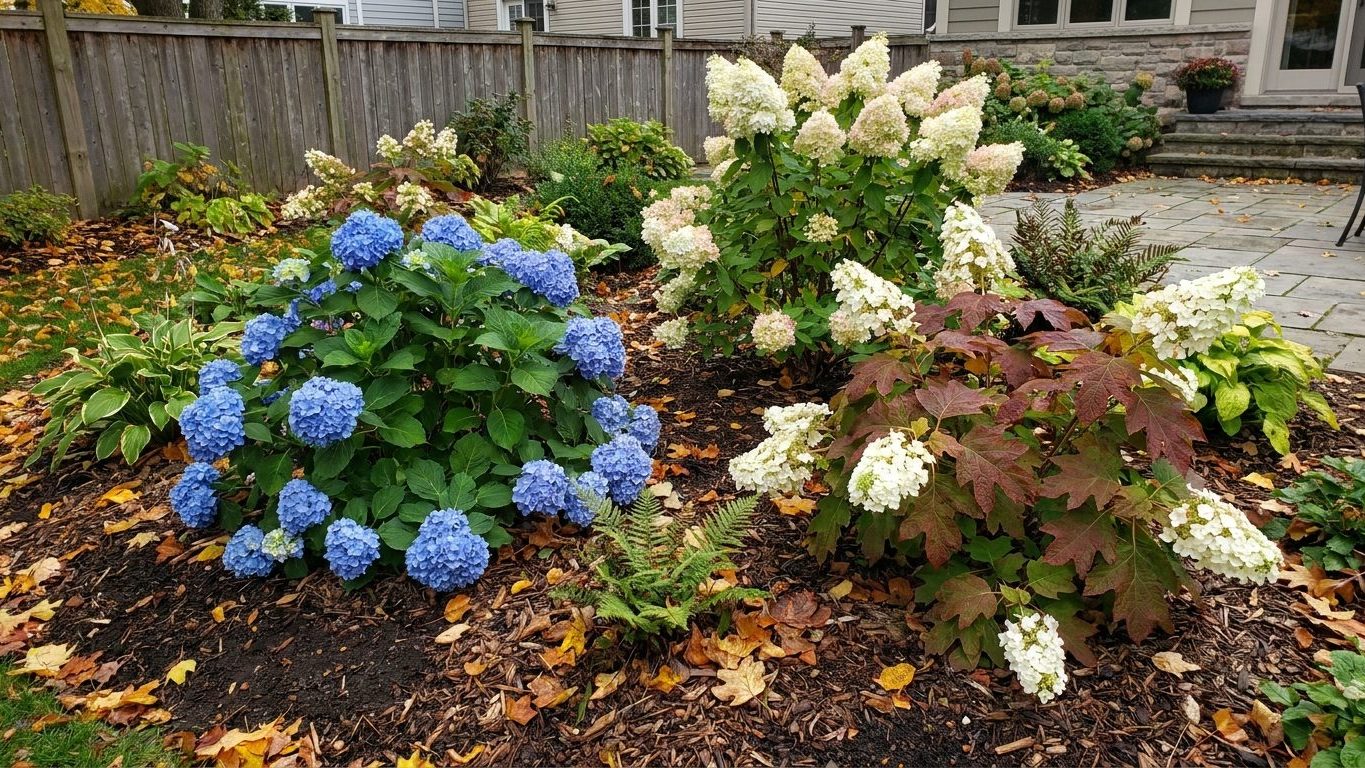
Panicle and smooth hydrangeas are the safest bets for most Ohio yards, holding up across the state’s zone 5b to 6b range without winter cover. Bigleaf types can grow here too, especially near Columbus, but they bloom on old wood and often lose next year’s flowers to a hard freeze unless protected. The right pick depends on how much winter risk your yard, and your patience, can absorb.
Hydrangeas that grow well in Ohio: The Short Answer
Columbus sits at the warmer edge of Ohio’s hydrangea math, and the USDA Plant Hardiness Zone Map puts the whole state at 5b to 6b, one range that covers everything from Lake Erie to the Ohio River. That spread is exactly why some hydrangeas thrive here without a second thought and others need a wall, a wrap, or a bit of luck.
Panicle hydrangea

Hydrangea paniculata blooms on new wood, so an Ohio winter never touches the flowers already planned for next summer. It holds up across the entire 5b to 6b range without cover and tolerates full sun better than anything else on this list. Plant this one first if you are unsure.
Smooth hydrangea

Native to Ohio woodlands, Hydrangea arborescens, the type sold as ‘Annabelle’, also flowers on new wood and comes back even after stems die to the ground in a rough winter. It handles the state’s heavy clay soil and part shade better than panicle types. Nearly foolproof here.
Climbing hydrangea

Hydrangea anomala subsp. petiolaris survives Ohio winters without complaint once established, but it can take three to five years against a wall or trellis before the first bloom shows. Patience matters more than protection with this one, and it rewards a shaded north wall.
Oakleaf hydrangea

Hydrangea quercifolia sits closer to the edge of its comfort zone in Ohio’s colder pockets. It blooms on old wood, so a brutal cold snap can strip next year’s flower buds even though the shrub itself survives fine. A spot against a warm house wall helps.
Mountain hydrangea

Hydrangea serrata behaves like a smaller, tougher bigleaf. It also buds on old wood, which means an Ohio winter can erase a season of flowers while the plant itself comes back from the base without trouble. Treat any bloom here as a bonus, not a guarantee.
Bigleaf hydrangea

Hydrangea macrophylla is the riskiest name on this list for an Ohio yard. It needs old wood to flower, and the state’s winters often kill those buds outright, leaving a healthy plant with plenty of leaves and no blooms at all. Wrap it or skip it in any exposed spot.
Ohio — the year and the numbers
- State
- Ohio
- USDA zones
- 5b-6b
- Last spring frost
- May 5 to May 15
- First fall frost
- October 5 to October 15
- Annual rain
- 42 in
- Lawn zone
- cool-season
- Source
- Ohio State University Extension — Ohio Gardening Calendar · Columbus
How to Work Out the Dates for Your Own Yard
Matching a hydrangea to your own yard starts with the same frost math used for any spring planting, then adds one extra check for the kind of wood it blooms on.
- Find your last spring frost: Ohio State University Extension’s Ohio Gardening Calendar puts it between May 5 and May 15 for zone 6a, the range that covers Columbus.
- Find your first fall frost: the same calendar sets it between October 5 and October 15, marking how long new growth has to harden off before cold returns.
- Check which wood the shrub blooms on: panicle and smooth types flower on wood grown after frost, so a hard winter never threatens the coming season’s show.
- Weigh old-wood types against that exact window: bigleaf and mountain hydrangeas set buds the fall before, so anything colder than their rated zone can erase them by spring.
- Watch the first full winter before judging: a shrub that leafs out fine but skips flowers is telling you the buds died, not that the plant failed outright.
A panicle hydrangea planted in May clears both frost dates with room to spare, since its buds form only after the last freeze near Columbus. A bigleaf hydrangea planted that same week already carries buds it set the previous fall, and a late freeze inside that May 5 to May 15 window can wipe them out before anyone notices.
Ohio North to South: How the Dates Shift
The USDA Plant Hardiness Zone Map’s 5b to 6b span for Ohio is not one uniform climate, and moving north to south or toward the lake shifts the risk for old-wood bloomers in particular.
- Lake Erie shoreline (Cleveland, Toledo, Sandusky): the lake delays both frosts, giving bigleaf and other old-wood types extra buffer at each end of the season.
- Southern Ohio along the river (Cincinnati, Portsmouth): sits toward the milder end of the state’s range, so oakleaf and some bigleaf cultivars hold their buds more often.
- Appalachian foothills and the northeast highlands (Youngstown, the hill country east of Columbus): higher ground pushes conditions toward the colder end, favoring panicle and smooth over anything that blooms on old wood.
None of that changes the dates on the Ohio hydrangea guide, but it explains why a neighbor two counties over gets blooms a bigleaf here skips.
Mistakes Ohio Punishes
Pruning bigleaf outside its window
Bigleaf and mountain hydrangeas set next year’s buds on this season’s wood, so cutting them back outside the June to July window removes flowers before they even form. Wait for new growth to show, shape lightly, and stop as soon as buds are visible.
Fertilizing past midsummer
A late feeding pushes soft new growth that has no time to harden before Ohio State University Extension’s fall frost window of October 5 to October 15 arrives. Stick to the May and July feedings and let the plant slow down naturally into fall.
Leaving bigleaf uncovered through winter
Exposed flower buds on old-wood types rarely survive an open Ohio winter without some cover. Mound mulch or wrap burlap around the base before the ground freezes, and skip this step entirely with panicle or smooth types, which need none of it.
Ohio Extension Offices and County Contacts
Zone 5b to 6b is a starting point, not a verdict for your particular yard. Ohio State University Extension and your county office can confirm frost timing and site quirks a statewide map cannot capture.
- The Ohio hydrangea guide: the full zone map and frost dates for the state in one place.
- The Ohio hydrangea calendar: month by month planting, feeding, and pruning windows.
- What goes wrong with hydrangeas in Ohio: the pests and problems specific to this climate.
Call the county office before buying anything that blooms on old wood.
Common Questions
Do hydrangeas survive Ohio winters without any protection?
Panicle and smooth hydrangeas handle an open Ohio winter with no cover at all. Bigleaf and mountain types usually survive too, but they can lose their flower buds if the season turns unusually cold.
What’s the best hydrangea for a shaded Ohio yard?
Smooth hydrangea tolerates more shade than panicle types and still blooms reliably on new wood. Climbing hydrangea also works well against a shaded wall, though it takes a few years to produce its first flowers.
Can bigleaf hydrangeas ever be reliable in Ohio?
They can, in a warmer microclimate like a spot against a heated house wall or on the milder southern edge of the state, but they need winter cover most years to keep last fall’s buds intact.