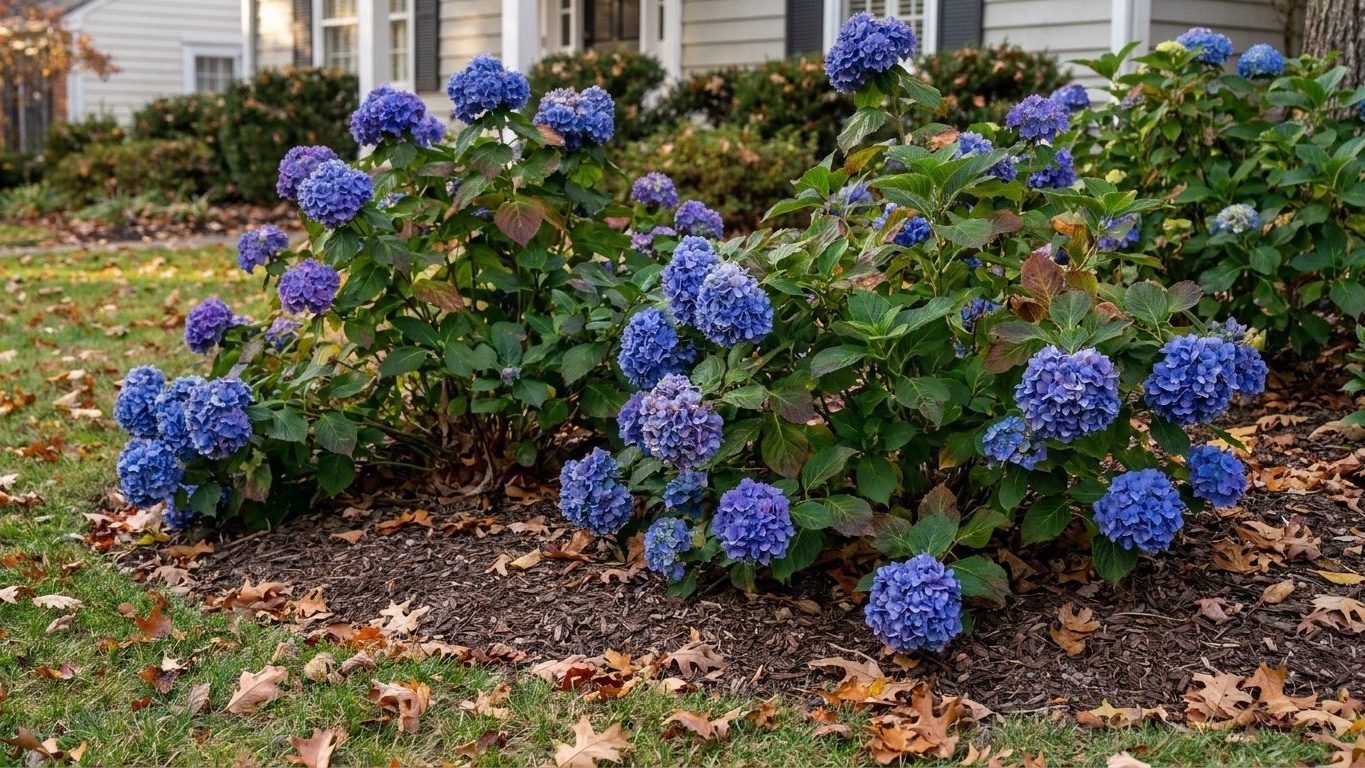
Plant hydrangeas in North Carolina in March, April, August, or September, once Charlotte’s last spring frost (March 23 to April 5) has passed or before the first fall frost (October 30 to November 8) arrives. Prune bigleaf varieties only in June or July, right after they finish blooming, since next year’s flowers are already forming on this year’s wood by late summer.
When to prune hydrangeas in North Carolina: The Short Answer
NOAA NCEI U.S. Climate Normals 1991-2020 puts Charlotte’s last spring frost at March 23 to April 5 and its first fall frost at October 30 to November 8, and every date below is built around that gap.
- January: Hydrangeas are fully dormant, so there’s nothing to plant or prune this month. Check mulch depth around the base and leave bare stems alone until growth resumes.
- February: Frost is still likely this far ahead of the spring window’s April edge, so hold off on planting. Order bare-root stock now if you want it ready to go in March.
- March: The plant window opens, though frost can still land through the first days of April, so tuck new shrubs against a wall or under high shade at first. This is also the first of three fertilizer months.
- April: Planting continues through the tail of frost season, and leaves nipped by a late freeze usually push out again within weeks. Water new plants deeply since spring rain in the Piedmont is uneven.
- May: The second fertilizer month arrives as flower buds swell on bigleaf shrubs. Skip pruning now, since it would cut off blooms about to open.
- June: Once bigleaf flowers fade, the pruning window opens, so cut spent blooms and dead wood back to a healthy bud. Hold off on feeding until next month.
- July: Pruning continues through this second and final bigleaf month, and it’s also the last of the three fertilizer months. After July, let the shrub set next year’s buds undisturbed.
- August: The state’s second planting window opens as the ground stays warm enough for roots to establish, with fall frost still three months out. New transplants need consistent water through late-summer heat.
- September: Planting continues into early fall, giving roots close to two months to settle before the frost edge arrives. This is the last month to put a hydrangea in the ground for the year.
- October: Frost begins arriving as early as the last days of the month in parts of the Piedmont, so this isn’t a planting or pruning month. Add a fresh layer of mulch before the ground cools further.
- November: By the second week, frost has typically reached the whole reference area around Charlotte. Let fallen leaves stay as extra insulation over the root zone through winter.
- December: Shrubs sit fully dormant and the calendar has nothing scheduled. Use the quiet month to plan where an August or September planting might go next year.
That’s the full year matched against the freeze data above, though your own yard may run a little earlier or later than downtown Charlotte.
North Carolina — the year and the numbers
- State
- North Carolina
- USDA zones
- 5b-8b
- Last spring frost
- March 23 to April 5
- First fall frost
- October 30 to November 8
- Annual rain
- 44 in
- Lawn zone
- transition-season
- Source
- NOAA NCEI U.S. Climate Normals 1991-2020, 32F freeze probabilities · Charlotte
How to Work Out the Dates for Your Own Yard
USDA Plant Hardiness Zone Map (2023) places North Carolina across zone 5b to 8b, and that spread between the coldest mountain hollow and the mildest coastal inlet is why a planting date good for Charlotte can be off by weeks somewhere else in the state.
- Confirm your local frost window: compare your address to Charlotte’s spring and fall edges, since a mountain garden or a coastal one can differ by two or three weeks in either direction.
- Match the move to a plant month: only put a hydrangea in the ground during March, April, August, or September, never as an impulse buy in the middle of summer or winter.
- Read your zone before you commit: if you’re gardening above the Piedmont, toward the cooler end of that 5b to 8b range, lean on the spring window and skip the fall one, since a young root system has less time to establish before winter arrives early.
- Feed on the three-month schedule: fertilize in March, May, and July only, and skip a feeding anywhere else in the calendar.
- Prune within the two-month bigleaf window: cut spent blooms and dead wood only in June or July, since bigleaf sets next year’s flower buds on this year’s wood soon after.
Line those five checks against your own address and the state calendar stops being generic, it becomes a schedule built for the yard you actually have.
North Carolina North to South: How the Dates Shift
Elevation changes these dates more than latitude does across this state, and Charlotte’s Piedmont numbers are only the starting point once you climb toward the mountains or drop toward the sea.
- The Mountains (Asheville, Boone, the Blue Ridge): spring frost lingers well past Charlotte’s edge at this elevation, so push planting later and expect bigleaf bud break to lag behind the Piedmont.
- The Piedmont (Charlotte, Raleigh, Greensboro): the frost dates and calendar above apply most directly to this middle band of the state.
- The Coastal Plain (Wilmington, New Bern, the Outer Banks): frost lifts earlier in spring and holds off later in fall than around Charlotte, stretching both planting windows.
The North Carolina hydrangea guide breaks these three bands down further for anyone gardening outside the Piedmont.
Mistakes North Carolina Punishes
No blooms after a hard prune

Bigleaf hydrangeas set next year’s flower buds on this year’s wood soon after they finish blooming, so a cut made in fall, winter, or early spring removes flowers before they open. Prune only in June or July, right after the current bloom fades, nowhere else on the calendar.
Roots rotting in Piedmont clay
Heavy clay across the Piedmont holds water long after a storm passes, and a new hydrangea planted in a tight, unamended hole can sit in standing water for days. Dig the hole wider than deep, work in compost or grit, and confirm it drains within an hour before planting.
New growth burned by a late frost
Planting too early, before Charlotte’s spring frost edge has fully passed, invites a freeze to nip tender leaves right after they emerge. Wait until the window has cleared, or cover a new shrub overnight if a late frost is forecast after it’s already in the ground.
North Carolina Extension Offices and County Contacts
Charlotte’s frost dates are a starting point, not a guarantee, and the county office nearest your own yard, through NC State Extension, carries the rest.
- Your state page: the frost dates and the pruning window for where you live in North Carolina.
- Which ones hold up here: the varieties that tolerate this state’s clay, humidity, and frost swings.
- What’s going wrong: the pests and problems local to North Carolina hydrangeas, and what to do about each.
Common questions
Can I plant hydrangeas in North Carolina in the fall?
Yes, August and September are both listed planting months, and a shrub planted then has close to two months to root in before the frost edge arrives near Charlotte.
What happens if I prune bigleaf hydrangeas outside June or July?
A cut made outside that window removes flower buds already set on the current wood, so the shrub grows fine but produces few or no blooms the following year.
Do hydrangeas survive winter in the North Carolina mountains?
Many do, but the state’s hardiness range runs down toward the cooler end near the mountains, and gardeners there often lean on hardier types and stick to spring planting only.