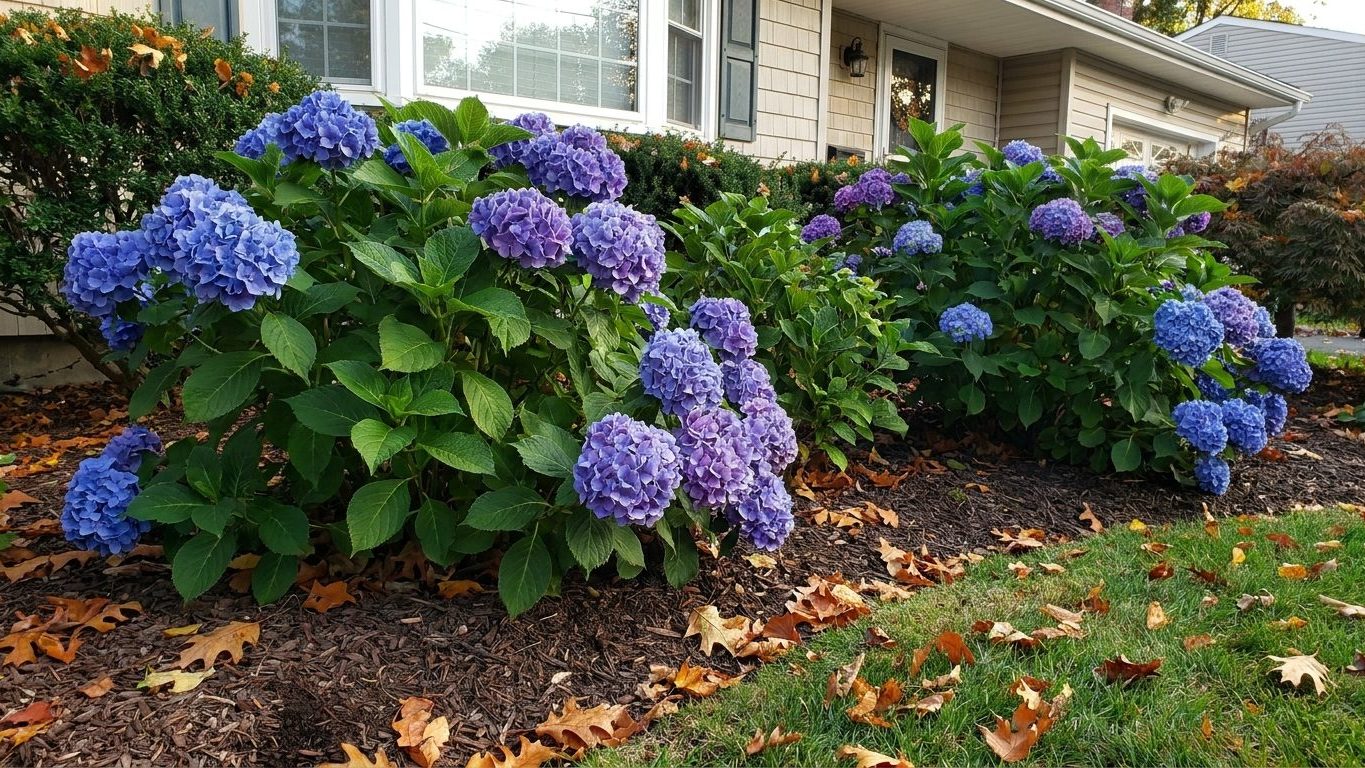
Hydrangeas in New Jersey run into a predictable lineup of pests and diseases tied to Newark’s humid summers and its March 29 to April 6 last-frost window: aphids and bud blight show up first, powdery mildew and leaf spot follow through summer heat, and deer pressure builds as the November frost window closes in. Catching each one by its timing, not just its symptom, is what keeps a shrub blooming.
Hydrangea pests and diseases New Jersey: The Short Answer
In Newark, the reference city for New Jersey’s climate data, hydrangea trouble follows the season rather than the calendar page. NOAA NCEI’s 1991-2020 climate normals put the last spring frost between March 29 and April 6 and the first fall frost between November 4 and November 16, and nearly every problem below lines up with one end of that stretch or the other.
Aphids
Small green or black insects cluster on tender spring shoots right after the frost-free window opens, curling leaves and leaving sticky residue behind. A strong hose blast knocks most colonies loose, and a soap spray handles stragglers before ants and sooty mold move in behind them.
Botrytis blight on buds
Cool, wet stretches right after the spring planting window turn unopened flower buds brown and mushy, with a gray fuzzy coating showing on humid mornings. Pull infected buds immediately and skip overhead watering, since wet petals are what let the fungus spread from one cluster to the next.
Powdery mildew
A white, flour-like film coats leaf tops during the humid stretch that overlaps the June and July pruning window for bigleaf types, worst where air stays still. Space plants for airflow, thin crowded interior stems during that same window, and treat early spots with a sulfur fungicide.
Cercospora leaf spot
Circular purple-brown spots with tan centers appear on lower, older leaves through mid to late summer, eventually causing early leaf drop on stressed plants. Rake and discard fallen leaves rather than composting them, and water at the base in the morning so foliage dries by afternoon.
Japanese beetles

Metallic green beetles chew ragged holes through leaves and flowers during peak summer heat, sometimes skeletonizing whole clusters within days. Hand-pick into soapy water in early morning when beetles move slowly, and skip pheromone traps, which tend to draw in more beetles than they catch.
Deer browsing on buds

As the November 4 to November 16 frost window approaches, deer strip tender stems and next year’s flower buds, especially on unfenced properties near woods. A physical barrier or repellent applied before the first hard freeze protects the buds that would otherwise open the following June.
New Jersey — the year and the numbers
- State
- New Jersey
- USDA zones
- 6a-7b
- Last spring frost
- March 29 to April 6
- First fall frost
- November 4 to November 16
- Annual rain
- 47 in
- Lawn zone
- transition-season
- Source
- NOAA NCEI U.S. Climate Normals 1991-2020, 32F freeze probabilities · Newark
How to Work Out the Dates for Your Own Yard
Working out which problem is actually on your hydrangea starts with the calendar, not the leaf.
- Check the date against the frost windows: NOAA NCEI’s climate normals put Newark’s last spring frost between March 29 and April 6, so bud damage showing up before that window closes usually points to winter injury, not disease.
- Look at what’s affected first: spotting that starts on lower, older leaves in July points toward Cercospora rather than a fungus that attacks new growth at the top.
- Note the weather of the past week: a stretch of rain right before symptoms appear favors botrytis and powdery mildew over insect feeding damage.
- Inspect at two different times of day: Japanese beetles and aphids are easiest to catch feeding in early morning, while fungal spots stay visible all day long.
- Match the timing to the pruning window: mildew that appears just as the June to July bigleaf pruning window opens often traces back to stems left crowded too long.
- Rule out deer last: browsing near the November 4 to November 16 frost window leaves torn, ragged stem edges rather than the clean cuts insects leave.
Once the timing matches, the identifying details in the section above confirm it, since each entry there lists what the problem leaves behind and what actually works against it.
New Jersey North to South: How the Dates Shift
Elevation, the shore, and distance from the coast all nudge these timelines in different directions across the state.
- North Jersey and the Highlands (Sussex, Warren, Morris counties): higher ground delays the frost-free start, which pushes back aphid and botrytis pressure but also shortens the humid stretch that favors mildew.
- Central Jersey (Middlesex, Mercer, Somerset counties): conditions track closest to Newark’s own numbers, so the timing in the short answer above applies with little adjustment.
- The Shore (Monmouth, Ocean, Cape May counties): marine air keeps humidity elevated later into fall, stretching the powdery mildew and leaf spot risk beyond what inland yards see.
- South Jersey and the Pine Barrens (Camden, Gloucester, Atlantic counties): sandy soil drains fast, cutting root rot risk but leaving plants more drought-stressed and open to spider mites in dry stretches.
None of that changes the state’s hardiness zone of 6a to 7b, but it does shift when each problem below shows up in your own yard rather than at the reference station.
Mistakes New Jersey Punishes
Watering the leaves, not the roots
Overhead sprinklers keep foliage wet through the humid stretch that already favors powdery mildew and leaf spot, giving fungal spores exactly the moisture they need to spread. Switch to a soaker hose at the base, run it in the morning, and let leaves dry by afternoon.
Pruning outside the June-July window
Cutting bigleaf hydrangeas outside the June and July pruning window removes next year’s flower buds and leaves fresh wounds that heal slowly as cooler weather sets in. Stick to that window, and treat any cut made outside it as a bud sacrifice, not a shaping choice.
Leaving fallen leaves in place
Skipping fall cleanup lets Cercospora spores and aphid eggs overwinter in leaf litter, ready to reinfect new growth as soon as the last spring frost passes. Rake and discard fallen leaves before the first fall frost window closes, rather than letting them sit through winter.
New Jersey Extension Offices and County Contacts
The reference-city figures above are a starting point, not the final word for every county, and Rutgers Cooperative Extension fills in the rest.
- Your state page: the frost dates and the pruning window where you live.
- Which ones hold up here: the varieties that tolerate New Jersey’s winters and summers without extra fuss.
- Rutgers NJAES: county-level diagnostics for confirming which pest or disease is actually on your plant.
Common questions
Do I need to spray my hydrangeas every year to prevent disease?
Not on a healthy shrub with good airflow and morning watering at the base. Routine spraying makes more sense as a response to a confirmed problem than as a yearly habit.
Can one sick hydrangea infect the others nearby?
Fungal spores from leaf spot and botrytis can spread to neighboring plants through wind-blown rain and shared soil moisture, so removing infected leaves and buds promptly limits how far a problem travels.
Is deer damage more common in one part of New Jersey than another?
Properties near wooded edges in the Highlands and the Pine Barrens tend to see more browsing pressure than yards in denser, central suburban areas, simply because deer traffic is heavier there.