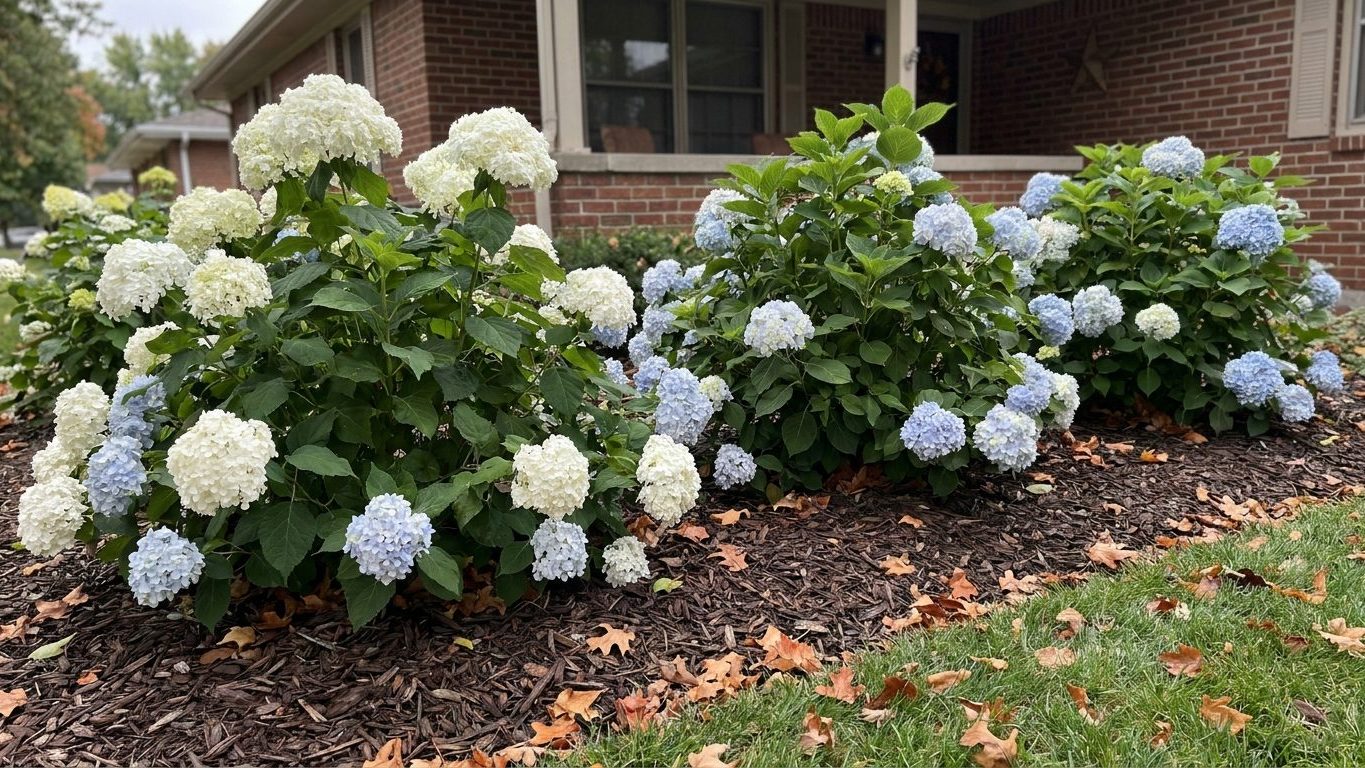
In Omaha, the safest windows for planting hydrangeas run April through May and again in August through September, once the region’s last spring frost (April 12 to April 23) has passed or well before the first fall frost (October 15 to October 26) arrives. Prune bigleaf varieties in June or July, right after the blooms fade, never before flowering ends.
When to prune hydrangeas in Nebraska: The Short Answer
NOAA NCEI U.S. Climate Normals 1991-2020 sets Omaha’s last spring frost between April 12 and April 23 and its first fall frost between October 15 and October 26, and every gesture below is timed against those two windows.
- January: Hydrangeas sit dormant under whatever mulch you left in fall. Skip pruning now, since bigleaf buds for next summer are already set along the stems.
- February: Still too early to prune or fertilize. Use this month to plan new varieties, since nothing above ground needs attention yet.
- March: A fertilize month opens. Feed as new growth stirs, roughly a month ahead of the last frost window, but leave old mulch in place until the ground fully thaws.
- April: The first planting window opens. Hold off until frost risk fades toward the back half of the month, and water new transplants well if a late cold snap threatens.
- May: Both a fertilize and a planting window run this month. It’s the safest stretch to get bigleaf, panicle or smooth hydrangeas into ground that has warmed enough for fast root growth.
- June: Bigleaf pruning opens right after the first flush of blooms fades. Cut spent flower heads back to the first healthy bud, no farther.
- July: A second fertilize pass runs alongside the tail end of the bigleaf pruning window. Finish any cuts early in the month so new buds harden before fall.
- August: Planting reopens as the summer heat breaks. Roots set into cooler soil faster than in a July planting, with months to go before the first fall frost.
- September: The planting calendar closes out. Get shrubs in by mid-month so they have roughly a month of root growth before the first fall frost window.
- October: Frost risk climbs through the month. Stop fertilizing, add a fresh layer of mulch at the base, and ease off heavy watering once nights turn cold.
- November: Most of the state has seen its first freeze by now. Mound extra mulch over the crown, especially for bigleaf varieties in the colder end of the state’s zone 4a to 5b range.
- December: Fully dormant. Check that winter wind hasn’t stripped mulch from the base, and leave pruning tools put away until June.
These dates come from Omaha’s airport station, and your own yard, especially in the Panhandle or a low frost pocket, can run a week or two later in spring and earlier in fall. Confirm your local window before committing a new shrub to the ground.
Nebraska — the year and the numbers
- State
- Nebraska
- USDA zones
- 4a-5b
- Last spring frost
- April 12 to April 23
- First fall frost
- October 15 to October 26
- Annual rain
- 32 in
- Lawn zone
- cool-season
- Source
- NOAA NCEI U.S. Climate Normals 1991-2020, 32F freeze probabilities · Omaha
How to Work Out the Dates for Your Own Yard
NOAA NCEI U.S. Climate Normals 1991-2020 sets Omaha’s last spring frost between April 12 and April 23 and its first fall frost between October 15 and October 26, and your own yard’s dates start from there.
- Find your local frost dates: call your county extension office or check a station closer than the Omaha airport, since a rural yard or a low spot often runs a week or two behind the city’s numbers.
- Count backward from bloom: if you want flowers on old wood, plan bigleaf pruning for June or July, right after bloom fades, not before.
- Match your planting month to the calendar: stick to April, May, August or September, the only months the state’s planting window covers.
- Check where you fall in the hardiness range: USDA Plant Hardiness Zone Map puts Nebraska across zone 4a to 5b, and a yard on the colder end needs heavier winter mulch than one near Omaha.
- Weigh which hydrangea you’re planting: a panicle hydrangea shrugs off a late frost that would blacken a bigleaf’s flower buds outright.
None of this replaces a look at your own soil and site. A south-facing wall or a low spot that collects cold air can shift these dates by more than a week in either direction.
Nebraska North to South: How the Dates Shift
Nebraska spans a long stretch of latitude and a real elevation gain heading west, and that changes the calendar more than a single state-wide figure suggests.
- The Panhandle and the west (zone 4a): higher elevation and drier air push the last frost later and the first fall frost earlier, so shrink both planting windows from the edges.
- The southeast corner near Omaha and Lincoln (zone 5b): this is the milder end of the range and the closest match to the reference-city dates above.
- The Sandhills and north-central counties: sandy, fast-draining soil dries out between waterings, so shrubs set in April or May need more frequent watering through their first summer.
Check the Nebraska state guide for your county’s exact frost window before locking in a date, since the state-wide range covers a real spread.
Mistakes Nebraska Punishes
No blooms on an otherwise healthy shrub
This usually means pruning happened outside the June to July window, cutting off buds that were about to flower. Prune bigleaf hydrangeas only right after bloom fades, never in fall or early spring, and next year’s flowers stay intact.
A shrub planted in October that never leafs out
Planting outside the April, May, August or September window leaves roots too little time to establish before the first fall frost arrives. Stick to the four planting months and skip a fall planting once frost risk climbs.
Stems dead to the ground every spring
This points to a colder microclimate, often in the state’s zone 4a stretch, where winter cold reaches the crown without enough mulch. Pile extra mulch over the base going into November and favor panicle or smooth varieties where winters run hardest.
Nebraska Extension Offices and County Contacts
Omaha’s frost windows are a starting point, not a county-by-county guarantee, and the office nearest your address can confirm what actually happens in your yard.
- Your state page: the frost dates and the pruning window for wherever you live in Nebraska.
- Which ones hold up here: the hydrangea varieties that get through a Nebraska winter and the ones that struggle.
- Nebraska Extension: University of Nebraska-Lincoln Extension connects you to the county office that can check your local frost dates.
Common questions
Can I plant hydrangeas in Nebraska in fall?
Yes, within the state’s August and September window, but get them in the ground early enough to root before Omaha’s October 15 to October 26 first frost.
Do hydrangeas need winter protection in Nebraska?
In the colder end of the state’s zone 4a to 5b range, a heavy mulch layer over the crown protects bigleaf hydrangeas better than any winter wrap.
What happens if I prune bigleaf hydrangeas too early?
Pruning before June risks cutting off flower buds already set on old wood, which is why the state’s prune window sits in June and July, right after bloom.