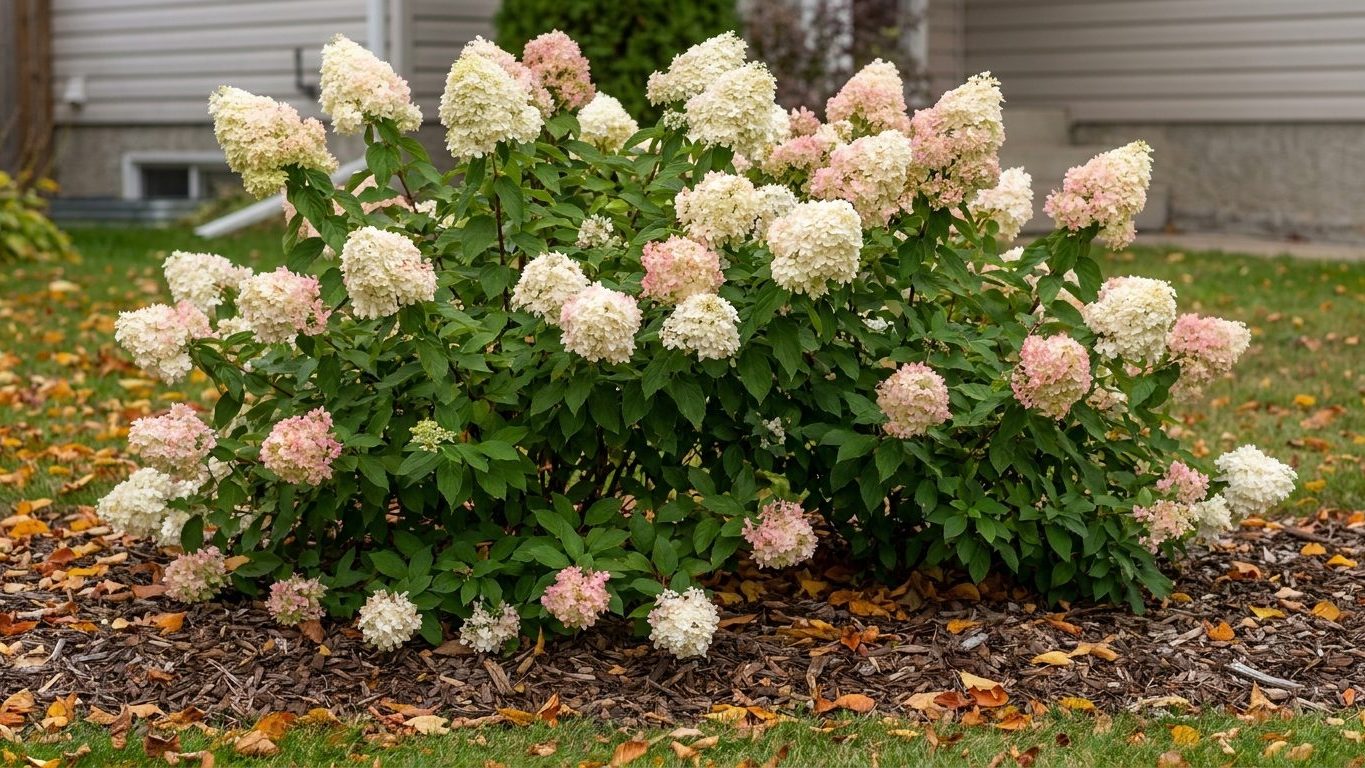
Winnipeg gardeners rarely lose a hydrangea to one named bug. What punishes bigleaf and mophead types here is winter cold working on stems that never fully hardened off, opening the door to fungal trouble once the short growing season turns humid. Canadian zone 3b keeps the real threat list short: dieback, late frost scorch, mildew, leaf spot, aphids, botrytis, and browsing animals.
Hydrangea pests and diseases Manitoba: The Short Answer
Winter bud kill

Natural Resources Canada’s Plant Hardiness Site places Winnipeg in Canadian zone 3b, cold enough that unprotected bigleaf stems die back below the snow line most winters, taking next year’s flower buds with them. Scratch a stem in spring: green means live wood, brown and dry means cut back to white pith and mulch heavier next fall.
Late frost injury

The mean last spring frost falls May 23 for Winnipeg, but leaves pushed out during a warm April stretch can blacken overnight if a late cold snap follows. It looks like disease, curled and brown at the tips, but it stops spreading. New growth replaces it within two weeks.
Powdery mildew
White powdery mildew shows on upper leaf surfaces during the humid stretch that follows the July fertilize window, especially on shrubs crowded against a fence or house wall. It rarely kills a hydrangea but it stunts the next flush of buds. Space plants for airflow and water the soil, not the leaves, in the evening.
Leaf spot
Cercospora leaf spot appears as small purple-brown circles on the lower leaves by mid-summer, usually after a wet spell during the May-to-August planting window. Left alone it climbs the plant and drops leaves early. Pick off and bin the spotted leaves as soon as you see them, and avoid overhead watering.
Aphid clusters

Aphids cluster on soft new growth through the summer, curling leaf tips and leaving a sticky residue that draws ants. They rarely do lasting harm on an established shrub. A hard spray from the hose knocks most of them off, and ladybugs usually finish the job within a week.
Botrytis blight
Botrytis blight turns flower petals and soft stems gray and mushy after a stretch of cool, wet weather, the kind that pools around dense plantings. It spreads fast on damaged tissue. Cut out affected blooms and stems right away and rake up fallen petals instead of leaving them to rot in place.
Deer and rabbit browsing
Deer and rabbits strip leaves and bark off exposed stems once snow covers their usual forage, and a hungry rabbit can girdle a young shrub in one night. The damage shows as clean-cut stems at a slant, not the ragged tears disease leaves behind. A cage of chicken wire around the base solves it.
Manitoba — the year and the numbers
- State
- Manitoba
- Hardiness zones
- 3b
- Last spring frost
- May 23
- First fall frost
- September 22
- Annual rain
- 21 in
- Lawn zone
- cool-season
- Source
- Environment and Climate Change Canada — Canadian Climate Normals 1981-2010, station WINNIPEG RICHARDSON INT'L A · Winnipeg
How to Work Out the Dates for Your Own Yard
Matching a diagnosis to the calendar takes less guessing than most people think, since Winnipeg’s own frost and bloom windows already rule out half the possibilities before you look closely at a single leaf.
- Check bud wood before the June prune window: Environment and Climate Change Canada’s Canadian Climate Normals puts the average last spring frost at May 23 for Winnipeg, so a stem still bare and brittle by early June is winter dieback, not disease.
- Watch new growth for two weeks after May 23: tips that blacken and curl right after a warm spell, then stop spreading, are frost scorch, and they resolve before the June-July prune window arrives.
- Scan leaf undersides in July: a fine white coating that wipes off with a finger is mildew, timed to the humid stretch that follows the July fertilize date, while dark spots that do not wipe off are leaf spot.
- Look for sticky residue and ants in mid-summer: that combination points to aphids feeding on the same new growth the May-through-August planting window is meant to encourage.
- Check flower heads after a cool, wet week: gray, mushy petals mean botrytis, a fast mover that needs cutting out the same day you spot it.
- Inspect stems at snow melt for slanted cuts: clean, angled bites low on the stem are rabbit or deer browsing from the winter just past, not a disease at all.
None of these windows are exact dates, they are the midpoint of a range, and a stem that looks wrong two weeks either side of these markers is still worth a second look before reaching for a spray. The extension office listed below sorts out anything that still puzzles you after that.
Manitoba North to South: How the Dates Shift
Winnipeg’s numbers describe the Red River Valley, and the rest of the province leans colder or milder depending on latitude, elevation, and how close a yard sits to open water.
- The Red River Valley and Winnipeg: the mildest and longest season in the province, and the numbers used throughout this guide.
- Western Manitoba and the Parkland: higher ground and distance from open water push spring later and fall earlier, shortening the window for any hydrangea planted there.
- The Interlake region: lake effect softens some spring mornings but adds humidity through summer, raising the odds of mildew and leaf spot on shrubs planted too close together.
- Northern Manitoba: colder ground and a much shorter frost-free stretch make a hydrangea outside a sheltered microclimate a risky bet, whatever the calendar below says for Winnipeg.
Wherever you garden in the province, treat the Winnipeg dates as a baseline and shift your own calendar by feel from there.
Mistakes Manitoba Punishes
Pruning bigleaf in fall
Cutting a bigleaf hydrangea back in September or October removes the flower buds it already set for next year, since this variety blooms on old wood. The prune window falls in June and July for a reason. Wait until then, and only cut what is clearly dead.
Planting too late in the season
A hydrangea put in the ground in late August, right at the edge of the May-through-August planting window, rarely grows roots deep enough to survive its first Manitoba winter. Move planting earlier in that window, ideally May or June, and mulch heavily the first fall regardless of the date.
Skipping mulch before freeze-up
Leaving the base of a hydrangea bare going into winter invites deeper freezing around the crown, which is what turns ordinary dieback into a dead shrub by spring. A thick layer of leaves or straw mounded over the base before the ground freezes protects the buds the June prune window depends on.
Manitoba Extension Offices and County Contacts
Manitoba Agriculture is the province’s own reference for pest identification and current advisories, and it fills in the local detail that a single frost date or zone number can’t cover on its own.
- Manitoba hydrangea guide: the province-wide frost dates, hardiness zone, and calendar windows for the season.
- Which hydrangeas grow in Manitoba: the varieties that tolerate Canadian zone 3b winters without the dieback described above.
- Manitoba Agriculture: gov.mb.ca/agriculture for local pest advisories and county-level contacts.
Common questions
Does every winter kill a hydrangea back to the ground here?
Not always. Canadian zone 3b is harsh enough that unprotected stems often die back, but a shrub mulched heavily before freeze-up and sited out of the north wind can keep live wood above the snow line most years.
Why do my hydrangea leaves get a white coating in July?
That coating is powdery mildew, tied to the humid stretch that follows the July fertilize window. It rarely kills the plant but stunts the next round of buds, so better spacing and evening soil watering do more than any spray.
Is it deer or disease eating my hydrangea?
Look at the cut. Disease leaves ragged, discolored tissue behind, while deer and rabbits leave clean, angled bites low on the stem, usually showing up right at snowmelt after a hungry winter.