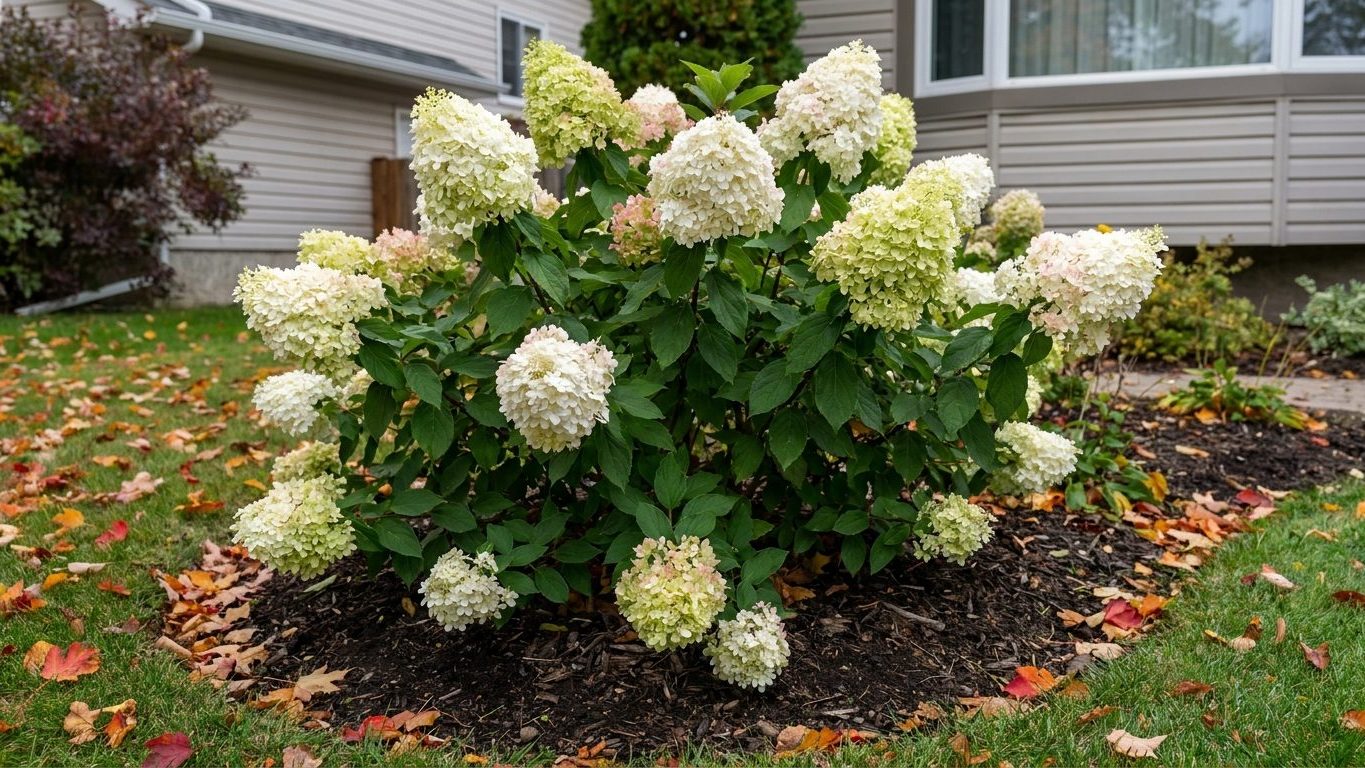
Plant hydrangeas in Manitoba between May and August, once soil has warmed past the average May 23 last frost at Winnipeg. Prune bigleaf varieties only in June or July, since fall cuts remove next year’s buds before Manitoba’s zone 3b winter arrives. Fertilize in May and July, and finish any new planting well ahead of the average September 22 first fall frost that closes the growing season.
When to prune hydrangeas in Manitoba: The Short Answer
Manitoba Agriculture’s growing season runs short and cold, so this calendar marks the only months when planting, fertilizing, or pruning actually pays off here.
- January: hydrangeas stay fully dormant under snow and mulch, and there is no outdoor gesture to make this month. Just check that wrap or mulch hasn’t blown clear after a windstorm.
- February: the ground stays frozen solid across the Winnipeg area, so pruning or planting now would only wound stems that can’t heal. Use the month to order stock for the May window instead.
- March: frost risk stays high a full two months ahead of the May 23 average last frost recorded by Environment and Climate Change Canada, so hold off on any digging. Harden off potted stock indoors near a bright window if you’re getting a head start.
- April: soil is often still cold beneath a mild surface, so planting or major pruning still waits. Pull back winter mulch gradually as snow melts to let the crown breathe.
- May: this opens the first month of the plant window, once the last frost has typically passed at Winnipeg. It’s also the season’s first fertilizing month, so feed and plant together.
- June: planting continues, and this is the first of the two months set aside for pruning bigleaf hydrangeas. Cut only spent flower heads and dead wood, never healthy stems already forming next year’s buds.
- July: planting and bigleaf pruning both stay open, and it’s the second fertilizing month of the year. Water deeply during dry stretches so new roots don’t stall in summer heat.
- August: the plant window closes at month’s end, giving new shrubs roughly two months of root growth before the average September 22 first fall frost. Skip any pruning past July.
- September: the average first fall frost falls this month, so treat any hydrangea still in a nursery pot as urgent. Get it in early, or hold it over to next spring.
- October: hard freezes are common now, and the plant is settling deeper into dormancy. Build up mulch over the root zone once the ground starts to firm.
- November: winter protection matters most this month, given Winnipeg’s zone 3b winters ahead. Wrap stems or mound extra mulch before the deep cold sets in for good.
- December: the shrub is fully dormant under Manitoba’s snowpack. There’s nothing to do but let that snow cover keep doing its job as insulation.
Nothing on this list works out of order: pruning in April or planting in September simply asks a shrub to do more than a short prairie season allows.
Manitoba — the year and the numbers
- State
- Manitoba
- Hardiness zones
- 3b
- Last spring frost
- May 23
- First fall frost
- September 22
- Annual rain
- 21 in
- Lawn zone
- cool-season
- Source
- Environment and Climate Change Canada — Canadian Climate Normals 1981-2010, station WINNIPEG RICHARDSON INT'L A · Winnipeg
How to Work Out the Dates for Your Own Yard
Your own yard may run colder or warmer than the airport station, so start from the same frost math and adjust for what you actually see on the ground.
- Mark your last frost window: Environment and Climate Change Canada puts the average last spring frost at Winnipeg on May 23, so treat any date before late May as risky, not safe.
- Count backward for hardening off: give potted stock two to three weeks near a bright window before that date, so it isn’t shocked the first day it meets outdoor air.
- Watch the soil, not just the calendar: wait until the top few inches feel workable and no longer frozen underneath, since a mild afternoon can still sit over frozen ground into April.
- Plant inside the four-month window: May through August is the stretch this province supports for planting, and pushing later cuts into the root-growing time before fall frost.
- Prune only in June or July: bigleaf hydrangeas set next year’s buds soon after bloom, so pruning outside those two months removes flowers you haven’t seen yet.
- Count forward to first fall frost: the average September 22 date means a shrub planted in August gets barely six weeks of root growth, so earlier planting always has the advantage.
Run this same sequence for your specific lot, then shift the whole thing a week or two earlier or later based on how your yard has behaved in past springs.
Manitoba North to South: How the Dates Shift
Manitoba is not one climate, and the province’s spread shifts these dates by weeks in either direction from the Winnipeg baseline.
- The Red River Valley (Winnipeg, Morden, Portage la Prairie): this is the warmest strip in the province, home to the May 23 average last frost and September 22 average first frost that Environment and Climate Change Canada records for Winnipeg, so treat it as the baseline rather than the safest case.
- The Interlake and eastern Parkland (Selkirk, Gimli, Dauphin): closer to the lakes, spring often arrives a little later and pruning may need to slide toward July rather than June.
- Western Manitoba and the escarpment (Brandon, Killarney, Swan River): higher ground and more open exposure mean frost can linger later into spring and return earlier in fall than the Winnipeg figures suggest.
- Northern Manitoba (Thompson, The Pas, Flin Flon): the growing season shrinks sharply this far north, and both the plant window and the bigleaf prune window run tighter than in the south.
Check the province’s frost-date guide for the range closest to your own yard rather than relying on one airport reading.
Mistakes Manitoba Punishes
Planting straight from a warm greenhouse
Nursery stock raised under glass gets shocked when it meets open prairie air before the May 23 average last frost recorded by Environment and Climate Change Canada. Harden it off outdoors in a sheltered spot for a week first, then plant once soil has warmed inside the May-through-August window.
Pruning bigleaf hydrangeas in fall
Cutting bigleaf stems after bloom removes buds already set for next year, since this variety flowers on old wood. Keep pruning inside June and July only, and let spent flower heads ride through winter instead of trimming them off.
Leaving the crown bare into winter
Zone 3b winters at Winnipeg can kill stems and buds left uncovered, even on shrubs that survived the year before. Mound mulch over the crown before the ground freezes hard, and check it again after any late-fall melt-and-refreeze cycle.
Manitoba Extension Offices and County Contacts
Winnipeg’s frost dates are a starting point, and Manitoba Agriculture tracks the horticultural detail a single station can’t cover.
- Manitoba Agriculture: provincial staff answer questions on hardy shrub varieties and soil conditions specific to your municipality.
- Your municipal office: many towns keep local frost and planting notes that refine the provincial averages for your street.
- Master Gardener volunteers: several Manitoba chapters run plant clinics, so bring a sample or a photo for a second opinion before you commit to a planting date.
Common questions
What happens if I miss the August planting cutoff in Manitoba?
A shrub planted in September has only a few weeks before the average first fall frost on September 22, leaving roots too shallow to handle a hard freeze. Hold the plant over in a pot in a sheltered spot and plant it in May instead.
Is May 23 a guaranteed frost-free date in Winnipeg?
No. Environment and Climate Change Canada’s figure is an average, not a guarantee, so frost falls later than May 23 in roughly half of all years. Treat it as the middle of a window, not a safe line to plant on.
Can I still fertilize hydrangeas in June?
The province’s calendar sets aside May and July for feeding, so June sits between those two windows. Wait for July rather than fertilizing off-schedule, since late feeding can push soft growth that struggles ahead of fall frost.