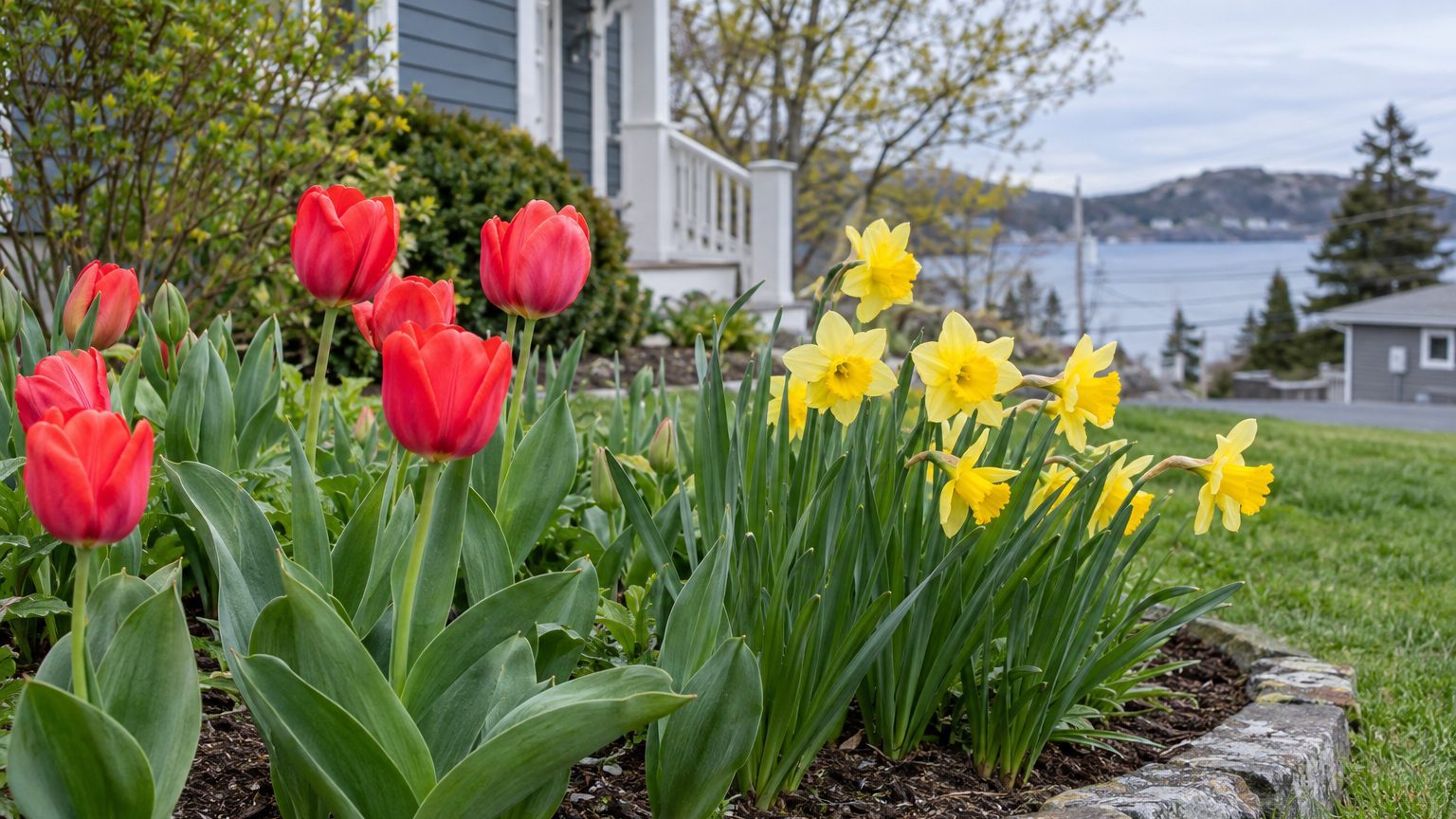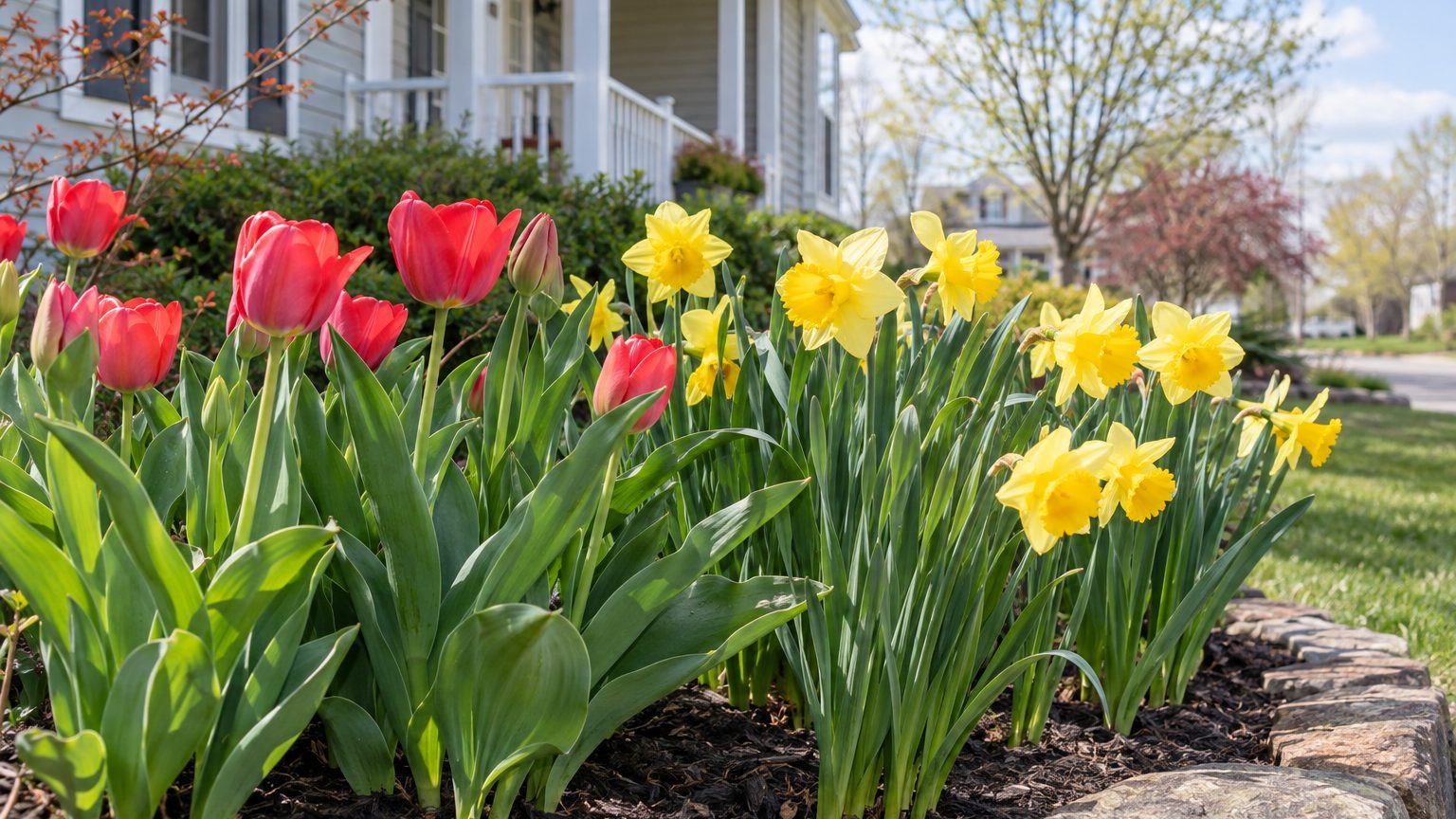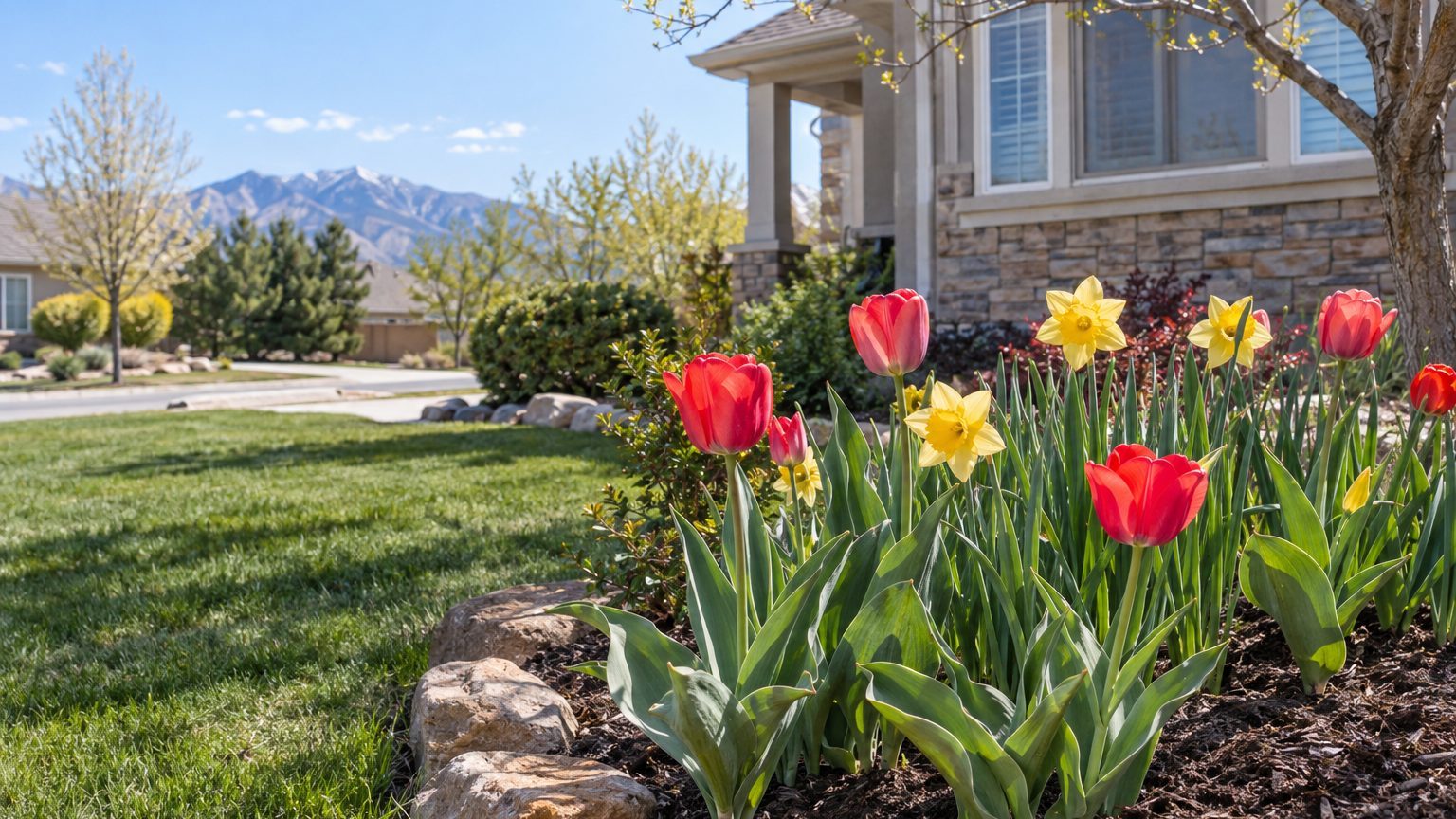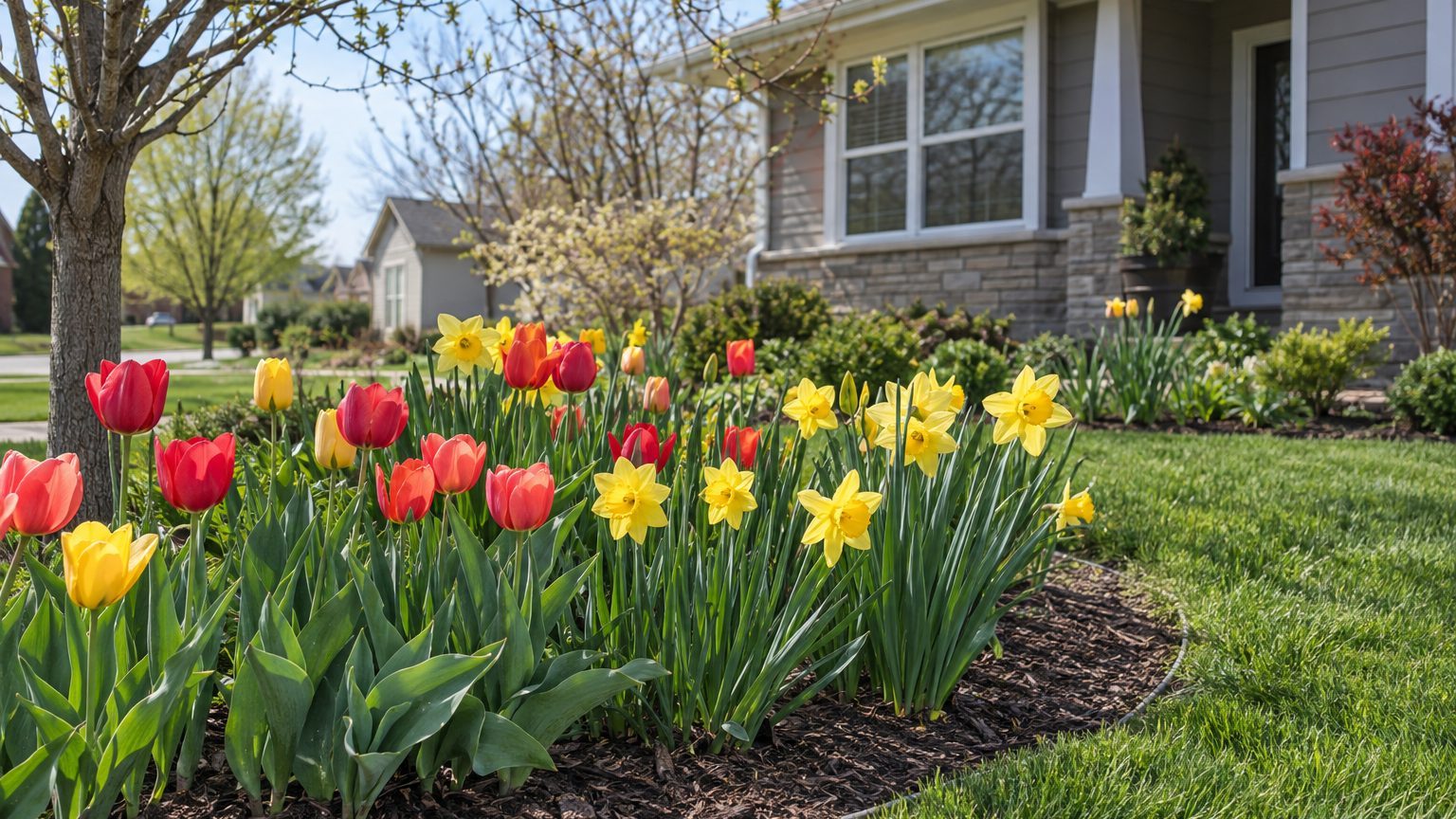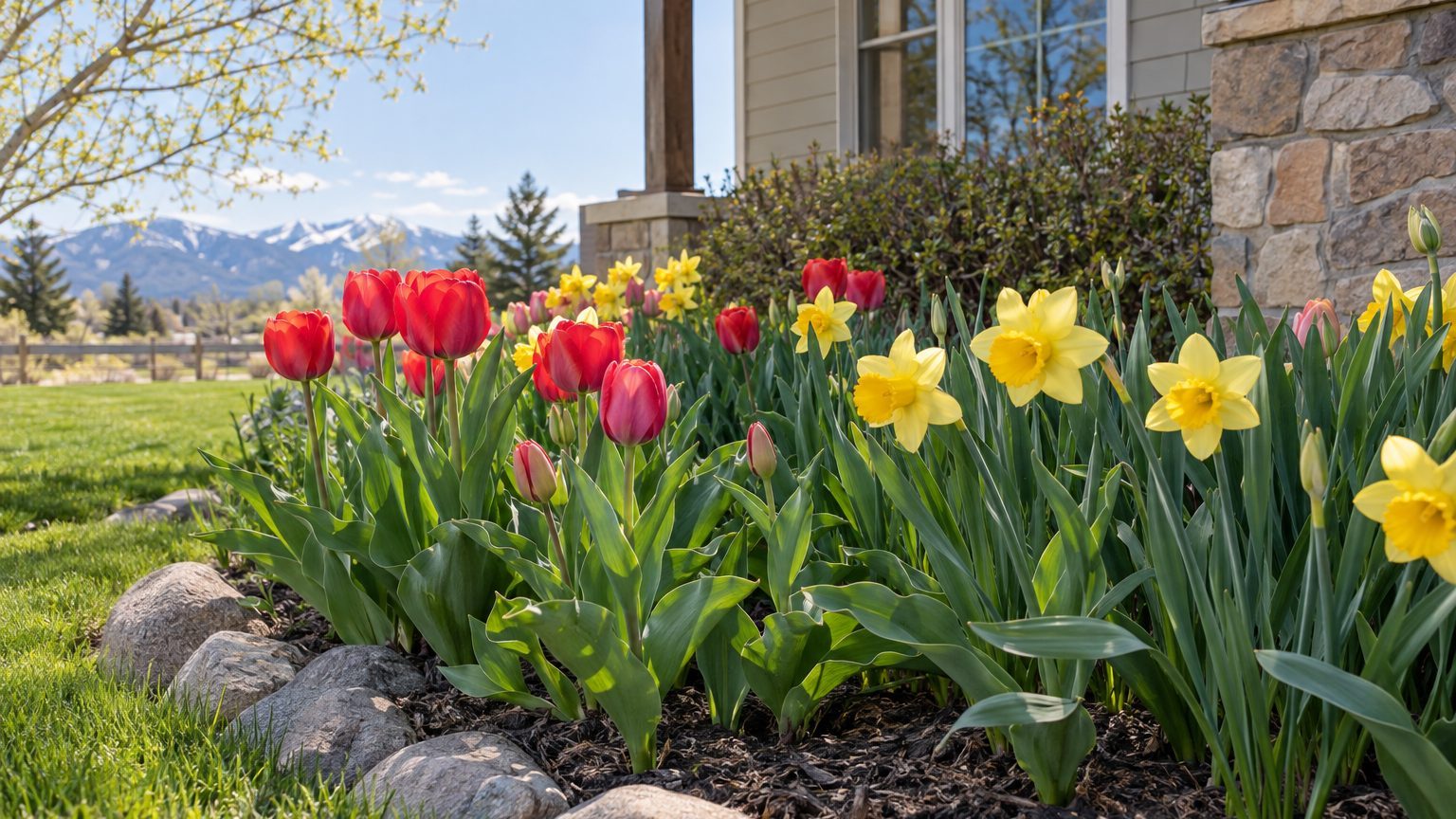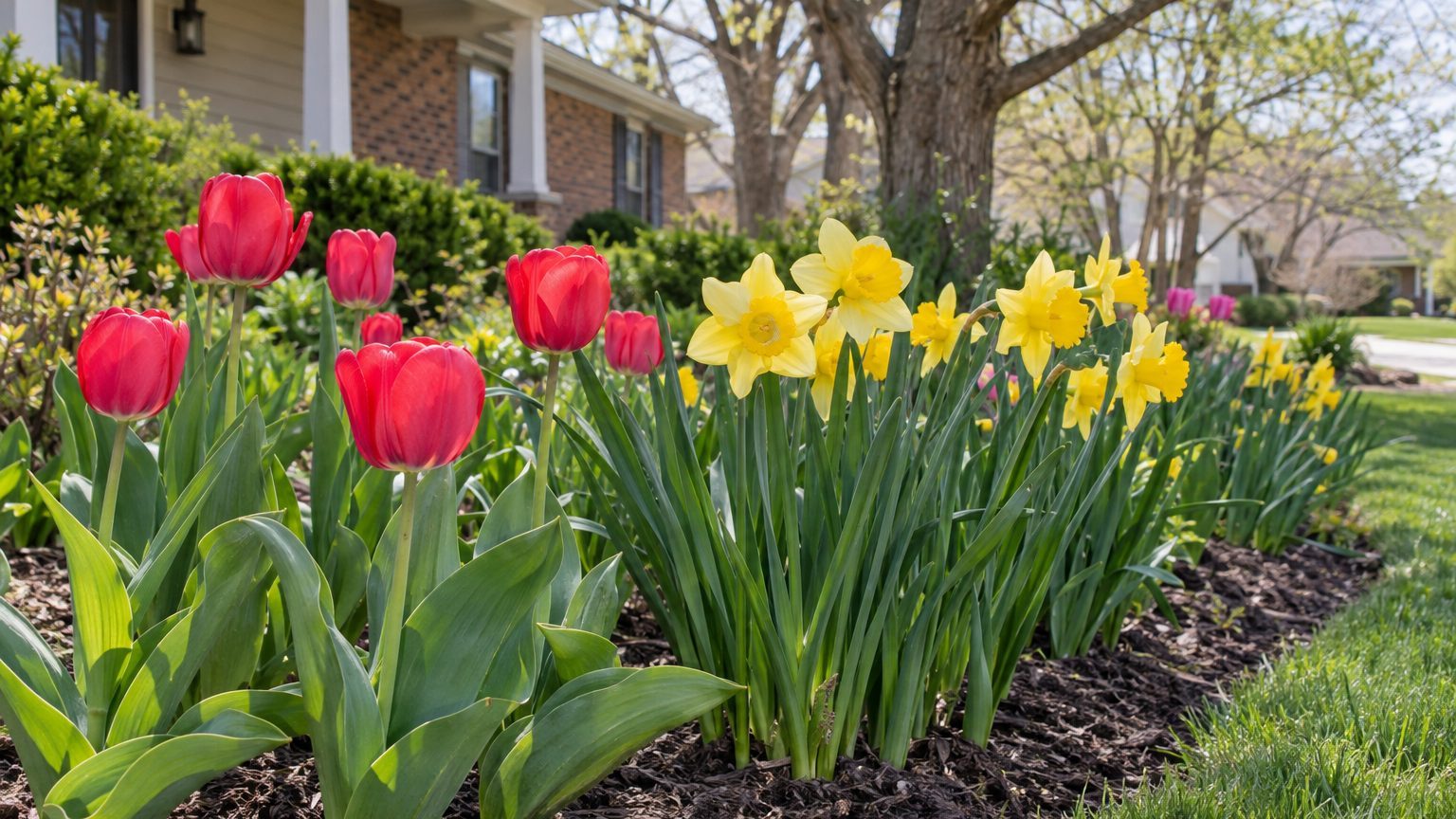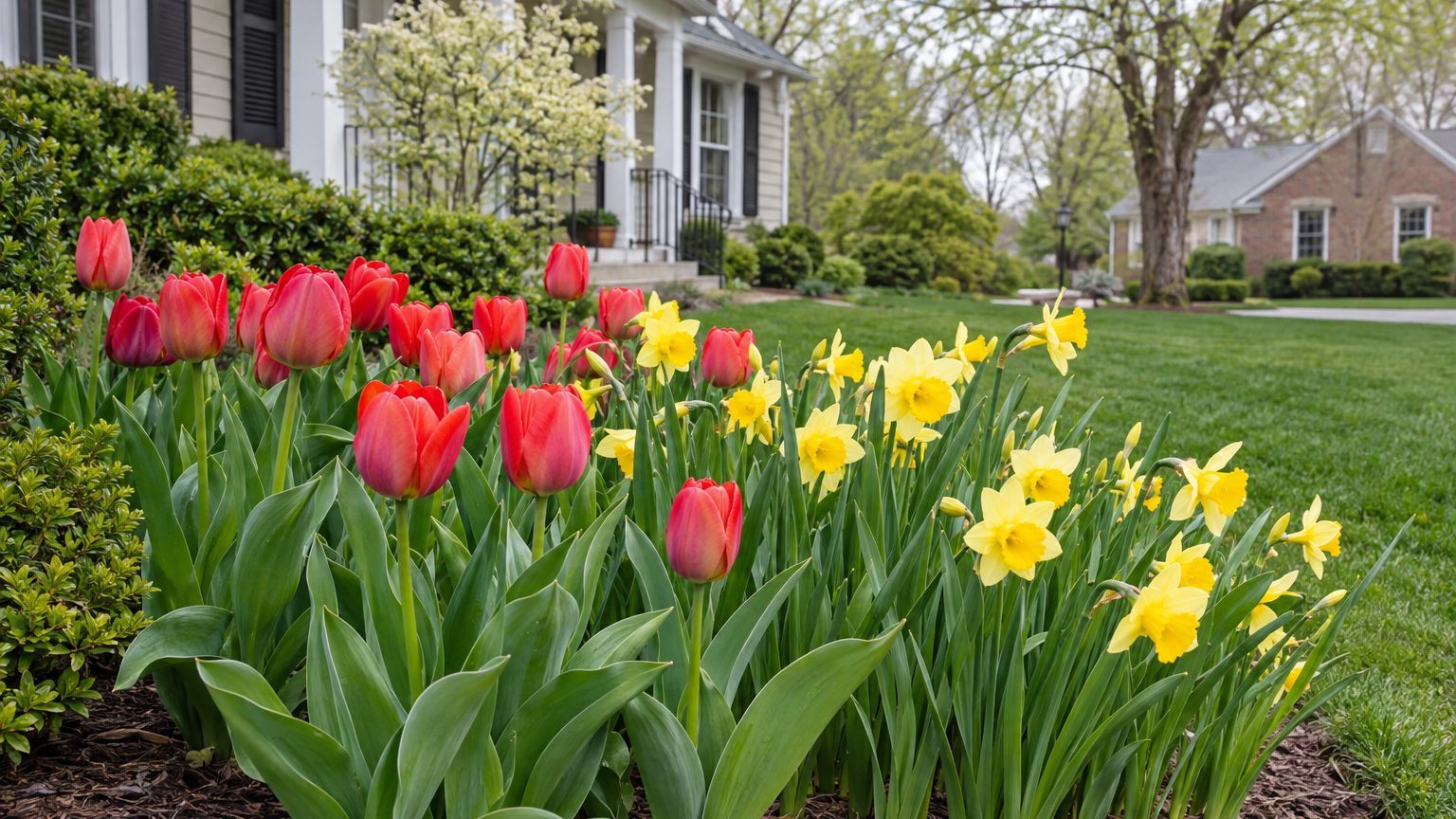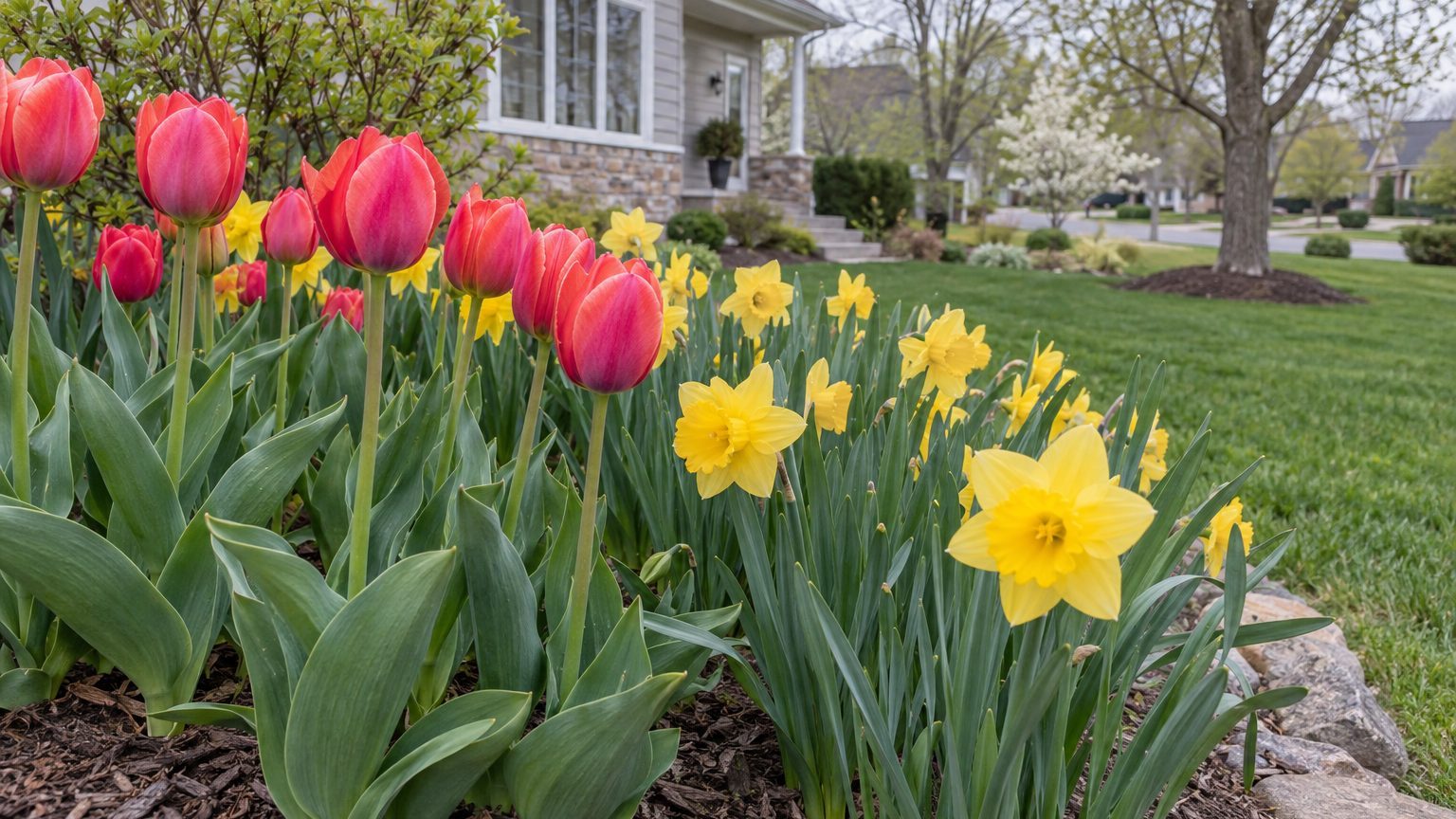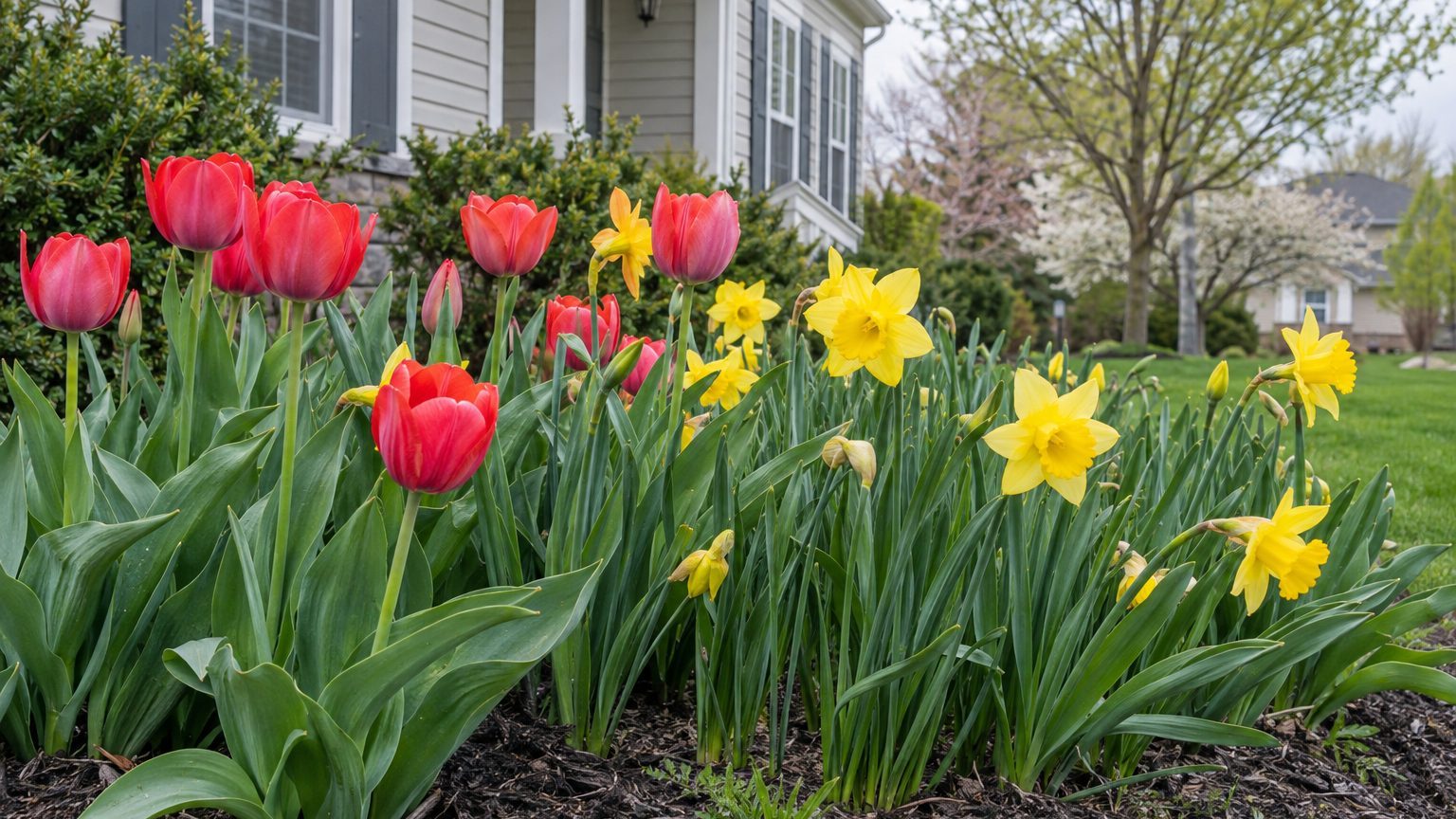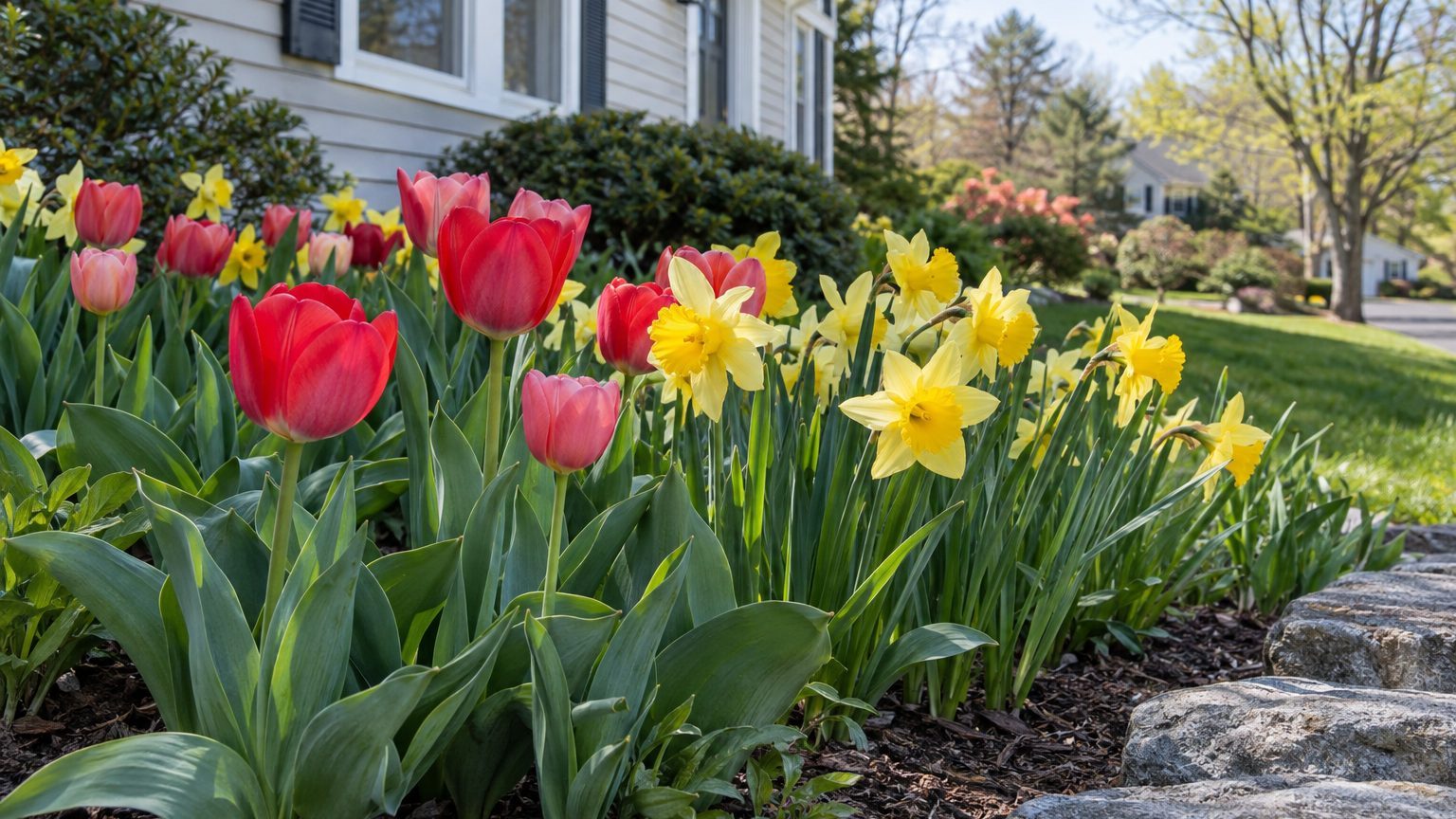
Daffodil leaves poking through the last patches of snow are one of the first signs that a New Hampshire spring is real, and the work behind that sight was done months earlier, in the cool fall soil. Tulips and daffodils go in the ground in autumn, and the timing here follows the soil and the calendar more than any single date.
When to Plant Tulips and Daffodils in New Hampshire

Plant tulips and daffodils in October, and if a bag of bulbs is still waiting in late November or December, plant them as long as the ground has not frozen solid. Here is the bulb’s year, from the shop to the first green shoot.
- In early fall, buy bulbs that feel firm and heavy for their size, since soft or moldy ones rarely recover.
- In October, plant once the soil has cooled below about 60°F, so the roots form before the ground freezes and the bulbs do not sprout too early.
- In late November or early December, plant any bulbs left over, because a bulb in the ground is far better off than one stored for the winter.
- After planting, spread a layer of shredded leaves or bark over the bed to even out the freezing and thawing of the soil.
- From March, the first shoots of the earliest hardy bulbs appear, and the later ones follow into April and May.
At the reference station, the first fall frost tends to arrive between October 13 and October 26, and gardens outside town often see it sooner, especially on higher ground, so check your own county. USDA hardiness zones across the state run from 3b to 6a.
Which Spring Bulbs Do Best in New Hampshire?
Daffodils are the safest choice. Most are hardy to zone 3, so they can be grown throughout the state, and animals leave them alone. Tulips and crocus grow too, but they attract hungry visitors.
Voles, squirrels, rabbits and deer all eat tulips and crocus, which is why a bed of daffodils usually looks the same from one year to the next while tulips can thin out.
| Bulb type | How it does in New Hampshire | Why |
|---|---|---|
| Daffodils | Reliable across the state, lasting for years | Hardy to zone 3 and left alone by deer and rodents |
| Tulips | Beautiful but often short-lived | Animals eat them, and many hybrids fade after a few seasons |
| Fosteriana tulips | A tulip that comes back well | This group perennializes better than most |
| Crocus | Grows well but needs protection | Voles, squirrels, rabbits and deer eat them |
Alliums and hyacinths also suit these gardens. According to Iowa State University Extension, alliums need the cold of winter to bloom, and they finish the bulb season as ornamental onions. Hyacinths go in the ground at the same time as the others.
When to Plant, Chill and Care for Spring Bulbs in New Hampshire
What matters most is the planting in October and the weeks after bloom, when the leaves are quietly refilling the bulb. Everything else is simple upkeep.
| Task | Best timing in New Hampshire | Why then |
|---|---|---|
| Plant tulips, daffodils, crocus, alliums and hyacinths | October | Roots form before the ground freezes |
| Plant bulbs that are still in the bag | Late November or December, while the ground can be dug | A planted bulb does better than a stored one |
| Check the soil before planting | When it has cooled below about 60°F | Bulbs planted into warm soil may sprout in the fall |
| Leave the leaves after bloom | As long as they are green, until they turn brown | The leaves feed the bulb for next year’s flowers |
After the flowers fade, remove only the spent blooms and leave the foliage alone. Never braid, tie or cut green leaves, however untidy they look next to the emerging perennials.
How Bulb Planting Time Changes Across New Hampshire
The October window holds across the state, but where you fall inside it depends on how soon the cold settles in around you.
- White Mountains and the North Country: Cold arrives sooner at higher elevations, so plant at the start of the October window and do not count on a long fallback into December.
- Lakes Region: Large lakes hold their warmth into fall and soften the first cold nights, so the soil can cool a bit later near the shore than on the hills above.
- Seacoast: Ocean air keeps the ground workable longer, which makes late plantings in November and December more realistic here.
- Monadnock region and the Merrimack Valley: Planting follows the middle of the October window, and cold hollows on a property can chill the soil sooner than open slopes.
Whatever the region, the 60°F soil check is a better guide than the calendar when the weather runs warm or cool.
Where to Get Bulb Advice in New Hampshire
University of New Hampshire Extension publishes fall gardening guidance written for the state’s soils and winters. Its county offices can answer questions that depend on your own yard.
- The extension website has articles on bulbs that naturalize and on fall planting, and they are worth reading before you order in late summer.
- Your county office can advise on a soil test, which is easiest to arrange before the ground cools.
- If a bed of bulbs failed to come up, bring a sample and a description to the county office in spring for help with a diagnosis.
Common Questions
Do Tulip and Daffodil Bulbs Need to Be Chilled in New Hampshire?
No. Most spring-flowering bulbs need about 12 to 16 weeks of cold to flower, and a New Hampshire winter supplies it. Refrigerator chilling is for mild climates, so here the bulbs go straight into the soil.
Can Daffodils Protect Tulips from Deer?
Daffodils are used as deer training plants in New Hampshire to protect more deer-loved plants from browsing. Because daffodils are left alone, planting them around tulips is worth a try in a New Hampshire yard that sees deer.
Will Daffodils Grow Under Trees in New Hampshire?
Most likely. In New Hampshire, daffodils naturalize well, especially in partly shady areas, and most daffodils are hardy to zone 3 here. A lightly shaded spot under deciduous trees suits them.