Skip to content

Best Roses for New Brunswick

Best Roses for New Brunswick

When the snow melts in a New Brunswick garden, the roses that leaf out from the base of last year’s canes are usually the ones bred for cold. Hardy shrub roses, Canadian-bred climbers and many old-fashioned types handle the winters here with little fuss. Tender hybrid teas can still be grown, but they ask for more work.

Best Roses to Grow in New Brunswick

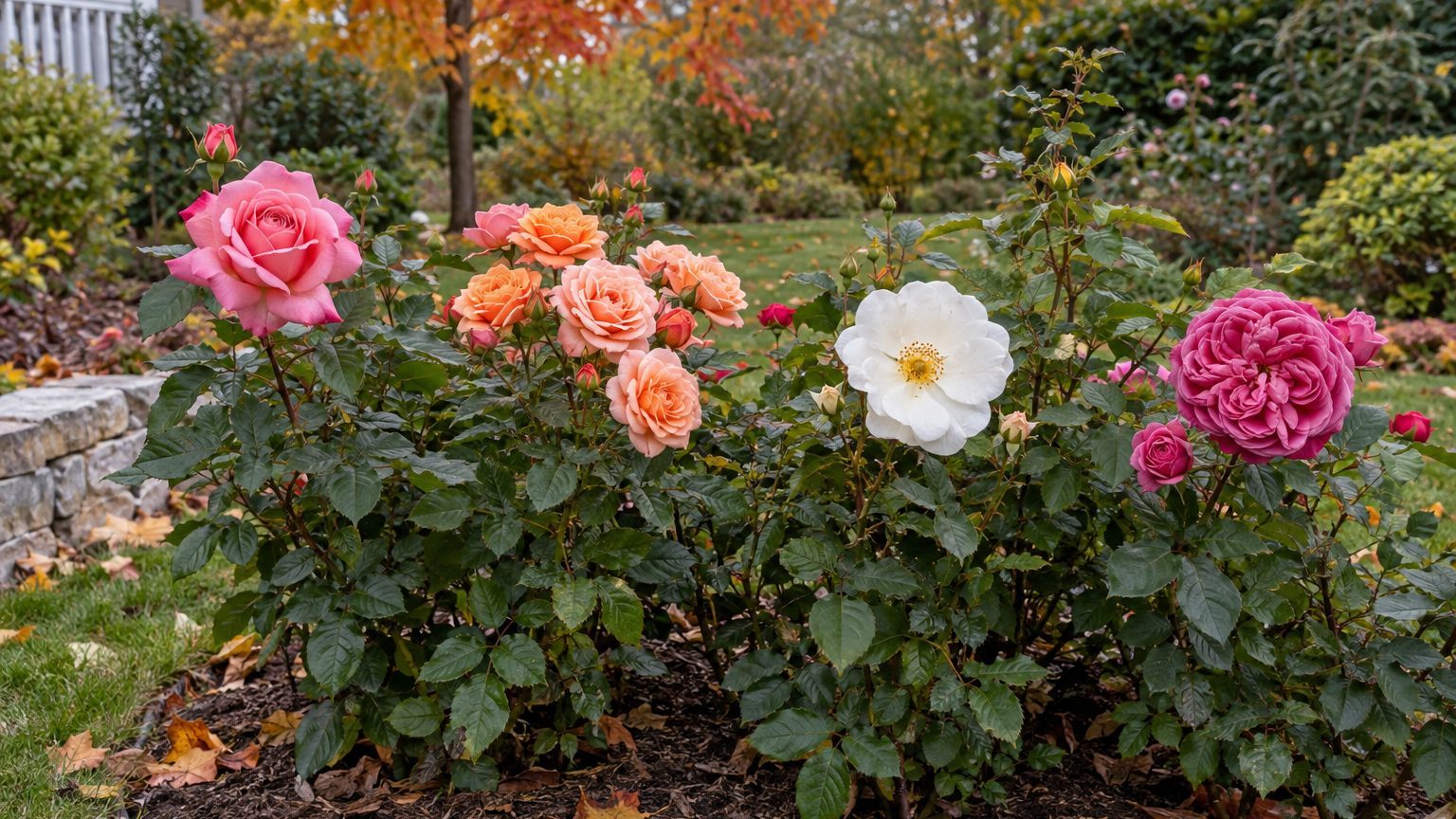
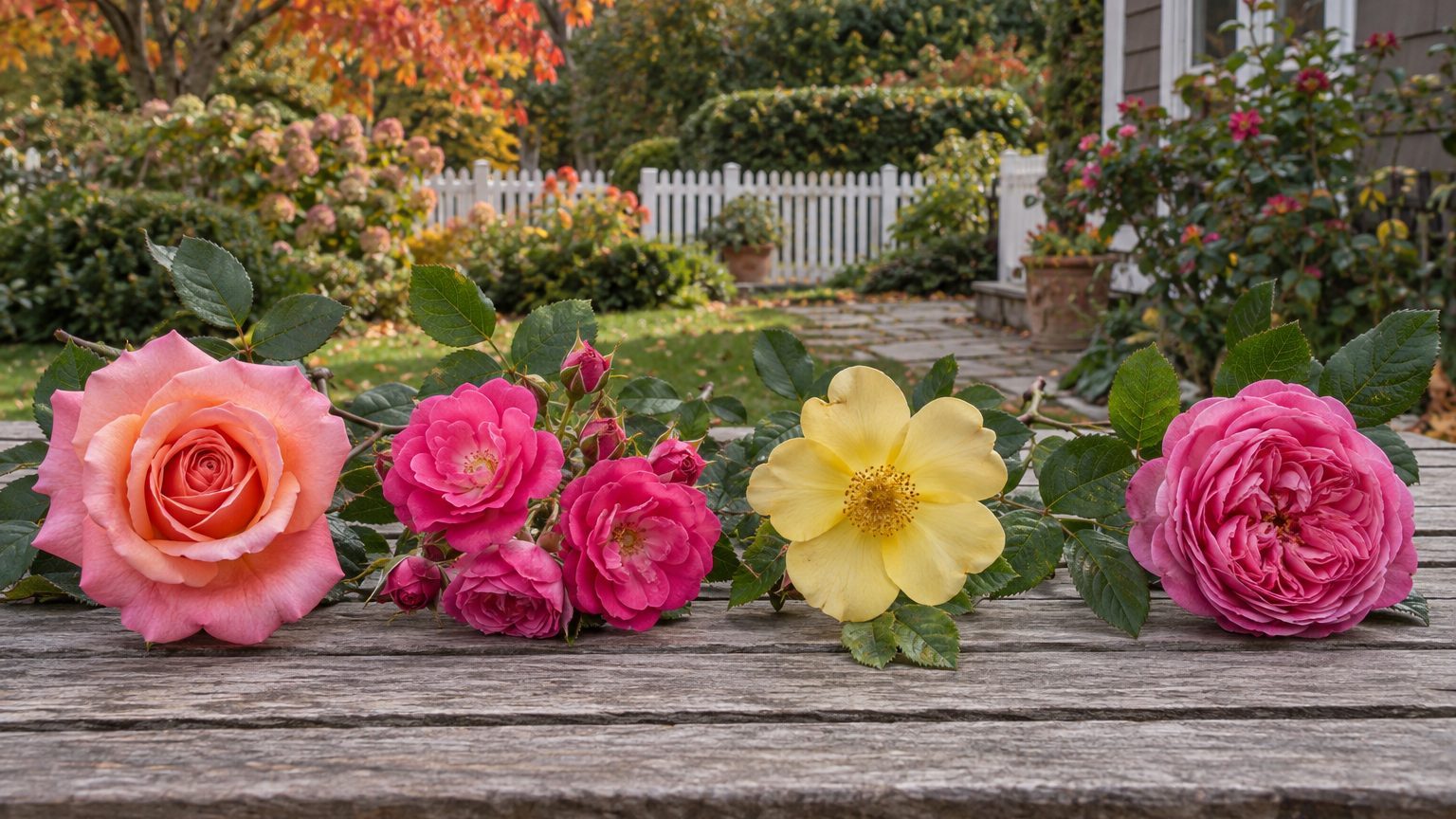
Healthy roses in bloom

Hardy types carry the day here, because winter is the limit on what survives and a cool, damp summer rarely stops a tough shrub rose from blooming. The reference city in the southeast sits in Canadian hardiness zone 5a, a rating from a separate system that does not convert to a USDA zone. Choose only types hardy enough for your coldest winters.

Hardy Shrub Roses

Shrub roses are the easiest way into growing roses here. Knock Out is one that performs well without extra winter protection, so the canes are not wrapped or mounded in autumn. Plant one in a sunny spot and let it grow.

Explorer Series

Bred in Canada, these shrub and climbing roses carry the names of explorers such as Champlain, Cabot and Kelsey. They also do well without extra protection. Climbing forms suit a fence or a trellis where a hybrid tea would need a coat of mulch every November.

Meidiland Series

These low, spreading shrub roses held up well in cold-climate trials, which makes them a sensible pick for a front border or a bank. Check the hardiness rating on each variety before buying, since not every one is equally tough.

Floribundas and Polyanthas

Both are more winter hardy than hybrid teas, and they bloom in generous clusters. They suit a bed along the foundation or the walk, where a cold snap would otherwise take a lot of flowers with it.

Hybrid Perpetuals and Old-Fashioned Roses

Hybrid perpetuals and many old-fashioned roses prove hardier than hybrid teas as well. Some of the old garden types flower once a year, which suits a gardener who prefers one big show over steady bloom.

Hybrid Teas and Grandifloras

These are the tender end of the family. Hybrid teas, floribundas and grandifloras need winter protection in cold winters. If you love the long-stemmed look, plant a few and give them a sheltered spot, but build the main border from tougher roses.

How to Choose a Rose for a New Brunswick Garden

Start with the winter, since it decides what lives. Then think about how much attention you want to give the plant, because the hardiest roses ask the least of you.

Match the rose to the situation in the garden, and keep the tender types for the spots where you will check on them in autumn and spring.

Your situation What suits it in New Brunswick Why
Very cold winter Floribundas, polyanthas, hybrid perpetuals, shrub roses They prove more winter hardy than hybrid teas and grandifloras
Little time Knock Out or an Explorer rose They perform well without extra winter protection
You want hybrid teas anyway A sheltered spot and a plan for protection They need cover in cold winters, applied in November
Old-fashioned look Old garden roses and hybrid perpetuals Many are hardier than hybrid teas

A humid summer, a dry spell or a small space can each change the pick too. For those, ask a local garden centre which varieties have done well nearby, and bring the hardiness rating with you.

Which Roses Suit Different Parts of New Brunswick

The province is not one climate, and the choice of rose shifts with where the garden sits.

  • In Moncton, frost has ended by May 23 on average, and in one year out of two it comes later. Hardy shrub roses are a safe base, and hybrid teas are possible here with protection.
  • Northern and upland districts: they run weeks behind Moncton, so lean on the hardiest types, such as Explorer roses and shrub roses. Wait longer before uncovering and planting.

A sheltered corner can behave like a milder district, but a windy slope will not.

Rose Buying Mistakes to Avoid in New Brunswick

Buying Tender Roses Without a Plan

A hybrid tea planted in the open and left alone can lose its canes over winter, and the plant then restarts from low on the stem. Choose a hardy shrub rose, or cover the tender one in late November, after hard frosts have killed the leaves. Take the covering off in May, or in April if spring comes early.

Ignoring the Hardiness Rating

Plant tags may quote a USDA zone, and the Canadian system does not convert to it. The cost is a rose bought for the wrong winter. Look for a Canadian rating and compare it with Canadian zone 5a in Moncton, remembering that colder districts run lower.

Planting at the Wrong Time

A bare-root rose set in the ground out of season struggles to establish. Plant bare-root roses in April or May. Potted roses can go in later, which is useful if a spring purchase comes after the main planting window.

Where to Get Rose Advice in New Brunswick

New Brunswick has no local extension page on rose timing, so the months here follow the nearest comparable climate to the south. Confirm local timing with a garden centre, a rose society or the provincial gardening groups. Federal resources help too.

  • Visit Agriculture and Agri-Food Canada for general plant and growing guidance from the federal department.
  • Ask a local garden centre in early spring about which hardy varieties came through the winter nearby.
  • Contact a local rose society or provincial gardening group before ordering bare-root stock for April planting.

Common Questions

When Should You Prune Roses in New Brunswick?

Prune repeat-blooming roses such as hybrid teas, floribundas and modern shrub roses in April or May, once active growth begins. March can work if you wait for active growth. Once-blooming roses flower on last year’s wood, so prune them right after they bloom, never in early spring.

When Should You Feed Roses?

Feed roses from April through July, and into August at the latest. Stopping by August keeps new growth from staying soft when winter arrives.

Can You Plant a Potted Rose Later than a Bare-Root One?

Yes. Bare-root roses go in during April or May, while potted roses can be planted later in the season. Water them regularly until they are settled.
Best Roses for Nevada

Best Roses for Nevada

A Nevada spring can look very different in a low-desert yard and at high elevation. Hybrid teas, floribundas, polyanthas, miniatures, climbers and old garden roses all earn a place here, though elevation and summer heat decide which suits your yard.

Best Roses to Grow in Nevada

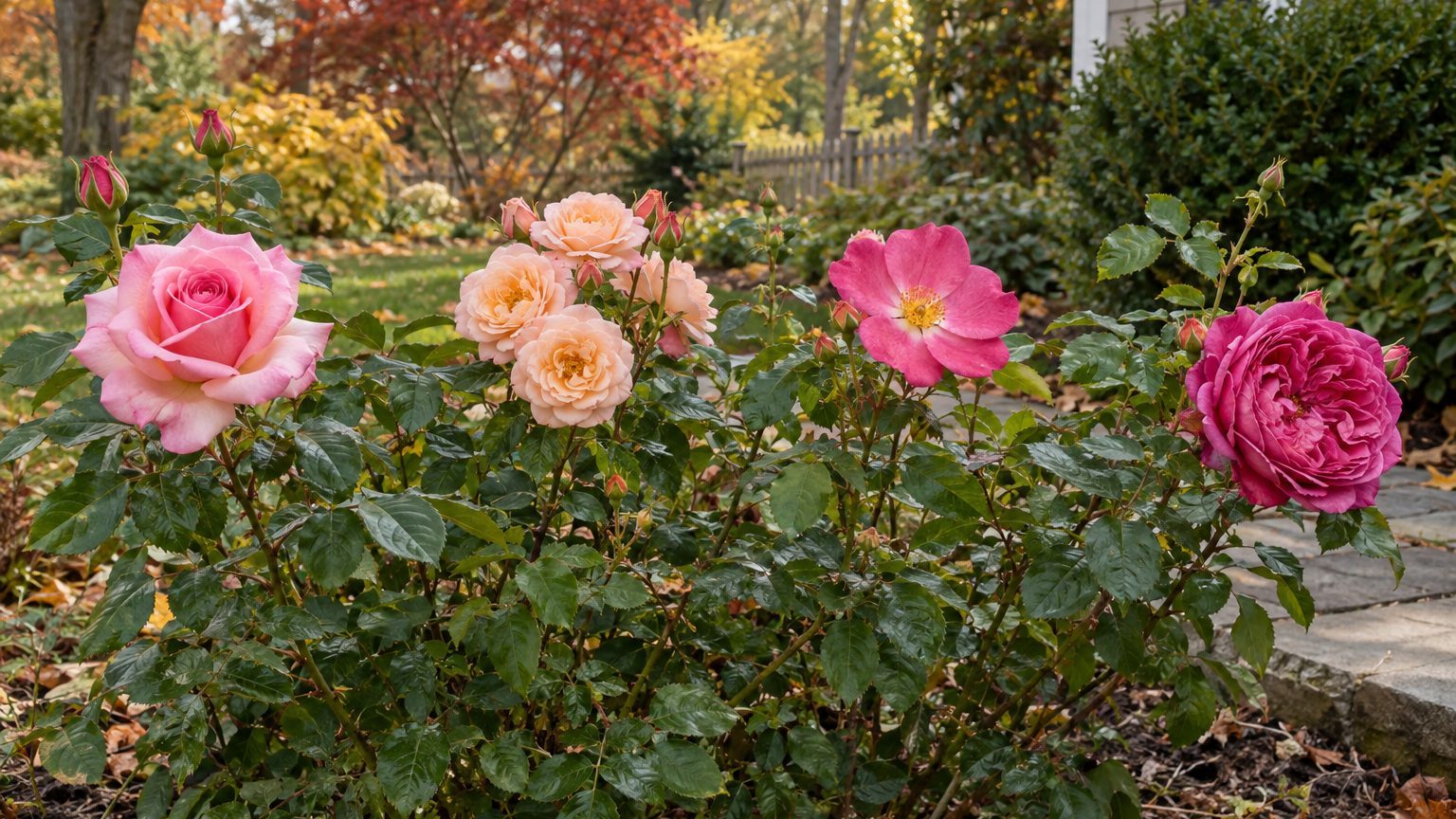
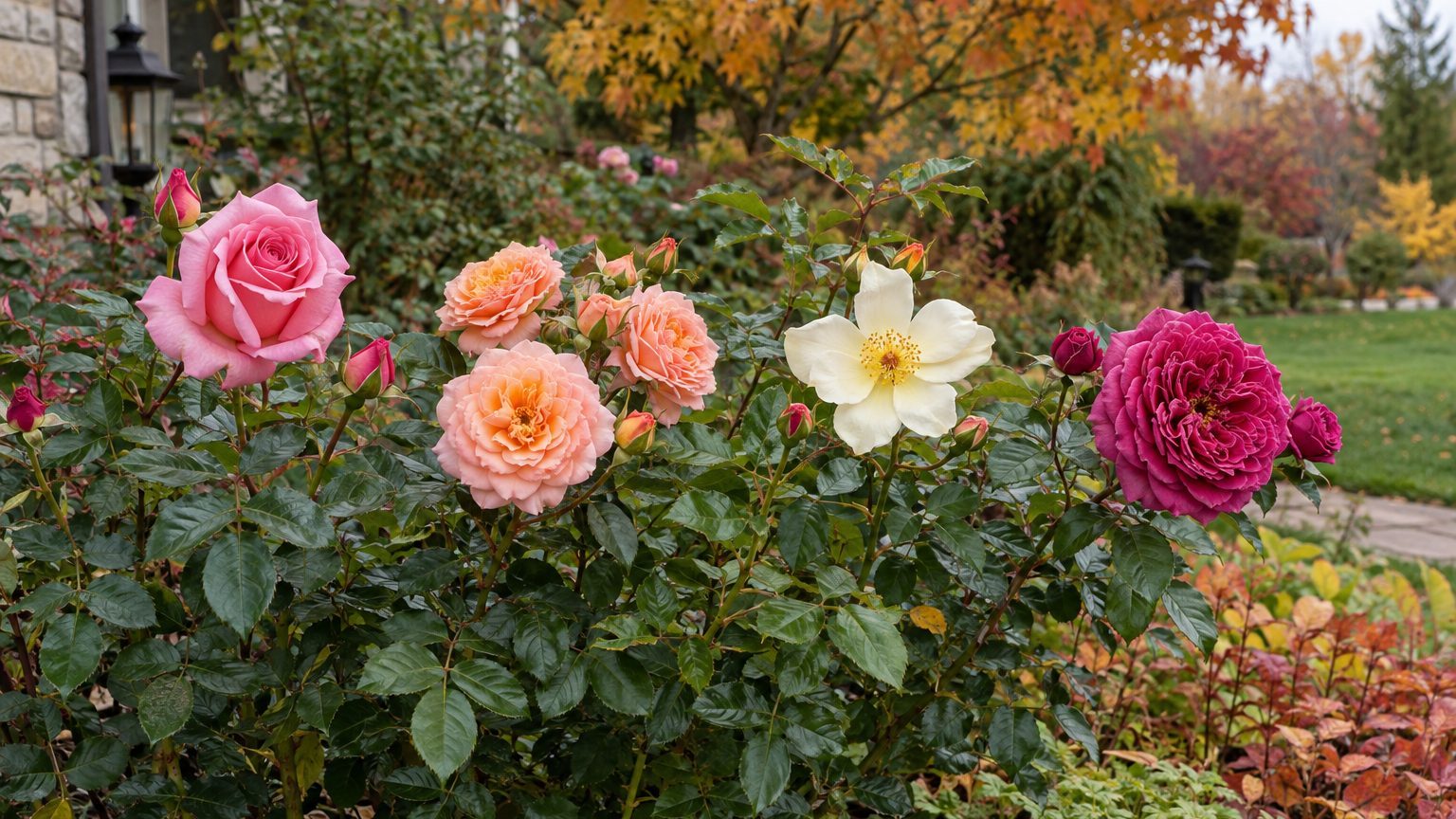
Healthy roses in bloom

Hybrid teas and floribundas are the roses grown most often, and the rest of the popular types (polyanthas, miniatures, climbers, old garden roses) earn their place for specific reasons. Dry air and summer heat matter in low-desert gardens, while colder high ground calls for a different plan.

Hybrid Teas

Hybrid teas are continuous bloomers, and many are resistant to powdery mildew, which suits dry air that can still leave leaves dusty with it in cool, shaded corners. They are the classic long-stemmed rose and the type most often grown in dry-climate gardens.

Prune them in January or February, and it can also be done in March.

Floribundas

Floribundas are grown nearly as often as hybrid teas and give you clusters of blooms instead of single stems. They bloom repeatedly, so they take the same winter pruning.

Use them where you want color over a long stretch rather than a few cutting-quality flowers.

Polyanthas

Polyanthas make excellent borders and small hedges, and they do well in containers. Many are hardy, and most varieties bloom continuously.

That makes them a sensible pick along a walkway or on a patio where you want low upkeep and steady flowers.

Miniatures

Miniatures sit among the popular types for dry-climate gardens and fit beds too small for a full-size shrub. Pot them or tuck them at the front of a border.

Check whether a miniature rose repeats or blooms once before choosing its pruning time.

Climbers

Climbers can cover fences and arbors. Some bloom once and some repeat, so check the tag before you buy.

A once-blooming climber flowers on last year’s wood, so prune it right after it blooms and never in early spring. A repeat bloomer follows the winter schedule.

Old Garden Roses

Old garden roses split into European types, which are cold hardy and bloom once, and Asian types, which repeat. Growers who keep European and Asian old garden roses often find the old garden group needs less maintenance than modern roses, especially in the hot summer months.

That is a real advantage in a Nevada summer.

How to Choose a Rose for a Nevada Garden

Nevada spans USDA hardiness zones 4a to 10a, so the right rose depends on where you garden more than on any one favorite variety. Start with the problem your yard poses, then pick the type that answers it.

The pruning and planting months below follow the nearest comparable climate, since Nevada has no local rose-timing page. Confirm them with a local garden center or a rose society.

Your situation What suits it in Nevada Why
Very cold winter, high ground European old garden roses They are cold hardy, and in the high mountains other roses need some protection
Powdery mildew on leaves Hybrid teas and other mildew-resistant varieties Many hybrid teas resist mildew, and planting resistant varieties is the best control
Hot, dry summer Old garden roses They need less upkeep than modern roses in the hot months
Little time to spare Polyanthas They are hardy, and most varieties bloom continuously
Small space or patio Polyanthas in containers, or miniatures Polyanthas do well in pots and make small hedges

For bare-root roses, the planting months run January and February, with March as a fallback. Potted roses can go in later than that. Pruning repeat bloomers follows the same months, and feeding starts after pruning.

Which Roses Suit Different Parts of Nevada

The gap between the desert south and the mountain edges is wide, and it changes which roses you can rely on.

  • Las Vegas: Heat is the main test in the low desert, so lean toward old garden roses and the sturdier modern types, and plant bare-root roses early in the winter window.
  • Reno and Carson City: Winters are colder here than in the south, so favor cold-hardy roses and confirm bare-root planting time with a local garden center or rose society.
  • Lake Tahoe and the high mountains: Conditions at Lake Tahoe and in the high mountains differ sharply from the low desert, so confirm suitable rose types and winter care locally.

Your own yard may sit in a pocket warmer or colder than the town around it, so treat these as starting points.

Rose Buying Mistakes to Avoid in Nevada

Choosing a Type Too Tender for Winter

A hybrid tea planted on a high, exposed site can suffer where a cold-hardy rose would not, because the high mountains are where roses need protection from winter. The cost is canes killed back and a slow, weak start the next year.

Look up your hardiness zone before you buy, and choose a cold-hardy European old garden rose or a polyantha if your site runs cold.

Buying a Mildew-Prone Variety

Powdery mildew can show up on roses in shaded or crowded plantings. A susceptible variety may leave you reaching for a spray.

Look for varieties sold as mildew resistant, since planting resistant varieties or using a preventive fungicide spray is how this disease is best controlled. Good airflow around each plant helps too.

Planting a Grafted Rose in a Hard Winter Spot

Where winter is hardest, a grafted rose can lose its top growth and leave only the rootstock to sprout, which means a plant that is not the rose you paid for. The loss shows up in spring, when the new shoots look different from the original.

Ask the nursery whether the rose is grafted and how it handles winter at your elevation. In cold sites, favor the hardy types already named above.

Where to Get Rose Advice in Nevada

Local advice matters most here, because conditions change so much from valley floor to mountain slope. University of Nevada, Reno Extension and your county extension office can tell you what grows in your own zone.

  • The state extension service offers gardening guidance for Nevada conditions, so check it before choosing varieties.
  • Your county extension office can answer questions about your specific site, and the cooler months before planting season are a good time to call.
  • A local rose society or garden center can confirm timing and tell you which varieties do well near you.

Common Questions

When Should You Feed Roses in Nevada?

Feeding runs from February through June, starting after pruning and repeating regularly until June. Skip midsummer, then feed again from September to mid-October.

Why Do Roses Stop Blooming in Summer Heat?

Many varieties pause blooming during extreme summer heat. They usually pick up again as the weather cools.

Do Light-Colored Roses Attract Thrips?

Thrips are said to prefer light-colored blossoms, such as yellow and white. If thrips bother your roses, darker varieties may be less appealing to them.

Best Roses for Nebraska

Best Roses for Nebraska

When a rose cane greens up near the base after a Nebraska winter, the type you planted often explains why. Many shrub roses and old garden roses come through the cold with little fuss, while hybrid teas ask for more work.

Best Roses to Grow in Nebraska

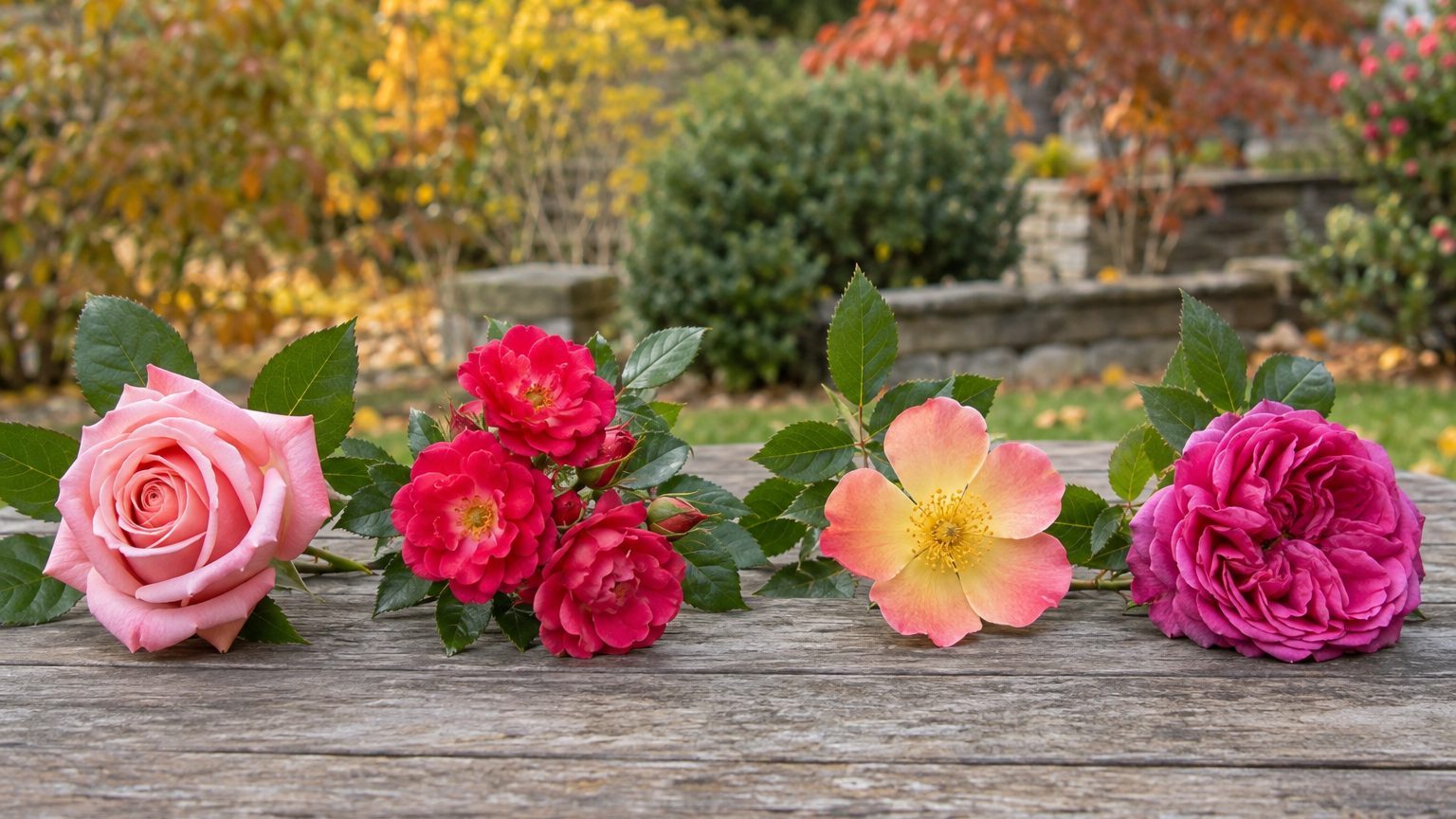
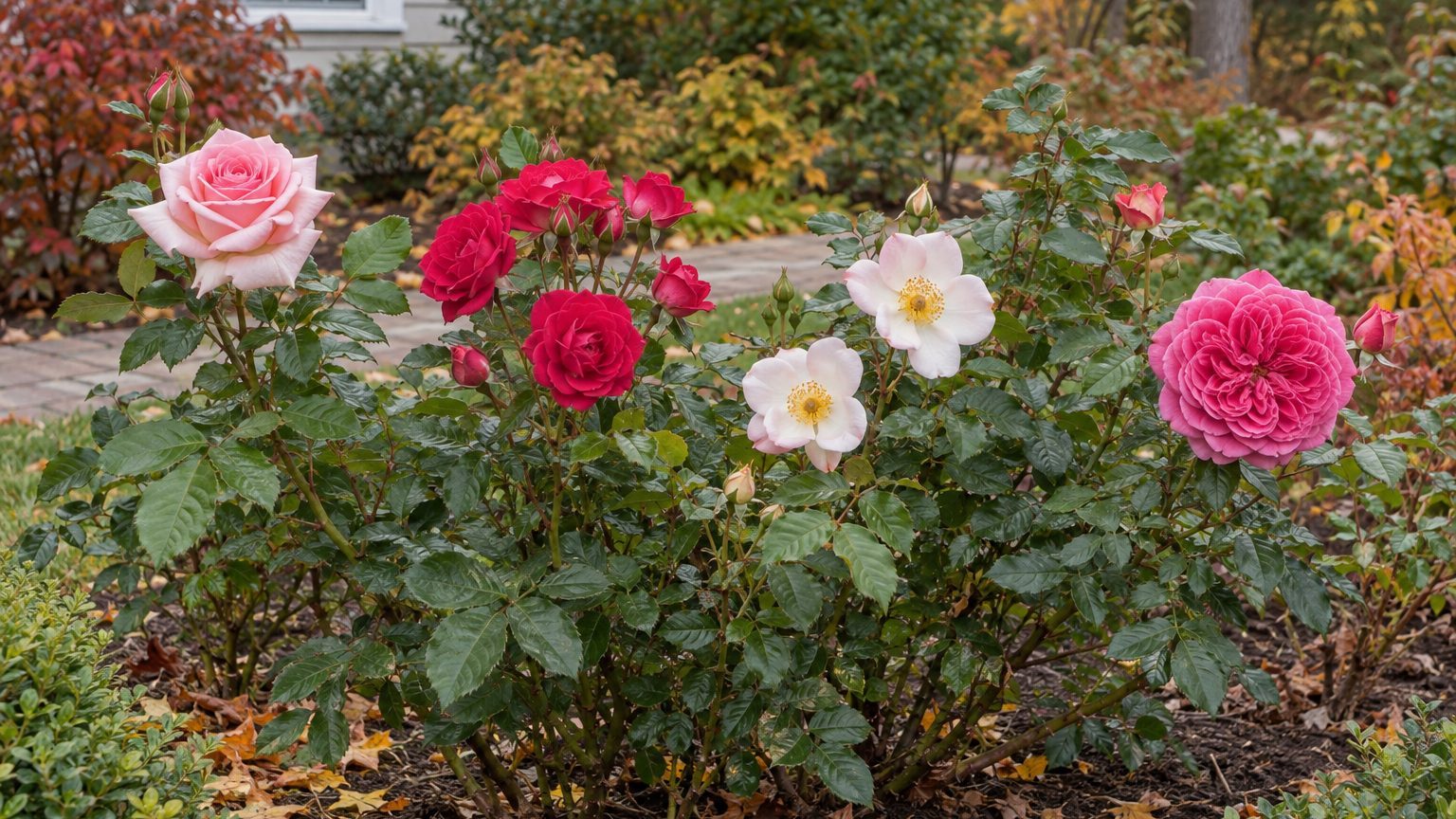
Healthy roses in bloom

Many hardy shrub roses and old garden roses hold up well here, because winter cold is the main test. Nebraska gardens fall between zones 4a and 5b on the USDA hardiness system, so a rose that needs a mound of protection in January is a bigger commitment than one that does not. Humid summers add disease pressure for the tender types.

Shrub Roses

Most shrub and landscape roses are reliably winter hardy and need no extensive preparation for the cold. Hardy shrub roses such as Knock Out and the Explorer series perform well without extra protection.

Many shrub roses are also well adapted to Nebraska and to water-conserving landscapes, which suits a dry stretch in July.

Old Garden Roses

Many old garden roses are extremely tolerant of cold, and that toughness is why they turn up in older Nebraska yards. Plant them where they have room, since they grow into full shrubs.

Once-blooming types flower once a year on last year’s wood. Prune them right after they bloom, never in early spring, or you cut off the buds.

Floribundas

Floribundas are shorter and more compact than hybrid teas, and they carry large clusters of flowers. They are semi-hardy and require winter protection, which makes them useful for beds, shrub borders and low hedges.

They still want winter protection when a cold winter arrives, so treat them as a step up in toughness rather than a hands-off shrub.

Polyantha Roses

Polyanthas are shrubby, low-growing roses with clusters of small flowers. They are usually quite hardy and bloom freely through the growing season.

Some polyanthas still need protection, so read the plant tag before you count on one going without a mound.

Hybrid Teas

Hybrid teas are popular for their large flowers, and most of them carry some fragrance. They are not reliably winter hardy, so plan to protect them in cold winters.

Put protection on in November, or in December if the fall stays mild, and only after several killing freezes have put the plants to sleep. Prune them in March or April, and in February when the forsythia blooms.

Climbing Roses

Most climbers are not reliably hardy in Nebraska winters, though some are hardier than others. Check the label for hardiness before buying.

Many climbers bloom once on last year’s wood, so they follow the same rule as old garden roses and get pruned after flowering.

How to Choose a Rose for a Nebraska Garden

Start with how much winter work you are willing to do. Hardy shrub types ask for almost none, and hybrid teas ask for the most. Then match the rose to the spot, the summer weather and the room you have.

Your situation What suits it in Nebraska Why
Very cold winter Shrub roses and old garden roses Many shrub and old garden roses are reliably hardy and tolerate cold well.
Humid summer Shrub roses rather than hybrid teas Hybrid teas are susceptible to aphids and black spot.
Heat and drought Shrub roses Many are well adapted to Nebraska and to water-conserving landscapes.
Little time Knock Out, the Explorer series, floribundas Knock Out and Explorer roses need no extra protection, and floribundas need less care.
Small space Floribundas and polyanthas Floribundas are compact, and polyanthas are low-growing.

Climbers fit a fence or arbor but need a protection plan. If you are unsure which row describes your yard, start with a hardy shrub rose and add a few floribundas for color near the house.

Which Roses Suit Different Parts of Nebraska

Nebraska runs from milder eastern yards to colder, more exposed western ones, so the same rose can behave differently across the state.

  • Panhandle: Winters are colder and more exposed here, so lean on shrub roses and old garden roses and treat hybrid teas as a project that needs yearly protection.
  • Sandhills: Dry, open ground favors the shrub roses described as well adapted to water-conserving landscapes, and wind makes tender climbers a poor bet.
  • Omaha and Lincoln area: This milder eastern side gives hybrid teas and floribundas a better chance, though humid summers raise the odds of black spot.

Your county’s conditions can differ from a neighbor’s by a good margin, so a quick call to the local extension office settles the choice.

Rose Buying Mistakes to Avoid in Nebraska

Buying a Tender Rose Without a Plan

Hybrid teas, grandifloras and many climbers are not reliably hardy here, and an unprotected plant can lose canes or the whole bush.

If you want one anyway, budget time for mounding in November, after several killing freezes. Otherwise choose a shrub rose and skip the work.

Choosing Disease-Prone Varieties

Hybrid teas are susceptible to aphids and black spot, and a humid summer gives both a head start. The cost is spotted leaves, a thinner plant and more spraying or hand cleanup.

A shrub rose or a floribunda gives you flowers with less fuss. Clear fallen leaves from beds so spores have less to winter on.

Ignoring the Hardiness Label

A rose bred to be hardy in a cold zone needs little to no added protection, while one bred for milder places can struggle through a Nebraska winter. Check the tag before you buy, not after the first hard freeze.

Buy bare-root roses early and plant them in March or April, before growth starts. Container roses are more forgiving of timing.

Where to Get Rose Advice in Nebraska

Local help starts with Nebraska Extension and your county office. They can tell you which roses have done well in your part of the state and what is causing a problem.

  • Its site carries rose pruning and winter protection guidance, and it is worth a read in late winter before the buds swell.
  • Your county extension office can look at a leaf or cane you bring in, which helps most in summer when black spot shows.
  • Master gardener volunteers often answer local questions in spring, when planting and pruning decisions are being made.

Common Questions

When Should You Feed Roses in Nebraska?

Feed from April through July, starting after pruning, again at first bloom and in mid-July. After mid-August, stop feeding, because late feeding pushes soft growth that winter can damage.

Can You Plant a Rose in July?

Yes, if it comes in a container. Container roses can go in from April through midsummer, and water them regularly while they settle. Bare-root roses are best planted in March or April, though May through July can work.

When Do You Take Winter Protection Off Roses?

March or April, once the ground thaws. Pull the mound away gradually, then prune hybrid teas and floribundas when the buds begin to swell.

Best Roses for Montana

Best Roses for Montana

A rose that leafs out in a Montana spring has already come through a long, hard winter. The ones that settle in and bloom year after year are mostly hardy shrub roses, while fussier garden roses ask for more care. Knowing which type suits your yard saves money before a single plant goes in the ground.

Best Roses to Grow in Montana

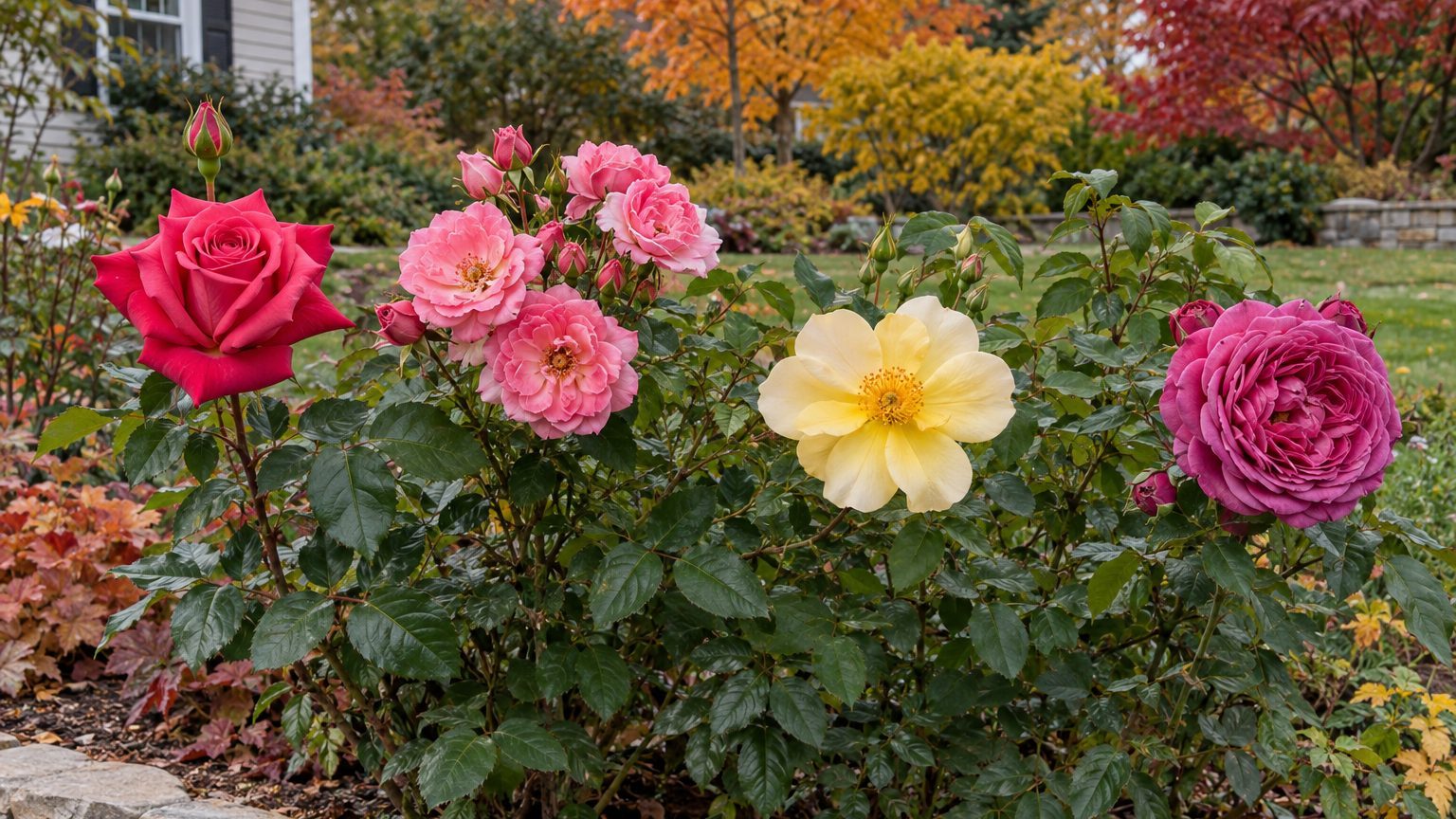
Best Roses for Montana

Hardy shrub roses are the ones that settle in across Montana, because winter sets the limit here. The climate is only marginally suited to most types of roses, yet many shrub roses are hardy and vigorous and need little care under severe conditions. Hardiness zones in the USDA system run from 3a to 6a across the state, so check your own zone before you buy.

Hardy Shrub Roses

Hardy Shrub Roses — Best Roses for Montana

Some shrub roses tolerate winter temperatures of -45°F, making them a sound starting point in cold yards. Hardy types such as Knock Out and the Explorer series perform well without extra protection.

Among the shrub rose divisions, hybrid kordesii, hybrid rugosa and shrub roses are the ones with cultivars that have adapted to Montana. Look for those words on the plant tag.

Hybrid Rugosa and Hybrid Kordesii

Hybrid Rugosa and Hybrid Kordesii — Best Roses for Montana

These groups come from divisions with proven cultivars for Montana, which makes them a sensible shortlist when a nursery offers a long row of choices.

Ask for a named cultivar from either group and check that it is sold for cold climates. A tag that only says “hardy” tells you little.

Alpine and Nootka Roses

Alpine and Nootka roses do better in the warmer areas of the state. They have survived on protected planting sites, so give them a spot out of the open wind, such as the sheltered side of a building or a fence.

In a cold valley or an exposed yard, pick one of the sturdier shrub roses instead.

Red Leaf Rose

The Red Leaf Rose, Rosa rubrifolia, can reach a height of several feet. That makes it a good fit at the back of a border, where its size is an asset instead of a problem.

Leave it room to grow. Crowding a tall shrub rose leads to hard pruning later.

Hybrid Teas and Grandifloras

In Montana they ask for more than a shrub rose does, since hybrid teas and grandifloras often need additional winter protection.

Grow them if you enjoy the extra work, and treat them as a few special plants rather than the backbone of the bed.

How to Choose a Rose for a Montana Garden

Start with the worst thing your yard throws at a rose, then work backward to the type. In a cold Montana yard, hardiness comes before flower color.

A rose that suits your situation will cost you less in replacements, sprays and winter chores than a prettier one that does not.

Your situation What suits it in Montana Why
Very cold winter Explorer series, hybrid rugosa, hybrid kordesii Hardy shrub roses get through winter without extra protection, and some tolerate -45°F
Humid summer Simplicity series It is a shrub rose series described as resistant to pests and diseases
Little time Hardy shrub roses such as Knock Out They are vigorous and need little care under severe conditions
Small space Miniature roses They are naturally dwarf and stay popular in small garden spaces
Warmer, sheltered spot Alpine or Nootka roses They do better in warmer areas and have survived on protected sites

Floribundas, a cross between a hybrid tea and a polyantha, typically repeat bloom each season, and they suit a gardener willing to give some winter care. For a tall screen or a back-of-border plant, the Red Leaf Rose does the job.

Which Roses Suit Different Parts of Montana

Montana is large, and the same rose does not face the same winter in every part of it. Local winter patterns matter when you choose.

  • Billings: This is one of the milder valleys, with the last spring frost usually falling between April 29 and May 10. Alpine and Nootka roses have a better chance here if they get a protected site.
  • Mountain valleys: Frost can arrive in any month in the mountain valleys elsewhere in the state. Lean on the hardiest shrub roses and treat hybrid teas as an experiment.

If your yard falls between these conditions, plant the hardy types first and add anything tender only after seeing how your own site behaves through winter.

Rose Buying Mistakes to Avoid in Montana

Buying a Tender Type

A hybrid tea or grandiflora bought on looks alone can be an easy rose to lose here. These types need extra winter protection, and without it the canes can die back hard.

Choose a hardy shrub rose for the main planting. If you still want a hybrid tea, plan the winter mounding before it arrives.

Ignoring Disease in Humid Summers

A variety that is prone to disease turns a wet summer into a season of spotted leaves and spraying. The cost is a plant that looks poor and needs more work from you.

Look for shrub roses sold as pest and disease resistant, such as the Simplicity series, which also repeat bloom through the growing season. Meidiland roses are another series useful in the landscape.

Buying a Grafted Rose

A grafted rose is only as hardy as its graft union, and in a hard winter the grafted top can die while the rootstock survives. You then end up with a vigorous plant that is not the rose you bought.

Choose bare-root plants on their own roots, graded Number 1. If the top freezes back, what regrows is still the rose you chose.

Where to Get Rose Advice in Montana

Local growers know which cultivars have come through your valley’s winters. Local sources can point you to proven choices before you spend money on plants.

  • Montana State University Extension publishes guidance on growing shrub roses in the state, and it is worth reading before the nursery trip in spring.
  • Your county extension office can tell you which roses have done well locally and which frost pockets to avoid, so call before you plan the bed.

Common Questions

When Should You Prune Roses in Montana?

Repeat-blooming roses such as hybrid teas, floribundas and modern shrub roses are pruned in April. May also works if spring runs late. Once-blooming roses, including old garden roses, ramblers and many climbers, flower on last year’s wood, so prune them right after they bloom and never in early spring.

When Can You Plant Bare-Root Roses?

Plant them in April or May, as soon as the ground can be worked and while the plants are still dormant. Potted roses can go in later in the season.

When Should You Cover Roses for Winter, and When Do You Uncover Them?

November is the usual time, around Thanksgiving. October or December also works. In Montana, the advice is to mound about eight inches of soil over the bush. Take it off gradually in April, or in May, once the danger of hard frost has passed.

Best Roses for Missouri

Best Roses for Missouri

Roses that come through a Missouri winter with green canes and still bloom in a humid July tend to be tough rather than fussy. Floribundas, polyanthas, shrub roses and old garden roses have that reputation, while hybrid teas ask for more attention. Choosing by hardiness first makes the rest of the season easier.

Best Roses to Grow in Missouri

Best Roses for Missouri

Hardy types hold up here because winters fall between zones 5b and 7b on the USDA system, and humid summers invite black spot on the fussier kinds. A rose bred for colder winters than yours needs little added protection, which makes hardy, compact and disease-tolerant types practical choices for a Missouri yard.

Floribundas

Floribundas — Best Roses for Missouri

Floribundas came from crosses between hybrid teas and polyanthus roses. They make large, hardy, shrubby bushes that bloom profusely in clusters. They are very hardy and ask for less care than a hybrid tea.

Their compact growth suits bed planting, a shrub border or a low hedge.

Polyantha Roses

Polyantha Roses — Best Roses for Missouri

Polyanthas are shrubby, low-growing roses with clusters of small flowers. They are usually quite hardy and bloom freely through the growing season, which is what a long Missouri summer calls for.

Their low habit makes them easy to tuck in front of taller shrubs.

Old Garden Roses

Many old garden roses tolerate cold well, while hybrid teas can take considerable damage in the same winter. That makes them a sound pick for the colder parts of the state.

Once-blooming roses, which include old garden roses, ramblers and many climbers, flower on last year’s wood. Prune them right after they bloom, never in early spring.

Shrub Roses

More gardeners are getting to know old fashioned and shrub roses, and many of them are well adapted to water-conserving landscapes. That helps when a dry spell settles in during summer.

Because they are sturdy plants, they suit a yard where roses must manage on their own.

Hybrid Teas

Hybrid teas carry large flowers, and most but not all have some fragrance. They are semi-hardy and need winter protection, and they are susceptible to aphids and black spot.

If you want hybrid teas, plant them where you can keep an eye on them rather than building a whole bed around them.

How to Choose a Rose for a Missouri Garden

Start with the trouble your yard actually hands a rose, whether that is a hard winter, a damp summer or simply too little time. Each type answers a different problem.

Hardiness comes first, because a rose that dies back to the ground every winter never gets a chance to show what it can do.

Your situation What suits it in Missouri Why
Cold winters Old garden roses, polyanthas Many old garden roses tolerate cold, and polyanthas are usually quite hardy
Humid, disease-prone summers Floribundas or shrub roses instead of hybrid teas Hybrid teas are susceptible to aphids and black spot
Heat and dry spells Shrub roses Many are well adapted to water-conserving landscapes
Little time Floribundas They are very hardy and require less care
Small space Floribundas, polyanthas Floribundas grow compact, and polyanthas stay low

Whatever you choose, plant bare-root roses in March or April (February works too), and feed from April through August. Repeat bloomers such as hybrid teas and floribundas get pruned in March, when the forsythia blooms and the buds swell, though April is fine as well.

Which Roses Suit Different Parts of Missouri

Winters vary across Missouri, and that changes how much protection a rose needs.

  • Northern Missouri: this is the colder end of the state, toward zone 5b, so lean on old garden roses, polyanthas and other hardy types, and expect hybrid teas to want winter cover.
  • Southern Missouri: winters are milder here, which gives hybrid teas a better chance and lets you experiment a little more with tender varieties.

Wherever the yard sits, a rose bred for cold winters is a dependable choice.

Rose Buying Mistakes to Avoid in Missouri

Hybrid Teas Without Winter Cover

Hybrid teas are semi-hardy, and a hard winter can cost you the canes, sometimes the whole plant. That is a poor return on a nursery purchase.

Pick a hardier type for the main planting, and if you want a hybrid tea, plan on covering it for winter.

Disease-Prone Varieties for Humid Summers

Black spot and aphids find susceptible roses easily in a damp Missouri summer, and the leaf loss weakens the plant before winter.

If you want less spraying and fussing, look beyond susceptible hybrid teas.

Feeding Past August

Feeding is something roses welcome from April through August, and March works if leaves come early. Fertilizer late in the season pushes soft new growth that may not harden off before winter.

Stop after August and let the canes firm up.

Where to Get Rose Advice in Missouri

Variety lists change as breeders release new roses, so local advice is worth a visit. University of Missouri Extension publishes garden guidance, and your county extension office knows what grows in your soil.

  • Its website has rose and garden articles written for Missouri conditions, useful before you order in winter.
  • The county extension office can answer questions about your own yard, and spring is a good time to call, before planting.

Common Questions

Do All Hybrid Teas Have a Fragrance?

Most do, but not all. If scent matters to you, check the label or smell the flower before you buy.

Can You Plant a Potted Rose Later than a Bare-Root One?

Yes. Potted roses can go in later than bare-root plants, which need the cool months of March and April.

Where Do Floribundas Come From?

Floribundas were derived from crosses between hybrid teas and polyanthus roses, which is why they join compact growth with clusters of flowers.

Best Roses for Mississippi

Best Roses for Mississippi

Yellow leaves with black spots, dropping from a hybrid tea by midsummer, are the sign that a rose was matched poorly to the garden. In Mississippi, the roses that stay glossy are mostly shrub types, rugosas, Drift roses and disease-resistant hybrid teas.

Best Roses to Grow in Mississippi

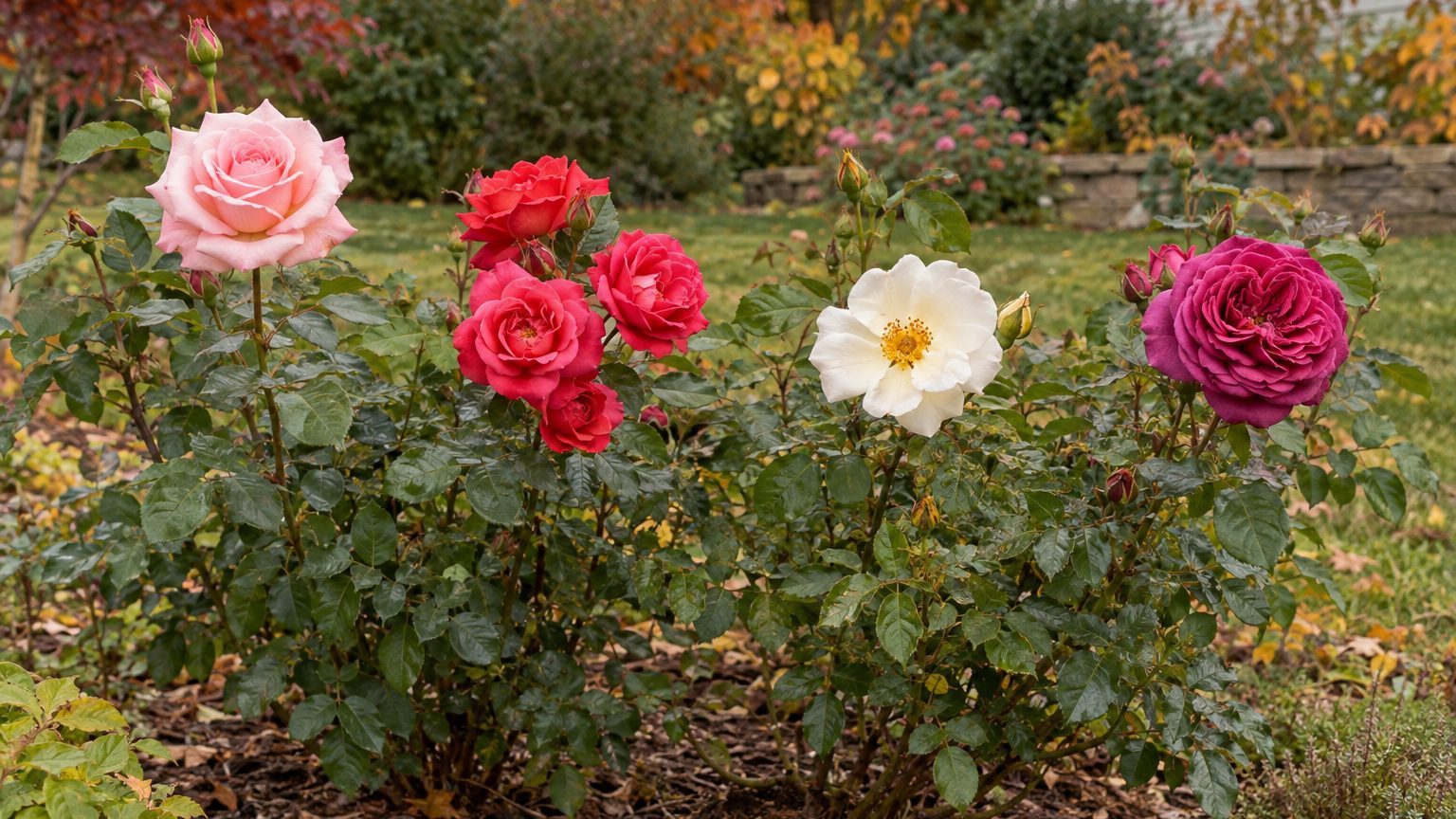
Healthy roses in bloom

Shrub roses, rugosas, Drift roses and old garden roses are practical choices for Mississippi gardens because they need far less spraying than hybrid teas. Mississippi spans USDA zones 7b to 9a, so winter hardiness still deserves a place in the buying decision. Leaf disease is the real test, and disease resistance can reduce the work it creates.

Shrub Roses

Shrub roses bloom beautifully with few chemical controls needed, which is the main reason to start here. Repeat-blooming shrub roses ask for less spraying than hybrid teas and are pruned in February and March as the buds swell.

Drift Roses

Drift roses are a good match for anyone who likes Knock Out roses. They come in Red Drift, Pink Drift, Apricot Drift, Coral Drift, Peach Drift, White Drift and Popcorn Drift, a white-and-yellow blend, so a whole bed can be planted in coordinated colors.

Rugosa Roses

Rugosas stand out for disease resistance. They are listed as resistant to black spot, powdery mildew and cercospora leaf spot. The named ones are Blanc Double de Coubert, Fru Dagmar Hastrup, Rugosa Alba and Topaz Jewel. Alba Semi-Plena, an alba rose, carries the same resistance.

Old Garden Roses

Old garden roses do not need the hard pruning that many modern roses get, and hard cutting can ruin their graceful shape and cut flowering sharply. Once-blooming types flower on last year’s wood, so prune them right after they bloom, never in early spring.

Hybrid Teas

Hybrid teas are susceptible to black spot and need an effective spray program running before the growing season begins. If you want one anyway, choose a resistant variety such as Pride N Joy, which is listed as black spot resistant.

Floribundas and Grandifloras

Sexy Rexy, a floribunda, and Prima Donna, a grandiflora, are listed as black spot resistant. Iceberg and Julia Child are floribundas that mix well with shrub roses in a formal rose bed.

How to Choose a Rose for a Mississippi Garden

Start with how much time you want to spend on the rose after planting. The amount of spraying can determine whether a rose keeps healthy foliage through summer. Match the type to that effort and the rest falls into place.

Colors, shape and bloom habit come next, since they decide which of the resistant types you will actually enjoy.

Your situation What suits it in Mississippi Why
Little time for spraying Shrub roses They bloom well with few chemical controls
Black spot keeps coming back Rugosa roses such as Topaz Jewel or Rugosa Alba Resistant to black spot, powdery mildew and cercospora leaf spot
You love hybrid tea blooms Pride N Joy, plus a spray program Listed as black spot resistant, but hybrid teas still need spraying started before the season
You want a color mix Drift roses They come in a range of colors and pair well with Knock Out roses
You like the old-fashioned look Old garden roses They skip hard pruning, which would spoil their shape

Climbing roses come in many varieties and colors, but they are subject to disease and insects, so give them good air movement and check the leaves regularly.

Which Roses Suit Different Parts of Mississippi

Mississippi stretches from cooler hills in the north to a warmer coast, and that shifts the timing for repeat-blooming roses more than it shifts the choice of variety.

  • Gulf Coast: Winters are milder here, so roses wake earlier. Prune repeat-bloomers when the buds swell, which can be mid-February.
  • North Mississippi: Winters run colder, so buds swell later. Wait until about mid-March, and favor sturdy shrub roses and rugosas that do not need coddling.

Across the state, let the buds set the day rather than the calendar, and check with your county office for how your own garden compares.

Rose Buying Mistakes to Avoid in Mississippi

Hybrid Teas Without a Spray Plan

Hybrid teas require a rigorous spray program to keep black spot at bay. Buying one on impulse and skipping the spraying costs you leaves, then blooms. Either commit to the program before the season begins or choose a shrub rose or a resistant variety instead.

Hard Pruning Old Garden Roses

Treating an old garden rose like a hybrid tea ruins its shape and sharply reduces flowering, because it blooms on last year’s wood. The replacement habit is simple: leave it alone in winter and tidy it right after the flowers fade.

Counting on Knock Out and Drift to Be Immune

These roses are easy, but they are not invincible. There is no cure for rose rosette disease in cultivars like Knock Out and Drift. Buy healthy plants and inspect them regularly for symptoms.

Where to Get Rose Advice in Mississippi

Mississippi State University Extension supports home gardeners across the state, and your county office can answer questions specific to your soil and neighborhood.

  • The state extension site has rose and disease information to read before you order plants in winter.
  • Your county extension office can help identify spotted-leaf problems, so bring a sample once symptoms show.
  • Ask the county office which varieties do well locally before you buy anything.

Common Questions

When Should You Plant Bare-Root Roses in Mississippi?

February and March are the preferred months. Planting can also be done in January, April, November or December. Potted roses can go in later than bare-root ones.

How Often Should You Feed Roses in Mississippi?

Feed monthly from March through September. Follow the label on a rose fertilizer, or use a soil test to adjust the amount.

Do Shrub Roses Need Pruning?

Repeat-blooming shrub roses are pruned in February and March, as the buds swell. Once-blooming shrubs and old garden roses wait until after they flower.

Best Roses for Minnesota

Best Roses for Minnesota

Rose canes that stay green and leafy through a Minnesota summer have usually earned their spot by surviving the winter before it. Roses here are chosen first for cold, then for how they handle humid summer foliage. Hardy shrub roses and the Canadian-bred series are practical starting points.

Best Roses to Grow in Minnesota

Healthy roses in bloom

Minnesota winters decide the list. The USDA hardiness zone range runs from 3a to 5a across the state, so a rose has to take real cold, and humid summers then favor varieties that shrug off fungal leaf diseases. The list below starts with winter hardiness, then weighs disease resistance.

Hardy Shrub Roses

If hilling soil and wrapping canes every fall sounds like too much work, hardy shrub roses are the answer, because they do not require winter protection. They suit a front yard where you want color without a November project.

Knock Out

Knock Out is a shrub rose that performs well without extra winter protection. That makes it an easy choice for a beginner who does not want to manage a mound of soil or leaves each year.

Explorer Series

The Explorer roses are hardy shrub roses that also do well without added protection. They are a sensible pick for a colder corner of the yard, where a more tender rose would struggle through the winter.

Canadian Artist Series

The Canadian Artist Series was bred to be winter hardy and disease-resistant, a useful pairing when winters are hard and summers are humid. Campfire has yellow, red and pink flowers, while Emily Carr can serve as a focal point in a front yard.

Hybrid Teas, Floribundas and Grandifloras

These are the roses most people picture, and most were bred for warmer climates. They cannot survive northern winters without protection, so they only make sense if you are willing to cover them each fall. Repeat-blooming types like these are pruned in April or May, once the mound is off and a hard freeze has passed.

How to Choose a Rose for a Minnesota Garden

Start with how much winter work you want to do. A rose that needs a mound of protection asks for a task every November and another in April, while a hardy shrub rose asks for neither.

Then look at your summer. A humid season invites fungal problems such as black spot and rust, so disease resistance matters as much as cold hardiness.

Your situation What suits it in Minnesota Why
Very cold winters Canadian Artist Series or Explorer roses They were bred to be winter hardy, so they cope with Minnesota cold
Humid summers Canadian Artist Series Bred to be disease-resistant, which helps against fungal leaf spots
Little time to spare Knock Out or other hardy shrub roses They do not require winter protection
Wanting classic hybrid teas Hybrid teas, floribundas or grandifloras with winter protection They were bred for warmer climates and need covering to survive

For a small yard, look for a compact hardy shrub rose that will not need winter protection. A compact hardy shrub rose is a reasonable place to start in a tight spot, since it skips the winter protection step.

Which Roses Suit Different Parts of Minnesota

Minnesota is a big state, and the cold is not the same everywhere. The Twin Cities sit in the milder south of the state.

  • Twin Cities: The milder south of the state gives a protected hybrid tea a better chance, and the last spring frost in the Twin Cities falls between April 17 and April 30. Hardy shrub roses still avoid the winter-covering work.
  • Northern Minnesota: Seasons run tighter at both ends here, so hardy shrub roses and the Canadian-bred series are the safer choice. A tender rose asks a lot more of you in this part of the state.

Wherever you live, check the cold of your own yard before you buy, because a sheltered spot near the house can differ from nearby open ground.

Rose Buying Mistakes to Avoid in Minnesota

Buying a Tender Type Without a Plan

Hybrid teas, floribundas and grandifloras may catch your eye at the store, but they cannot survive northern winters unprotected. If you buy one, plan the covering: wait until the rose is fully dormant after several hard freezes, which usually means November, before putting protection on.

Ignoring Disease Resistance

A humid summer rewards roses that resist fungal problems. Rust is not a serious rose disease, but choosing varieties resistant to black spot and other fungal diseases helps lessen its effects. Look over new plants for rust symptoms before you bring them home, and pick disease-resistant varieties where you can.

Pruning Once-Bloomers in Spring

Old garden roses, ramblers and many climbers flower once a year on last year’s wood. Prune them right after they bloom, never in early spring, or you cut off the flower buds. Repeat-blooming roses are the ones for April and May pruning.

Where to Get Rose Advice in Minnesota

University of Minnesota Extension publishes research-based guidance on roses and other garden plants, and your county office can answer questions about your own yard.

  • Its website is a useful place to read about roses before you shop, ideally in winter or early spring.
  • Your county extension office can help with a specific problem, such as spotted leaves, once the plants are growing in summer.

Common Questions

When Should You Plant Roses in Minnesota?

Bare-root roses go in during April or May, and June is a fallback. Potted roses can go in later, once severe frost has passed in late May or early June.

When Should You Feed Roses in Minnesota?

Feed from April through July, with a first feeding in late April and another at peak bloom. Stop after July so the plants can slow down before winter.

When Should You Take Winter Protection Off Roses?

April is the month for it, and May also works. Take the mound off in stages from mid-April rather than all at once.

Best Roses for Michigan

Best Roses for Michigan

Cane tips that turn black and brittle after a long Michigan winter show quickly which roses were never meant for the state. Own-root roses can send up new canes from the roots even after the old canes die back. The roses that stay healthy here combine hardiness in the cold with resistance to the leaf diseases of humid summers.

Best Roses to Grow in Michigan

Healthy roses in bloom

Hardy shrub roses, old garden roses and disease-resistant series do well in Michigan, because winters fall across USDA hardiness zones 4a to 6b and humid summers invite black spot. Tender garden-center types can still grow here, but only with protection and more attention.

Shrub Roses

Shrub roses, also called landscape roses, are easy to grow and known for winter hardiness and resistance to common rose diseases. They need no extensive winter preparation. Home Run, Carefree Spirit, Bull’s Eye and Distant Drums are shrub roses recommended for disease resistance, and Pink Snowflakes and Ringo All-Star are other shrub roses worth a look.

Old Garden Roses

Many old garden roses tolerate cold very well, which suits the colder parts of the state. Once-blooming old garden roses flower on last year’s wood, so prune them right after they bloom, never in early spring, or you cut off the flower buds.

Buck Roses

Buck roses are known for winter hardiness, low maintenance and good looks, and they resist black spot. Look for own-root plants when you can find them. They are harder to come by, but if the canes die back to the root, the plant survives.

Knock Out and Explorer Roses

Hardy shrub roses such as Knock Out and the Explorer series perform well without extra winter protection. For a gardener who wants flowers without a fall chore list, they are a sensible place to start.

Drift and Meidiland Roses

The Drift series, including Peach Drift, and the Meidiland roses appear on disease-resistant lists, which matters in a damp summer. Eyeconic Lemonade and Eyeconic Pink Lemonade belong to that group too.

Hybrid Teas and Floribundas

Hybrid teas, floribundas and grandifloras are not reliably winter hardy and need protection in cold winters. Put it on in November, after several killing freezes (December works too). Prune these repeat bloomers in March or April, or in February once the forsythia blooms and the protection is off.

How to Choose a Rose for a Michigan Garden

Start with the problem your yard gives you, not the flower you saw in a catalog. A rose that fits the winter and the summer humidity of your spot will outlast a prettier one that does not.

Your situation What suits it in Michigan Why
Very cold winter Buck roses, Explorer series, old garden roses Proven hardiness. Own-root plants regrow from the roots if the canes die back.
Humid summer Drift, Meidiland, Easy Does It and Julia Child floribundas Listed for disease resistance, so black spot is less of a fight.
Little time Shrub roses such as Knock Out Hardy, resistant to common diseases, and no extensive winter preparation.
Small space Hardy miniature or polyantha roses Some are reliably hardy and need little winter preparation.

Climbing roses are the exception to watch, since most are not reliably winter hardy. Whatever you pick, bare-root plants go in during March or April, before growth starts, and potted roses can follow from April into midsummer.

Which Roses Suit Different Parts of Michigan

Michigan runs from a colder north to a milder southeast, and the rose list shifts with it.

  • Upper Peninsula: Stay with the hardiest types, such as Buck roses, Explorer roses and own-root shrub roses. Hybrid teas here still need winter protection.
  • Detroit area: Spring frost comes around April 30, a little earlier than across most of the Lower Peninsula, while winter protection still comes off once the ground thaws. Tender roses are easier to manage here, though they still need winter cover.

Across the Lower Peninsula, you have room to mix hardy shrub roses with protected favorites.

Rose Buying Mistakes to Avoid in Michigan

Choosing a Tender Rose Because It Is Familiar

Hybrid teas, floribundas and grandifloras fill garden centers, but they take more care than shrub roses and suffer considerable damage in hard winters. The cost is dead canes and a bare bush in spring. Swap in a shrub rose, or plan the winter cover before you buy.

Buying a Disease-Prone Variety

A rose with weak resistance faces black spot and other leaf diseases in a humid summer, and it asks for steady spraying and cleanup. Pick from the disease-resistant series, such as Drift, Meidiland and Buck roses, and the problem shrinks before it starts.

Planting a Grafted Rose Where Winter Kills

When a grafted rose dies back hard, you can lose the named variety you paid for. Own-root roses are harder to find but more winter hardy, since a plant that dies to the ground can regrow from its own roots. Ask for them by name when you shop.

Where to Get Rose Advice in Michigan

Local growers know which varieties came through recent winters. Michigan State University Extension and your county office are the places to ask.

  • The extension outreach pages explain rose care and point you to the office serving your county.
  • Your county office can help identify black spot and winter damage if you bring a cane or leaf sample.
  • Ask before ordering bare-root roses, so you know which varieties are hardy for your corner of the state.

Common Questions

When Should You Feed Roses in Michigan?

Feed from April through July: after pruning, at first bloom and in mid-July. Stop after mid-August, because late feeding pushes soft growth that winter damages.

Can You Plant a Rose in July?

A potted rose can go in through midsummer, and bare-root roses can also be planted in July, though early spring is easier on them. Water new plants regularly in summer heat.

When Should You Take Winter Protection Off Roses in Michigan?

Take it off in March or April, once the ground thaws. Remove the mound gently from the base of the rose, then prune repeat bloomers as the buds begin to swell.

Best Roses for Massachusetts

Best Roses for Massachusetts

A rose can leaf out happily in spring and still lose its canes to a hard Massachusetts winter, so the type you pick matters more than the spot you pick it for. Hardy shrub roses, rugosas and old garden roses carry through with little help, while hybrid teas need protection in cold winters. Choosing by winter toughness first makes the rest of the garden easier.

Best Roses to Grow in Massachusetts

Healthy roses in bloom

Hardy shrub roses, rugosas and old garden roses do well here because winter, more than summer heat or humidity, decides which roses last, and USDA hardiness zones run from 5a to 7b across the state. Tender types can still succeed, but they need a plan for the cold months.

Hardy Shrub Roses

Most shrub, landscape and species roses are reliably winter hardy and need no extensive preparation for winter. Knock Out and the Explorer series perform well without extra protection, which makes them a sensible start for a front yard or a foundation bed.

Rugosa Roses

Rosa rugosa is known for broad hardiness, which suits the colder inland yards well. Give it sun and elbow room, and the winter wrap can stay in the shed.

Old Garden Roses

Many old garden roses are extremely tolerant of cold temperatures. Many of them flower once a year on last year’s wood, so prune them right after they bloom, never in early spring.

Hybrid Teas and Floribundas

Hybrid teas, floribundas and grandifloras are not reliably winter hardy and must be protected. Mound the base and cover the canes in November, once several killing freezes have sent the plants dormant. December works too if the weather holds.

These repeat bloomers flower on new wood, so they are pruned in March or April, as the buds begin to swell. Cut less in fall and more heavily in spring.

Climbing Roses

Some climbing roses are not reliably winter hardy, so check the hardiness of a variety before you buy. A hardy climber trained on a trellis or arbor gives height without taking up bed space, while a tender one needs the same winter protection as a hybrid tea.

How to Choose a Rose for a Massachusetts Garden

Start with how much winter work you are willing to do. The type of rose and its place in the garden decide how much protection it needs, so a sheltered corner can change the answer.

After that, think about what you want the rose to do: fill a border, cut for a vase, or climb a post.

Your situation What suits it in Massachusetts Why
Very cold winter or exposed yard Shrub roses, rugosas, old garden roses These are reliably hardy and need little winter preparation
Little time for care Knock Out or an Explorer series rose They perform well without extra winter protection
Small space A hardy miniature, or a climber on a trellis Some miniatures are reliably hardy, and a climber grows up instead of out
Cut flowers for the house Hybrid teas Long stems and a single sweet-scented bloom, but they need winter protection

Humid summers and dry spells differ from one yard to the next, so lean on what helps any rose: direct sun and loose, well-drained soil rich in organic matter.

Which Roses Suit Different Parts of Massachusetts

Winter severity shifts from the harbor to the hills, and that changes how adventurous you can be with tender roses.

  • Boston and the harbor shore: Waterfront air is the mildest in the state, so hybrid teas and floribundas are easier to carry through here, as long as you still protect them in November.
  • Inland suburbs: Frost comes sooner in fall and lingers longer in spring than on the waterfront, so lean toward shrub roses and rugosas and expect to cover tender roses earlier.
  • The Berkshires: Colder winters make hardy shrub roses, rugosas and old garden roses safer choices, with tender types kept to a protected corner.

Wherever you live, pick the rose for your own yard’s winter, not the nearest city’s.

Rose Buying Mistakes to Avoid in Massachusetts

Buying Tender Roses Without a Winter Plan

A hybrid tea planted in spring and left bare in winter is a rose you buy again. Most types of garden roses need some protection here, and the amount depends on the type and where it sits in the garden.

If you want the look but not the work, choose a hardy shrub rose. If you buy a tender one, put on its protection in November after several killing freezes.

Planting in the Wrong Spot

Roses sulk in shade and in heavy, soggy soil. They want direct sun and good drainage, with loose soil rich in organic matter. Check the spot at midday before you dig, and loosen the bed with compost if the soil is dense.

Pruning Once-Bloomers in Early Spring

A spring cut on a once-blooming rose removes the wood that carries that year’s flowers. Check the tag or ask the seller whether a variety repeats. Repeat bloomers get the March or April cut, while once-bloomers wait until the last flowers fade.

Where to Get Rose Advice in Massachusetts

UMass Extension publishes garden guidance for the state and can tell you which roses hold up in your own neighborhood. Your county’s extension office is the nearest contact for local questions.

  • The state extension site carries fact sheets on rose selection and care, handy before you shop in late winter.
  • The county office can answer questions about a struggling plant, best brought in with a cane or leaf sample once growth starts in spring.
  • Before you buy, check which hardiness zone your yard falls in and take that note to the nursery.

Common Questions

When Should You Plant Bare-Root Roses in Massachusetts?

Plant them in March or April, before growth starts. Roses in containers can go in later, and May, June and July all work for them.

When Should You Feed Roses in Massachusetts?

Feed from April through July: after pruning, at first bloom and again in mid-July. Skip feeding after mid-August so new growth is not soft going into winter.

When Should You Take Winter Protection Off Roses?

Take it off in March or April, once the ground has thawed. Remove the mound gradually, then prune out weak, dead or crossing canes.

Best Roses for Maryland

Best Roses for Maryland

Black spot on the lower leaves often appears once Maryland summers turn humid, while a hard winter can leave dead canes. The roses that last here pair leaf-disease resistance for the muggy months with enough hardiness for the cold ones.

Best Roses to Grow in Maryland

Best Roses for Maryland

Roses that last in Maryland pair resistance to black spot, which thrives in humid summers, with enough hardiness for winters that run from zone 5b to 8a in the USDA system. Where you garden in the state decides whether winter hardiness or disease resistance matters more.

Knock Out Roses

Knock Out Roses — Best Roses for Maryland

Most landscape roses grown in Maryland are Knock Out cultivars, because they are highly resistant to black spot, a disease that used to be very common here. If you want a rose that shrugs off the leaf disease of a humid summer, start with this group.

Old Garden Roses

Old Garden Roses — Best Roses for Maryland

Many old garden roses are extremely tolerant of cold, while hybrid teas can suffer considerable damage. They also do without hard pruning, which would ruin their graceful shape and cut their flowering. Once-blooming types flower on last year’s wood, so prune them right after they bloom, never in early spring.

Cold-Hardy Cultivars

A cultivar bred for colder winters generally needs less added protection in a milder garden. That is good news for much of Maryland, where a hardy-bred rose can stand through winter on its own. Check the hardiness rating on the tag against your own zone.

Own-Root Roses

Own-root roses grow from cuttings rather than being grafted onto a different rootstalk. Depending on their hardiness compared with your zone, they may still need winter protection. If the canes die back, new ones will often emerge from the deep roots.

Maryland Native Roses

The most widespread native species are swamp rose (Rosa palustris), Carolina rose (Rosa carolina) and Virginia rose (Rosa virginiana), all non-climbing shrubs. One native climber, Rosa setigera, scrambles into taller plants. Most roses in Maryland carry pink flowers.

Modern Roses

Aside from wild roses and heirlooms, home gardeners usually choose among hybrid teas, grandifloras, floribundas, shrub roses and miniatures. Hundreds of cultivars exist and they vary in susceptibility to disease, so seek out disease-resistant varieties before you buy.

How to Choose a Rose for a Maryland Garden

Start with the problem your yard poses, since winter cold and summer humidity pull the choice in different directions. A rose that handles one can still fail at the other.

Then read the plant tag for a hardiness rating that matches your zone and any mention of disease resistance.

Your situation What suits it in Maryland Why
Very cold winter Old garden roses or cultivars bred for colder zones Old garden roses tolerate cold well, and cultivars bred for colder winters need less protection in milder gardens
Humid summer Knock Out cultivars or other disease-resistant varieties They are highly resistant to black spot, and varieties differ in how susceptible they are
Little time for pruning Old garden roses They do not need the hard pruning that many modern roses require
Canes that die back in winter Own-root roses New canes often emerge from the deep roots

Miniature and shrub roses sit among the modern types gardeners choose, but the same rule applies to them as to any modern rose: pick a disease-resistant variety first.

Which Roses Suit Different Parts of Maryland

Maryland spans mountains, a central corridor and a low coastal plain, and each pushes the choice a different way.

  • Garrett and Allegany counties: The mountains run weeks later in spring and colder in winter. Lean on old garden roses and cold-hardy cultivars, and prune repeat bloomers once the buds swell, which comes later than elsewhere.
  • Around Baltimore: The last spring freeze arrives between April 3 and April 16, so tender new growth can still be caught. Disease-resistant shrub roses suit the humid summers, and hybrid teas do better with some winter protection.
  • The Eastern Shore: Milder winters leave more room for less hardy types, though the damp air still favors varieties with black spot resistance.

Whichever part you garden in, the hardiness rating and disease resistance on the tag matter more than the label on the pot.

Rose Buying Mistakes to Avoid in Maryland

Hybrid Teas in Exposed Spots

Hybrid teas can suffer considerable cold damage, and an open, windy bed makes it worse. The cost is canes that die back and a plant that spends the season rebuilding. Choose an old garden rose or a hardier cultivar for exposed sites, or tuck a hybrid tea into a sheltered corner.

Disease-Prone Varieties

Hundreds of cultivars exist and they vary in their susceptibility to disease, so a pretty bloom can hide a leaf-spotting plant. Black spot in a humid summer means yellowing, dropping leaves and a weaker rose. Seek out disease-resistant varieties, such as the Knock Out cultivars that landscapes in the state rely on.

Buying Without Checking the Roots

Whether a rose is grafted or grown on its own roots changes what happens after a hard winter. Own-root roses often send up new canes from the roots when the old ones die back, though they may still need protection if their hardiness falls short of your zone. Ask which kind you are buying.

Where to Get Rose Advice in Maryland

University of Maryland Extension publishes guides on rose problems and pruning, and its county offices can speak to the conditions where you live.

  • The extension website is the place to check a variety’s disease reputation before you shop, ideally in winter when catalogs arrive.
  • Your county extension office can help identify a spotted leaf or a failing cane, so bring a sample when symptoms first show.

Common Questions

When Should You Prune Roses in Maryland?

Repeat-blooming roses such as hybrid teas, floribundas and modern shrub roses are pruned in March, and it can also be done in February or April. Watch the buds: when the forsythia blooms and the buds swell, the time has come.

Can You Plant Bare-Root Roses in Maryland in Spring?

Yes. March and April are the months for bare-root roses, and it can also be done in February. Potted roses can go in later.

When Should You Feed Roses in Maryland?

Feeding runs from April through August, and it can start in March once the first leaves appear.

The almanac, state by state. Every date on this site comes from a state’s own frost facts and its extension service’s calendar — and says where it comes from.