Skip to content

Why Your Peony Is Not Blooming, and How to Fix It

Why Your Peony Is Not Blooming, and How to Fix It

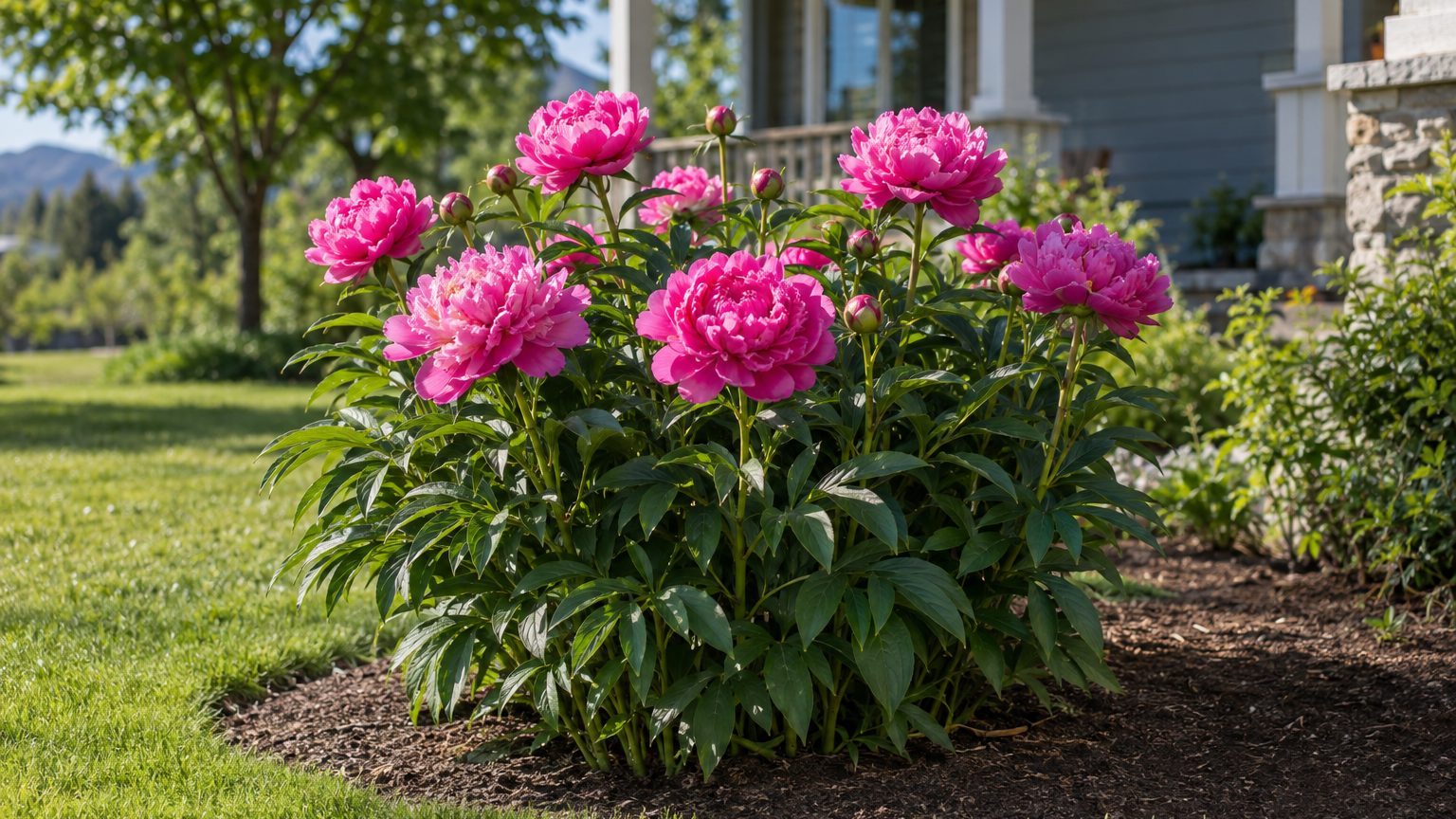
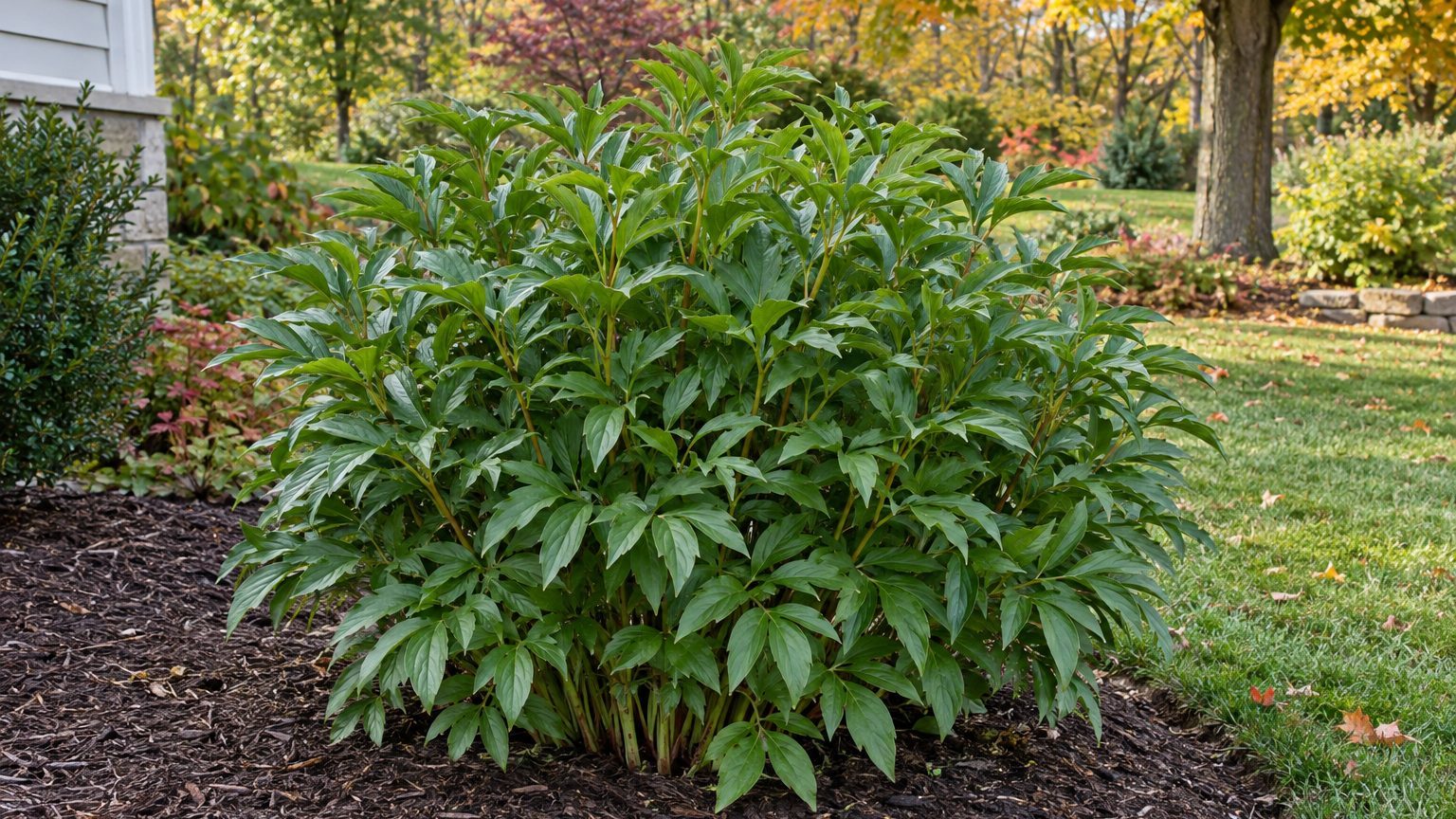
A peony that leafs out lush and green every spring but never sets a bud is a frequent puzzle in a home garden. Common causes include crown depth, sun exposure, the plant’s age, and winter cold.

Why Is Your Peony Not Blooming?

Check planting depth, shade, and whether the plant is still settling in. Peonies are slow to settle in, and they flower only when the buds sit near the surface, the leaves get plenty of direct sun, and winter delivers real cold. Type and climate shift how those rules play out.

In Illinois, a peony planted in the last year or two may take 2-3 years to establish and bloom. In Alaska, plants may not flower until they have matured 2-4 years in a location.

Warm winters matter too. In South Carolina, some cultivars in zones 8 and 9 fail for lack of chilling. The state selector just below this section takes you to the page for your own state.

How to Get a Peony to Bloom

Why Your Peony Is Not Blooming, and How to Fix It

Work through the likely causes in the order you would check them in the yard, starting with the ones you can see and ending with the ones that only time fixes.

  1. Check the depth of the buds, called eyes, by gently pulling soil back from the crown, because buried buds make a handsome leafy shrub that never flowers. In Kentucky, buds deeper than 2 inches often fail to bloom satisfactorily.
  2. Lift and replant a too-deep crown in fall so the eyes sit 1 to 2 inches below the surface, as advised for Iowa gardens, because deeper planting can keep a peony from flowering.
  3. Watch how long the sun reaches the plant, and move it if it falls short. In Wisconsin, full sun means a minimum of 6 hours of sunlight each day, and a peony in shade puts its energy into leaves.
  4. Pull back winter mulch if you have been piling it on. In Connecticut, the advice is to plant on a northern exposure and skip winter mulch, which helps the crown get its cold.
  5. Hold off on dividing a young plant, because in Washington the guidance is never to divide a plant less than 3 years old, as it may retard flowering.
  6. Give a recent division time, since in Iowa divisions with fewer than three buds may take 2 or more years to flower.

If none of these fits, the winter may be the culprit. Peonies need a stretch of real cold to set flowers, and a mild climate can keep a healthy plant from ever blooming. That is not a cause you can fix with a shovel.

Blooming Habits by Peony Type

Peonies are not all alike underground. The herbaceous kind dies back each winter and renews from buds at the crown, while tree peonies keep woody stems and are planted differently.

The depth rule you follow depends on which one you have, so check the type before you start digging.

Peony Type What changes Why it matters
Herbaceous peony Buds should sit no more than 2 inches below the soil surface, according to Kansas Deeper planting can delay flowering or prevent it completely
Tree peony The graft union goes at least 4 inches below the surface, according to Kansas Planting this deep encourages the plant to develop its own roots

These types follow opposite logic, so a tree peony planted at the shallow depth meant for herbaceous plants misses its graft rule, and the reverse buries the buds of an herbaceous plant. Either way, check what you planted before you dig, and match the depth to the type.

Peony Blooming Mistakes to Avoid

Planting Too Deep

This is the classic mistake, often made with the best intentions of giving roots a good start. The cost is a plant that grows well and never flowers. In Alaska, a peony set too deep may make a beautiful shrub but never produce blooms.

Dig the crown up in fall and reset it so the eyes are no deeper than the depth given above for your type.

Dividing Too Soon

Dividing feels like a favor to a crowded clump, but a young plant has little to spare. The cost is lost flowers, since dividing a plant less than 3 years old may retard flowering in Washington.

Leave young clumps alone. When you divide an established plant in Iowa, keep each piece large, with at least three buds.

Giving Up Too Early

A new peony that does not flower in its first spring or two is usually fine. In Illinois, it can often take 2-3 years to establish and bloom, so there is no reason to dig it up.

Instead, make sure the depth and sun are right, and wait. Moving a healthy young plant resets the clock and costs you more seasons of waiting.

When Peonies Bloom in Your State

Firm, plump buds at the tips of rising stems show that a plant is on track to flower. That is your cue to check sun, depth and mulch before the season passes.

  • Your state page gives the months for peonies where you live, so open it before you plan any planting or moving.
  • Open your state page when the new shoots first break the soil.

Common Questions

Can You Grow Peonies in a Warm Climate?

You can, but flowering is the problem. Peonies grow well in USDA hardiness zones 3 to 8 and can survive down to zone 9, but are unlikely to flower there, according to Virginia. Choose with care and expect fewer blooms.

How Much Winter Cold Do Peonies Need?

Peonies require winter cold to flower. In Connecticut, they need a minimum of 6 weeks of temperatures below 40°F. Mild winters can leave a healthy plant without buds.

Should You Mulch Peonies in Winter?

For flowering, it is better to leave the crown bare. Connecticut advice is to avoid winter mulch, which can keep the crown too warm and shallow buds from getting their chill.

Itoh Peonies: Size, Pruning and Care

Itoh Peonies: Size, Pruning and Care

In spring, an Itoh peony sends up stems with deeply cut leaves that look just like a tree peony’s, and by winter those stems are spent and ready to clear. That cycle shapes how tall the plant gets, how it is pruned and what it asks of you through the year.

How Big Do Itoh Peonies Get?

Itoh peonies are mid-sized plants, shorter than a tree peony and close to a typical garden herbaceous peony. In Ohio, they mature around 30 inches tall. In Arkansas, the popular ‘Bartzella’ reaches 3 feet on stout stems that hold the flowers above the foliage.

Type decides most of the difference, and climate adds some. Where summers are long and the soil is rich, a plant can stand a little taller than the same variety in a short season, so plan the planting space with a margin.

Because Itoh peonies are crosses between tree and herbaceous peonies, they carry traits of each. They bring the large blooms and cut foliage of a tree peony on a plant that dies back to the ground each winter.

How Do You Care for Itoh Peonies?

Care follows the plant’s yearly cycle, which is simpler than a tree peony’s because nothing needs to be shaped or carried over as woody framework. These gestures run from the dormant season through bloom and into fall.

  1. Cut the dead stems back to the ground once the plant has died back for winter, so that old tissue does not sit around the crown and new shoots come up clean in spring.
  2. Watch the new growth as it emerges in spring and leave it alone.
  3. Decide on support early in the season, because in Colorado, Itoh and herbaceous peonies are staked before growth gets far; their heavy flowers can hold water and flop over.
  4. Remove spent flowers as they fade.
  5. Clear fallen leaves and debris from around the plant when it begins to die back in fall.

Staking is where advice splits. In Ohio, Itoh peonies are described as needing no staking at all, thanks to their strong stems. If the stems stay upright, skip the cage. If rain bends the blooms down in your yard, put a support in early.

How Do Itoh Peonies Differ from Other Peony Types?

Peonies come in four groups that overlap in height and bloom order. In Pennsylvania, the sizes of each group are described side by side. In Connecticut, the groups bloom one after another beginning in late spring.

What changes Why it matters
Woodland peonies are small, compact plants, standing roughly 1 to 1.5 feet tall with white blooms; they open ahead of every other peony. A low plant for the front of a bed, and it opens the season before the others
Tree peonies reach 3 to 7 feet in height, coming into bloom after the woodland type. A woody shrub that needs room and keeps its stems through winter
Herbaceous peonies grow 2 to 4 feet tall. Die back each fall, and heavy flowers often need support
Intersectional peonies, a group that takes in the Itoh types, reach 2 to 2.5 feet in height. Short woody stems with tree-like blooms, and they die down to the ground in winter

For you, that means an Itoh peony fills the end of the peony season, after the others have faded. It also needs less room than a tree peony. Its care matches that of a herbaceous peony: both die back to the ground each fall and produce new growth in spring.

What Mistakes Hurt Itoh Peonies?

Leaving Old Stems Through Winter

Leaving Old Stems Through Winter — Itoh Peonies: Size, Pruning and Care

Itoh peonies die back each winter, and in Iowa they often do so just like herbaceous peonies. Old stems left standing can hide new shoots. Cut them to the ground in the dormant season and the plant starts fresh.

Pruning Like a Tree Peony

Pruning Like a Tree Peony — Itoh Peonies: Size, Pruning and Care

Tree peonies keep woody stems and are shaped lightly. An Itoh has short woody stems that bear new leaves in spring, but some stems are herbaceous and the plant still goes dormant. Cutting it back to the ground in winter is correct, and trimming only the tips leaves dead wood behind.

Skipping Support in a Windy Yard

Some growers never stake an Itoh. In Colorado, though, the advice is to stake early because the large flowers hold rain and tip over. If your yard is exposed, set the support before the stems get tall.

When Should You Cut Back Itoh Peonies?

Cut back once the foliage has collapsed and turned brown after the season ends, when the plant is dormant for winter. That is the sign. The stems are finished and the leaves are limp.

  • Your state’s peony page gives the months for cutting back in your climate, so check it in late summer.
  • The same page covers planting and dividing windows if you are adding a new plant.

Common Questions

Why Are They Called Itoh Peonies?

They are named for Toichi Itoh, a Japanese plantsman who crossed tree and herbaceous peonies. In North Carolina, the cross is dated to about 1948, and the resulting plants carry the best qualities of both parents.

How Many Flowers Does an Itoh Peony Produce?

In North Carolina, some plants are reported to produce as many as 50 flowers in a growing season, with strong stems and strong disease resistance. In Washington, blooms open over several weeks, which keeps color in the bed well past the first flush.

What Do Itoh Peonies Look Like in Spring?

In Iowa, the tree-peony-like foliage comes first, followed by large, colorful flowers. In Arkansas, ‘Bartzella’ bears 8-inch, double lemon-yellow blooms with a few small red flashes toward the center.

How and When to Fertilize Peonies

How and When to Fertilize Peonies

Red shoots pushing through cold spring soil are the signal that a peony is awake and ready for a modest meal. Fertilizer choice and placement vary by location and growing setup. Amounts and timing shift a little from state to state.

Do Peonies Need Fertilizer?

Established peonies need only a light feeding, and many bloom well on very little. How much you give depends on where you live and on whether the plant grows in a bed, a pot or a high tunnel.

In Indiana, a complete fertilizer can be applied annually. In Kansas the advice is to feed twice a year, in spring and fall. Local soil and climate make the difference, so a neighbor’s schedule in another state may not fit your yard.

Nitrogen is the nutrient to go easy on, because too much pushes leafy growth at the expense of flowers. The state selector just below this section takes you to the page for your state.

How to Fertilize Peonies

How and When to Fertilize Peonies

Feeding goes in a set order, and each gesture either protects the crown or steers the plant toward flowers instead of foliage.

  1. Wait for the shoots to rise, so that the feed meets roots that are actively growing. In Utah, feed when stems stand 2 to 3 inches high; South Carolina uses the same stage, while North Dakota calls for early spring.
  2. Choose a low-nitrogen or balanced fertilizer, so that the plant builds buds rather than a thicket of leaves. A low-nitrogen analysis such as 5-10-10 is the pick in Utah. Kansas uses an even ratio, such as 10-10-10.
  3. Measure the dose for each plant, so that a generous scoop does not tip it into leaf growth. A quarter cup of complete fertilizer per plant is the amount in Iowa and Indiana. For Utah high-tunnel peonies and South Carolina garden peonies, use 2 to 3 pounds per 100 square feet.
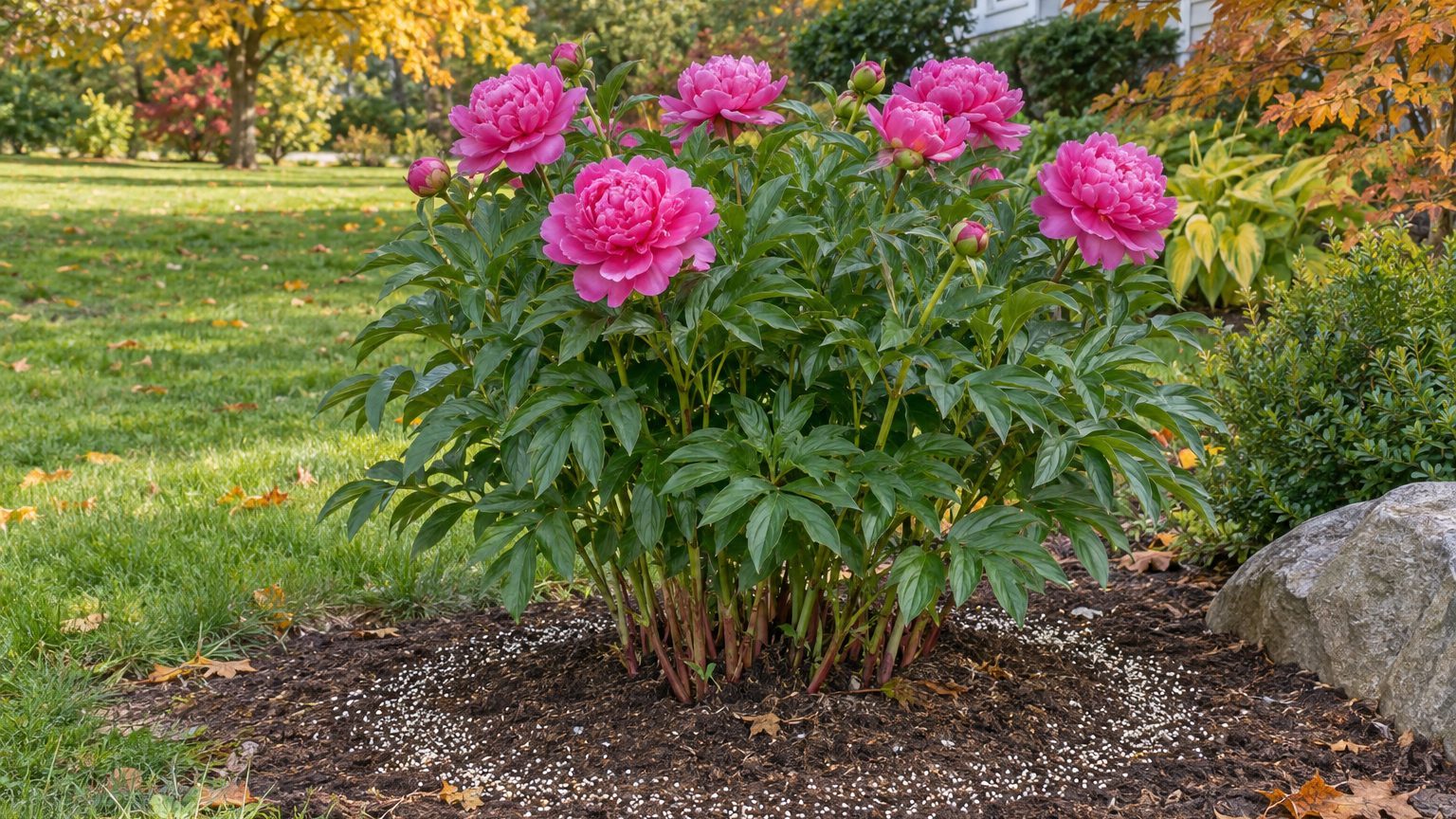
  4. Scatter the fertilizer in a band out from the crown, so that the feeding roots reach it and the crown stays clear. Kansas advice puts the band 8 to 18 inches from the center of the plant. In Iowa, the rule is to keep fertilizer 6 inches from the crown.
  5. Scratch it in lightly and water, so that the granules dissolve and move down to the roots instead of sitting on the surface.

Kansas gardeners who feed twice a year use 1.5 to 2 ounces per plant at each feeding. Whatever the schedule, the aim is the same: enough phosphorus and potassium to support buds, and only a little nitrogen so the plant does not trade flowers for foliage.

Fertilizing Needs by Peony Type

The feeding itself stays light, but the way it is delivered shifts with how the peony is grown.

Garden beds, containers and high tunnels use different feeding methods.

Peony Type What changes Why it matters
In-ground garden peony A quarter cup of complete fertilizer per plant, scratched into the surface, in Indiana Established roots search wide, so a small dose is enough
Container peony Controlled-release feed mixed into the potting mix at low rates, with 9 lbs/yd³ giving a good balance in Virginia trials A pot holds a small volume of mix, so the dose is set at planting
High tunnel cut-flower peony A low-nitrogen feed over the soil surface at 2 to 3 pounds per 100 square feet in Utah Closely planted rows are fed by area, not plant by plant

For an in-ground peony, use the recommendation for your state rather than the container or high-tunnel rates. For container production in Virginia, incorporate controlled-release feed into the potting mix at a low recommended rate before potting. The high tunnel row matters mainly if you grow peonies for cutting.

Peony Fertilizing Mistakes to Avoid

Fertilizer Piled at the Crown

Fertilizer Piled at the Crown — How and When to Fertilize Peonies

Fertilizer dumped against the stems can injure the crown, the knot of buds where next year’s shoots start. Spread it in a band out from the plant instead, and water it in so it does not sit in a concentrated pile.

Too Much Nitrogen

Too Much Nitrogen — How and When to Fertilize Peonies

A high-nitrogen lawn product or an extra scoop gives you a big, lush clump with few flowers. Choose a low-nitrogen or balanced analysis and stick to the measured dose, even when the plant looks like it could use more.

Ignoring Slow Growth

A peony whose top growth slows and whose vigor fades may be short of phosphorus and potassium. In Missouri, slowing top growth and fading vigor can call for a complete fertilizer high in phosphorus and potassium, placed 6 to 18 inches from the crown. Skipping that step lets the decline continue.

When to Fertilize Peonies in Your State

The sign and timing to watch for depend on where the peony grows. Follow the feeding timing given for your location. The months for that moment differ from state to state, and each state’s page lays them out.

  • Open the page for your state to find the local feeding months.
  • Mark that month on the calendar and set the measuring cup beside the bag before the shoots break the soil.

Common Questions

Can You Use Manure on Peonies?

Yes, as a soil improver rather than a feed. In South Carolina, well-rotted manure is spread on the soil surface in a 1- to 2-inch layer, and North Dakota advice is the same for composted manure. Keep the layer back from the stems.

What Do the Three Numbers on a Fertilizer Bag Mean?

They give the percentages of nitrogen, phosphorus and potassium, in that order. A bag marked 5-10-10 has less nitrogen than phosphorus or potassium, which suits a plant grown for flowers. A bag marked 10-10-10 has all three in even amounts.

Is a Soil Test Worth Doing Before Feeding Peonies?

It is useful if the plant has been in the same spot for years. A test shows whether phosphorus and potassium are already high, in which case a lighter feeding will do. Follow the sampling and submission instructions provided by the soil-testing laboratory you choose.

When to Divide Peonies, and How to Do It

When to Divide Peonies, and How to Do It

Peony foliage browns and sags as summer winds down, and that is the signal that a clump can be lifted and split. In South Dakota, Wisconsin, Indiana and Kansas, peonies are divided in fall or once the plant is dormant. The details that matter are timing, how many buds each piece carries, and how deep it goes back in the ground.

When Should You Divide Peonies?

In Kansas, lift and divide the roots after the plants go dormant. In Indiana, dormant bare-root peonies are less sensitive to injury and can establish in fall.

The exact months shift with climate. In South Dakota, September to early October is the usual window. Wisconsin gardeners aim for September, while in Indiana bare-root peonies are divided and planted in October. In Kansas, lift and divide the roots after the plants go dormant on September 1.

The state selector just below this section takes you to the page for your state, where the months are set for your climate.

How to Divide a Peony

When to Divide Peonies, and How to Do It

Dividing is simple work with a spade and a knife, and the order of the steps protects the buds that will become next year’s stems.

  1. In Kansas, lift and divide the roots after the plants go dormant on September 1.
  2. Dig wide around the clump and lift it whole, so the thick storage roots come up with as little tearing as possible.
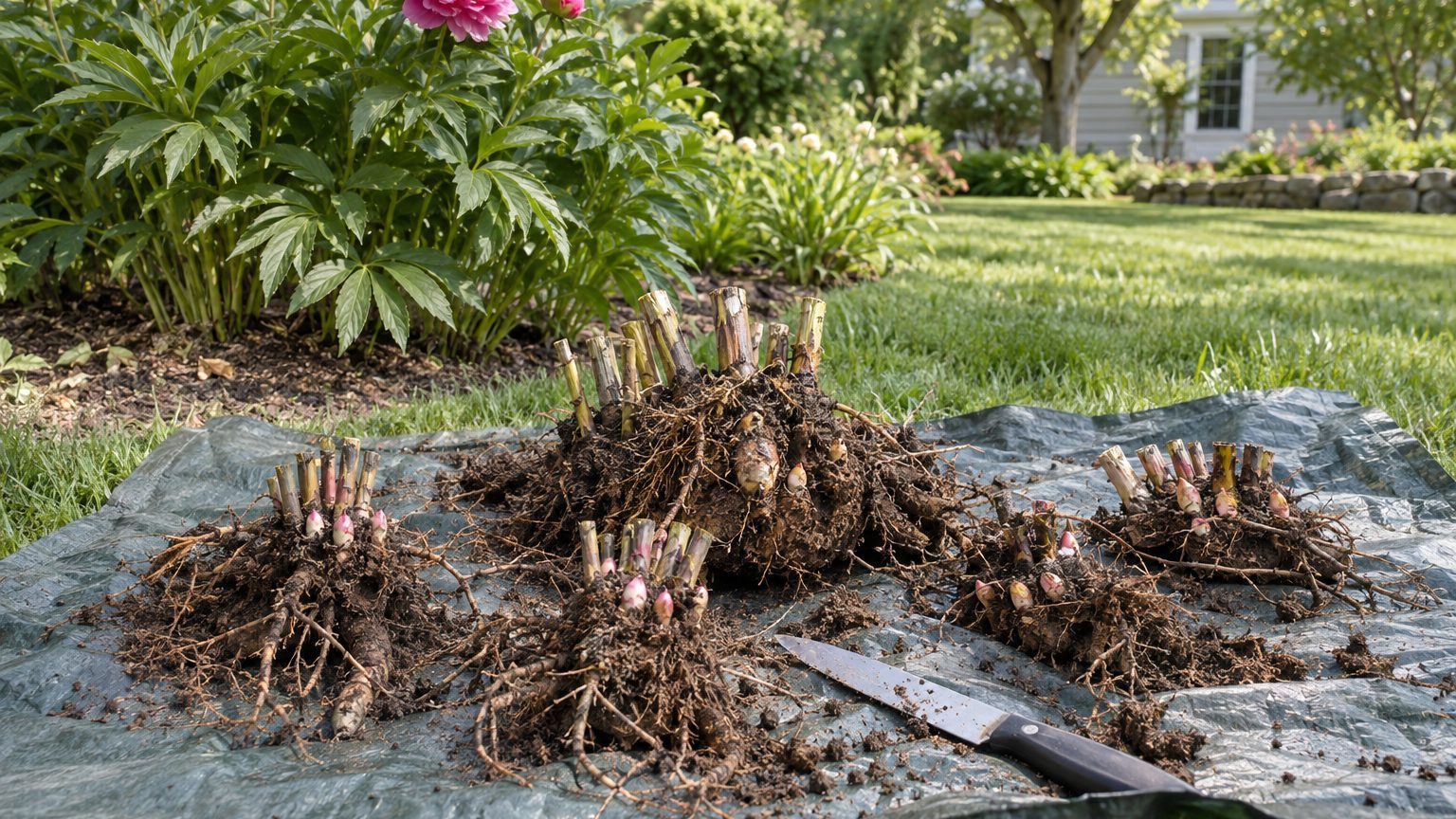
  3. Rinse off the soil and look for the pink buds, called eyes, which in South Dakota sit one to two inches below the soil surface, because they tell you where each cut can safely go.
  4. Cut the clump with a clean, sharp knife into sections that each hold 3 to 5 eyes (the Wisconsin advice), so every piece has enough buds to flower and a clean cut that heals without rot.
  5. Trim the roots on each piece to 4 to 6 inches, as Kansas growers do, which keeps the planting hole manageable and removes damaged ends.
  6. Replant with the eyes no deeper than 1 inch below the surface, the guidance in South Carolina, so the buds can still push through the soil in spring.

Water the new divisions and leave the soil to settle around the roots. Pick a sunny spot with drainage that suits the plant, because a peony left in the same place for years has already shown you what it likes.

Dividing Method by Peony Type

The right approach depends on the age and form of the plant in your hands. A mature clump, a young plant and a bare-root piece each call for a slightly different decision.

Start by asking whether the plant needs dividing at all, because that question comes before any cutting.

Peony Type What changes Why it matters
Established garden peony Division is optional and often unnecessary In South Carolina, peonies may never need dividing unless you want more plants
Young plant under 3 years Leave it in the ground In Washington, dividing a plant this young may retard flowering
Bare-root division Plant in fall, in October in Indiana Dormant, freshly dug roots take less injury and establish before winter

For you, this means most healthy peonies can simply stay put. Divide when you want more plants. A young peony should be left alone, and divisions that come to you bare-root go in the ground soon after they are cut or purchased.

Peony Division Mistakes to Avoid

Dividing a Young Plant

Dividing a Young Plant — When to Divide Peonies, and How to Do It

A peony still finding its footing has little reserve to spare. In Washington, the advice is never to divide a plant under 3 years old, since cutting it may delay flowering.

If you want more plants from a young peony, wait until it is well established and the clump has filled out.

Leaving Too Few Eyes

Leaving Too Few Eyes — When to Divide Peonies, and How to Do It

A division with only a bud or two looks tidy but flowers slowly. In Iowa, divisions with fewer than three buds may take 2 or more years to bloom.

When a cut would leave a thin piece, choose a different spot for the knife, or keep that piece attached to a neighbor. A larger division with several eyes gives you a better plant sooner.

Planting Too Deep

Planting too deeply can keep a peony from flowering. Keep the eyes close to the soil surface.

Set the crown so the eyes sit no deeper than 1 inch below the soil, the standard in South Carolina. If a replanted division sinks, lift it gently and reset it at the right height.

When to Divide Peonies in Your State

The trigger is the plant itself: the foliage browns, dies back and the clump goes dormant. Once you see that, the job is open, and the calendar only decides how soon your climate allows it.

  • The state page for your state lists the months for dividing peonies where you live, so check it when the leaves start to fade.

Common Questions

How Often Do Peonies Need to Be Divided?

Rarely. In Washington, garden peonies may grow for 15 to 20 years before they need dividing, so a clump that is still flowering well can be left alone.

How Long Until a Divided Peony Blooms?

In Kentucky, a division takes 2 to 3 years to bloom. Patience is part of the deal, and a piece with plenty of eyes and a strong root system tends to get there sooner.

Why Divide Peonies in Fall Instead of Spring?

In Indiana, dormant plants are less sensitive to injury. In Indiana, plants that establish themselves in fall grow more vigorously in their first growing season.

Peony Diseases: Botrytis, Powdery Mildew and Leaf Blotch

Peony Diseases: Botrytis, Powdery Mildew and Leaf Blotch

Black, wilted shoots in spring, a gray fuzz on the stems, or reddish purple blotches on the leaves by the end of summer: each of these points to a different peony disease. Botrytis, powdery mildew and leaf blotch can be confused, and telling them apart helps you choose the right response.

How Do You Recognize a Peony Disease?

You recognize a peony disease by pairing what the plant looks like with when it shows up. Shoots and leaves can show different symptoms, and damp or crowded conditions can favor fungal problems.

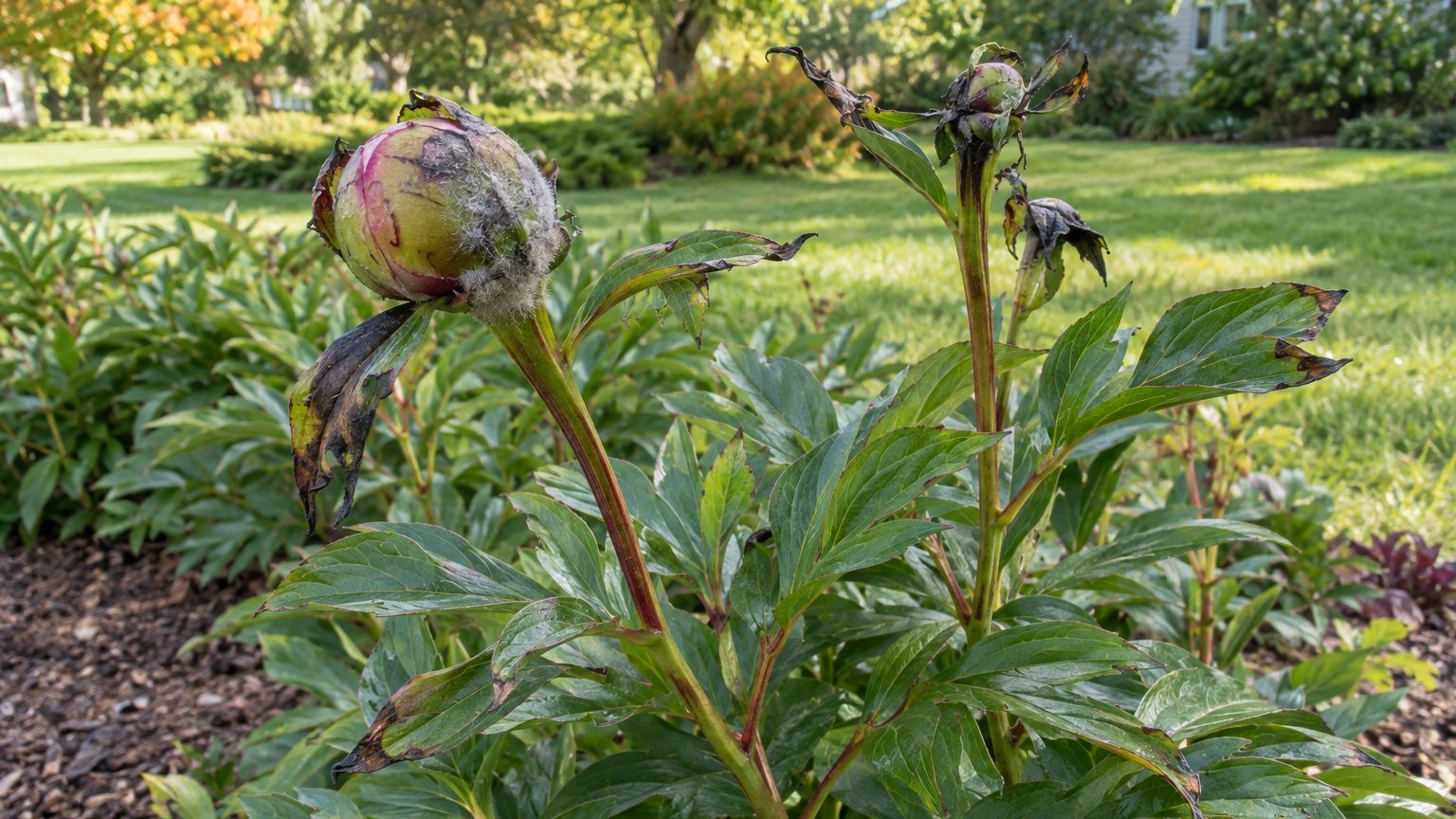
  • Botrytis: in Minnesota, new shoots may turn black, wilt and die as they emerge in spring; in Ohio, a fine, velvety gray mold can cover newly emerging shoots.
  • Leaf blotch: in Minnesota, irregular to round reddish purple blotches measure 1 inch or larger and are most common from late summer to early fall.
  • Powdery mildew: a white, dusty film on the leaf surface that wipes off with a finger, usually late in the season.

Peony type and local weather shift the picture, so the state selector just below this section takes you to the page for your state.

How to Treat Peony Diseases

Peony Diseases: Botrytis, Powdery Mildew and Leaf Blotch

Fungal peony diseases are managed through cleanup and timing far more than rescue sprays, so the gestures below follow the order of the gardening year.

  1. In Indiana, remove and destroy wilted or rotted shoots in spring, and pull off winter mulch before new shoots emerge.
  2. Spray a protective fungicide before any symptoms appear, since in North Dakota it is advised that these products will not cure a fungal disease once it has started.
  3. In North Dakota, the fungicide can be reapplied at 14-day intervals until mid-June.
  4. Water at the soil and keep the foliage dry, as Iowa advice suggests, and space peonies three to four feet apart.
  5. Cut off dead buds in late spring, since in Iowa this is one of the main prevention habits.
  6. In Iowa, remove diseased foliage at the end of the growing season and carry the debris away from the bed.

Keep the cleared debris out of the compost pile. In Washington, the advice is that Botrytis can be carried into the compost mixture and back to the garden.

Peony Diseases by Peony Type

Not every peony grows in the same setting, and the setting decides which disease risks you manage. A peony in a pot, under a tunnel or in open ground gets a different mix of moisture, airflow and exposure.

Peony Type What changes Why it matters
Garden peonies in the ground In Arkansas, they stay healthy with a minimum of 6 hours of sun and well-drained soil. In Iowa, plants are spaced three to four feet apart. Sun and airflow dry the leaves quickly, which gives fungal spores less time to take hold.
Container-grown peonies In Virginia, crowns get a broad spectrum fungicide before potting and again 2 weeks after. Crowns start in a confined, moist mix, so protection begins before roots and shoots are growing.
High tunnel cut-flower peonies In Utah, humid conditions inside the tunnel favor Botrytis, which rots young shoots at ground level when they are 5 to 8 inches tall. Humidity can build under cover and favor shoot rot.

Peonies grown for cut flowers also face viral diseases, which have been reported in Europe, the USA, Japan, China and New Zealand. For a home garden, the practical lesson is simple: match your care to how and where the plant grows, and begin with healthy crowns.

Peony Disease Mistakes to Avoid

Composting Diseased Debris

Composting Diseased Debris — Peony Diseases: Botrytis, Powdery Mildew and Leaf Blotch

Tossing cut stems and leaves on the compost pile feels tidy, but Botrytis can ride along and return with the finished compost. In Washington, the advice is to keep peony debris out of the pile. Bag it for the trash or take it off the property.

Spraying After Symptoms Show

Spraying After Symptoms Show — Peony Diseases: Botrytis, Powdery Mildew and Leaf Blotch

Waiting for black shoots or gray mold before reaching for a fungicide means the window has closed. In North Dakota, these products protect rather than cure, so they go on before symptoms appear in spring. Put the first spray on the calendar, and let spots or mold trigger cleanup instead.

Reusing Old Mulch

Mulch that sat over a diseased peony can hold the pathogens, and in Indiana the advice is not to reuse it. After a bad year, Illinois advice is to pull the old layer and put down 2-3 inches of fresh mulch.

Peony Diseases in Your State

The sign that starts the work is a black, wilting shoot in spring or the first reddish purple blotch on a leaf. Timing for spraying and cleanup shifts with local weather, so each state has its own months.

  • Open the page for your state to see the months that fit your climate for spring spraying and fall cleanup.
  • Check the bed when shoots first break the soil, and clear any blackened ones right away.

Common Questions

What Temperatures Does Botrytis Need to Infect Peonies?

In Illinois, Botrytis can infect plants when temperatures are between 32 and 84 degrees. Spores are released as humidity rises as well as when it falls, so a mild, damp spell is enough to put young growth at risk.

Does More Sun Help Prevent Peony Diseases?

It helps. In Arkansas, peonies stay very healthy when planted with a minimum of 6 hours of sun in good garden soil with excellent drainage. Sun dries the foliage after rain and dew, and drained soil keeps the crown from sitting wet.

Can Peonies Get Viruses?

Yes. Viral diseases of peony have been reported in Europe, the USA, Japan, China and New Zealand. Viral diseases have been reported in Europe, the USA, Japan, China and New Zealand.

When to Cut Back Peonies in Fall

When to Cut Back Peonies in Fall

By autumn the peony’s leaves have gone brown and floppy, and the clump looks ready for the cleanup crew. Whether to cut it back now or wait depends on a hard freeze and on what kind of peony you grow.

When Should You Cut Back Peonies?

Garden peonies are herbaceous plants whose stems and leaves die back. Cutting before that takes away leaves still feeding the roots. Tree peonies follow a different rule, since their woody stems stay put.

Climate moves the date. In North Carolina, gardeners cut when foliage dies in fall, while South Carolina guidance calls for cutting dead stems after frost. In Indiana, peonies go dormant in late September or early October, which gives a sense of how the season turns in a cold-winter state.

The state selector shown just under this section leads to the page for your state.

How to Cut Back Peonies

When to Cut Back Peonies in Fall

The fall cut is quick, but the order matters, because each step protects the plant from the next problem.

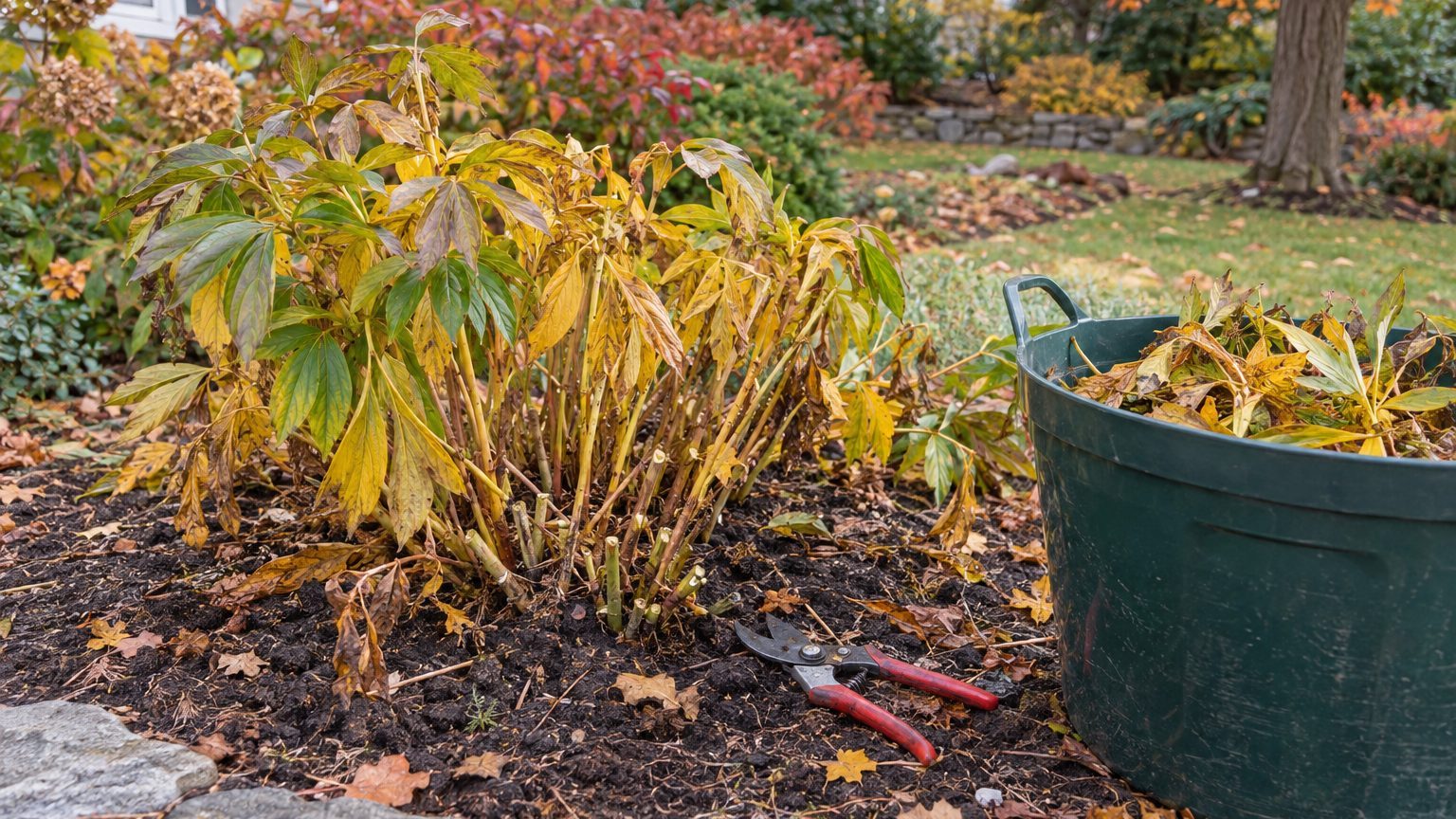
  1. Wait until the foliage has died back before removing it. In Iowa, the advice is not to cut before the foliage has been destroyed by a hard freeze.
  2. Cut the stems close to the ground and remove the debris. In Kentucky, the cut sits 1 to 2 inches above the soil. In Connecticut, gardeners cut down to 3” once a hard frost has damaged the leaves.
  3. Gather every stem and leaf from the clump, including the fallen ones, so the spores that cling to old foliage do not survive the winter beside the crown.
  4. Pull away any mulch applied during the growing season, because disease can overwinter in it just as it does in fallen leaves.
  5. In Ohio, lay down fresh mulch for winter to a depth of no more than 2 – 3″.

Some gardeners prefer to leave the cleanup for spring, and in Iowa that is an accepted choice, since the old stems and leaves can come off after fall frost or in spring. In Wisconsin, removing peony foliage in fall helps reduce potential disease development.

Cutting Back by Peony Type

Most peonies in home yards are the herbaceous kind, and they get the full cutback. The less common tree peonies are a different plant, with stems that act like those of a deciduous shrub.

Check the base of your plant before you reach for the shears. Stems that are soft, green and die back each year mean cut. Stems that are woody and stay on the plant through winter mean leave them alone.

Peony Type What changes Why it matters
Herbaceous peony Stems and leaves are cut down to the soil surface after frost kills the foliage Removing old foliage reduces disease that would carry over to the next season
Tree peony Not cut to the ground in fall. In Washington, pruning for shape and health is preferably done after flowering The woody stems are permanent, so cutting them down removes the framework of the plant

If you are not sure which kind you have, the stems tell the story. A clump that sends up fresh red shoots from the ground each spring is herbaceous. A plant with bare, woody branches standing all winter is a tree peony, and it keeps those branches. In Washington, pruning for form and health is preferably done after flowering.

Peony Cutback Mistakes to Avoid

Cutting Too Early

Cutting Too Early — When to Cut Back Peonies in Fall

Green leaves are still working, and cutting them while they are healthy cuts short the plant’s work for the season. Foliage often looks tired long before a freeze, but tired is not dead.

If the leaves turn unsightly in summer, Kentucky guidance is to wait until late August or September before trimming them. Elsewhere, follow local guidance on when to cut back the foliage.

Cutting Tree Peonies to the Ground

Cutting Tree Peonies to the Ground — When to Cut Back Peonies in Fall

A gardener who treats every peony the same may cut a tree peony down like its herbaceous cousins. That removes woody growth the plant took years to build, and the shrub has to start over from what is left.

Leave the stems standing through fall. In Washington, pruning for form and health is preferably done after flowering.

Composting Diseased Foliage

Peony debris can carry disease, and recommendations about composting it vary by location. Advice varies on this point. In Wisconsin, the debris is destroyed rather than composted, and in South Carolina the stems stay out of the compost pile.

Indiana takes a gentler line, saying plant debris can be composted unless disease was present. In Kansas, shed leaves go into the compost pile. If your peonies had leaf spots or mold this season, do not compost the debris.

When to Cut Back Peonies in Your State

The sign to watch for is foliage that frost has blackened or collapsed, with stems gone limp and brown. That is the signal to bring out the pruners, and the calendar months for your area come from the state page.

  • The page for your state gives the months when cutting back usually happens, so look it up before the first hard freeze is in the forecast.
  • The page also helps you plan the rest of the fall peony jobs around your own climate, so you are not guessing at dates.

Common Questions

Does Cutting Peony Stems for Bouquets Hurt the Plant?

It can if you take too many. In Alaska, research notes that harvesting more than ten stems could affect the next year’s crop. Cut a few, and leave plenty of foliage to feed the roots.

What Should You Do If Peony Leaves Look Ragged in Summer?

Leave them until the season winds down if you can. In Kentucky, the advice for unsightly foliage is to wait until late August or September, and then cut the leaves 1 to 2 inches above the soil and discard them.

Can You Move or Divide Peonies at Cutback Time?

Yes, the timing overlaps. In Kansas, foliage can be cut back at the end of August, and plants are divided or moved from September until the ground freezes. Cutting the foliage first makes the clump easier to lift and handle.

Growing Peonies in Pots: Which Ones, Soil and Winter Care

Growing Peonies in Pots: Which Ones, Soil and Winter Care

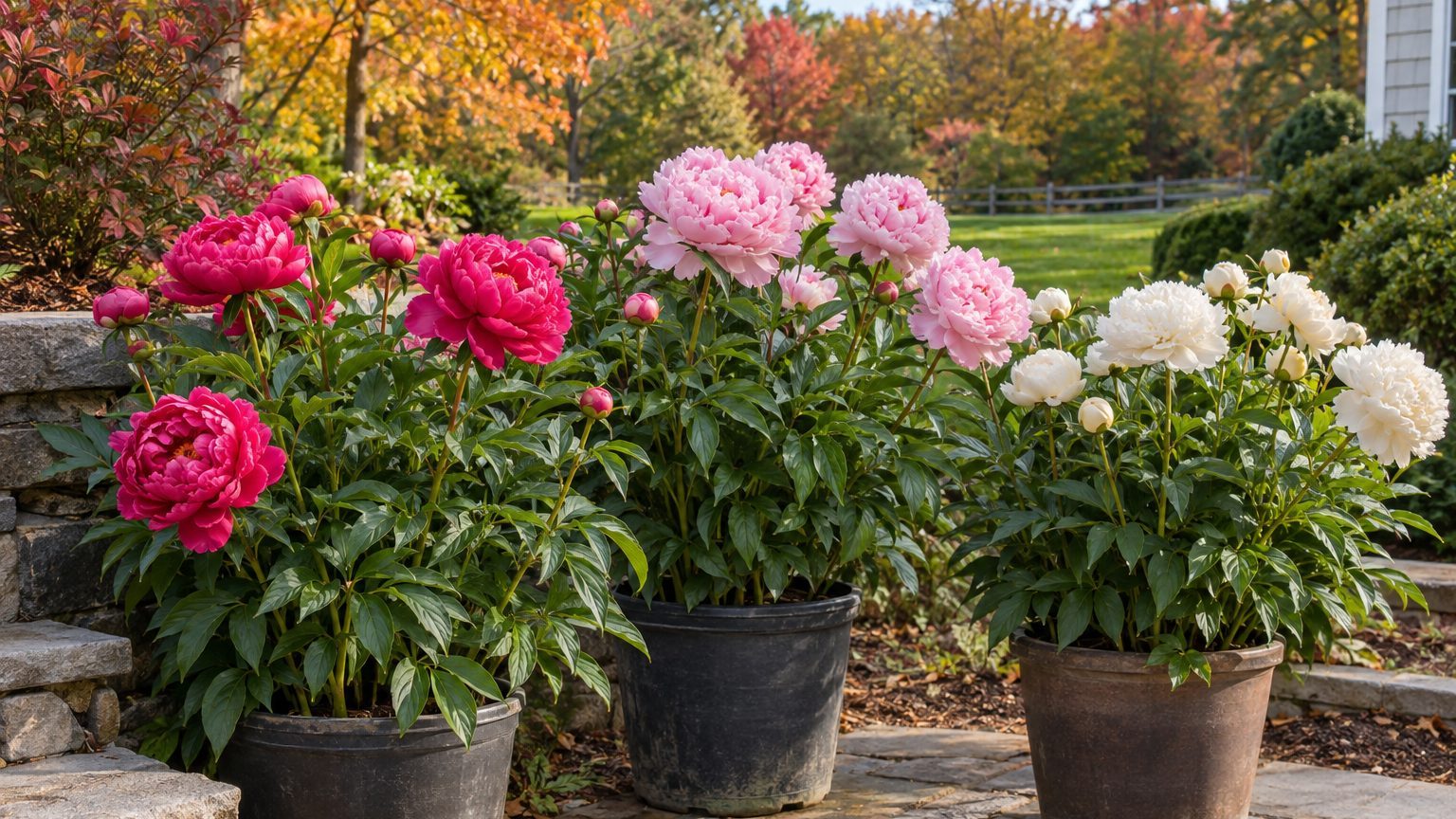
A peony in a pot can stay on the patio season after season, which makes it easy to forget that its roots are more exposed to cold than roots in the ground. Herbaceous peonies can live in containers, and the soil, the pot size and the winter spot decide whether they flower.

Can You Grow Peonies in Pots?

Yes, herbaceous peonies can grow in containers, but their winter needs depend on the local climate. The type of peony and your local winter set the details. A potted peony usually carries fewer shoots and flowers than one planted in the ground, so expect a smaller show.

Winter matters more than most people expect. In research on container-grown peonies, fluctuating temperatures built up more chilling than a constant low temperature. In the container research, fluctuating temperatures provided more chilling accumulation than a constant low temperature.

Climate changes the plan. Where winters are mild, finding enough cold is the hurdle. Where winters are harsh, as in Alaska, roots in a container are more exposed to cold than roots in the ground.

How to Plant a Peony in a Container

Planting in a pot follows a short order, and each step protects the crown and the roots for the years ahead.

  1. Pick the pot by crown size, so that a small crown is not lost in a huge volume of wet mix. In Virginia, a 1-gallon pot suits smaller crowns.
  2. In Virginia, move up to a 2- or 3-gallon pot for larger crowns, so that the roots of a crown with 6 to 10 eyes have room to spread.
  3. Fill the pot with a light, peat-based mix, so that water drains freely and the roots never sit in a soggy mass. In Virginia, trials found a nursery mix of 60% hydro fiber and 40% peat works well.
  4. Blend in composted pine bark if your mix is plain peat, so that it holds air as it ages. In Virginia, a peat-based mix amended with bark at 1:1 by volume did well.
  5. Set the crown so that it sits under 2 inches of mix, as Virginia growers advise, which keeps the buds protected without burying them too far.
  6. Water the pot in after planting so that the mix settles around the roots and no air pockets remain.

Choose a pot with drainage holes, and set it where it gets plenty of sun. In Alaska, plastic grow bags have been suggested in place of rigid pots, since they may cost less and take up less room.

Which Peony Types Suit a Pot

Herbaceous peonies are the type container research covers, and the biggest difference between plants is the size of the crown you start with. A bigger crown wants a bigger pot, though not a much faster plant.

Cultivars such as Sarah Bernhardt and Katherine Fonteyn have been studied in containers, mainly for how they gather winter chill.

What changes Why it matters
Smaller crowns in Virginia: a 1-gallon pot A snug pot suits a small crown, and finish time barely differs between container sizes.
Larger crowns of 6 to 10 eyes in Virginia: a 2- or 3-gallon pot More roots need more room, so the bigger pot keeps them from crowding.
Sarah Bernhardt and Katherine Fonteyn: winter exposure to fluctuating temperatures Swinging temperatures gave these container plants more chilling than a constant cold.

For you, the practical lesson is to match the pot to the crown and not to chase size. In the Virginia work on herbaceous peonies, container-grown plants had fewer shoots and flowers than field-grown plants, so pots are better suited to a small display than a cutting garden. For tree and Itoh peonies, check the nursery tag for pot and winter advice.

Mistakes to Avoid with Potted Peonies

Planting the Crown Too Deep

Planting the Crown Too Deep — Growing Peonies in Pots: Which Ones, Soil and Winter Care

It feels safer to bury the buds well, yet a crown planted far below the surface sends up leaves and few flowers. Aim for 2 inches of mix over the crown, a depth tested in Virginia.

Choosing an Oversized Pot

Choosing an Oversized Pot — Growing Peonies in Pots: Which Ones, Soil and Winter Care

In the Virginia work, there was very little difference in finish time between container sizes. A large volume of wet mix around a small crown just holds water longer. Fit the pot to the crown, and step up only when the crown has grown.

Sheltering from Every Temperature Swing

Tucking the pot into a steady, always-cold corner seems protective, yet fluctuating temperatures built up more chilling than a constant low in container plants. Fluctuating temperatures increased chilling accumulation in the container research, but that result alone does not show where a home pot should overwinter. In Alaska, local farmers’ potato storage sheds have been considered for peony storage, so ask nearby growers whether that approach suits your pot.

When to Give Potted Peonies Winter Care

The cue is the foliage. Once the leaves yellow and collapse in autumn, the plant is going dormant and the pot needs its winter position. Cut the dead stems back, then use local guidance to choose a winter position that protects the mix from waterlogging and the roots from damaging cold.

  • Your state page lists the months for cutting back and moving pots where you live, so open it when the leaves start to fade.

Common Questions

Can You Use a Grow Bag Instead of a Pot?

In Alaska, plastic grow bags have been suggested in place of pots, because they may be cheaper and need less room.

Can a Potted Peony Spend Winter in a Shed?

In Alaska, growers have looked at borrowing local farmers’ potato storage sheds for peony storage. For a home pot, ask nearby growers whether an unheated shed offers suitable winter conditions in your climate.

What If a Potted Peony Does Not Survive Winter?

In Alaska, one gardener replaced the lost plants with more economical varieties from local nurseries, already growing in pots. Starting again with a nursery plant is a fair way to try a new spot, and the crown size will guide you to the right pot.

How to Choose a Peony for Your Zone and Yard

How to Choose a Peony for Your Zone and Yard

A peony that blooms heavily each spring and one that sulks for years can look identical on the nursery bench. What separates them is how well the plant matches your winter cold, your sun and your soil. Choosing a peony starts with your zone, your yard and the kind of plant you want, and the type you buy changes the answer.

Which Peony Is Right for Your Yard?

The right peony is one whose winter-cold needs match your winters, planted in a sunny, well-drained spot with room to grow. In North Carolina, peonies can grow in zones 3–8 and do best in zones 5–7.

Winter cold is an important part of the choice. In Connecticut, peonies need a minimum of 6 weeks of temperatures below 40°F to flower.

In the lower South that chill often falls short. There, early-blooming, single or Japanese cultivars are the ones that perform well in South Carolina. The state selector just below this section leads to the page for your state.

How to Choose a Peony

How to Choose a Peony for Your Zone and Yard

Start with winter cold, because a peony that fails on winter cold cannot be rescued by good soil.

  1. Look up your USDA hardiness zone, so that you know early whether your yard sits inside the range peonies grow in or at the warm end, where winter chill gets thin.
  2. Compare your typical winter with the cold peonies need, because without it the plant makes leaves but few flowers. In Connecticut, where zones run from 7a to 5b, this is not generally a problem, while a mild lower-South winter can fall short.
  3. Choose a sunny spot, since low light decreases flowering. In Utah, choose a location with at least 6 to 8 hours of direct sunlight.
  4. Test the soil before you buy, so the plant is not set into the wrong chemistry. In Washington, peonies grow best at a pH of 6.0–7.0, and in South Carolina the preferred range is 6.5 to 7.0. Then check drainage, because peony roots die in saturated soil and clay that stays wet is best avoided.
  5. Read the tag for mature height and spread, and look at bloom time, so the plant has room when full grown. Choosing varieties that open at different times stretches the show across the season.
  6. Buy recognized named cultivars, so that quality is more certain than with an unlabeled division. In Iowa, spring is often the best time to plant container-grown peonies.

None of these steps takes long, and all of them happen before money is spent. A hardiness map, a soil test kit and careful observation of afternoon shadows can help settle the decision.

Choosing a Peony by Peony Type

Peonies are not interchangeable. Bloom time, chill needs and planting habits shift from one kind to the next, and those shifts matter at the edges of the growing range.

In the South, choose by season and chill. In the North, choose by bloom time and the length of show you want.

Peony Type What changes Why it matters
Early-blooming cultivars Flowers open before hot weather sets in They do well in the South, as in South Carolina, because the blooms finish before the heat arrives
Single or Japanese cultivars Flower form is simpler than a full double They are the best performers in South Carolina
Low-chill types Need less winter cold to flower In warm areas of North Carolina, plant them with crowns no more than one inch deep and skip winter mulch, which can act like an insulating blanket
Earlier and later bloomers Flowering runs from the end of April to early June in Pennsylvania, and from early June to early July in South Dakota Mixing bloom times in the same bed stretches the season, since each plant flowers for only a short spell

For a warm-climate yard, prioritize low-chill, early, simple-flowered cultivars. For a colder yard, bloom time matters a great deal, and a mix of early and later plants keeps flowers in the bed far longer than a single variety can.

Peony Buying Mistakes to Avoid

Ignoring Winter Chill

Ignoring Winter Chill — How to Choose a Peony for Your Zone and Yard

Peonies often do not perform well in the lower South because the winters do not chill them enough. The cost is a healthy-looking plant that makes foliage year after year with few or no flowers.

Before buying, ask the nursery whether a variety suits your winter, and in a mild climate lean toward the low-chill and early types.

Planting in Soggy Clay

Planting in Soggy Clay — How to Choose a Peony for Your Zone and Yard

Heavy clay that holds water is a quiet killer, because peony roots die in saturated soil. The plant may look fine for a season, then decline as the roots rot below ground.

Pick a spot where water drains away after rain, or choose a slightly raised area of the yard. Moving a planting site before you dig costs nothing, and replacing a lost plant does.

Skipping Named Cultivars

A division from a neighbor or an unlabeled bargain bag may perform well, but you have no record of its bloom time, size or quality. In Indiana, recognized named cultivars offer more assurance of plant hardiness and quality.

Look for a label with the variety name, then match it to your zone, sun and the bloom window you want.

Best Peonies for Your State

Match the cultivar’s chill needs and bloom time to your state’s growing conditions. Planting and bloom months differ from state to state, and each state’s months sit on that state’s page.

  • In Iowa, spring is often the best time to plant container-grown peonies.
  • In South Carolina, early-blooming cultivars can finish flowering before hot weather arrives.

Common Questions

How Long Does a Peony Bloom?

In North Carolina, each plant blooms for about two weeks in late spring to early summer. Planting varieties with staggered bloom times is what stretches the show beyond that.

How Big Are Peony Flowers?

In South Dakota, peony flowers range from about three to eight inches wide, depending on the species and cultivar. Check the tag if you want a large, showy bloom or a smaller one.

How Many Peony Varieties Are There to Choose From?

Thousands of garden varieties are grown worldwide, and only about 100 are used as cut flowers. If you want armloads for the vase, ask a nursery which varieties are grown for cutting.

Bare-Root Peonies: When and How to Plant Them

Bare-Root Peonies: When and How to Plant Them

A bare-root peony arrives as a knobby bundle of fleshy roots topped with a few pink or red buds called eyes, and it wants to go into the ground while it is still asleep. Autumn is the season for that job.

When Should You Plant Bare Root Peonies?

In Utah and North Carolina, fall is the preferred season for planting bare-root peonies. In Indiana, dormant plants are less sensitive to injury when they are moved. Spring planting asks a sleeping root system to wake up and settle in at once.

Where you live changes the calendar. In Indiana, October is the month for planting or dividing bare-root stock. Utah and North Carolina also favor fall planting.

In Indiana, freshly dug roots face less storage and handling damage, and fall-established plants grow more vigorously in their first growing season. In Alaska, the end of the growing season is when peonies should go in.

How Do You Plant Bare Root Peonies?

Work in this order, and each step protects the buds that become next spring’s shoots.

  1. Choose an open spot, and check with your county extension office about the soil and drainage for peonies.
  2. Dig a hole wide and deep enough to spread the roots without bending them.
  3. In Iowa, set the crown with the eyes pointing up and their tips 1 to 2 inches below the soil surface.
  4. Backfill with the native soil and press it gently around the roots.
  5. Water well after planting.
  6. Allow room for neighbors, which in Iowa means 3 to 4 feet between plants, so that air moves through the foliage as the clumps grow.

Mark the spot with a stake. The buds stay underground all winter, so mark the spot.

How Does Planting Differ by Peony Type?

What shifts is how much space each one needs once it grows into a full clump.

In Kansas, dwarf and standard types have different spacing requirements.

What changes Why it matters
Dwarf types need at least 2 feet between plants (Kansas) A compact clump needs less room, so you can fit more plants into a small bed.
Standard types need at least 4 feet between plants (Kansas) A larger clump needs room to spread, and crowding it limits air movement around the foliage.

Check the plant tag before you dig, since the tag tells you which group a variety belongs to. If the type is unknown, ask your county extension office about spacing.

What Mistakes Should You Avoid with Bare Root Peonies?

Planting Too Deep

Planting Too Deep — Bare-Root Peonies: When and How to Plant Them

Burying the buds feels protective, but it backfires. In Kansas, eyes set more than 2 inches deep may flower late or not flower at all, and the plant can look healthy for years without a single bloom.

Check the depth before you backfill, and fill or dig as needed. If an established plant has stopped blooming, check with your county extension office about lifting and replanting it.

Buying Roots with Few Eyes

Buying Roots with Few Eyes — Bare-Root Peonies: When and How to Plant Them

A division with too few eyes is slow to build up. In Utah, divisions with at least 3 to 5 eyes reach maturity sooner. In Alaska, good roots have 5 to 8 eyes.

Look at the eyes before you buy, especially from online sellers.

Paying Full Price in Spring

In Alaska, some wholesale bare-root peonies can sell for $60-80 per plant. Planting time is also the end of the growing season, and that is when good deals can turn up.

In Alaska, deals may appear toward the end of the growing season, when peonies should be planted.

How Do You Know It Is Time to Plant?

The plant tells you. When the foliage on established peonies has browned and died back, fresh-dug roots are showing up for sale. That is the signal to get roots into the ground.

Each state has its own months, and the state page gives the window for your area.

  • Open your state page to find the planting window for your climate.
  • Order roots ahead of that window so they are in hand the day the soil is ready to dig.

Common Questions

Should You Soak Bare Root Peonies Before Planting?

In North Carolina, a soak in clean water for about 10 minutes rehydrates the roots before planting. A quick sanitizing dip before the soak is also recommended there. Plant right after.

Can You Plant Divisions from Your Own Peonies the Same Way?

Yes. In North Carolina, established clumps can be divided in fall, the same season when purchased bare-root crowns are planted. Each division goes in at the same depth and spacing as a new root.

What Soil Do Bare Root Peonies Need?

A light, well-drained mix with steady moisture. Cut-flower growers plant peonies in beds like that.

When to Plant Peonies in Yukon: Dates and Care

When to Plant Peonies in Yukon: Dates and Care

When birch and aspen leaves turn yellow along the Yukon River, a peony clump is already dying back, and its roots are about to start settling in for winter. September is the month to plant or divide peonies in Yukon, while the soil can still be worked. The dates here follow gardens in a comparable northern climate, so confirm local timing with a garden centre, a garden society or one of the territory’s gardening groups.

When to Plant Peonies in Yukon

When to Plant Peonies in Yukon: Dates and Care

Plant or divide peonies in September, before the ground freezes. The rest of a peony’s year in Yukon follows from that fall planting, and the dates below speak of Whitehorse, in Canadian hardiness zone 1b (a Canadian rating that does not convert to a USDA zone).

  • In spring, the red shoots push up as the soil thaws, and the clump needs nothing more than a clear, unmulched crown so the eyes can break through.
  • In Whitehorse, around early June, the last spring frost arrives on average on June 5, which means that in about half of years frost comes later, so treat the date as the middle of a window and cover young shoots when a cold night is forecast.
  • In July and August, the buds open, later than peonies bloom elsewhere in North America, and some may begin in June.
  • In late summer in Whitehorse, the first fall frost falls on average around August 25, again the middle of a range, and northern or upland yards often see it sooner.
  • In September, the planting window opens, and roots set into cool soil have time to anchor before the ground locks up.
  • After the first hard frost, the leaves and stems of a herbaceous peony go limp and brown, and that is the signal to cut them back.

Because a newly planted peony is building roots, plan on patience for flowers. A young plant often skips bloom the first spring and then catches up.

Which Peonies Grow Best in Yukon?

Peonies suit Yukon well. They need a cold winter rest to set flower buds, and long, hard winters supply that without trouble. Spring frost can still damage young shoots, so protect them when a cold night is forecast.

Peony type How it does in Yukon Why
Herbaceous peony Grows well and blooms in July and August Dies to the ground each winter and needs the long cold rest to flower

Tree peonies and Itoh hybrids are also sold in garden centres, and they are worth trying in a sheltered spot, but a tree peony keeps its woody stems above ground all winter, so it is more exposed to a hard season. Start with herbaceous plants, and ask local growers which cultivars have held up in your neighborhood.

When to Plant, Cut Back and Feed Peonies in Yukon

Peony care follows the calendar and clear signs in the plant. When you plant, keep the eyes (the pink buds on the root) close to the soil surface, because a peony set too deep may bloom poorly or not come up at all.

Task Best timing in Yukon Why then
Plant or divide September Roots settle in before the ground freezes
Enjoy bloom July and August Northern peonies flower later than those farther south
Cut back herbaceous peonies After the first hard frost The foliage has died, and removing it clears a hiding place for disease

Tree peonies are never cut back, because they keep their woody stems. For feeding advice, ask a local garden center what suits your soil.

How Peony Planting Dates Change Across Yukon

Yukon stretches from broad valleys to high country, and a peony’s season shifts with where your yard sits.

  • Higher ground and cold hollows: A yard on a slope or in a low spot where cold air pools can see frost well outside the usual dates, so a sheltered, sunny site gains the plant extra growing time.

A warm, south-facing wall can move a peony’s year ahead a little, but local gardeners can help you fine-tune the September planting window.

Where to Get Peony Advice in Yukon

Canada has no county extension offices, so advice comes from the territory’s agriculture staff, local gardeners and garden centres. They know which cultivars have wintered in your area and can help with a soil question or a plant that will not bloom.

  • Agriculture and Agri-Food Canada publishes the federal department’s guidance at Agriculture and Agri-Food Canada, a place to start for soil and crop questions before you contact territorial staff.
  • A local garden society or master gardener group can tell you in spring which peonies came through the winter, and which came through poorly.
  • A garden center in Whitehorse can help you choose firm bare roots with healthy eyes for September planting.

Common Questions

Why Hasn’t a New Peony Bloomed in Yukon?

A newly planted peony may skip flowers while it builds roots, so healthy leaves without a first-spring bloom are not a reason to worry. If the foliage is vigorous but flowers stay missing, check the planting depth and the light, since buried eyes and shade are common causes.

Can You Buy and Plant Peonies in Spring in Yukon?

Ask local garden centers when potted and bare-root peonies are available. Plant or divide peonies in September, before the ground freezes.

Should You Water Peonies After Planting in September?

Yes, give the roots a deep soaking at planting and keep the soil lightly moist while it stays unfrozen. Moist soil helps the roots take hold before winter, and a layer of mulch added after the ground freezes helps hold the plant steady through the cold.

The almanac, state by state. Every date on this site comes from a state’s own frost facts and its extension service’s calendar — and says where it comes from.