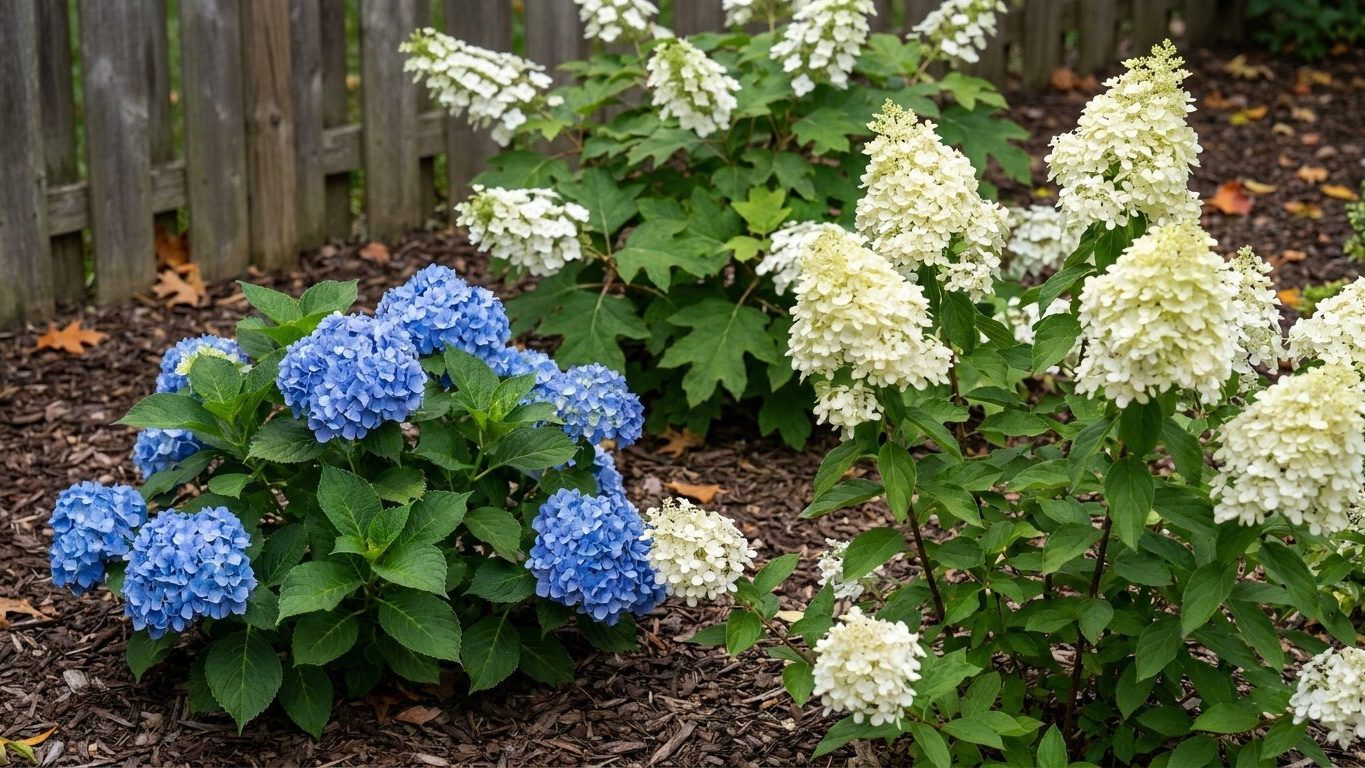
Oakleaf and bigleaf hydrangeas grow best across Louisiana, handling both the humid summers and the mild winters that barely dip below freezing in the New Orleans area. Panicle hydrangea comes in close behind for full-sun spots, while climbing hydrangea and smooth hydrangea struggle against the state’s long, hot growing season.
Hydrangeas that grow well in Louisiana: The Short Answer
Louisiana’s growing season rewards species built for heat and humidity over ones bred for hard winters, and that logic decides most of this list. The USDA Plant Hardiness Zone Map puts the state at zone 8a to 10a, with New Orleans sitting near the warm 10a end and the northern parishes closer to 8a.
Oakleaf Hydrangea

Native to the Southeast, Hydrangea quercifolia shrugs off Louisiana humidity and heavy afternoon heat better than any hydrangea on this list. Its flower buds form in fall, so it rides out the state’s freeze-free winters without losing next year’s bloom. Part shade and well-drained soil are all it asks for.
Bigleaf Hydrangea

Hydrangea macrophylla is the classic Southern hydrangea, common in New Orleans courtyards and Baton Rouge front yards alike. It blooms on old wood, so it needs protection from a hard fall prune, and it wants afternoon shade once summer heat sets in. Given that shade, it flowers reliably year after year.
Panicle Hydrangea

Hydrangea paniculata tolerates full sun better than any hydrangea grown here, which matters in a state with few shady building lots. It blooms on new wood, so a hard prune never costs a season of flowers. It holds up through Louisiana’s long summer without the wilting bigleaf shows by midday.
Smooth Hydrangea

Hydrangea arborescens, sold as Annabelle in most nurseries, grows here but shows its strain by August, with stems that flop under humidity-heavy blooms. It needs afternoon shade and steady moisture to avoid collapsing in the heat. Treat it as a plant for a protected bed, not an open yard.
Mountain Hydrangea

Hydrangea serrata shares bigleaf’s old-wood bloom habit but was bred for cooler summers, and it shows more leaf stress once July heat builds in south Louisiana. It fares better in the state’s northern parishes, where summer nights run cooler. Farther south, expect smaller blooms and more wilting.
Climbing Hydrangea

Hydrangea anomala subsp. petiolaris is the riskiest choice on this list, bred for the cool summers of the Northeast and Pacific Northwest rather than Louisiana’s long, humid growing season. It often takes years to establish here and may never bloom heavily. Most Louisiana gardeners get better results from a native vine instead.
Louisiana — the year and the numbers
- State
- Louisiana
- USDA zones
- 8a-10a
- Last spring frost
- January 18 to February 8
- First fall frost
- December 17 to January 8
- Annual rain
- 63 in
- Lawn zone
- warm-season
- Source
- NOAA NCEI 1991-2020 Climate Normals, 32F freeze probabilities · New Orleans
How to Work Out the Dates for Your Own Yard
Matching a hydrangea to your yard means reading Louisiana’s own calendar rather than a nursery tag written for a national audience.
- Start with your frost window: NOAA NCEI 1991-2020 Climate Normals puts the New Orleans area’s last spring frost between January 18 and February 8, and the first fall frost between December 17 and January 8, so the frost-free stretch runs nearly the whole year.
- Check the bloom wood before you prune: bigleaf and mountain hydrangea set buds on old wood, so they only take a hard cut safely in the June to July window this state’s calendar allows for bigleaf pruning.
- Count your afternoon sun hours: more than six hours of direct summer sun calls for panicle or oakleaf hydrangea, both bred for open exposure, rather than bigleaf or smooth types.
- Watch for midday wilting in year one: a hydrangea drooping by early afternoon through July is asking for more shade or richer, moisture-holding soil, not more water alone.
- Note where a plant lags through summer: repeated leaf stress by mid-July, even with adequate water, usually means the variety was bred for cooler summers than this state delivers.
Oakleaf hydrangea passes both tests here, since its bloom wood forms by fall and the freeze-free winter never threatens next year’s flowers, while its thick leaves resist the humidity that mildews a smooth hydrangea by August.
Climbing hydrangea fails the same test, wanting the cooler summer nights of a northern zone to set buds, and in the New Orleans area it often goes years without a real bloom.
Louisiana North to South: How the Dates Shift
Distance from the Gulf, not elevation, does most of the work moving these dates around inside Louisiana.
- North Louisiana (Shreveport, Monroe, Ruston): colder winters and a more reliable freeze give bigleaf and mountain hydrangea the dormant rest they were bred for, and pruning mistakes matter less since buds set later.
- Central Louisiana (Alexandria, Baton Rouge, Lafayette): summers run longer and hotter than the north, and freezes turn less dependable, so panicle and oakleaf hydrangea handle the stretch better than bigleaf types.
- Coastal and Southeast Louisiana (New Orleans, Houma, Lake Charles): freezes turn rare enough some years to skip entirely, which means heat and humidity, not cold, decide which hydrangea makes it through August.
Check the state guide for the frost windows and hardiness range that apply where you garden.
Mistakes Louisiana Punishes
No Blooms After a Fall Haircut
Bigleaf and mountain hydrangea set next year’s flower buds on old wood by late summer, so a fall or winter prune cuts off the coming season’s blooms before they ever open. The state’s calendar allows a safe cut only in June and July, right after the current bloom fades, so mark that window and skip any other pruning entirely.
Leaves Crisping by Midsummer
A spot with more than six hours of direct afternoon sun scorches bigleaf and smooth hydrangea leaves by July, especially in the long, hot stretch south of Alexandria where humidity traps heat close to the ground. Move new plantings to filtered afternoon shade, or plant panicle or oakleaf hydrangea instead, since both tolerate open sun without curling leaves.
Roots Rotting in Wet Clay
Louisiana’s heavy clay holds standing water for days after a summer storm, and hydrangea roots sitting in that water develop rot within a single season, even on an otherwise healthy plant. Work compost into the planting hole and raise the bed a few inches above grade before setting any new hydrangea into the ground.
Louisiana Extension Offices and County Contacts
The state’s hardiness range is a starting point, and LSU AgCenter Cooperative Extension Service fills in the rest through parish-level offices that know local soil and rainfall patterns.
- Your state page: the full Louisiana hydrangea guide, with the frost windows and hardiness range for where you garden.
- The Louisiana hydrangea calendar: month-by-month planting, fertilizing, and pruning windows built around this state’s frost dates.
- What goes wrong here: the pests and problems this state’s extension offices see most often on hydrangeas, and what actually fixes them.
Common Questions
Do hydrangeas need full sun in Louisiana?
Most need protection from direct afternoon sun once summer heat builds, except panicle and oakleaf hydrangea, which tolerate open exposure. Give bigleaf, smooth, and mountain hydrangea morning sun with afternoon shade to avoid scorched, curling leaves through July and August.
What’s the best hydrangea for New Orleans heat?
Oakleaf hydrangea handles New Orleans humidity and heat with the least fuss, followed closely by panicle hydrangea in sunnier spots. Both set flower buds in a way that survives the area’s freeze-free winters without losing next year’s bloom.
Can hydrangeas grow in Louisiana’s clay soil?
Yes, once the planting hole is amended with compost and the bed is raised a few inches above grade to shed excess water. Left unamended, heavy clay holds water long enough after summer storms to rot hydrangea roots within a season.