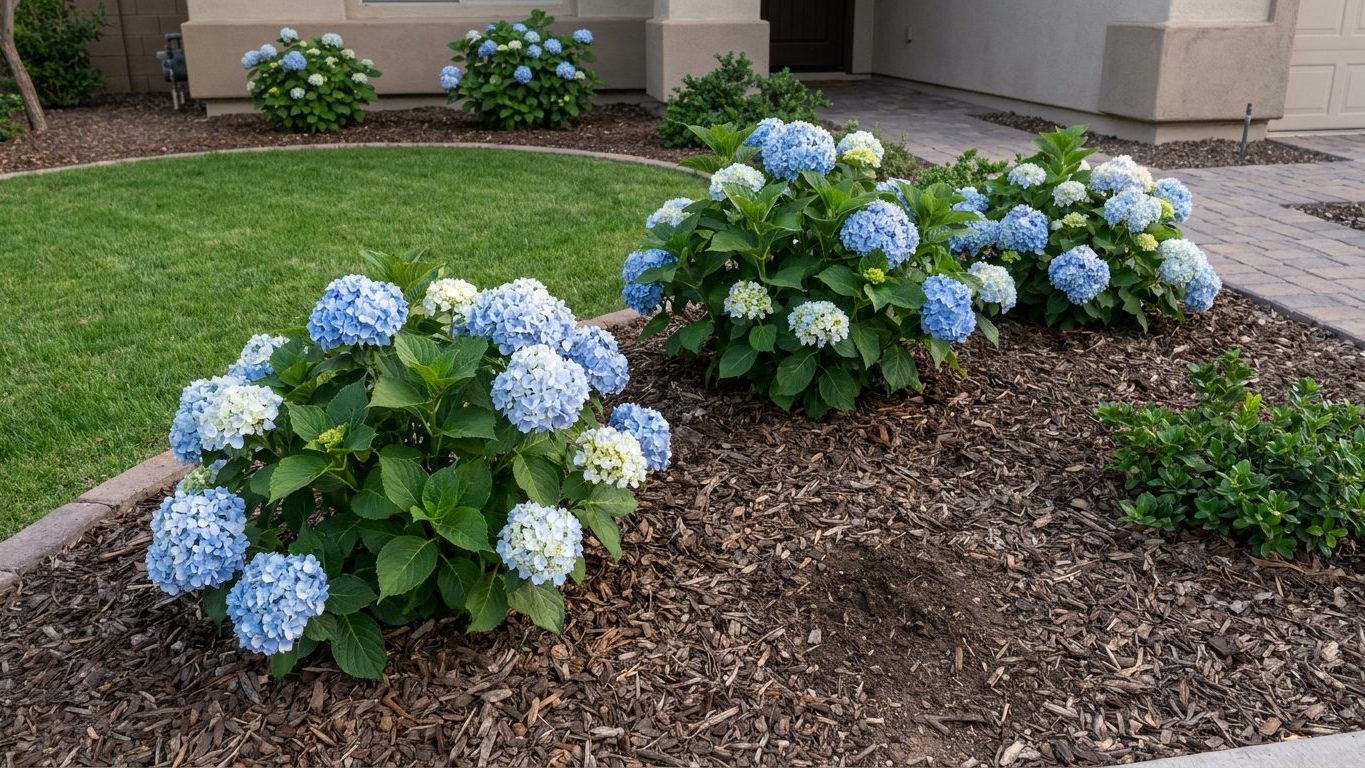
In Phoenix and across the rest of the low desert, hydrangeas go in the ground in January, February, October, or November, when heat backs off enough for new roots to establish without scorching. Frost barely factors into the decision here. Bigleaf varieties get pruned in June and July, right after bloom, before the worst of summer arrives. Higher, cooler parts of the state run on a different clock entirely.
When to prune hydrangeas in Arizona: The Short Answer
Phoenix hydrangea planting comes down to two windows carved out by heat rather than cold, January, February, October, and November, according to the state’s planting calendar. The USDA Plant Hardiness Zone Map puts Arizona at a sprawling 4b to 10b, a range wide enough that no single date applies statewide, only to the low-desert reference city of Phoenix.
- January: One of the two low-desert planting windows opens, and cool soil lets roots establish before summer heat becomes the limiting factor. The rare 32F snap this month is not a serious threat.
- February: The planting window continues, and this is the last easy month to set new hydrangeas before spring warmth accelerates toward the heat that actually decides this crop’s fate.
- March: The first of three yearly fertilizer feedings goes down, giving roots a boost before active spring growth takes over.
- April: No planting or pruning is scheduled. Deep, regular watering matters more as afternoon highs climb past what hydrangea roots comfortably tolerate.
- May: Second fertilizer feeding of the year. Watch morning-shade beds and containers for early wilting on the first genuinely hot afternoons.
- June: Bigleaf pruning begins, right after the spring bloom fades and before the hottest stretch of summer sets in.
- July: The third and final fertilizer feeding lands alongside the tail end of pruning. Finish cuts before triple-digit heat stalls new growth for the season.
- August: Nothing is scheduled. This is the month to protect existing plants with afternoon shade and steady moisture rather than start anything new.
- September: Still no planting or pruning. Use the month to prep beds and containers for the fall window just ahead.
- October: The second planting window opens as summer heat finally breaks, the better of the two dates since roots get a full cool season to spread.
- November: Planting window continues. Get anything new in the ground before December’s outside chance of a freeze.
- December: A rare cold snap can bring 32F, though it has shown up in only 6 of the last 30 springs. Established plants go dormant and need little attention.
Notice what’s missing here: a spring frost date. Phoenix is listed as frost-free for 365 days in most years, so this calendar runs on heat, not cold. Higher, cooler pockets of Arizona, covered below, freeze hard and follow a different clock entirely.
Arizona — the year and the numbers
- State
- Arizona
- USDA zones
- 4b-10b
- Frost
- none in an average year
- Annual rain
- 7 in
- Lawn zone
- warm-season
- Source
- NOAA NCEI 1991-2020 Climate Normals + NOAA RCC ACIS daily records, station USW00023183 — https://www.ncei.noaa.gov/access/services/data/v1?dataset=normals-annualseasonal&stations=USW00023183 · Phoenix
How to Work Out the Dates for Your Own Yard
Every yard sits a little differently even within the same metro, and working out your own dates starts with the same handful of checks the state calendar is built on.
- Check your microclimate first: A west-facing wall or a low spot that traps heat pushes your safe planting window earlier into January rather than February, because that corner hits damaging heat sooner than an open, shaded yard.
- Count from the plant window, not a frost date: NOAA NCEI 1991-2020 Climate Normals shows Phoenix reaching 32F in only 6 of 30 springs, so aim to have hydrangeas in the ground by the end of the January-February window or the October-November window rather than waiting on a frost warning that rarely comes.
- Mark the bigleaf pruning deadline: Plan cuts for June or July, right after bloom fades, and finish before the hottest weeks arrive so wounds have time to callus in mild air.
- Match fertilizer timing to the three feedings: March, May, and July line up with spring growth, early summer stress, and the push needed before triple-digit heat slows the plant down.
- Watch for the rare freeze anyway: A cold snap between late December and mid-January can still bring 32F in an unlucky year, so keep frost cloth on hand for young plants even though it isn’t the deciding factor.
None of these steps replaces watching your own yard for a season. A hydrangea in full afternoon sun behaves nothing like one tucked against a shaded, east-facing wall, even on the same street.
Arizona North to South: How the Dates Shift
Elevation moves these dates more than latitude does in a state built on desert floors and mountain rims, and the USDA Plant Hardiness Zone Map’s 4b to 10b range for Arizona is the clearest sign of how far apart those pockets sit.
- High Country (Flagstaff, the Mogollon Rim, the White Mountains): true hard freezes here put growing conditions closer to the cold end of the state’s zone range, and hydrangeas need real winter protection on a schedule that looks nothing like Phoenix’s.
- Southern Arizona desert (Tucson, Yuma): a similarly heat-driven calendar to Phoenix, with slightly milder summer nights in a few higher pockets, but still well within the frost-free bulk of the state’s zone range.
For the zone-by-zone specifics behind these shifts, the state hydrangea guide breaks down each pocket in more detail.
Mistakes Arizona Punishes
Planting Into the Summer Heat
Going into the ground outside the January-February or October-November windows means young roots meet triple-digit heat before they’ve spread, and most bigleaf hydrangeas planted in May or June stall or scorch within weeks. Stick to the state’s plant months and treat summer as a waiting season.
Pruning Outside the June-July Window
Bigleaf hydrangeas set next year’s buds on old wood soon after this year’s bloom fades, so pruning in August or later removes flowers before they even form. Keep cuts inside June and July, and skip pruning entirely in a year when bloom was already thin.
Full Afternoon Sun With No Cover
A hydrangea planted with unblocked west or south afternoon exposure scorches by midsummer even with regular watering, since desert light intensity outruns what the leaves can handle. East-facing walls or filtered high shade matter more here than in milder states.
Arizona Extension Offices and County Contacts
The state’s hardiness range and the Phoenix calendar above are starting points, but a county office knows local soil, water hardness, and pest pressure better than any statewide chart, through the University of Arizona Cooperative Extension network.
- Your state page: the frost dates and the pruning window where you live.
- Which ones hold up here: variety-by-variety notes for Arizona conditions.
- What goes wrong here: the pests and problems specific to this state’s growing season.
Common questions
Can hydrangeas survive a Phoenix summer?
Most established plants make it through with consistent deep watering and afternoon shade, but the summer months are the reason planting is scheduled for January, February, October, or November instead of spring or midsummer.
Do hydrangeas need winter protection in Arizona?
In the low desert, rarely. A 32F snap has shown up in only 6 of the last 30 springs, so the risk is small, though a light frost cloth on young plants during a cold snap between late December and mid-January is cheap insurance.
What’s the best month to prune hydrangeas in Arizona?
June or July, right after bigleaf bloom fades and before the harshest summer heat sets in, since cuts made later remove next year’s flower buds along with this year’s spent blooms.