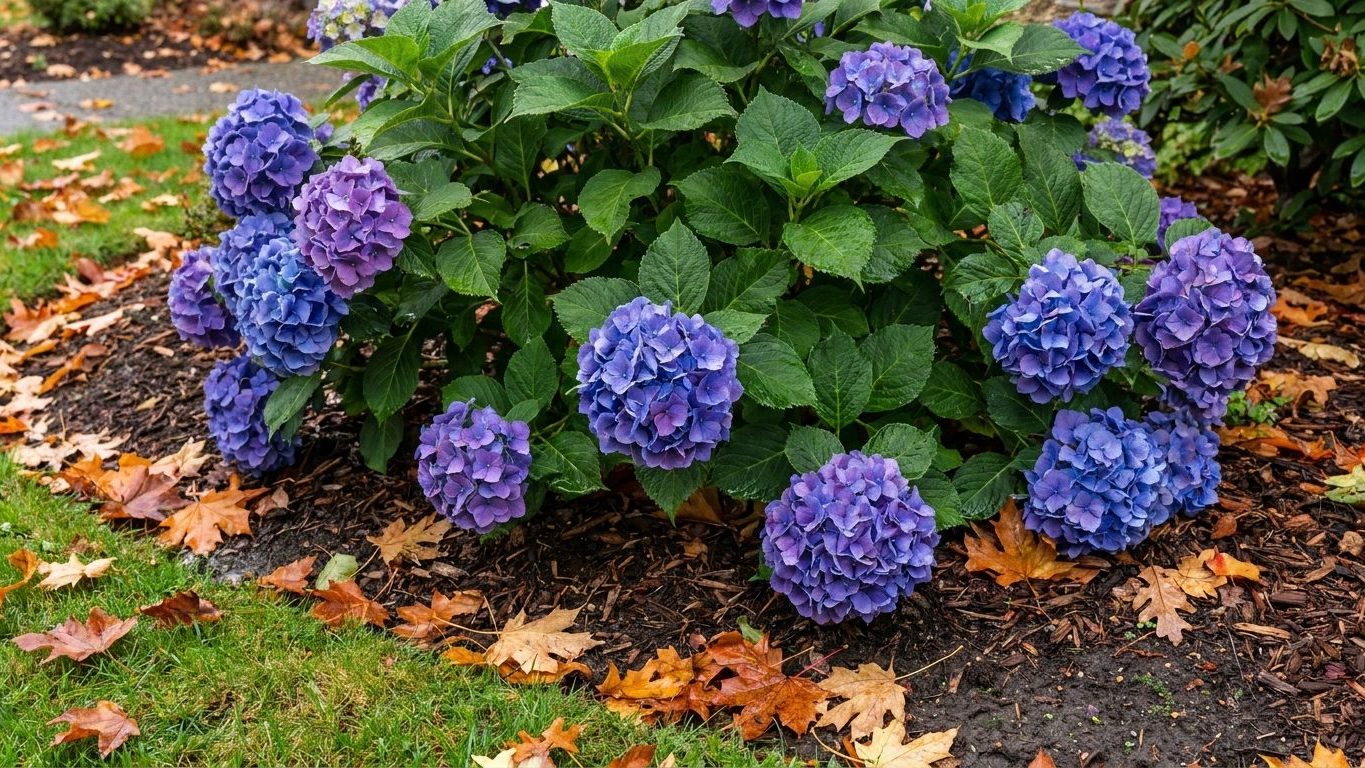
In Vancouver’s cool, wet coastal climate, the hydrangea problems that show up most are slug damage on new spring shoots, aphids on tender growth, and powdery mildew or Botrytis blight once summer humidity settles in. Bigleaf hydrangeas, the province’s most common variety, sit in Canadian hardiness zone 9a here and stay leafy long enough into fall for these fungal problems to matter each year.
Hydrangea pests and diseases British Columbia: The Short Answer
Slugs and snails on new shoots
Environment and Climate Change Canada’s Canadian Climate Normals put Vancouver’s average last spring frost at March 18, and slugs reach tender new hydrangea shoots within weeks of that thaw. Look for ragged holes and silvery trails on the lowest leaves. Handpick after dusk or ring the crown with grit, then recheck after rain.
Aphids on new growth
Aphids cluster on soft new tips soon after leaves unfurl, curling foliage and leaving a sticky residue that draws ants. A strong water spray most mornings knocks the colony down before it builds. Ladybugs and lacewings usually arrive on their own within a week or two if no broad insecticide has been used.
Botrytis blight in cool, damp spells

Cool, damp stretches in spring and again in fall turn flower buds and stem tips mushy and gray-brown, especially after a run of overcast days. Prune out affected tissue as soon as it appears and dispose of it away from the bed. Space plants for airflow and avoid wetting foliage late in the day.
Powdery mildew in summer humidity

A white, flour-like coating spreads across older leaves once summer humidity settles in along the coast, usually worse on plants crowded against a fence or wall. Thin nearby growth to let air move and water the soil rather than the leaves. A weekly baking-soda or milk spray can slow a mild case.
Cercospora leaf spot late in the season

By late summer, small purple-brown spots with yellow halos show up on lower leaves and the plant may drop them early. It rarely kills a hydrangea but it weakens next year’s buds if it repeats. Rake up and bin fallen leaves each fall rather than composting them at home.
Spider mites during a dry summer spell

Fine stippling and a dusty, pale look on leaves during a dry August stretch usually points to spider mites, worse on plants stressed for water near a hot wall. A hard spray of water on the underside of leaves every few days breaks up the colonies. Consistent watering through the dry stretch keeps pressure low.
British Columbia — the year and the numbers
- State
- British Columbia
- Hardiness zones
- 9a
- Last spring frost
- March 18
- First fall frost
- November 10
- Annual rain
- 47 in
- Lawn zone
- transition-season
- Source
- Environment and Climate Change Canada — Canadian Climate Normals 1981-2010, station VANCOUVER INT'L A · Vancouver
How to Work Out the Dates for Your Own Yard
Vancouver’s average frost dates are only a starting point, but a short countdown from them tells you which pressure matters most where you actually garden.
- Mark your last frost: Environment and Climate Change Canada’s Canadian Climate Normals put Vancouver’s average last spring frost at March 18, so count back three to four weeks from there to know when slugs and aphids typically start.
- Mark your first fall frost: the same normals put it at November 10 here, which sets the outer edge for late-season Botrytis and leaf spot before growth shuts down.
- Watch what’s already on the leaf: holes and slime mean slugs, a white coating means mildew, gray fuzz on buds means Botrytis, match what you see to the order above rather than guessing.
- Check the calendar windows for your yard: fertilize in March, May, or July, plant in March, April, September, or October, and prune bigleaf types in June or July, using the calendar page for your street.
- Pick a variety that matches your problem history: if mildew or Botrytis keeps returning, the varieties page lists which types shrug off damp, crowded coastal beds.
None of this replaces a look at your own shrub, since a south-facing wall or a shaded corner can shift every one of these dates by two or three weeks either way.
British Columbia North to South: How the Dates Shift
A single province still covers a wide range of coastal, valley, and mountain conditions, and each one nudges these dates a different way.
- South Coast and Lower Mainland (Vancouver, Burnaby, Surrey): mildest and wettest, closest to the reference dates above, fungal pressure runs highest.
- Vancouver Island (Victoria, Nanaimo, Tofino): a similar mild pattern, but exposed west-coast sites see even more rain, so slugs and Botrytis linger longer into summer.
- Fraser Valley and inland pockets (Chilliwack, Abbotsford, Hope): summers run hotter and drier than the coast, favoring mildew flare-ups and spider mites over slugs.
- Southern Interior and Okanagan (Kelowna, Penticton, Vernon): drier air and a harder winter push the whole calendar later in spring and earlier in fall.
- Northern BC (Prince George, Terrace, Smithers): a much shorter, cooler season narrows every window above and limits how many pest generations show up at all.
Check the state hub for the exact frost dates and pruning window that apply to your own part of the province before you act on any of this.
Mistakes British Columbia Punishes
Watering the foliage at night
Evening overhead watering leaves hydrangea leaves wet through the cool, humid coastal night, which is exactly what Botrytis and powdery mildew need to take hold. Switch to a soaker hose or water at soil level in the morning instead, and the fungal pressure common on the coast drops fast.
Planting outside the fall window
Environment and Climate Change Canada’s Canadian Climate Normals put Vancouver’s average first fall frost at November 10, and planting after that leaves roots sitting in cold, saturated soil before they can settle in. Stick to the plant window of March, April, September, or October instead, and check the calendar page before digging in late fall.
Skipping the fall leaf clean-up
Fallen leaves and spent flower heads left on the ground through a mild coastal winter carry Botrytis and leaf-spot spores straight into next spring, since a hard freeze rarely visits Vancouver’s yards. Rake and bag diseased leaves each fall rather than composting them at home.
British Columbia Extension Offices and County Contacts
Vancouver’s zone and frost numbers are a starting point only, the Government of British Columbia’s Agriculture and Seafood office and your local garden center fill in what’s specific to your street.
- Your state page: the British Columbia hydrangea hub for the full frost, zone, and calendar picture at a glance.
- Your planting and pruning calendar: the calendar page lays out the fertilize, plant, and prune windows month by month.
- Which varieties hold up here: the varieties page names the types that shrug off this coastal disease pressure.
Start with whichever page matches the problem already showing on your shrub.
Common questions
Do I need to spray my hydrangea every year in BC?
Not automatically. Most coastal yards only need action once a symptom actually shows, since a shrub with good spacing and morning watering often gets through a season with nothing more than a leaf rake in fall.
Can I compost blighted or spotted hydrangea leaves?
Home compost piles rarely get hot enough to kill Botrytis or leaf-spot spores, especially in a mild zone 9a winter with no hard freeze. Bag diseased leaves for yard waste pickup instead of adding them to the bin.
Why does my hydrangea get mildew even in part shade?
Shade keeps leaves damp longer after rain or watering, and still air under a fence or wall traps that moisture against the foliage. Thinning nearby growth and watering the soil rather than the leaves usually matters more than the amount of sun the plant gets.