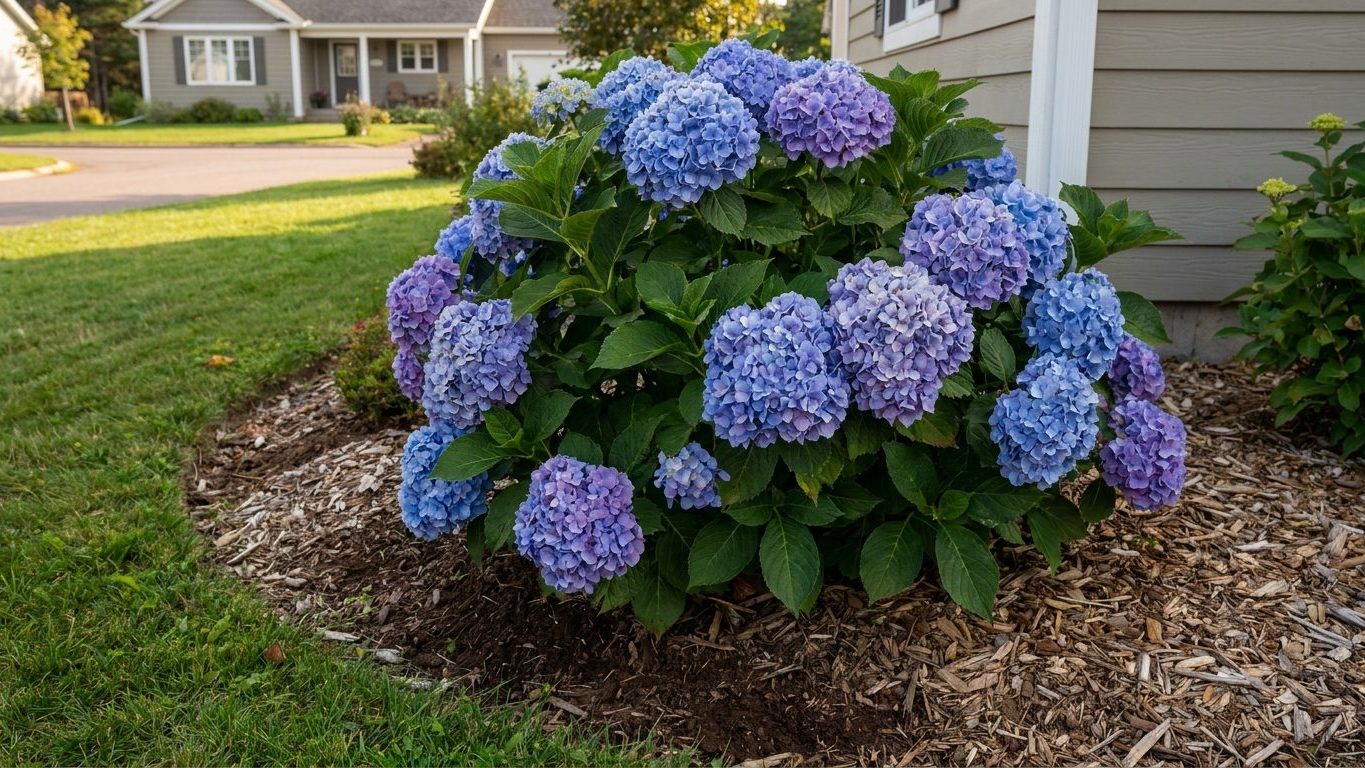
Hydrangeas can grow on Prince Edward Island, but the choice of kind decides whether they bloom. With Charlottetown’s frost season running from an average May 16 last frost to an average October 17 first frost, and the reference city rated Canadian zone 5b, panicle and smooth hydrangeas are the reliable picks, while bigleaf varieties often lose their flower buds to winter cold.
Hydrangeas Care Calendar for Prince Edward Island

Environment and Climate Change Canada’s Canadian Climate Normals for Charlottetown A put the average last spring frost at May 16 and the average first fall frost at October 17, with the reference city rated Canadian hardiness zone 5b. That May date is a mean, not a safe line: frost arrives later half the time.
- Dormancy: the safest window to plant or move a shrub falls before buds swell, in the weeks ahead of May 16.
- Planting: wait two to three weeks past the average last frost, once mild nights hold steady rather than trusting the date itself.
- Frost watch: new leaves that open before May 16 can still blacken overnight, so keep a sheet ready.
- Steady growth: the stretch between May 16 and October 17 is roughly the whole frost-free season this reference city gets.
- Last feeding: stop well before fall so new stems have time to toughen ahead of the October 17 average.
- Shutdown: as nights cool toward that October date, ease off pruning and let the plant close down on its own schedule.
Treat both frost dates as the middle of a range, not a wall calendar entry, and lean later if your yard sits low, inland, or away from the coast.
Prince Edward Island — the year and the numbers
- State
- Prince Edward Island
- Hardiness zones
- 5b
- Last spring frost
- May 16
- First fall frost
- October 17
- Annual rain
- 46 in
- Lawn zone
- cool-season
- Source
- Environment and Climate Change Canada — Canadian Climate Normals 1981-2010, station CHARLOTTETOWN A · Charlottetown
Best Hydrangeas for Prince Edward Island
Natural Resources Canada’s Plant Hardiness Site rates Charlottetown at Canadian zone 5b, a scale built on seven climate variables rather than the single measure behind the USDA zones used elsewhere on this site. The two numbers don’t convert to each other.
The split that decides is where each shrub sets its flower buds. Kinds that bloom on new wood shrug off a hard winter, kinds that bloom on last year’s wood can lose the whole show to one cold snap.
| Kind | Flowers on | Verdict here | Why |
|---|---|---|---|
| Panicle hydrangea | New wood | Good fit | Winter cold can’t erase buds that haven’t formed yet. |
| Smooth hydrangea | New wood | Good fit | Dies back hard some winters and still rebounds and blooms. |
| Bigleaf hydrangea | Old wood | Risky | Zone 5b winters often kill last year’s buds outright. |
| Oakleaf hydrangea | Old wood | Marginal | Borderline hardiness, needs a sheltered spot to set buds. |
| Climbing hydrangea | Old wood | Slow but possible | Hardy vine, but takes years on a wall before it flowers. |
Reblooming bigleaf cultivars exist and can push a few flowers on new growth after a rough winter, but that’s not a sure thing at this zone. The finer differences between these kinds live on their own pages.
When to Plant, Prune and Feed Hydrangeas in Prince Edward Island
The two frost dates from Environment and Climate Change Canada’s Canadian Climate Normals for Charlottetown A, May 16 and October 17, set every gardening window on the Island.
Each task counts backward or forward from one of those two dates, since the calendar page turns the same numbers into all twelve months.
| Task | Window here | Counted from |
|---|---|---|
| Planting | Two to three weeks after May 16 | Average last spring frost |
| Pruning new-wood kinds | Late winter into early spring, before May 16 | Ahead of the average last frost |
| Last feeding | Eight to ten weeks before October 17, roughly mid to late August | Average first fall frost |
Old-wood bloomers like bigleaf hydrangea take a lighter hand. Skip a hard prune, and just clear dead wood once new leaves show which stems made it through winter.
Hydrangeas Problems in Prince Edward Island and What Causes Them
No flowers on an otherwise healthy shrub
Bigleaf hydrangea sets its flower buds on the previous year’s stems, and Charlottetown’s zone 5b winters, per Natural Resources Canada’s Plant Hardiness Site, run cold enough to kill those buds outright most years. Choose a new-wood bloomer instead, or mound mulch over the base each fall.
New growth blackened after a late frost
The May 16 last-frost date is a mean, so frost lands later in about half of all years, catching tender new leaves unprotected. Hold off planting until a run of mild nights, and keep frost cloth handy for a surprise cold snap.
Leaves scorched on the sunny side
Coastal wind and salt spray are common across the Island, and a bigleaf’s broad leaves catch both more than a panicle’s narrower foliage does. Plant on the sheltered side of a building or hedge, and water deeply through dry stretches.
Prince Edward Island North to South: How the Dates Shift
Small as Prince Edward Island is, the water on each shore still shifts the season enough for a hydrangea to notice.
- North Shore, facing the Gulf of St. Lawrence: colder water lingers into spring, so frost can hang on later here than the Charlottetown average suggests.
- South Shore, along the Northumberland Strait: this water warms earlier in the year, easing new growth out a bit sooner than the north side.
- Inland and central parishes: away from either shore, spring nights run colder and fall frost can arrive ahead of the coastal average.
- Sheltered village gardens: a fence, hedge, or building wall can buy a shrub extra weeks on either end of the season, regardless of which shore it sits near.
None of that moves the two reference dates, it just means a garden ten miles from Charlottetown can run early or late against them, so use the calendar page to adjust for your own shore.
Prince Edward Island Extension Offices and County Contacts
Charlottetown’s frost dates and zone 5b rating are a province-wide starting point, not a guarantee for every parish, so local guidance still matters.
- Prince Edward Island’s Department of Agriculture: the province’s agriculture page for programs and local contacts beyond this site.
- The hydrangea calendar for this province: month-by-month timing built from these same two frost dates.
- Which ones hold up here: a longer look at bigleaf, panicle, smooth, and oakleaf under zone 5b winters, and, right now, a reminder to hold off on fertilizer so new growth can harden before the October 17 average first frost.
Common questions
Can bigleaf hydrangea survive winter on Prince Edward Island?
The shrub itself often survives, but the flower buds it set the previous fall frequently don’t, given the cold that comes with Charlottetown’s zone 5b rating. Expect green leaves most springs and flowers in fewer of them, unless the base gets heavy mulch cover each fall.
Is it too late to plant hydrangeas in September?
A shrub planted now has roughly a month of mild soil before the average October 17 first frost, which isn’t much time to establish roots. Waiting for the safer spring window after May 16 gives it a full season to settle in first.
Which hydrangea blooms most reliably on the Island?
Panicle and smooth hydrangeas set their buds on new wood each spring, so a hard winter can’t erase a flower season that hasn’t formed yet. That’s the main reason they outperform bigleaf types at this zone.