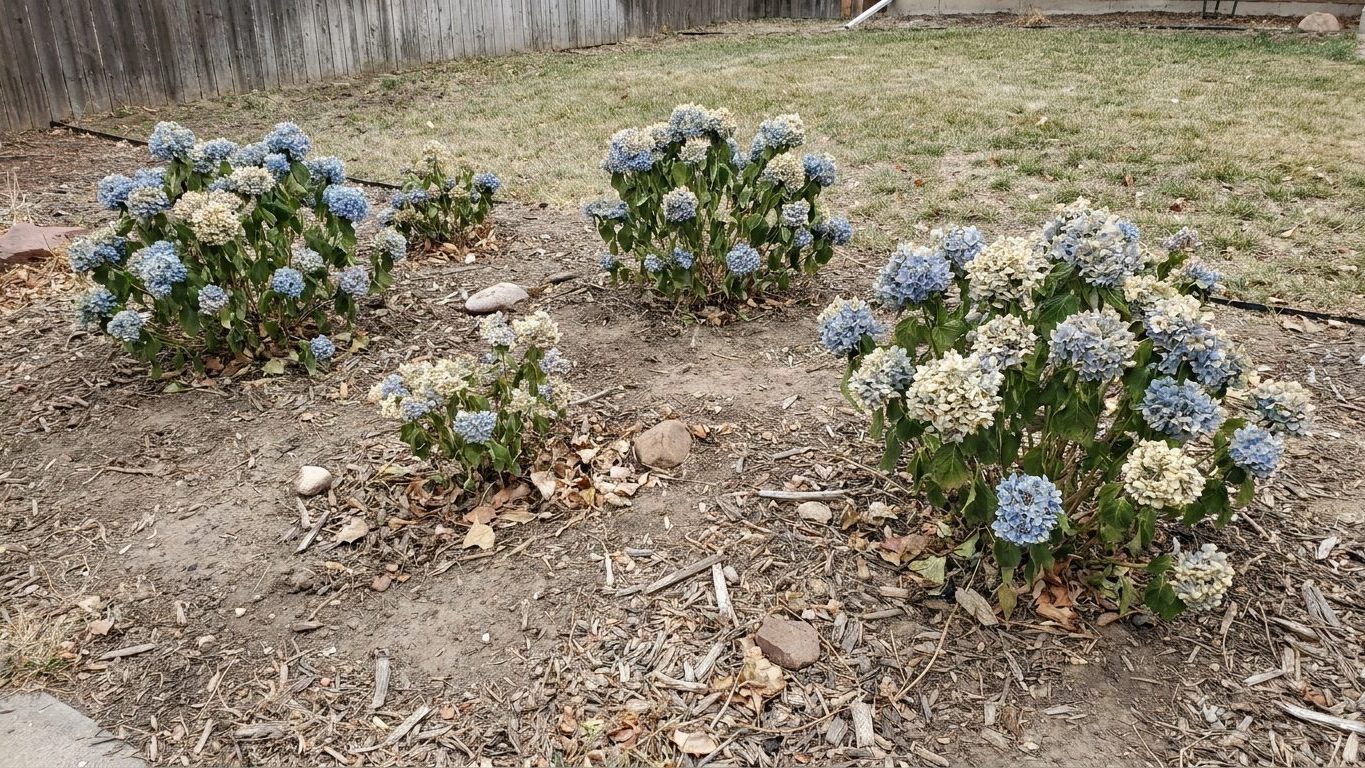
Yes, hydrangeas grow in Idaho, but which type and when you plant it depends heavily on where in the state you garden. USDA hardiness zones here stretch from 3b to 7b, and Boise’s frost-free season runs roughly late April to early October. Panicle and smooth hydrangeas handle that swing well. Bigleaf and oakleaf are a gamble outside the mildest valleys.
Hydrangeas Care Calendar for Idaho

Boise’s last spring freeze runs April 23 to May 7 and its first fall freeze lands October 7 to October 21, per NOAA NCEI 1991-2020 Climate Normals for station USW00024131. Idaho’s USDA hardiness zones span 3b to 7b, and that gap decides whether a hydrangea overwinters or dies back to the ground.
- Dormancy: from late fall through late winter, while the shrub is leafless, is the safe stretch to transplant or divide without disturbing new growth.
- Planting: wait two to three weeks after the last frost window closes, so from mid-May into early June, once the soil has warmed.
- Bud break: new leaves push out fast once nights stay above freezing, and any lingering cold in that April 23 to May 7 stretch can nip them.
- Bloom: color builds through the warm months between the last spring freeze and the first fall freeze, roughly five months in the Boise valley.
- Pruning: old-wood bloomers get cut back right after their flowers fade, new-wood types wait until late winter before growth resumes.
- Feeding: one dose after leaf-out and one more in early summer, then stop so new growth has time to harden before the October freeze.
- Fall prep: pile mulch over the root zone in the weeks before October 7 to October 21, since that is when the ground starts to lock up.
None of these dates are fixed. They are averages pulled from three decades of Boise weather, and a garden up in the mountains or down in a cold pocket will run later on both ends.
Idaho — the year and the numbers
- State
- Idaho
- USDA zones
- 3b-7b
- Last spring frost
- April 23 to May 7
- First fall frost
- October 7 to October 21
- Annual rain
- 12 in
- Lawn zone
- transition-season
- Source
- NOAA NCEI 1991-2020 Climate Normals, 32F freeze probabilities · Boise
Best Hydrangeas for Idaho
NC State Extension Gardener Plant Toolbox lists panicle hydrangea at zones 3 to 8, a range wide enough to cover nearly every county in Idaho.
Bigleaf and oakleaf need zones 6 to 9 and 5 to 9, and both bloom on the previous year’s wood, so a late spring freeze in the 3b to 7b range can erase a season’s flowers before they open.
| Kind | Verdict here | Why |
|---|---|---|
| Panicle | Reliable statewide | Zones 3 to 8, blooms on new wood, shrugs off late freezes |
| Smooth | Reliable statewide | Zones 3 to 9, blooms on new wood, tolerates the coldest pockets |
| Bigleaf | Marginal in mild valleys only | Zones 6 to 9, blooms on old wood, buds exposed most winters |
| Oakleaf | Risky outside zone 6 and up | Zones 5 to 9, blooms on old wood, needs a mild winter |
Climbing hydrangea and mountain hydrangea are the other kinds, and they are on their own pages, since Idaho’s numbers for them are too thin to call a verdict here.
When to Plant, Prune and Feed Hydrangeas in Idaho
Idaho’s frost dates set three fixed points, and everything else counts outward from them. NOAA NCEI’s 1991-2020 Climate Normals put Boise’s last spring freeze at April 23 to May 7 and first fall freeze at October 7 to October 21.
New-wood bloomers like panicle and smooth take their pruning cue from the last frost, while old-wood types like bigleaf take theirs from the flowers themselves, not the calendar.
| Task | Window here | Counted from |
|---|---|---|
| Planting | Two to three weeks after the last frost, roughly mid-May to early June | Last frost, April 23 to May 7 |
| Pruning new-wood types | Late winter, before growth resumes | Four to six weeks before the last frost window |
| Pruning old-wood types | Right after bloom fades, by mid-summer | Bloom end, not a fixed date |
| Feeding, last round | Six to eight weeks before the first fall freeze | First frost, October 7 to October 21 |
Stop feeding by that last window, since fresh growth pushed too late has no time to harden before the ground freezes.
Hydrangeas Problems in Idaho and What Causes Them
No flowers after a mild-seeming winter

This is bud kill, not a dead plant. Old-wood bloomers set next year’s flowers by late summer, and any freeze inside the April 23 to May 7 window can kill those buds even while the stems stay green. Switch to a new-wood type instead.
Stems dying back to the ground every year
In the colder end of Idaho’s 3b to 7b range, winter cold routinely kills stems above the snow line, and the shrub regrows from the roots each spring. Treat it as a die-back perennial, mulch heavily, and expect a shorter bloom stalk.
Buds still closed when frost hits

Boise’s growing season runs roughly five months between frosts, and higher, colder parts of the state get far less. A late-blooming type simply may not finish before the first fall freeze arrives, so pick an earlier bloomer for a short-season yard.
Idaho North to South: How the Dates Shift
Idaho’s 3b to 7b range hides a lot of ground, and elevation moves faster than latitude here.
- The Panhandle and lake country (Coeur d’Alene, Sandpoint): lake-moderated air softens the swings, and new-wood types establish here about as easily as anywhere in the state.
- The Treasure Valley and Snake River Plain (Boise, Nampa, Twin Falls): this is the reference zone behind the frost dates above, and it carries the longest frost-free stretch in Idaho.
- The mountains and high valleys (Sun Valley, McCall, Idaho Falls): elevation pushes the zone number down toward 3b and 4b, shortens the season on both ends, and narrows the safe list to the hardiest new-wood types.
The calendar sub-page above walks through all twelve months, but the shift from valley to mountain is the one number worth remembering before you buy a plant.
Idaho Extension Offices and County Contacts
Idaho’s 3b to 7b range and Boise’s frost dates are a starting point, not a guarantee for your yard. Elevation and local cold pockets change both numbers, and a county office can tell you what actually happens on your street.
- University of Idaho Extension: the statewide office for shrub care, soil questions, and local publications.
- Your county extension office: the closest source for frost records and elevation-specific advice.
- The planting and pruning calendar page: the month-by-month version of the three windows covered above, worth checking before you pick up a shovel this season.
Common questions
Can bigleaf hydrangeas survive Idaho winters?
Only in the mildest valleys, and only some years. Bigleaf’s zone 6 to 9 range brushes the warm edge of Idaho’s 3b to 7b span, and any freeze inside the April 23 to May 7 window can still kill the buds it set the summer before.
What is the best time to plant a hydrangea in Idaho?
Two to three weeks after the last spring frost clears. In the Boise area that falls between April 23 and May 7, so most years planting works out to mid-May into early June once the soil has warmed.
Do hydrangeas need shade in Idaho?
Afternoon shade helps most types get through the driest, hottest stretch of summer, though the exact answer depends on which kind you planted. The variety page on this site breaks that down type by type.