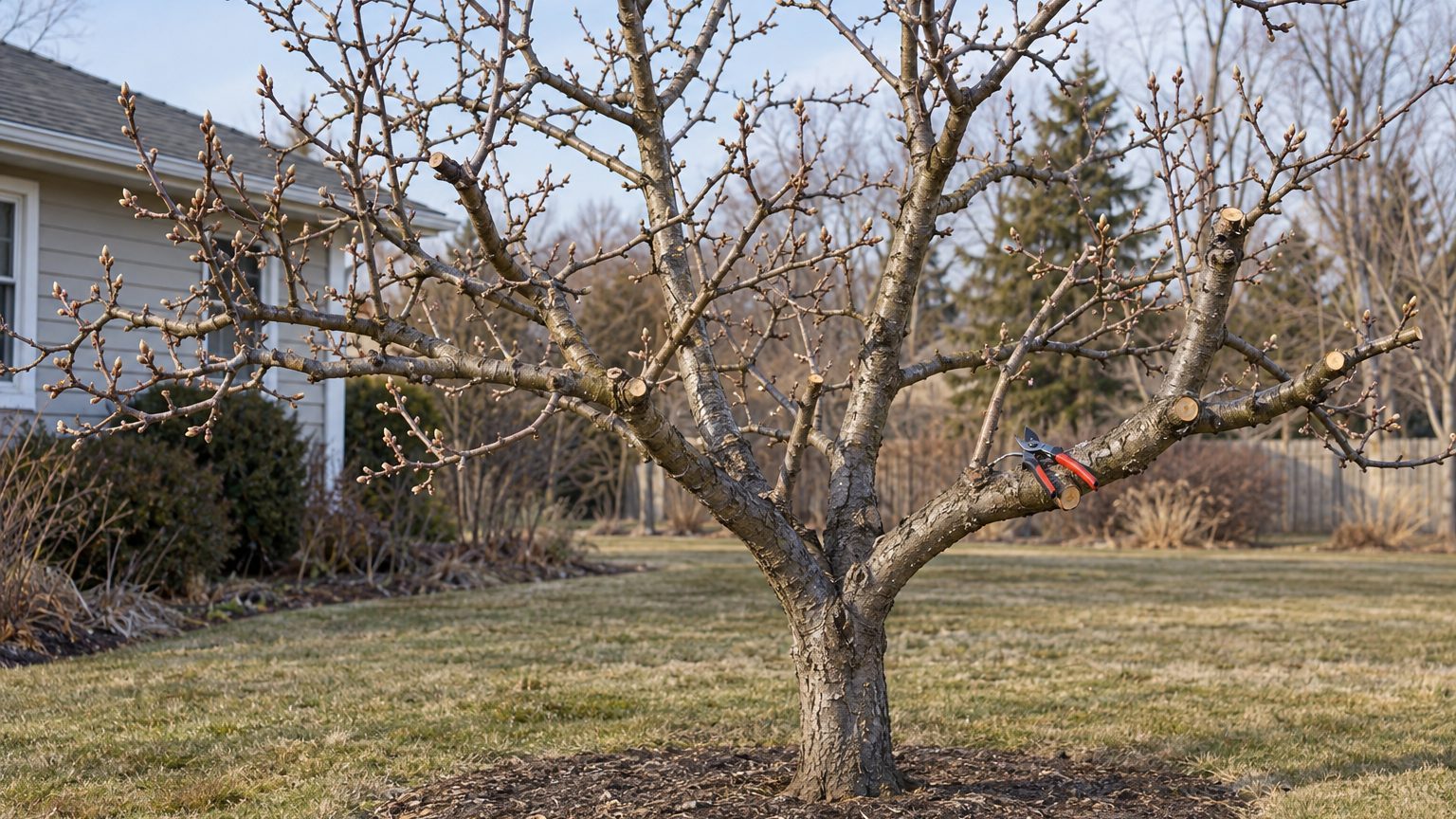
Bare branches against a winter sky are the cue for pruning fruit trees in Nevada. Apples, pears, peaches, cherries and plums are cut while they rest, in late January and February, before growth starts. The elevation of your yard and the type of fruit decide where in that stretch you work.
When to Prune Fruit Trees in Nevada

Dormant pruning of apples, pears, peaches, cherries and plums falls in January and February, in the favorable weather of late January and February, before the trees begin actively growing. Nevada runs from USDA hardiness zone 4a to 10a, so a high-elevation yard and a desert yard sit weeks apart. Let the tree’s rest guide you.
| Fruit tree | When to prune in Nevada | Why |
|---|---|---|
| Apples and pears | Late January into February, first in the order | They are pruned first, while the tree is deep in its rest |
| Peaches and nectarines | February, last and closest to bloom | Their flower buds are easily hurt by cold |
| Cherries and plums | January and February, before growth starts | Cuts made while dormant heal as the tree wakes |
| Young trees | January and February, while dormant | Shaping before buds open directs the new growth |
Fall and early winter are poor times to cut. Pruning then can prompt new growth that may not harden before the cold arrives. Wait until the heart of winter has passed, then work through the orchard in the order the table gives, finishing with the peaches.
Nevada — the year and the numbers
- State
- Nevada
- USDA zones
- 4a-10a
- Last spring frost
- January 7 to February 1
- First fall frost
- December 8 to December 23
- Annual rain
- 4 in
- Lawn zone
- warm-season
- Source
- NOAA NCEI U.S. Climate Normals 1991-2020, 32F freeze probabilities · Las Vegas
How to Tell Your Fruit Trees Are Ready to Prune
The tree gives clear signals, and they matter more than any date on the wall calendar, especially across Nevada’s very different elevations.
- The leaves have all dropped, so the branch structure is fully visible and you can judge what to remove.
- The hardest part of winter has passed, which tells you fresh cuts will not be exposed to the deepest cold.
- The buds are still tight, because pruning is done before the buds swell and open.
- No new green growth shows at the tips, a sign the tree is still resting and will tolerate the cuts.
- Peach buds are still closed but bloom is near, which tells you it is time to prune the peaches last.
If buds have started to swell, the window is closing, so move quickly on the trees that remain.
When to Prune Peach and Apple Trees in Nevada
Apples are pruned first, in the heart of the dormant season. Their buds are not easily hurt by cold, so there is little reason to wait, and late January is a comfortable time to start.
Peaches go last, as close to bloom as you can manage. Their flower buds are easily hurt by cold, and pruning them late lets you see which buds survived the winter before you decide what to cut. Peaches and apricots have a low chill requirement, below 400 to 500 hours in Nevada, so they can bloom during a warm spell in winter. Watch them closely and finish before the flowers open.
Where to Get Fruit Tree Advice in Nevada
Local conditions vary a great deal across the state, so a nearby expert is worth a call before the first cut.
- University of Nevada, Reno Extension offers publications on fruit trees in the state, best read in autumn before the pruning season.
- Your county extension office can tell you what winter looks like in your own yard, so call it in early winter, before the cuts begin.
Common Questions
Can You Prune Fruit Trees in Fall in Nevada?
Fall pruning is avoided. Cuts can trigger new growth that may not harden before the cold, so wait for the dormant season in late winter.
Should Young Fruit Trees Be Pruned at Planting?
Bare-root trees go in while dormant, before the buds open, and they are sold in late winter and early spring, in February and March. That timing lines up with the dormant pruning window, so shaping can happen at the same visit.
Which Fruit Trees Need the Most Winter Cold in Nevada?
Apples and pears need more winter chill, around 700 to 800 hours, than apricots and peaches. That is why the low-chill fruits are more likely to bloom early during a warm winter spell.