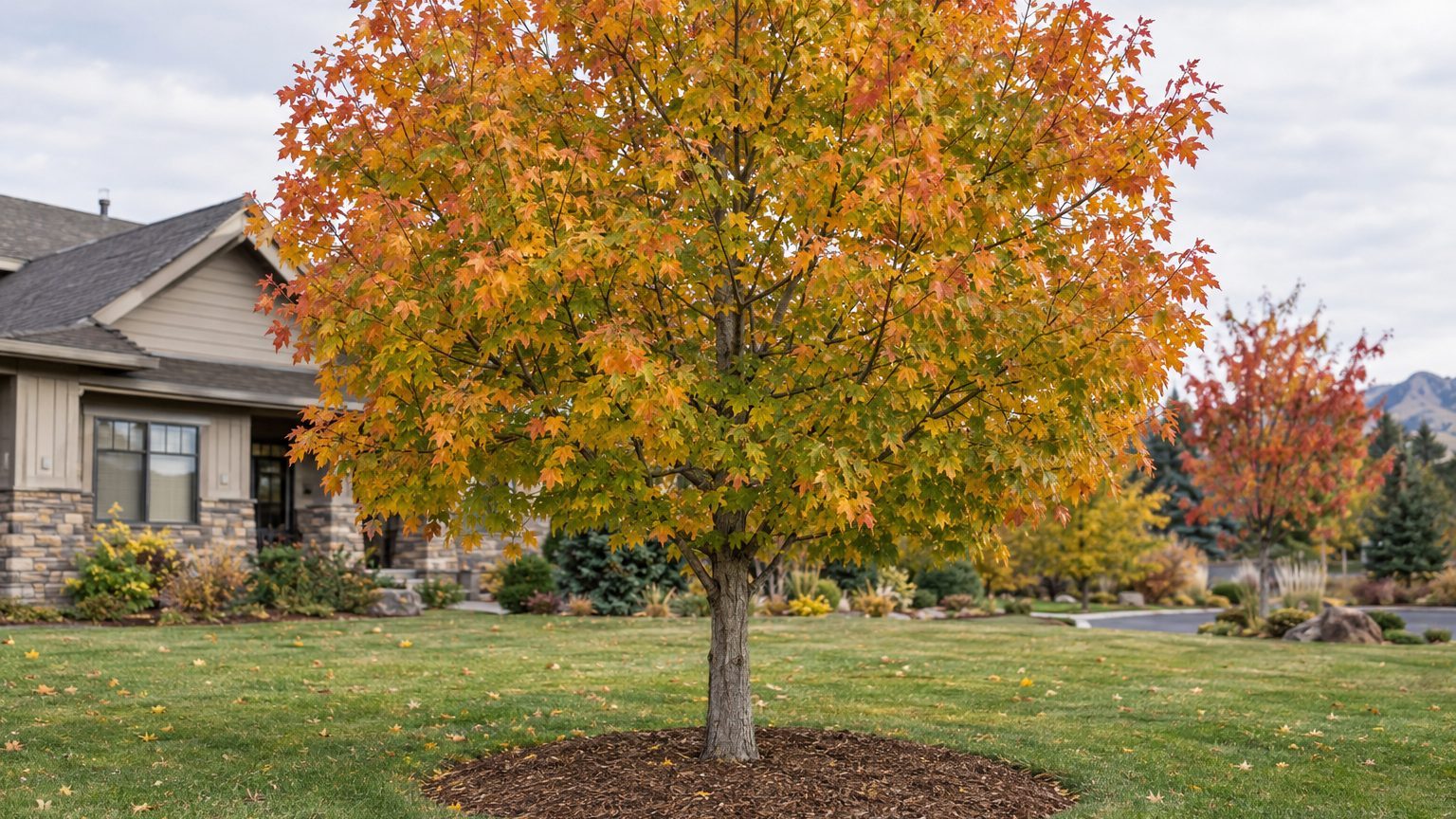
Buds still tight on a bare maple in early spring tell you the planting window has opened, and a cool fall day can open it again. In Montana, shade and ornamental trees go in during April and May, with September and October as a second window for trees sold in a pot or a burlap-wrapped ball.
When Is the Best Time to Plant Trees in Montana?

Spring is the main season for shade and ornamental trees here, and fall works for trees that come with their roots in soil. Billings, one of the milder valleys, serves as the reference point for the dates below.
- In April, plant while the buds are still closed and the soil has thawed, since a dormant tree loses less water while its roots settle in.
- In May, container and balled-and-burlapped trees can still go in, as long as you water them regularly once the leaves open.
- Through the summer, hold off, because heat and dry soil stress new roots more than at any other time of year.
- In September and October, container and balled-and-burlapped trees can be planted while the soil still holds some warmth, which keeps roots growing before winter.
- After a fall planting, keep watering until the ground freezes.
Last spring frost in Billings falls between April 29 and May 10, and the first fall frost arrives between October 1 and October 14. Mountain valleys elsewhere in Montana can frost in any month, so a cold snap after planting is always possible. The USDA hardiness zone runs from 3a to 6a across the state, which is why a tree rated for your zone matters more than the date alone.
Montana — the year and the numbers
- State
- Montana
- USDA zones
- 3a-6a
- Last spring frost
- April 29 to May 10
- First fall frost
- October 1 to October 14
- Annual rain
- 14 in
- Lawn zone
- transition-season
- Source
- NOAA NCEI 1991-2020 Climate Normals, 32F freeze probabilities · Billings
When to Plant Fruit Trees in Montana
April is the month for planting fruit trees in Montana, with March and May as fallback months when the weather or the ground says so. Bare-root trees go in only in spring, while they are still dormant and before the buds open.
Container-grown fruit trees are more forgiving. They can be planted most of the year if you keep them watered, though they settle best in the dormant season.
| Kind of fruit tree | When to plant in Montana | Why then |
|---|---|---|
| Bare-root | April, or March and May if needed | The tree is dormant and the buds have not opened |
| Container | April, or March and May if needed | Roots settle best in the dormant season, and watering carries the tree through the rest |
A bare-root tree that leafs out before it is planted starts with a handicap, so have the hole ready as soon as the soil can be worked.
Best Trees to Plant in Montana
Montana winters are cold and zones range from 3a to 6a, so check the hardiness rating on the tag against your own zone before you buy. Crabapples are a dependable ornamental choice where water is limited, and chinkapin oak is a long-lived shade tree for the milder zones.
Pears also have a track record in Montana trials, where Parker and Golden Spice performed best at the research sites.
| Tree | How it does in Montana | Why |
|---|---|---|
| Crabapple | Fairly drought tolerant once established | Needs only a modest amount of moisture over the year, counting both precipitation and any watering |
| Chinkapin oak | Suited to hardiness zones 4 to 7 | Low maintenance, long-lived, with no serious pests |
| Parker pear | Among the best performers in Montana research sites | Held up in the trials alongside Golden Spice |
| Golden Spice pear | Among the best performers in Montana research sites | Held up in the trials alongside Parker |
Crabapple varieties differ in disease resistance, and some are more susceptible than others, so look for a cultivar rated for resistance. Chinkapin oak is hardy in zones 4 to 7, so check your local conditions in the coldest valleys.
When to Plant, Water and Prune Trees in Montana
Planting, watering and pruning each have their own season, and they rarely overlap. Plant in spring or early fall, water through the first seasons, and prune fruit trees in late winter.
Peaches are pruned last, closest to bloom, because their flower buds are easily hurt by cold. Apples go first.
| Task | Best timing in Montana | Why then |
|---|---|---|
| Plant shade and ornamental trees | April and May, or September and October for container and balled-and-burlapped trees | Dormant buds in spring, warm soil in fall, and no summer heat |
| Plant fruit trees | April, or March and May | Bare-root trees need to be dormant |
| Water a young tree | Regularly after planting, and in fall until the ground freezes | New roots dry out fast, and frozen ground ends their access to water |
| Prune fruit trees | February and March, or April if needed | After the worst cold and before bud swell |
Avoid pruning fruit trees in fall or early winter, because new growth may not harden before the cold. The full pruning schedule is on the page When to Prune Fruit Trees in Montana.
Where to Get Tree Advice in Montana
Local conditions vary a lot from one Montana valley to the next, and a quick call can save a tree. Montana State University Extension and your county extension office can help with the choice of species and with soil questions.
- Extension staff can recommend trees that suit your elevation and zone, so ask before you buy in spring.
- A county office can explain how to take a soil sample and send it for analysis, best done before planting.
Common Questions
Can You Plant a Tree in Montana in Summer?
A container tree can survive summer planting if you water it faithfully, but the heat is hard on new roots. Waiting for spring or early fall gives the tree an easier start.
Should You Remove the Burlap from a Balled-and-Burlapped Tree?
Yes. Cut away the wire basket and peel back the burlap from the top of the ball once the tree sits in the hole, so roots can spread freely into the surrounding soil.
How Deep Should You Plant a Tree?
Dig the hole as deep as the root ball and wider than it. Set the tree so it sits at the same level it grew in the nursery, and keep mulch back from the trunk.