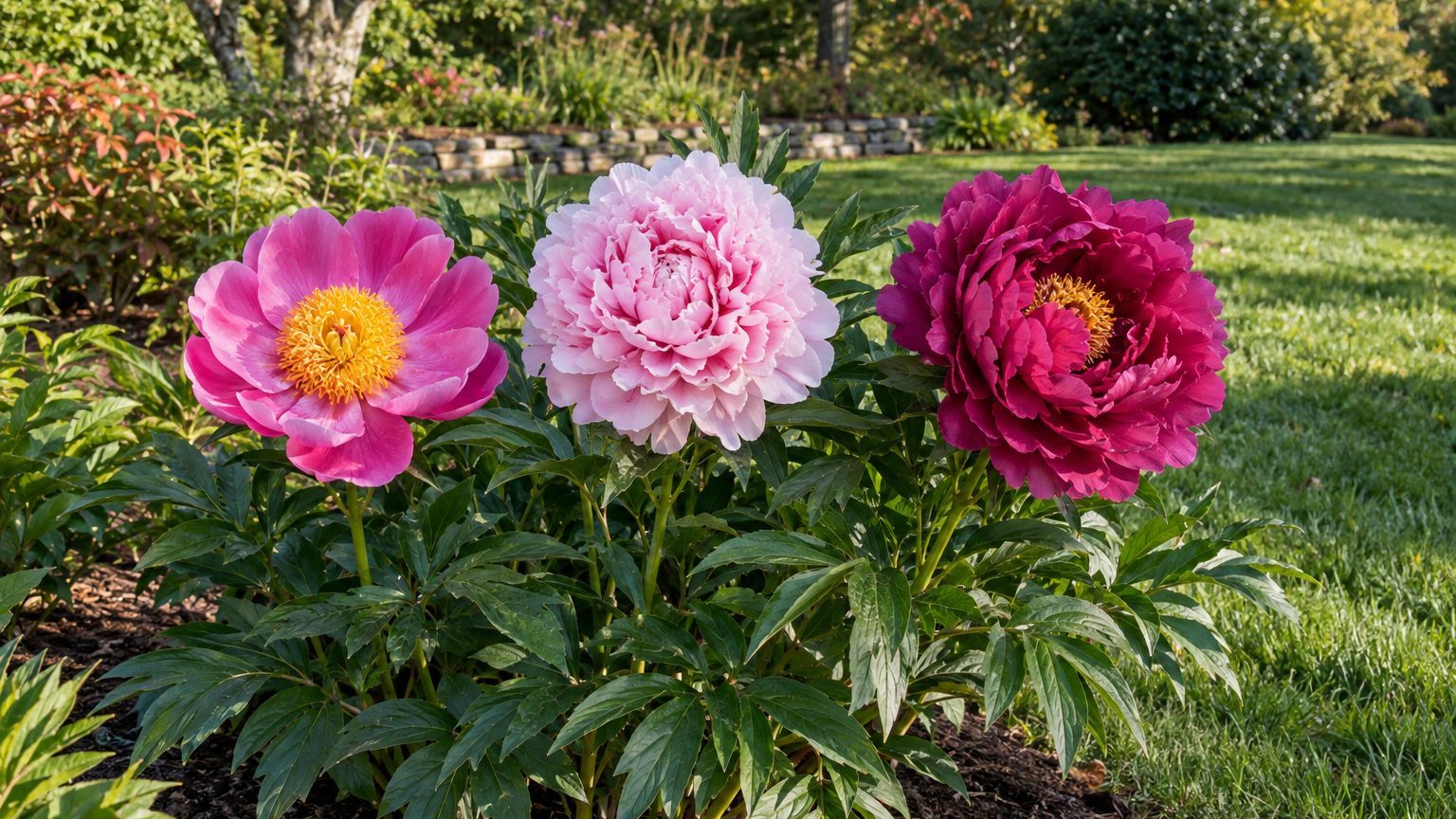
Fat reddish buds push through cold soil every spring, and by early summer the clumps are heavy with bloom. In Utah, that show depends on winters cold enough to give the plant a proper rest. Herbaceous and tree peonies suit the state, and the right pick depends on your elevation, your space, and whether you want flowers for the vase.
Best Peonies to Grow in Utah

Herbaceous peonies and tree peonies fit Utah because its winters deliver the cold rest these plants need before they flower. Peonies require winter chilling in order to bloom, so Utah’s cold works in your favor, especially away from the warmest southern valleys. Within these groups, flower form, color and bloom date give you plenty of room to choose.
Herbaceous Peonies

These are the classic garden peonies. They die back to the ground each winter and return in spring, with showy blooms in pink, purple, red and white above attractive foliage.
Give them full sun. Set the roots so the eyes stay near the soil surface, because a peony planted too deep may bloom poorly or not come up at all.
Tree Peonies

Tree peonies (Paeonia suffruticosa) look similar to herbaceous types but are deciduous shrubs with woody stems. Once mature, tree peonies rarely need staking because their woody stems carry the heavy flowers.
They tend to bloom earlier than herbaceous peonies, and the flowers are larger. Give them light shade and a protected location, such as the lee side of a fence or a wall.
Cut Flower Varieties
There are literally hundreds of peony varieties, which makes a nursery visit feel like a buffet. If you want armfuls for the house, look for varieties recommended for cut flower production rather than those sold only for landscaping.
Single, Double, Bomb, and Anemone Forms
Peony flowers come in single, double, bomb and anemone forms, and the colors run through whites, pinks, reds, corals and yellows. Some are fragrant and some are unscented.
Decide how much scent you want near a patio or window before you buy, since that trait varies from one variety to the next.
Early, Mid, and Late Bloomers
Varieties are sorted into early, mid and late bloomers. In Utah the main show arrives in June, and an early variety can open in May.
Combining early, mid and late varieties gives you a longer stretch of flowers.
Utah — the year and the numbers
- State
- Utah
- USDA zones
- 4a-9a
- Last spring frost
- April 12 to April 29
- First fall frost
- October 18 to October 29
- Annual rain
- 16 in
- Lawn zone
- transition-season
- Source
- NOAA NCEI 1991-2020 Climate Normals, 32F freeze probabilities · Salt Lake City
How to Choose a Peony for a Utah Garden
Start with what your yard asks of the plant. Cold is rarely the problem in Utah, so the real choices come down to space, upkeep and what you plan to do with the flowers.
Match your own situation to a row below, then pick a variety from the form and bloom-date options above.
| Your situation | What suits it in Utah | Why |
|---|---|---|
| Very cold winter | Herbaceous peony | It needs winter chilling to bloom and dies back each year |
| Little time for staking | Tree peony | Woody branches support the large flowers once mature |
| Small space | A variety suited to the available space | The plant tag should describe its mature size |
| Shady or sheltered corner | Tree peony | Prefers light shade and a protected location |
| Flowers for the vase | Cut flower varieties | Recommended for cut flower production rather than landscaping alone |
| Long season of blooms | Early, mid and late varieties | Staggered bloom dates stretch the harvest |
A warm southern Utah yard deserves extra thought, since peonies may flower poorly where winters are mild. Choosing the coolest exposure you have helps there.
Which Peonies Suit Different Parts of Utah
Utah’s hardiness zones, in the USDA system, run from 4a to 9a, so the same peony does not perform the same way everywhere.
- Salt Lake Valley: Salt Lake Valley is milder than much of Utah, so local conditions matter when choosing a peony. Tree peonies appreciate shelter from wind and strong afternoon sun.
- Park City and Cache Valley: Higher, colder country gives peonies a deep winter rest and suits herbaceous types especially well. Choose early bloomers carefully, since the season starts later at elevation.
- St. George and southern Utah: Warmer winters mean peonies may flower poorly because they get less chilling. Plant in the coolest spot you have and keep expectations modest.
Wherever you garden, tuck tree peonies into a protected corner and give herbaceous types the open sun.
Peony Buying Mistakes to Avoid in Utah
Tree Peony in an Exposed Spot
A tree peony set in an open bed misses the shelter it prefers, and its early, large flowers have nothing to protect them from wind. Choose a protected location with light shade, such as beside a fence or near the house.
Expecting Bloom Without Enough Cold
Peonies that do not get enough winter chilling may flower poorly. In warmer southern Utah, a plant that looks healthy can still skip its flowers.
Pick a cooler exposure and give the plant time. A newly planted or transplanted peony may not bloom the first spring, even in a cold yard.
Buying a Pot Without Knowing Its Size
A small nursery pot says little about the adult plant.
Read the tag before you buy, and match the mature size to the spot, whether that is a narrow border or a corner with room to spread.
Where to Get Peony Advice in Utah
Utah State University Extension publishes peony guidance written for Utah conditions, and your county office can tell you what grows well at your elevation.
- Browse the extension site for its peony and cut flower material, which covers variety choices and bloom timing for Utah.
- Call your county extension office to ask about your elevation and soil before you choose between herbaceous and tree peonies.
- Take your questions to a local nursery before choosing a bare-root peony.
Common Questions
When Should You Plant Peonies in Utah?
Fall is best, in September or October, before the ground freezes. Bare-root peonies respond best to fall planting.
When Should You Cut Back Peonies in Utah?
Cut herbaceous peonies back in October or November, after a hard freeze has killed the foliage. Tree peonies keep their woody stems and are never cut back.
How Much Sun Do Peonies Need?
Herbaceous peonies do better in full sun. Tree peonies can handle full sun to partial shade, and they like a protected spot.