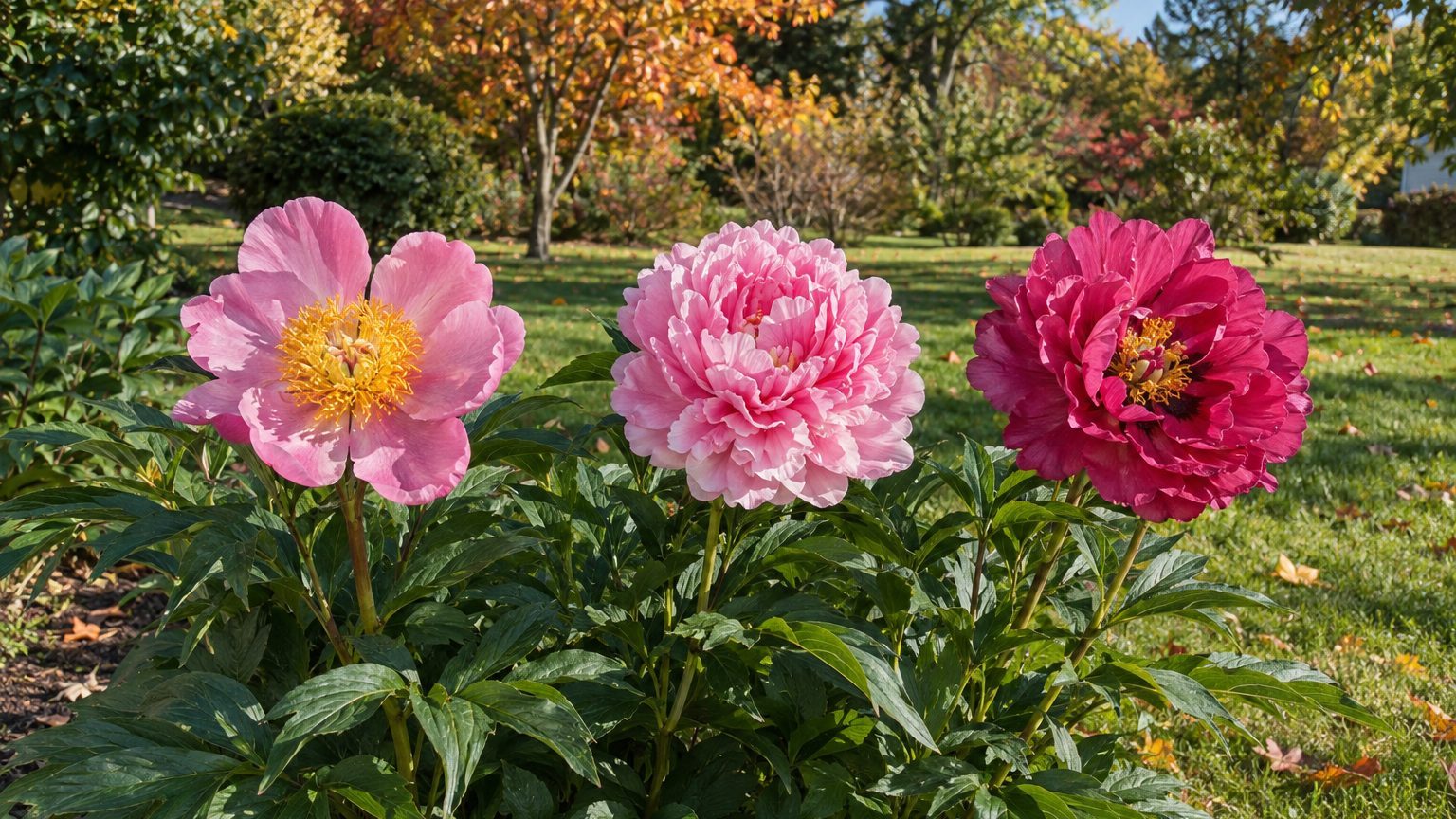
A peony in a Florida bed usually gives you plenty of leaves and few or no flowers. The plant needs a cold winter rest to bloom, and most of Florida never delivers one. A few kinds still deserve a try, mainly in the northern part of the state, and they are worth knowing before you spend money.
Best Peonies to Grow in Florida

Florida’s climate is too mild and too hot for peonies to do well. Peonies are ill-suited to Florida’s summer heat and humidity, and they also miss the winter chill they need to flower. If you want to experiment, tree peonies and Itoh peonies are generally more resistant to botrytis blight and peony measles than garden peonies, and early bloomers have the best odds.
Tree Peonies

Tree peonies (Paeonia suffruticosa and relatives) are upright, multi-stemmed and woody, and the woody stems stay on the plant year-round to carry next year’s growth. They are generally more resistant to botrytis blight than garden peonies, which matters in damp Florida air.
Give them airy spacing and never cut the stems to the ground.
Itoh Peonies

Itoh peonies, also called intersectional hybrids, cross a herbaceous peony with a tree peony. They carry short woody stems that die back to the ground in winter, and they resist botrytis blight and peony measles better than garden peony cultivars.
That resistance makes them the more sensible herbaceous-style choice for a humid state.
Early-Blooming Cultivars
Early-blooming cultivars do best in the South because they flower before hot weather sets in. They are also less prone to botrytis blight.
The same logic applies in north Florida. When you shop, look for descriptions that say early, and expect the flowering window to be short.
Herbaceous Garden Peonies
Herbaceous peonies (Paeonia lactiflora) are the familiar bushy mounds that die back to the ground in winter. They often do not perform well in the lower South because the winter chilling falls short.
Treat them as a gamble here, not a plan.
Florida — the year and the numbers
- State
- Florida
- USDA zones
- 8b-11b
- Last spring frost
- February 16 to March 7
- First fall frost
- November 26 to December 13
- Annual rain
- 53 in
- Lawn zone
- warm-season
- Source
- NOAA NCEI 1991-2020 Climate Normals, 32F freeze probabilities · Jacksonville
How to Choose a Peony for a Florida Garden
Start with how forgiving the plant is of damp heat, then ask how much winter cold your yard really gets. Peonies do best where winters are cold and may flower poorly in mild-winter climates, so lower expectations the farther south you garden.
The rows below match common Florida situations to a type.
| Your situation | What suits it in Florida | Why |
|---|---|---|
| Hot, humid summers | Tree or Itoh peonies | They are generally more resistant to botrytis blight than garden peonies |
| Summer comes on fast after a mild spring | Early-blooming cultivars | They flower before hot weather sets in |
| Mild winters with little chill | No peony type reliably suits mild winters | Peonies need a cold winter rest to flower, and herbaceous types struggle in the lower South |
| Little time for fall cleanup | Tree peonies | The woody stems stay on the plant, so there is no cutting back |
Which Peonies Suit Different Parts of Florida
The state runs from a place with real winter freezes to one with almost none, and that spread decides how much any peony has to work with.
- North Florida, around Jacksonville: Winters here give a peony a modest chance of getting enough chill. Try tree or Itoh peonies, or an early-blooming cultivar, in a bed with good air movement.
- Central Florida, around Orlando: Winters are effectively frost-free, so peonies get little rest, and summer is the hard season for them. Flowering is unlikely, and the garden calendar here favors cool-season color over peonies.
- South Florida, around Miami: Frost-free winters and long, wet summers leave peonies with almost nothing in their favor. Spend the garden budget on plants built for the heat.
Even in the north, expect a result that varies from year to year with how cold the winter turns out.
Peony Buying Mistakes to Avoid in Florida
Buying a Herbaceous Peony and Expecting Flowers
The classic garden peony needs a cold winter rest. In a mild winter it may grow leaves and skip the bloom, which leaves you with a plant that takes up a bed for nothing.
If you still want one, choose an early-blooming cultivar and plant it in north Florida. Otherwise lean toward a tree or Itoh type.
Choosing a Variety That Wants More Chill
Chill needs vary by cultivar, and some are written for much colder places. Peonies need winter cold to flower, and Florida often cannot supply enough.
Read the plant tag or catalog description for the chill it asks for, and pass on varieties pitched at cold-winter gardeners.
Planting Too Deep
A peony set too deep may bloom poorly or not come up at all. Keep the eyes near the soil surface when you plant, and resist the urge to bury them against the heat.
Shade from afternoon sun and a little air space around the plant do far more to help it through a Florida summer.
Where to Get Peony Advice in Florida
Local advice matters more here than in a cold-winter state, because results vary by region. Check locally before you buy.
- The UF/IFAS Extension site has guidance written for Florida gardens, including what to plant instead of cold-climate flowers.
- Your county Extension office can tell you how much winter chill your neighborhood gets, so call or stop in before you order plants.
Common Questions
Will a Peony Bloom the First Spring After Planting?
It may not bloom the first spring.
Do You Cut Back Peonies in Florida?
A herbaceous peony dies back each year and is cut back after frost. A tree peony keeps its woody stems and is never cut back, and an Itoh peony dies back to the ground in winter like a herbaceous one.