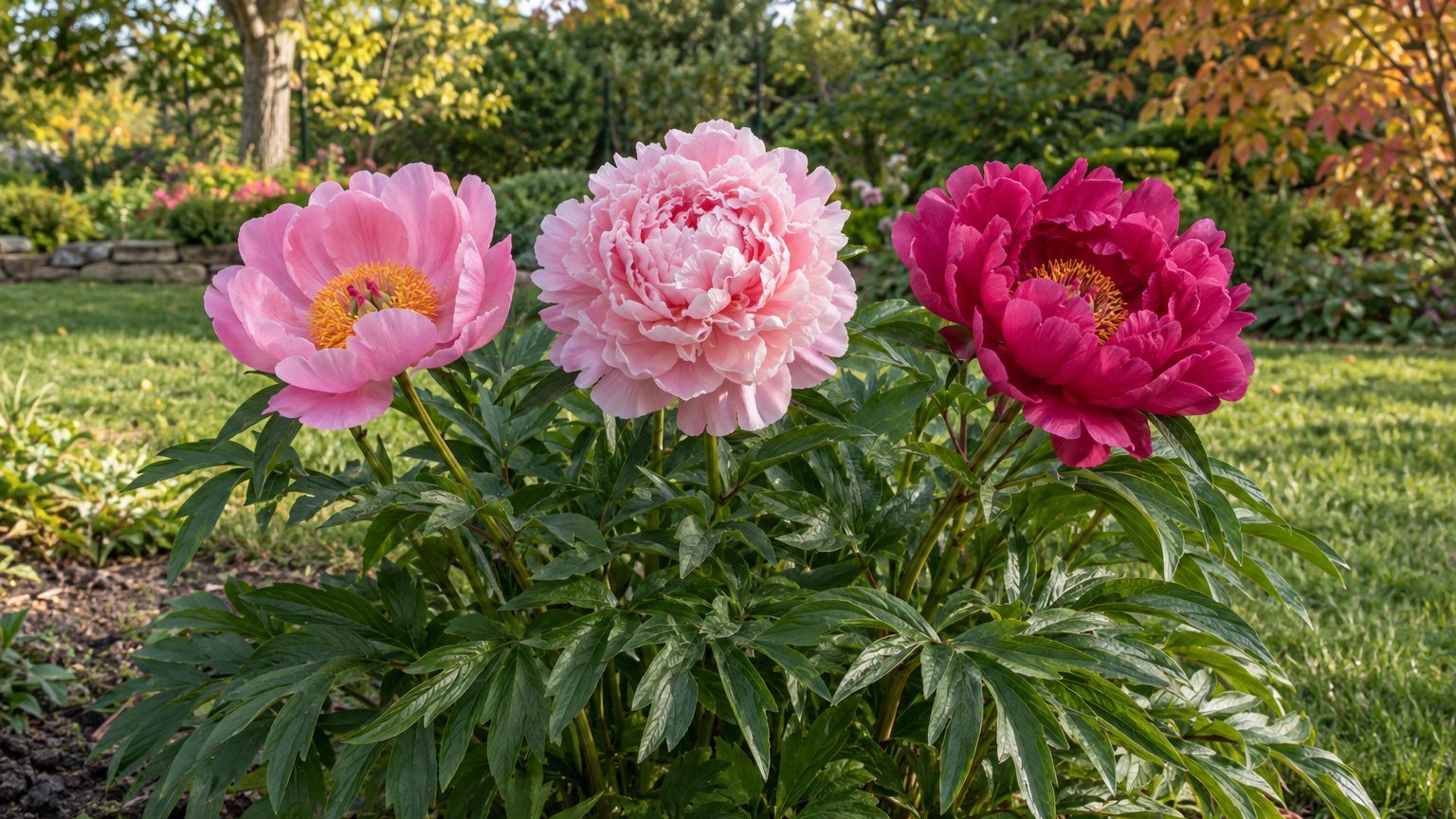
Peonies are a cool-country plant, and most of Arizona is not cool country. Where winters stay mild, flowering is thin or missing, while the high country gives them the cold rest they want. Early-blooming herbaceous cultivars are the ones to try if you garden at a lower elevation.
Best Peonies to Grow in Arizona

Herbaceous peonies that bloom early in spring hold up best here, and they do their best work in the cold high country. In the low desert the winter is too mild for them to flower reliably. A peony needs a cold winter rest to flower. Phoenix reached freezing in only 6 of 30 springs, while the high country has a very different winter.
Early-Blooming Cultivars

Early bloomers open before hot weather settles in, which matters in a state where summer heat arrives fast. They are also less prone to botrytis blight. If you want to test a peony at a lower elevation, start here.
Sarah Bernhardt

This soft pink double is a popular cut-flower cultivar. It is also a standard landscape choice. Its popularity means plants are easy to find, but it still wants real winter cold to flower.
Karl Rosenfeld
This deep red cultivar appears on the cut-flower and landscape lists. It suits a cold-winter garden at elevation. A newly planted division may skip its first spring bloom, so give it time to settle.
Festiva Maxima
This white peony is another long-standing landscape cultivar. It is a good pick for a high-country bed where winters give the plant its full rest. Plant it with the eyes near the soil surface, since deep planting can leave it blooming poorly or not coming up at all.
Red Charm
Red Charm belongs with the popular cut-flower cultivars. Like the others, it does best where winters are cold. Peonies handle cold much more readily than heat, so the high country is the safer home for it.
Arizona — the year and the numbers
- State
- Arizona
- USDA zones
- 4b-10b
- Frost
- none in an average year
- Annual rain
- 7 in
- Lawn zone
- warm-season
- Source
- NOAA NCEI 1991-2020 Climate Normals + NOAA RCC ACIS daily records, station USW00023183 — https://www.ncei.noaa.gov/access/services/data/v1?dataset=normals-annualseasonal&stations=USW00023183 · Phoenix
How to Choose a Peony for an Arizona Garden
Your elevation matters more than any cultivar name. A garden that freezes hard each winter gives peonies what they need, while a garden in the low desert asks them to bloom without the rest they depend on.
Match the plant to the season you can offer it, then pick a cultivar from the popular lists above.
| Your situation | What suits it in Arizona | Why |
|---|---|---|
| Very cold winter, high country | An early-blooming herbaceous cultivar | Peonies tolerate cold much more readily than heat and need winter cold to flower |
| Hot summer | Early-blooming cultivars | They bloom before hot weather sets in |
| Warm, damp spells | Early-blooming cultivars | They are less prone to botrytis blight |
| Concern about disease | Herbaceous peonies in well-drained soil | They are generally thought to have very few disease problems and prefer well-drained, loamy soil |
| Mild winter, low desert | An early-blooming cultivar, with modest expectations | Without a cold winter rest, flowering may be poor |
Small-space gardeners have no special peony in this lineup. Choose by winter cold first, and let the space you have decide how many plants you set.
Which Peonies Suit Different Parts of Arizona
Arizona includes mild-winter desert areas and cold high country, and peony success follows that split.
- Flagstaff and the high country: Winters here freeze hard, which gives peonies the cold rest they need. This is where herbaceous peonies behave most like they do in a cold-climate garden.
- Phoenix and the low desert: Freezing temperatures are rare and the winter chill is thin. Flowering may be sparse, so choose an early bloomer and treat any flowers as a bonus.
At middle elevations, success depends on whether winter provides enough cold.
Peony Buying Mistakes to Avoid in Arizona
Choosing for a Mild Winter
Buying a peony without checking your winter cold is a mistake. A plant that never gets its chill grows leaves but flowers poorly, and the money spent on a root goes to foliage. If you garden in the low desert, pick an early bloomer and keep expectations low, or put your effort into the high country if you have a garden there.
Planting Too Deep
A peony set too deep may bloom poorly or fail to come up. Keep the eyes, the small pink buds on the root, near the soil surface when you plant. Well-drained, loamy soil helps, though ordinary garden soil still gives good flowers.
Expecting Flowers the First Spring
A newly planted or transplanted peony may not bloom its first spring. Many gardeners decide the plant has failed and dig it out. Leave it in place rather than judging it by its first spring.
Where to Get Peony Advice in Arizona
Local growers know which cultivars cope with your elevation, and the state’s extension network is the place to reach them.
- University of Arizona Extension publishes gardening guidance for the state’s different climates, and it is worth checking before you order roots.
- Your county extension office can speak to conditions at your elevation, so call or visit before you buy.
Common Questions
Should You Cut Back a Peony in Arizona?
A herbaceous peony dies back each year and is cut back after frost. A tree peony keeps its woody stems and is never cut back.
Do Peonies Get Many Diseases?
Peonies are generally thought of as having very few disease problems. Early-blooming cultivars lower the risk of botrytis blight further.
What Soil Do Peonies Like?
They prefer well-drained, loamy garden soil. They prefer well-drained, loamy soil, so make drainage the priority when preparing the bed.