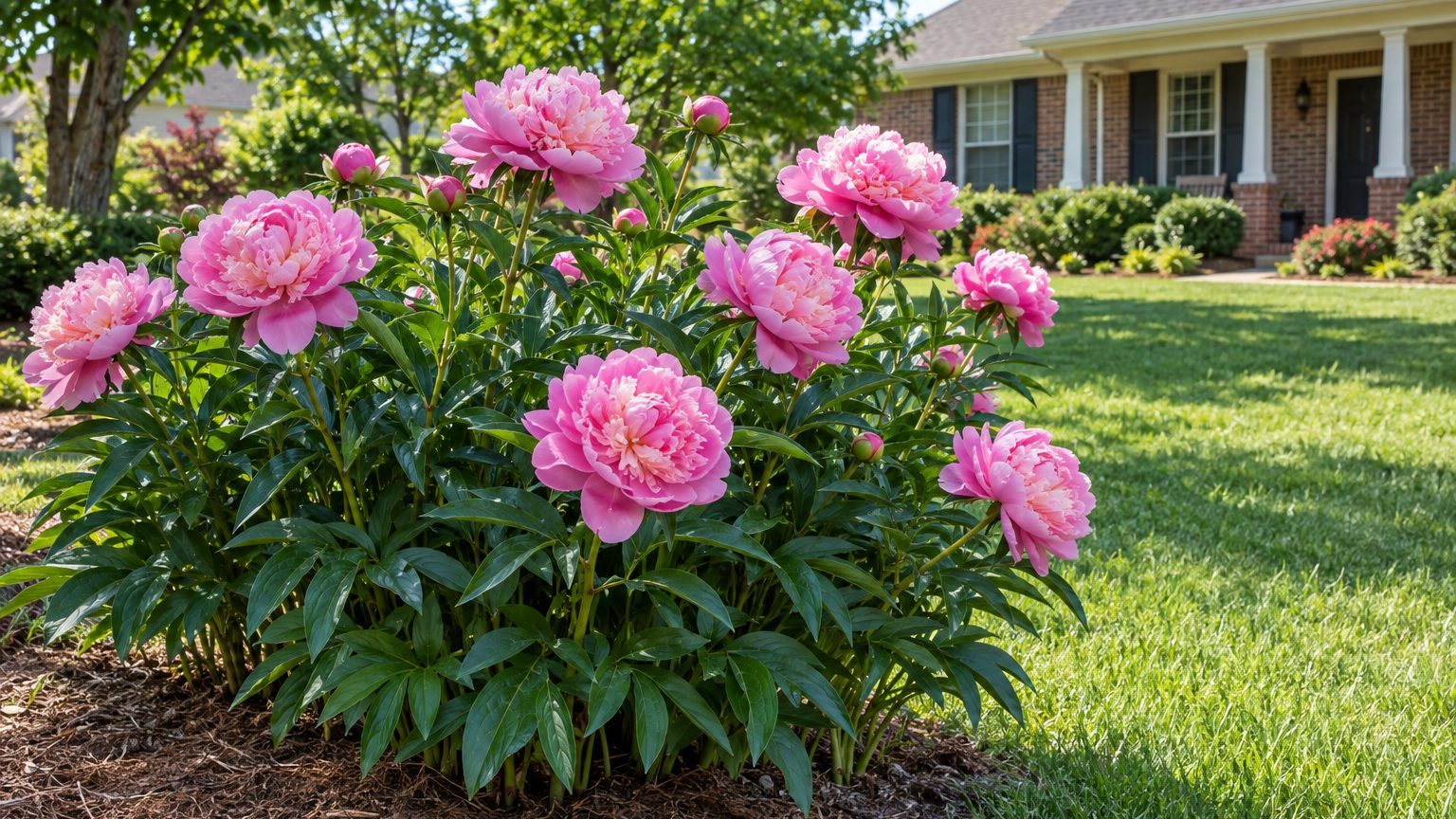
Peony shoots push through the soil as red, pointed knobs in spring, but the work that earns those blooms begins in autumn. Planting and dividing peonies in Mississippi is a fall job, set by the calendar months and by how much winter cold the roots get.
When to Plant Peonies in Mississippi

Plant or divide peonies in late September or October. That timing lets roots settle into cool soil before winter, and the plant spends the cold months doing the resting it needs. Mississippi spans USDA hardiness zones 7b to 9a, so the year looks a little different from the Gulf to the hills.
- In late September and October, plant bare-root divisions or move established clumps, setting the buds just below the soil surface.
- Through winter, the plant sits dormant and rests in the cold, which sets up flowering the following spring.
- In March, the earliest cultivars can start to open in a mild year, with new shoots already well up by then.
- In April and May, the main bloom arrives, and early-blooming types finish before the heat builds.
- In November, after frost has blackened the foliage, herbaceous peonies get cut back to the ground. October and December also work if frost came earlier or later.
In Jackson, the last spring freeze falls between March 6 and March 22. Suburban and rural yards usually freeze later than an airport does, often by one to two weeks, and more so on higher ground, so check the date for your own county. Freeze risk matters most for early shoots and opening buds, not for planting dates.
The first fall freeze in Jackson arrives between November 7 and November 22. Yards outside town tend to see it sooner, which is another reason to treat these as a starting point and not a guarantee. Use the stated fall planting window rather than calculating from the frost date.
Mississippi — the year and the numbers
- State
- Mississippi
- USDA zones
- 7b-9a
- Last spring frost
- March 6 to March 22
- First fall frost
- November 7 to November 22
- Annual rain
- 57 in
- Lawn zone
- warm-season
- Source
- NOAA NCEI 1991-2020 Climate Normals, 32F freeze probabilities · Jackson
Which Peonies Grow Best in Mississippi?
Peonies can grow in Mississippi, but this is the warm edge of their range. They flower best where winters are cold, and they often perform poorly in the lower South because of too little winter chilling. Success depends heavily on the type you choose.
Early bloomers, single flowers and Japanese forms handle Southern conditions better than heavy doubles. Early-blooming cultivars are less prone to botrytis blight.
| Peony type | How it does in Mississippi | Why |
|---|---|---|
| Early-blooming herbaceous | Dependable pick for the South | Flowers open before hot weather and the plants are less prone to botrytis blight |
| Single and Japanese herbaceous | Usually perform much better than doubles | Lighter flower heads and better fit with Southern conditions |
| Double herbaceous | Weaker choice, often disappointing | Heavy blooms handle humid spring weather and heat poorly |
When to Plant, Cut Back and Feed Peonies in Mississippi
The year follows a simple seasonal rhythm. Dig and plant in fall, enjoy the bloom in spring, and clean up after frost. A herbaceous peony dies back every year and gets cut back after frost, while a tree peony keeps its woody stems and is never cut back.
| Task | Best timing in Mississippi | Why then |
|---|---|---|
| Plant or divide | Late September or October | Roots establish in cooler soil before the winter rest |
| Bloom | April and May, as early as March for early cultivars | Early types flower before the heat sets in |
| Cut back herbaceous peonies | November, after frost (October or December also work) | Dead stems are removed once the foliage has finished for the year |
Depth matters more than most gardeners expect. A peony set too deep may bloom poorly or never come up, so keep the eyes near the soil surface. Feeding follows the plant’s growth. Your county extension office can help with soil questions before planting.
How Peony Planting Dates Change Across Mississippi
The planting window stays in fall across the state, but changes in winter cold and heat from north to south affect how well peonies do.
- Gulf Coast: Winters are mild and short, so peonies get the least chilling here and often struggle. If you try them, choose early single or Japanese forms and plant in late September or October.
- Jackson and central Mississippi: Winters give a modest but usable rest, and spring warms quickly. Early bloomers have the advantage because they finish before summer heat arrives.
- North Mississippi hills: Winters are colder here, which is better for flowering. Check your county for local frost timing, and plant in late September or October.
Higher ground and open country inland run cooler than town centers, so local conditions can shift your timing by a bit in either direction.
Where to Get Peony Advice in Mississippi
Mississippi State University Extension publishes garden guidance for the state, and each county has an office with local staff who know your soil and weather.
- Your county extension office can help with soil questions before a root goes in the ground.
- Staff can look at a sample of damaged foliage or buds and tell you what is wrong.
- Call or visit before fall planting begins.
Common Questions
What Causes Gray Mold on Peony Buds and Stems in Mississippi?
Fuzzy gray growth on buds or stems, combined with a stretch of damp, humid weather, points to botrytis blight. Remove affected parts and clear fallen debris from around the plant. Early-blooming cultivars are less prone to it, since they flower before the muggiest weather.
Why Didn’t a Newly Planted Peony Bloom?
A newly planted or transplanted peony may not bloom the first spring.
Can Spring Freezes Damage Peonies in Mississippi?
Young shoots and early buds can be hurt when a hard freeze arrives after growth has started. Damaged shoots often look wilted or blackened and collapse soon after the cold. Expect earlier-blooming cultivars to be more vulnerable than later-blooming ones.